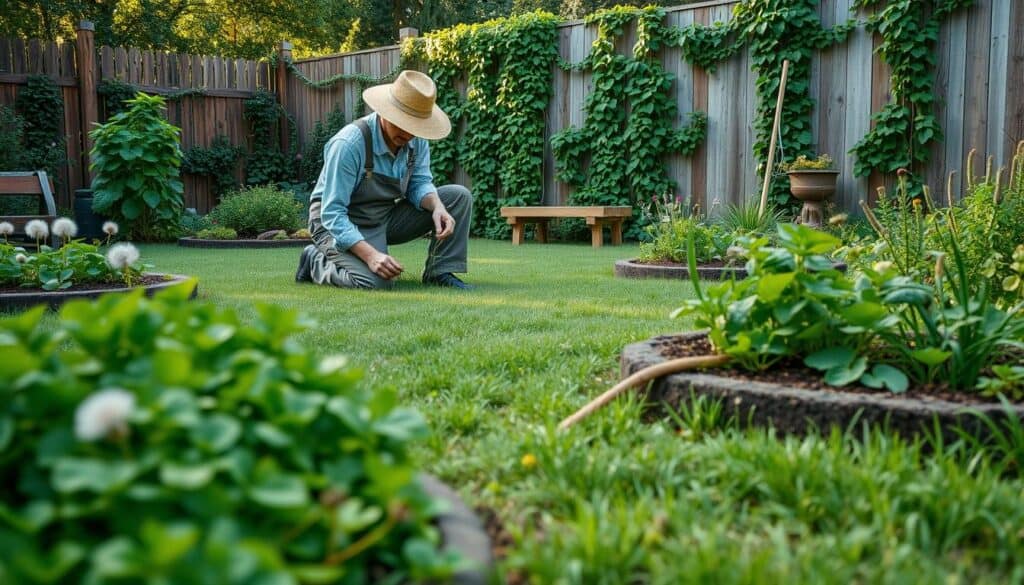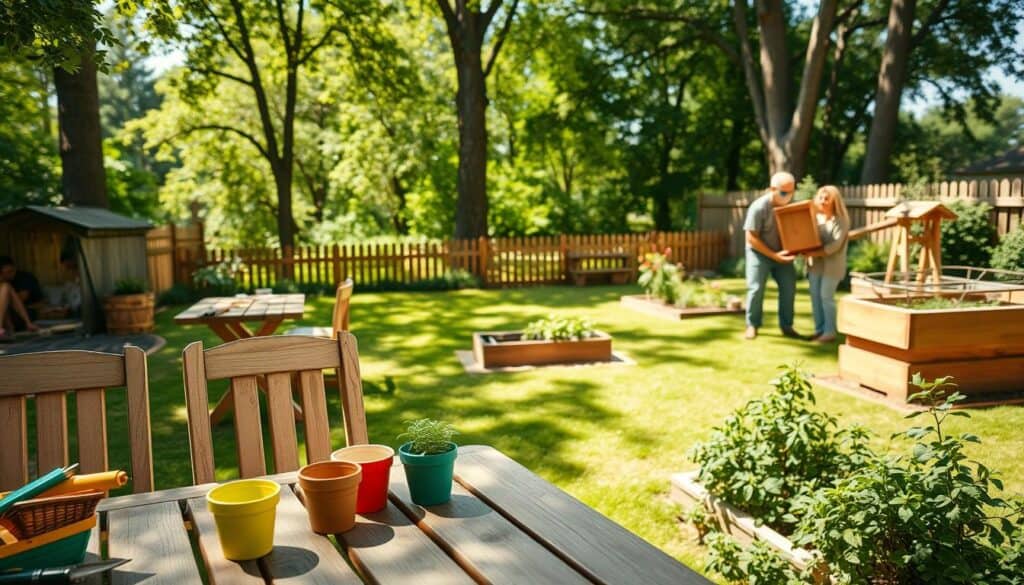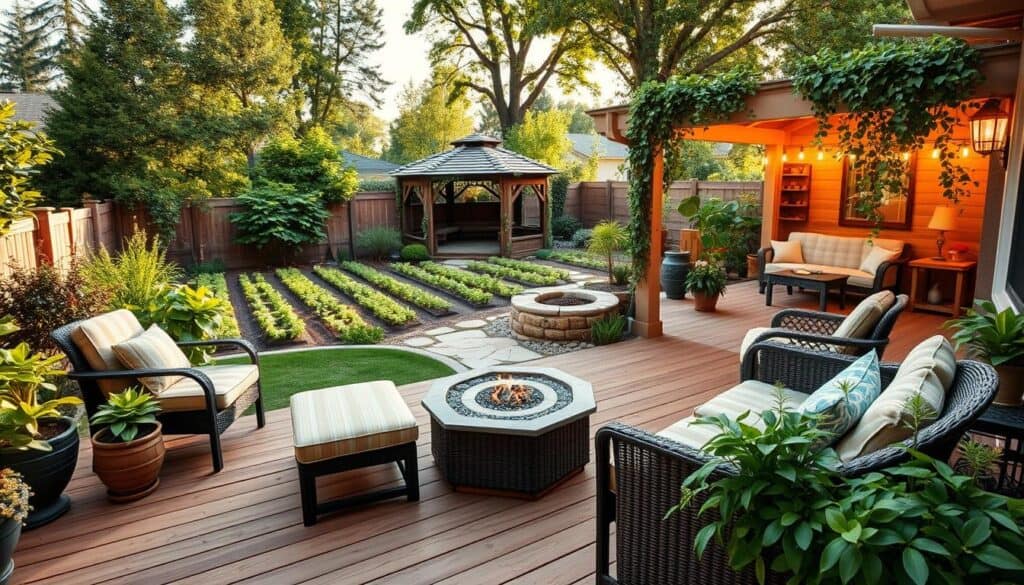
Starting a home garden is exciting for plant lovers. You dream of fresh veggies and colorful flowers. But, many of us, beginners alike, face challenges that slow their progress. Knowing these 10 beginner backyard garden mistakes early can save you time, money, and stress.
So, what is the biggest mistake a beginner gardener makes? Often, it’s poor soil prep or wrong watering. Spotting these common garden mistakes turns failures into chances to learn.
Our guide helps you avoid garden mistakes for a thriving garden. We share easy, effective tips for a successful garden. Whether you’re growing herbs or tomatoes, these tips will boost your confidence and success.
Visit The Marketplace or grab your Free Garden Starter Kit
Getting Started: The Foundation of a Successful Backyard Garden
Starting a garden is more than just planting seeds. It’s about building a strong foundation. By following backyard gardening tips, your plants will grow well.
A good beginner gardening guide helps you at the start. It makes gardening easier and leads to a good harvest. Preparation is key for growth.
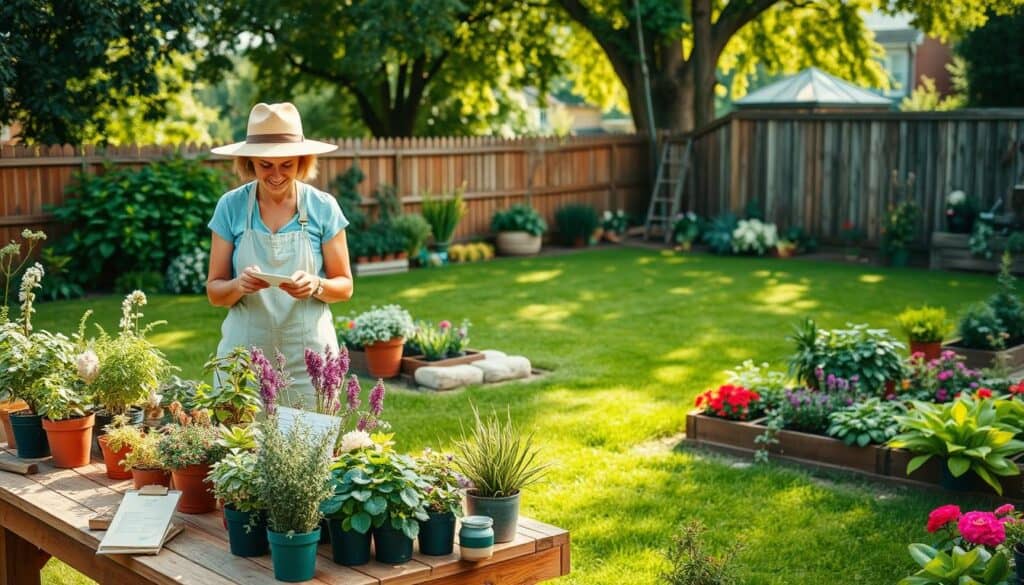
For a backyard garden designed for beginners, start small. Easy backyard gardening helps you gain confidence. Here are important steps to begin:
- Check your sunlight and soil.
- Find the right plants for your area.
- Use a small, raised bed for better soil.
- Keep a journal to track your garden.
Starting a backyard garden takes time and research. If it’s your first time backyard gardening, don’t try too much. Focus on a few crops you like.
Understanding your garden space is key. When you start a garden, watch how the sun moves. This helps you plan better.
Wondering what should i plant in my first backyard garden? It depends on your area and what you like. Choose plants that fight off local pests and diseases well.
Don’t Choose the Wrong Location for Your Garden
Finding the perfect spot for your backyard vegetable garden is key. Many mistakes new gardeners make come from picking a spot that looks good but lacks what plants need. Learning how to choose the right location for your garden can help you avoid common mistakes.
A simple backyard garden needs more than just good soil. It also needs a smart layout. Many first time gardener mistakes include placing beds too far from water or out of sight. This makes it hard to spot problems early.
Beginners usually wonder, how many hours of sun do vegetables need? Well, most need at least six to eight hours of direct sunlight daily. To check if your spot is right, ask yourself, is my garden getting enough sunlight?
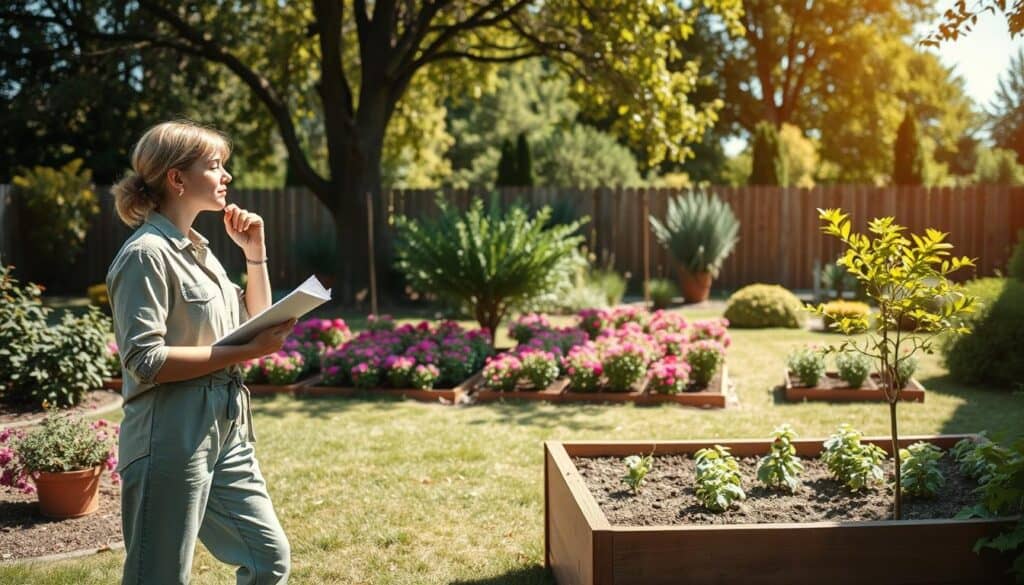
If your garden is dealing with shade, you might need to pick different plants or move your beds. Using easy backyard landscaping can help use your yard’s light better. Think about these things when checking your space:
- Watch how the sun moves all day.
- Look for shadows from trees, fences, or your house.
- Make sure the area has good air flow to prevent diseases.
- Put the garden near a water spigot for easy watering.
By using these backyard planting tips, you can avoid common mistakes. Good planning helps your plants get the energy they need. A bit of effort upfront makes the whole season more rewarding.
Avoid Overcrowding Your Plants and Ignoring Spacing Needs
One big mistake beginners make is trying to fit too many plants in their garden beds. It might look good at first, but overcrowding in backyard garden spaces can harm growth and reduce harvests. Plants that are too close together fight for sunlight, water, and nutrients. More isn’t always better!
New gardeners sometimes mix up this issue with planting in the wrong spot. While picking the wrong place is a problem, even the best spot won’t work if plants can’t breathe. Without enough air, plants become humid, attracting diseases and pests.
To avoid these spacing mistakes, read your seed packet or plant tag for spacing needs. They give you a lot of information. Learning how to space plants properly in garden rows lets each plant grow fully. Adequate airflow is the best defense against common garden diseases.
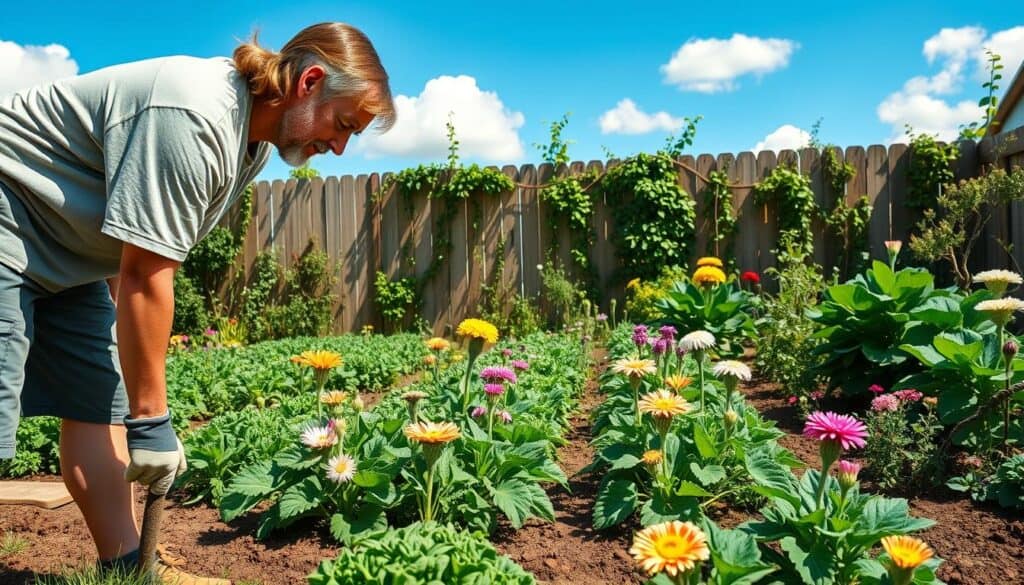
Using a good garden layout for beginners can make things easier. Try using a grid system or raised beds to plan where each plant goes before digging. Planning your layout in advance prevents the temptation to squeeze in just one more seedling.
To avoid overcrowding plants, think about the plant’s mature size, not its current size. A small tomato seedling will grow into a big bush. By giving your plants enough space, you’ll have a healthier and more productive garden.
Poor Watering and Drainage Problems
Learning to water your garden right is key to a great backyard harvest. its not as simple as it seems. Many people make watering mistakes in garden settings. This can stress out plants and slow their growth. Knowing your soil and plants’ needs helps you avoid these mistakes.
To water your garden well, focus on the roots, not the leaves. You want deep, steady moisture that helps roots grow deep. This is better than shallow sprinkling that leaves roots dry.
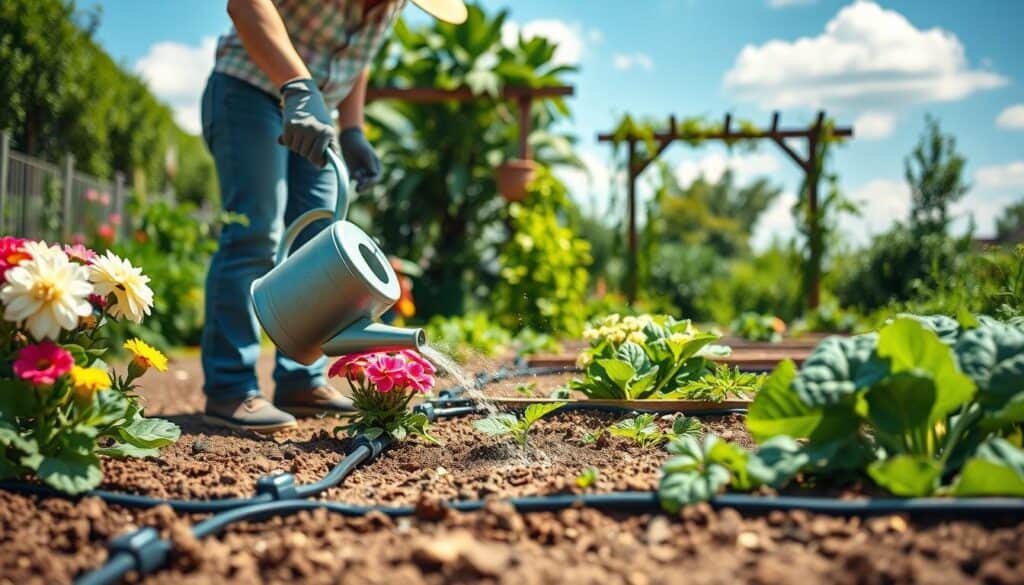
Poor drainage can also harm your garden. If your soil is too wet, plants may get root rot from lack of air. Be careful not to overwater vegetable garden beds. Wet soil attracts pests and diseases.
For beginner container gardening, watch your pots closely. Containers dry out quickly, so underwatering plants in pots is common. Check soil moisture by sticking your finger in it before watering.
The best way to water a backyard garden is with a routine that fits the weather. If you’re fixing inconsistent watering, try drip irrigation or a soaker hose. These deliver water slowly and steadily, keeping your garden healthy all season.
Don’t Forget About Your Soil Quality
Many gardeners fail because they treat soil like simple dirt. They assume all ground is ready for planting without preparation. If you ignore your soil’s composition, your plants will struggle, no matter the water or sunlight.
Learning how to improve garden soil is key for any gardener. Add organic matter like compost, aged manure, or leaf mold to boost fertility. These materials break down, creating a crumbly texture that helps roots grow.
You can easily test your garden soil at home with simple kits from local stores. These tests show your soil’s pH level and nutrient profile. This helps you know if you need to add lime or sulfur, saving you money.
Understanding how to build healthy garden soil means consistent care and organic nutrients. Layering compost feeds beneficial microbes, keeping your plants strong. This natural method keeps your garden productive for years.
If you’re fixing poor garden soil, dont give up, its really not that hard to do. Start by adding organic matter to the top six inches of your beds. This improves drainage and aeration. With patience and the right techniques, you can turn any ground into a lush, nutrient-rich paradise.
Use Fertilizers Correctly
Knowing how to feed your soil is key to a thriving garden. Many beginners struggle with choosing between synthetic vs organic fertilizer. Also feel free to ask for help at your Home Depot or Lowes garden center as many of them know quiet a lot. Synthetic fertilizers give a quick nutrient boost. Organic amendments, on the other hand, improve soil structure and support beneficial microbes over time.
If your plants are dying after fertilizing, you might be using too much chemical fertilizer. These products can burn roots if used too much. Always follow the instructions to avoid harming your soil.
Common raised bed garden mistakes include over-fertilizing. Raised beds have contained soil, so nutrients don’t leach away like they do in the ground. This can lead to toxic levels of minerals that stunt plant growth.
To find the best fertilizer for backyard garden success, follow these steps:
- Test your soil pH before adding any amendments.
- Choose slow-release organic options for steady growth.
- Apply compost to enrich the soil naturally.
- Avoid over-applying nitrogen, which encourages leaves but limits fruit.
By focusing on balanced nutrition, you create a healthy environment for your plants. Remember, less is often more when it comes to soil additives. Your garden will thank you with a bountiful harvest.
Improper Mulching Techniques, Easy Fixes
Proper mulching acts like a protective blanket for your soil. It needs precision. When done right, mulch keeps moisture in and weeds out, helping your flowers and veggies grow.
But, even good gardeners make mistakes. One common error is the “mulch volcano.” This happens when mulch is piled too high against tree trunks or plant stems. It traps moisture, leading to rot, diseases, and pests.
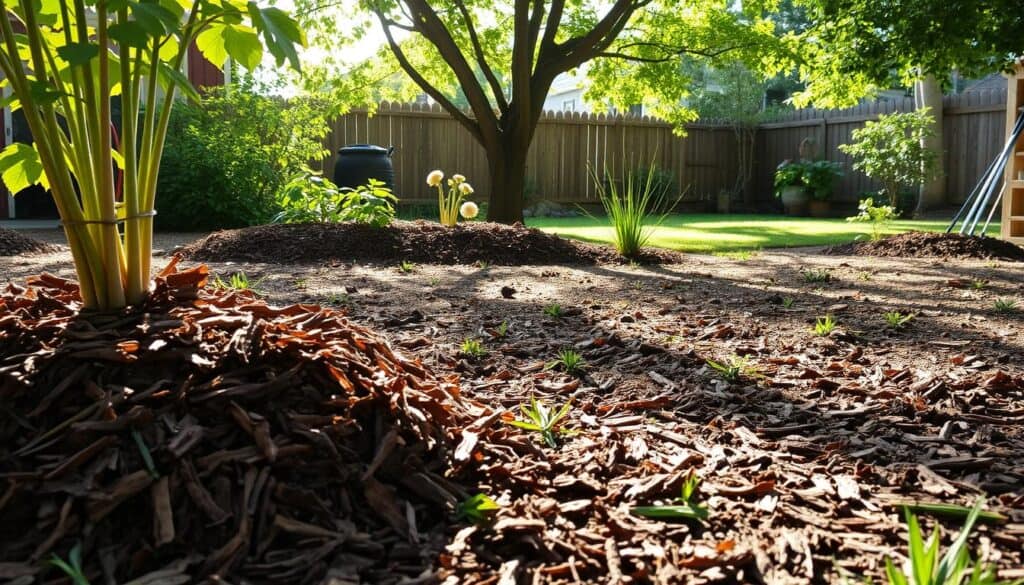
So, how much mulch should you use? A good rule is to apply two to three inches deep. Too much can block oxygen to roots. Too little won’t stop weeds or keep moisture in.
To keep your garden healthy and lively, follow these tips:
- Keep mulch at least three inches away from stems and trunks.
- Use organic materials like wood chips, straw, or shredded leaves for better soil health.
- Spread the mulch evenly to create a flat, consistent barrier across the soil surface.
- Refresh your mulch layer annually to maintain its protective properties.
- Avoid using dyed or chemically treated mulch near edible vegetable patches.
By following these steps, you create a low-maintenance environment for your plants. Proper mulching ensures your garden stays beautiful all year without constant care.
Don’t Let Weed and Pest Control Get Ahead of You
Many gardeners make the mistake of not planning for pests. They think plants can grow without any protection. But, by planning ahead, you can keep your backyard vegetable garden safe from harm.
Starting a simple backyard garden means being proactive. Knowing how to avoid mistakes saves you time and stress. A bit of planning can make your garden grow well and give you plenty to harvest.
For weed control for beginners, regular upkeep is key. I use cardboard quite often for weed control and it works great. You can remove weeds naturally with mulch or by pulling them early. Also, using organic gardening for beginners helps manage pests without harmful chemicals.
There are many ways to protect your plants and keep your garden looking good. These backyard planting tips help create a strong garden that keeps pests away. Here are some tips to how to prevent pests in garden and ensure success:
- Use physical barriers like row covers to block insects from reaching your crops.
- Practice crop rotation to break the life cycles of soil-borne pests.
- Encourage beneficial insects like ladybugs that act as natural predators.
- Monitor your plants daily to catch early signs of infestation or weed growth.
You can also use organic pest control for vegetables by choosing the right plant neighbors. Learning how to use companion planting helps you pair plants that help each other. Adding pest-repellent plants to grow, like marigolds or basil, keeps bugs away from your food.
Ignoring Plant Hardiness Zones and Seasonal Timing
Check the planting zonds you live in. It the first step to a sucessufl garden. Many new gardeners fail because they ignore the natural rhythm of the seasons. It’s key to know plant hardiness zones for beginners to pick crops that can survive in your climate. If you choose the wrong plants, they might not make it.
When you decide when to plant a backyard vegetable garden, timing is everything. Always check your local frost dates to avoid planting too early. A cold snap can ruin your hard work in one night.
Starting seeds indoors in late winter is a great way to get ahead. This method lets you grow young plants in a safe place before moving them outside. It helps extend your growing season and boosts your chances of success.
Knowing when to harvest vegetables is just as critical as planting. Harvesting at the right time ensures your produce is at its best. Waiting too long can make vegetables taste bad or lose their texture.
Successful organic gardening for beginners means following the natural calendar. Paying attention to weather and your zone helps avoid plant failures. Consistency and patience are the secrets to a rich harvest you can enjoy all season.
Overlooking the Importance of Proper Garden Tools
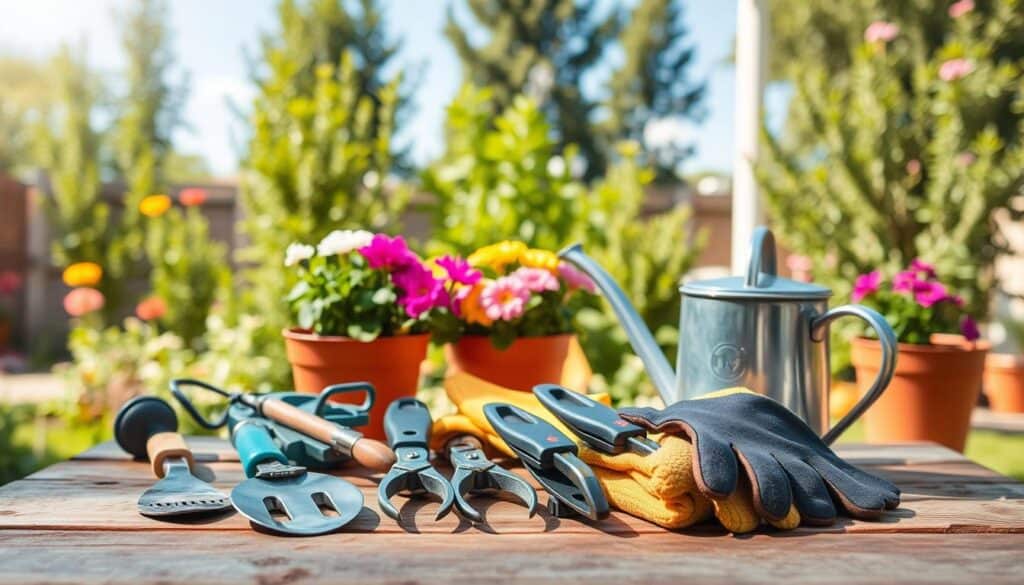
Getting the right tools is key to avoiding gardening headaches. Many beginner gardener pitfalls to avoid come from using makeshift tools. Having the right beginner gardening tools makes every task easier and more fun. Remember many of you are like me, a bit up there in years, think about your body first and buy tools that will be the safest for back, knees, hands, etc.
Using the wrong tools can lead to garden location mistakes that are hard to fix. Without the right digging tools, you might end up with poor soil or too little sunlight. A good spade and fork help you prepare the soil right the first time.
Getting the spacing right is critical for your plants. Without a measuring tape or garden hoe, you might end up with overcrowding in backyard garden beds. Proper spacing ensures your plants get enough air, keeping them healthy and strong.
Many watering mistakes in garden care come from using the wrong nozzle or hose attachment. To water correctly, you need a tool that gives a gentle, steady flow. This prevents overwatering vegetable garden beds or underwatering plants in pots, which can harm your plants quickly.
To keep your backyard a productive haven, add these tools to your collection:
- Hand trowel for precise planting and transplanting.
- Garden rake to clear debris and level your soil.
- Pruning shears to keep your plants healthy and shaped.
- Watering wand for controlled hydration at the root level.
- Sturdy gloves to protect your hands during long work sessions.
Building a reliable set of beginner gardening tools is a wise investment. With the right gear, you’ll spend less time struggling and more time enjoying your garden. Quality tools turn gardening from a chore to a hobby.
10 Beginner Backyard Garden Mistakes and How to Avoid Every One
Every successful gardener began as a beginner. Avoiding these 10 common mistakes will help you start right. This beginner gardening guide will turn your outdoor space into a lush, productive oasis. Knowing these pitfalls is key to mastering your backyard garden.
Starting a garden from scratch can feel overwhelming. But, focusing on these key areas will help your plants thrive:
- Location and Sunlight: Pick a spot with enough light. Most veggies need 6 to 8 hours of sun daily.
- Soil Quality: Test your soil early to fix any nutrient issues and ensure good drainage for your plants.
- Spacing: Don’t overcrowd plants. This prevents disease and lets each plant grow fully.
- Watering Habits: Stick to a regular watering schedule. This keeps the soil moist, which is best for your garden.
- Pest and Weed Control: Use organic methods to keep pests away and weeds from stealing nutrients.
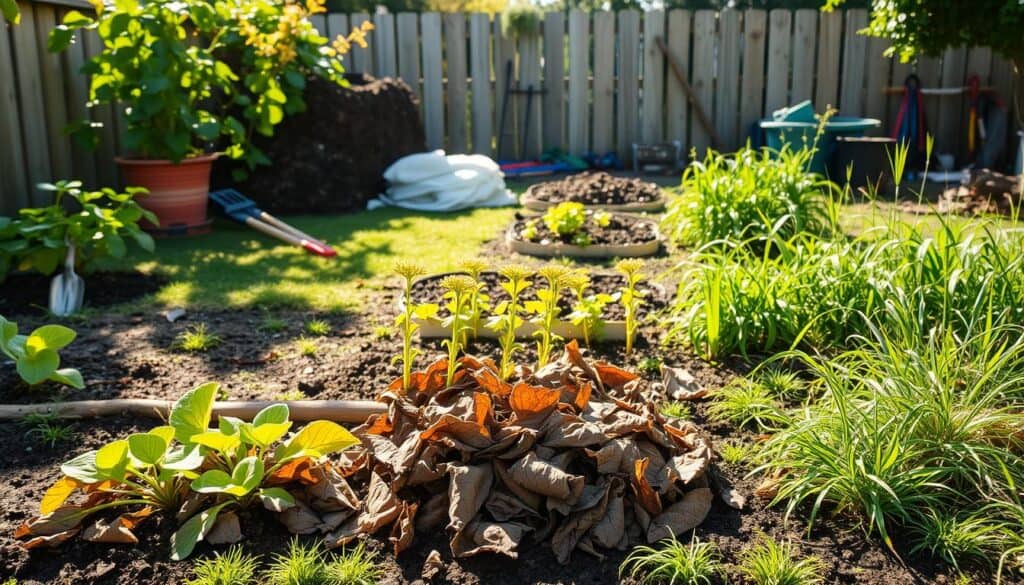
Timing is also critical. Always check your local plant hardiness zones to know when to plant. Using the right tools will also make gardening easier and more fun.
Don’t be afraid to try companion planting to keep insects away. If you wonder why your plants are dying, check these tips. With patience and careful attention, you’ll soon enjoy the harvest of your hard work.
Conclusion
Managing a backyard garden is rewarding and gets easier with time. Your skills grow with your plants each season.
By avoiding common mistakes, you create a healthy space for your plants. Small changes lead to a bigger harvest over time.
See every mistake as a lesson, not a failure. Each challenge helps you get better and improve your garden. Plants are pretty forgining, you will learn fast.. Hang in there.
Use these tips to care for your soil and plants better. You’ll feel confident for your next planting.
Grab your favorite trowel from brands like Fiskars or Felco and head outside. Your garden is ready to thrive under your care.