Do you dream of a lush harvest but feel limited by a tiny backyard? You’re not alone. Many homeowners face the challenge of small spaces. Yet, maximizing garden space is possible with the right approach.
By using clever planning, you can turn even the smallest patch of dirt into a thriving food source. This is a game-changer for those with limited room.
Strategic raised bed garden design lets you grow more vegetables and strawberries in less area. Whether you’re new to gardening or have years of experience, these methods help you organize your plants for the best results. We’ll explore 5 Raised Bed Garden Layouts That Maximize Every Square Foot.
These efficient layouts prioritize plant health and accessibility. Get ready to transform your outdoor area into a productive oasis. It will provide fresh produce all season long.
Visit The Marketplace or grab your Free Garden Starter Kit
The Philosophy of High-Density Gardening
High-density gardening turns small backyards into productive oases. It focuses on precise plant spacing to boost yield per square foot. This makes it ideal for small space gardening.
Above ground gardening techniques help avoid poor soil. These efficient garden layouts create a controlled space. They need less weeding and upkeep than traditional gardens.
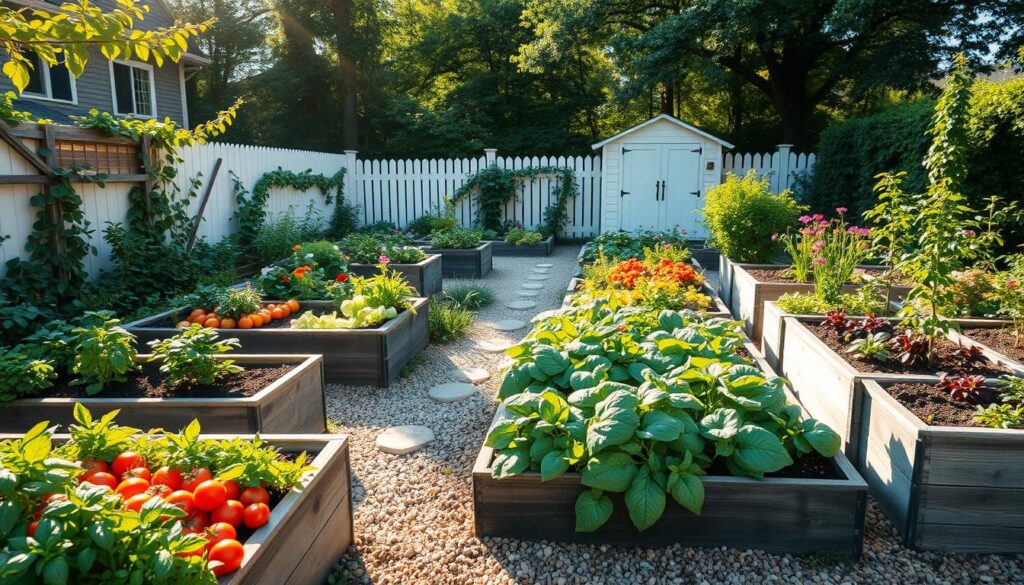
This approach views your garden as a three-dimensional space. By using compact gardening solutions, you can make the most of your yard. A well-thought-out vegetable garden design ensures each plant gets enough air and sunlight.
High-density planting offers several benefits:
- Increased Yield: Growing more plants in a smaller area means more harvest.
- Natural Mulching: Dense plants shade the soil, stopping weeds.
- Resource Efficiency: Concentrated beds make watering and fertilizing more effective.
Whether you’re looking for new raised garden bed ideas or improving your current setup, the aim is the same. A well-designed raise bed garden keeps plants healthy and productive all season.
5 Raised Bed Garden Layouts That Maximize Every Square Foot
Want to make the most of your garden space? Start with these five layouts. They’re great for turning your backyard into a productive food garden. With the right raised bed garden layouts, you can make a small area into a high-yield garden.
These designs are perfect for those who want to follow garden design permaculture or create a garden farm. They work well for both small urban plots and larger spaces. Your vegetable garden beds will stay productive all season.
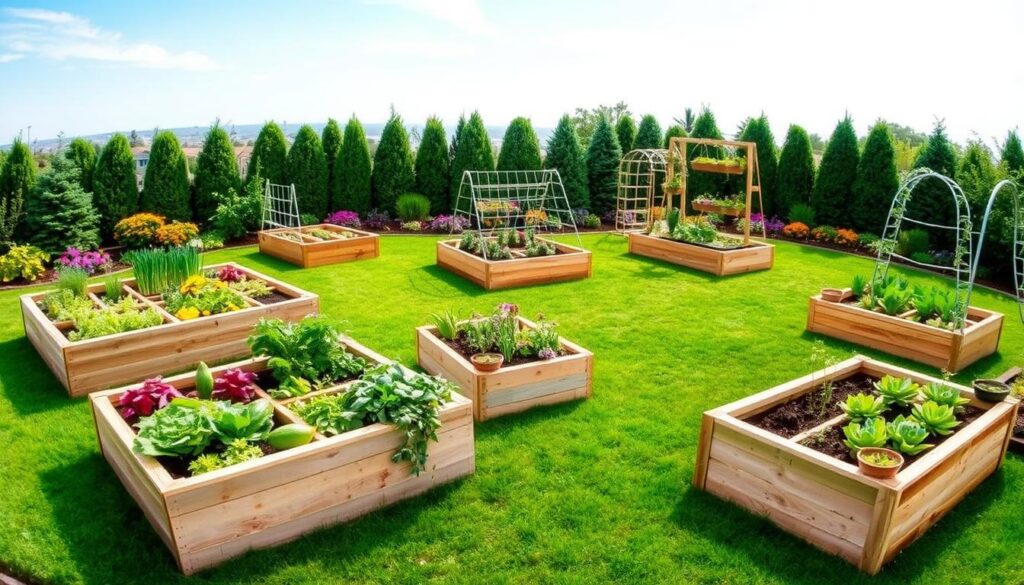
Here are five proven configurations to help you organize your space and achieve your dream veggie garden:
- The Classic Grid System: This layout is ideal for beginners, using a simple square foot grid to organize your vegetable garden beds for maximum density.
- L-Shaped Corner Beds: Perfect for maximizing garden space in tight corners, this design allows for easy access and efficient use of backyard garden vegetable areas.
- Vertical Trellis and Archway Integration: By adding a veggie garden arch or a vegetable garden pergola, you can grow climbing plants upward, saving precious ground space.
- The Keyhole Garden Layout: This circular design features a central composting basket, making it a highly efficient choice for a sustainable kitchen garden layout raised beds.
- Tiered and Stacked Configurations: These vertical garden beds ideas allow you to grow more plants in a smaller footprint, perfect for those seeking huge garden ideas in limited areas with the addition of a raised bed.
Using these raised bed ideas will help you create a beautiful, organized, and productive landscape. You can add vegetable garden lighting and pollinator-friendly landscaping. Start planning your layout today to make sure your backyard raised garden reaches its full capacity.
The Classic Grid System for Square Foot Gardening
The classic grid system is key to a successful high-density garden. It divides your vegetable garden beds into a precise grid. This removes the guesswork often found in small vegetable gardens.
By focusing on square foot gardening, you create a map for your plants. This method is great for maximizing square footage in gardens. It prevents overcrowding and ensures each plant has enough space to grow.
A well-planned raised garden bed example plan often uses this grid. It keeps garden beds vegetable crops organized and easy to harvest.
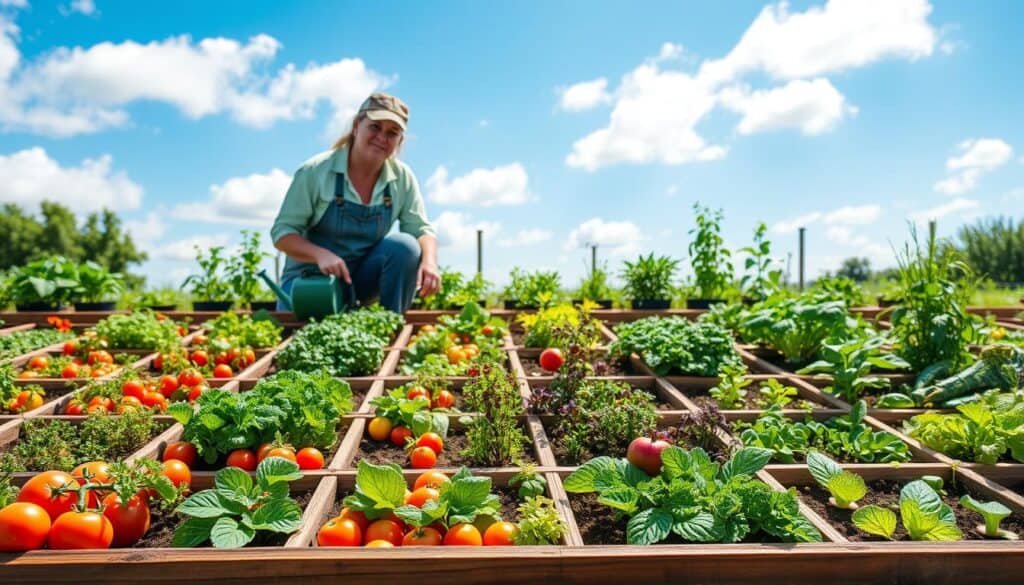
To start, divide your growing area into one-foot squares. This visual aid helps you figure out how many plants can fit in each section. Here are some common planting densities for your grid:
- 1 plant per square: Large crops like peppers, tomatoes, or broccoli.
- 4 plants per square: Medium-sized crops such as leaf lettuce or basil.
- 9 plants per square: Smaller crops like bush beans or spinach.
- 16 plants per square: Compact crops like radishes or carrots.
Using this system makes it easy to rotate crops throughout the season. You know exactly how much space each plant needs. This keeps your small vegetable gardens consistently productive. Embracing square foot gardening turns even small plots into productive spaces for your vegetable garden beds.
L-Shaped Raised Bed Designs for Corner Efficiency
Turning awkward corners into useful garden spots is key to smart garden design. Many people face challenges with unused areas in their yard. But, an L-shaped garden layout can make these spots bloom into a backyard garden vegetable paradise. It makes the most of space that would be wasted.
This design has a big plus: it lets you access all your garden vegetables easily. You don’t have to step into the bed to get to them. This way, your plants stay healthy and grow well all season.
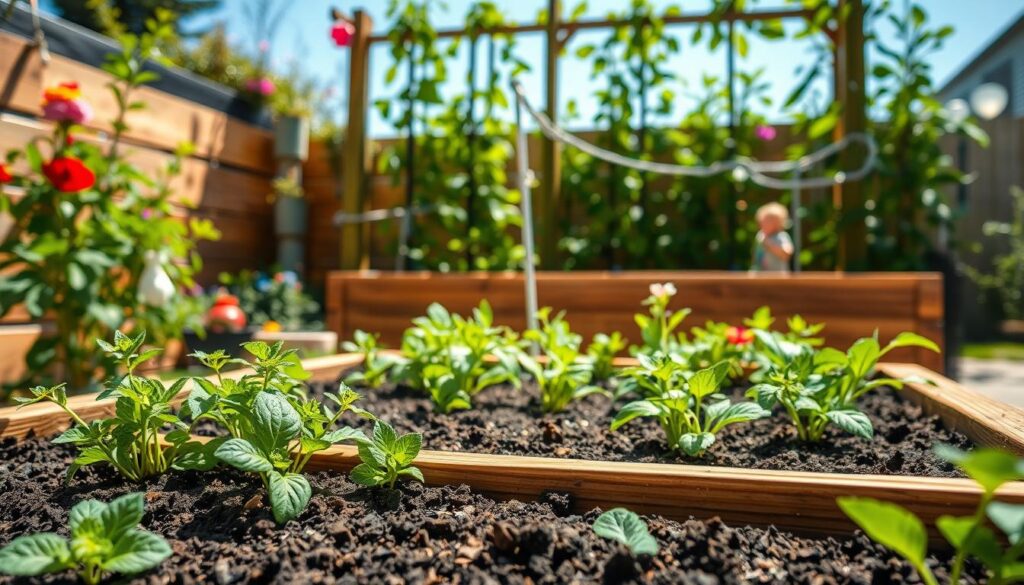
An L-shaped garden is great for fitting around things like sheds or fences. It makes your garden look planned and useful. It also fits well with your yard’s look, giving you a special spot for your favorite plants.
Thinking about garden yard ideas? Consider how an L-shape can set off your outdoor area. It acts as a clear divider, separating your garden from other parts of your yard. This makes your whole yard feel more organized and meaningful.
Wondering how to build an l-shaped raised garden bed? It’s easy. Just connect two rectangular frames at a right angle. Using strong materials like cedar or composite lumber keeps your garden bed strong and lasting for years.
Vertical Trellis and Archway Integration
Adding height to your garden beds makes your garden look amazing and increases your harvest. A vegetable garden with arch gives more space for climbing plants. A strong veggie garden arch turns a simple path into a green tunnel.
A vegetable garden pergola supports heavy crops like pole beans or vining squash. This vegetable pergola keeps your produce off the ground, preventing rot. It also makes harvesting easier on your back. Training vines upward frees up soil space for herbs and greens.
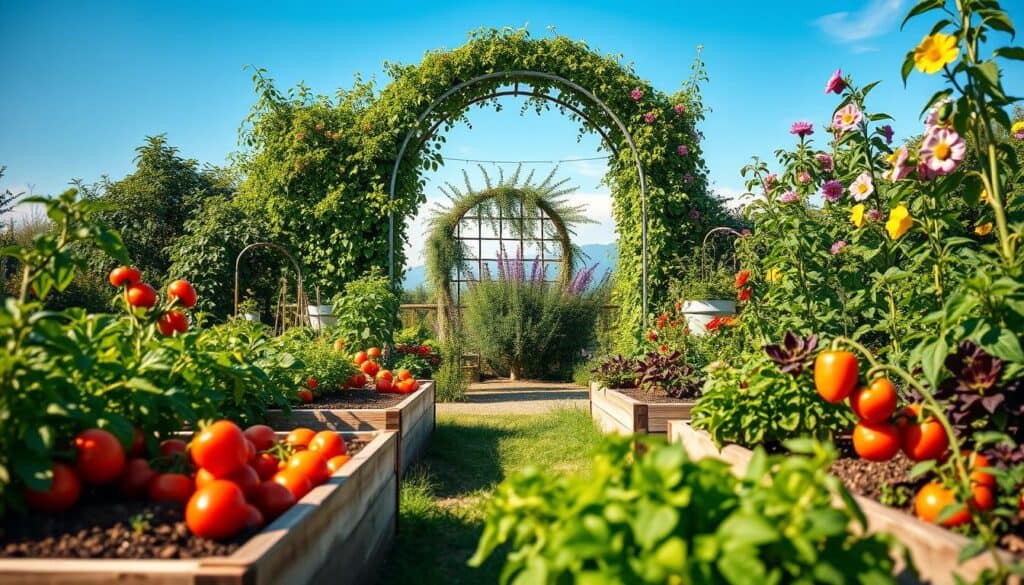
Looking for covered garden ideas? Vertical structures are perfect. These raised covered garden beds offer shade for plants that can’t handle the sun. They let you grow more varieties in a small area.
A pergola vegetable garden is both useful and beautiful. You might try building a vegetable garden with trellis and flowers to attract pollinators. Vertical gardening makes the most of your outdoor space.
The Keyhole Garden Layout for Accessibility
The keyhole garden layout is perfect for gardeners who want easy access and high yields. It has a central compost basket that feeds nutrients to the soil around it. This makes the raised kitchen garden beds very fertile.
This design is key in garden design permaculture. It creates a self-sustaining garden. Building a raised bed kitchen garden means you have a system that uses waste efficiently. The circular shape lets you reach all plants easily, without bending or stretching.
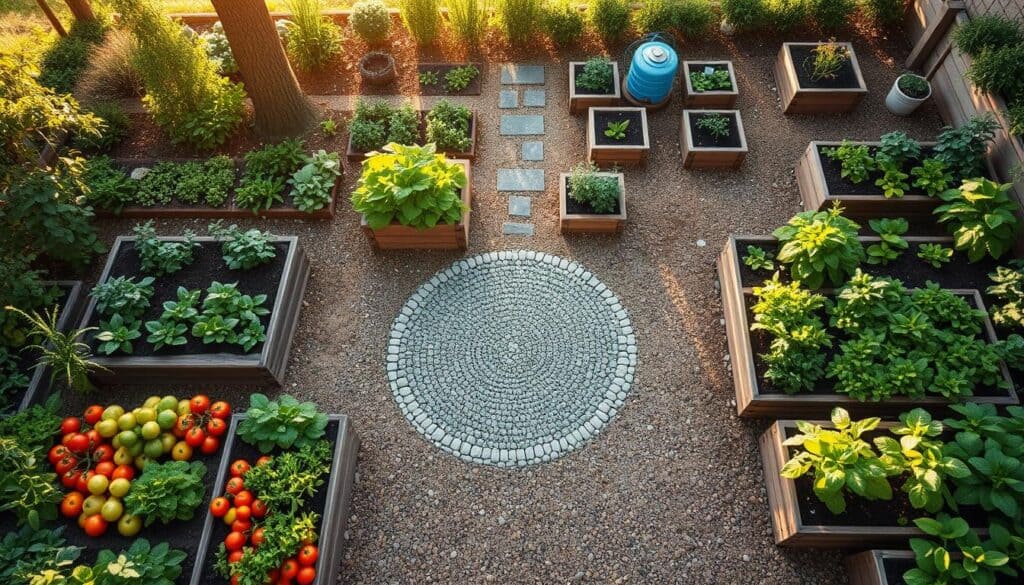
Many gardeners love this layout for its efficiency. Using kitchen garden layout raised beds makes managing crops easy. You don’t have to step into the garden, which prevents soil compaction. This keeps the soil loose and helps roots grow better.
Choosing this style is wise for any garden farm design focused on long-term success. Whether you grow herbs, veggies, or flowers, kitchen garden raised beds in a keyhole shape offer big benefits:
- Nutrient cycling: The central basket gives your plants a steady supply of compost tea.
- Ergonomic access: You can easily reach the center from any part of the garden.
- Space optimization: You can fit more plants in a smaller area than traditional rows.
Tiered and Stacked Bed Configurations
Turning a flat area into a multi-level garden is simpler than you might think. Stacked garden beds add beauty to your backyard and solve space issues. They use vertical space to make even small areas productive.
Raised garden bed ideas are great for adding depth to your garden. Each level can hold different amounts of soil. This lets you grow plants with different root depths in the same space. It’s perfect for veggie garden ideas that need specific soil conditions.
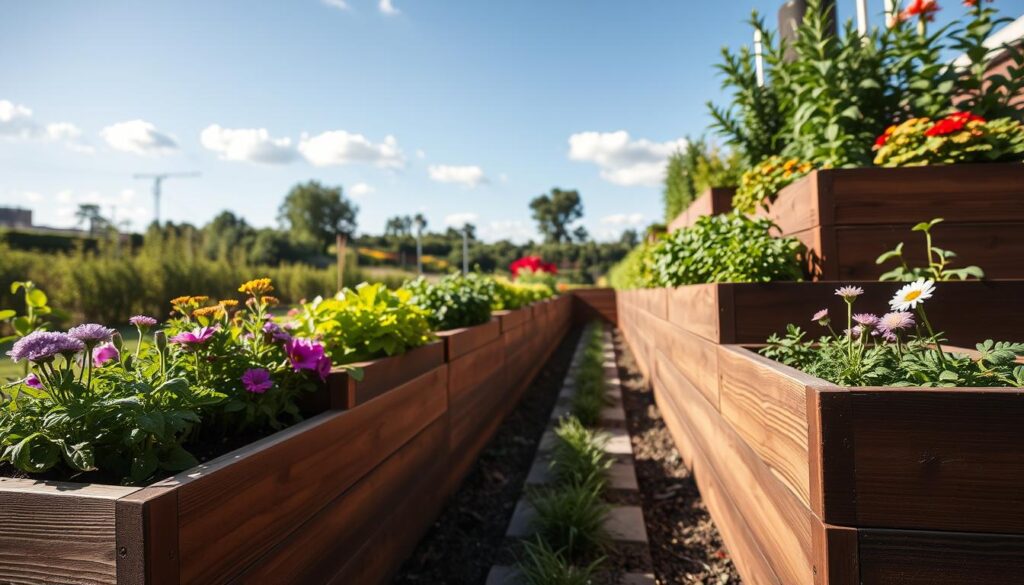
Looking for raised garden bed inspiration? Stacking helps organize crops by height or when they’re ready to harvest. It’s great for huge garden ideas to create eye-catching focal points. These raised bed ideas keep your garden both useful and beautiful all season.
When planning your garden beds ideas, remember these benefits:
- Improved Drainage: Higher tiers drain better, perfect for herbs and Mediterranean plants.
- Accessibility: Stacking beds make gardening easier on your back by reducing bending.
- Microclimate Creation: Different levels offer unique sun and shade spots for various plants.
- Visual Depth: Multi-level designs give your outdoor space a professional look.
Choose from cedar, stone, or composite materials for your garden beds ideas. Experiment with heights and shapes to match your style. Start with a two-tier system and see how it changes your gardening.
Essential Materials for Durable DIY Garden Beds
Choosing the right materials is key to making garden beds last long. When planning your diy garden beds, think about how materials handle moisture and soil pressure. The right base keeps your raised beds diy project stable and fruitful for years.
For strong diy raised beds, you need materials that can handle the job, especially on a concrete patio
. Cedar is a top pick because it fights off rot and bugs naturally. If you want something easy to care for, composite materials are a good choice. They look like wood but last much longer.
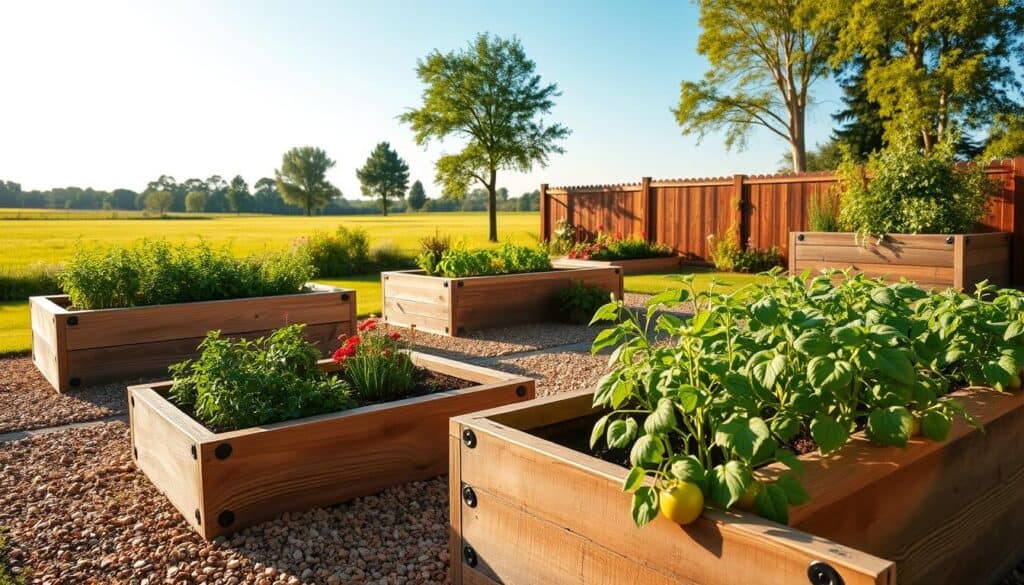
The life of your raised garden boxes depends on how well you put them together. A solid diy garden bed can hold heavy soil without breaking. Always use screws made for the outdoors to keep your frame strong.
For a lasting, stylish look, try a diy raised garden made of masonry. These garden boxes are very durable and can be shaped to fit your yard. They give a strong base that won’t warp or rot.
Brick garden bed ideas are popular for their classic beauty. A raised garden brick structure also keeps soil warm at night. This is great for growing plants longer into the fall.
Building a brick garden bed raised above the ground makes a beautiful yard feature. A raised garden with bricks lets you get creative with patterns and heights. It’s a great way to make a brick garden bed with plants that’s both beautiful and productive.
Incorporating Lighting and Pollinator-Friendly Landscaping
Turn your garden into a magical place at night with the right lighting and colorful flowers. Adding vegetable garden lighting lets you enjoy your garden even after dark. It makes your garden a beautiful spot for evening relaxation.
Raised garden beds with lights let you care for your plants when it’s cooler. LED strips or solar lights are great for seeing your plants and keeping your garden safe. They make your garden look warm and welcoming.
Adding pollinator-friendly landscaping brings life to your garden. Planting native flowers with your veggies attracts bees and butterflies. This helps your plants grow well.
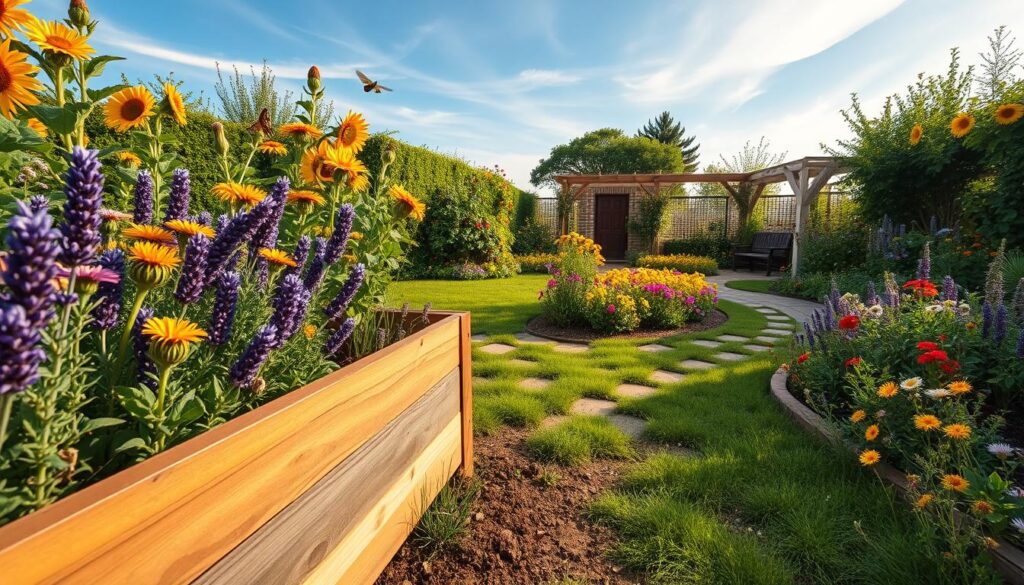
For a cottage vegetable garden aesthetic, mix your veggies with pretty flowers. Using vegetable garden raised bed and correct height makes your garden look and work great. This design has many benefits:
- Increased yields from better pollination.
- Enhanced privacy from vertical trellises.
- Extended usability of your garden at night.
- Improved aesthetics that mix function with beauty.
By combining these features, you make a garden that’s both useful and peaceful. Your garden becomes a place to relax, surrounded by nature’s beauty.
Seasonal Planning for Continuous Harvests
Planning your garden well lets you enjoy vegetables even after the first frost. By planning when to plant, you make sure your garden is always full. This way, your garden becomes a powerful tool for fresh food.
Looking into vegetable gardening ideas can lead to success. Succession planting means planting new seeds right after you pick the old ones. This keeps your garden busy and your table full of fresh food all summer.
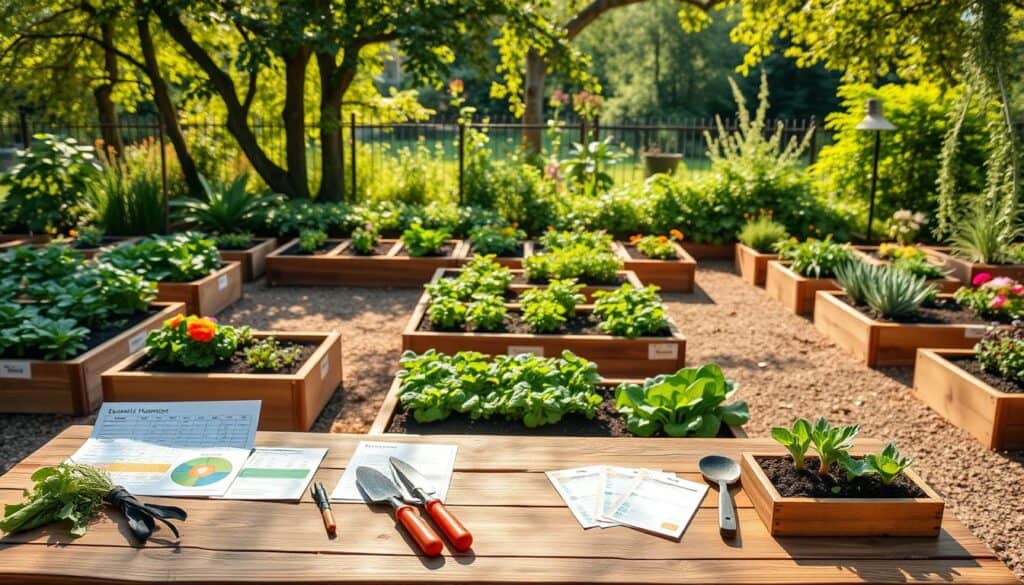
To keep your home vegetable garden healthy, rotate your crops. This moves different plants to different spots each year. It stops the soil from getting worn out and keeps pests away without chemicals.
A well-planned food garden is a source of pride and health. By planning for the seasons, you can grow cool-weather crops while summer ones are ready. This way, you get more food and keep your kitchen full of fresh ingredients.
Your veggie garden will do great if you see it as a living system. By planning ahead, you create a cycle of growth. Enjoy picking fresh food from your backyard all year.
Conclusion
Turning a simple plot of dirt into a thriving garden is possible. You now have the tools to design a layout that fits your needs and local climate.
Every square foot can be used for fresh produce and greenery. These designs help you create a backyard garden that gives you food all year.
Start by sketching your garden on paper today. Smart planning leads to a bountiful harvest and a beautiful space. Watch your plants grow in a space that suits your lifestyle.