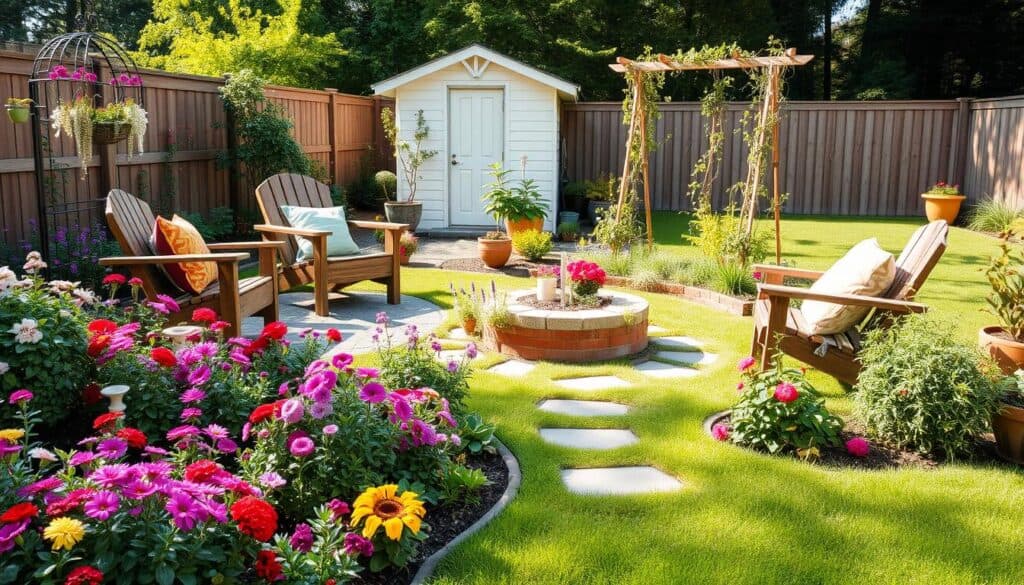
Start with the right plan and everything else falls into place. Creating an inviting outdoor sanctuary begins with mastering spatial organization and selecting the right plants. Whether you possess a tiny patio or a sprawling lawn, these steps simplify the process.
Proper planning ensures your project remains manageable and enjoyable. By focusing on flow and function, you can turn empty grass into a vibrant retreat. Our guide offers practical tips to help you visualize your space effectively.
Exploring creative garden design ideas allows you to express your personal style while maximizing utility. You do not need professional experience to achieve stunning results. Simply follow these fundamental principles to build a beautiful, thriving environment right outside your door.
Visit The Marketplace or grab your Free Garden Starter Kit
Assessing Your Outdoor Space and Sunlight Patterns
Every successful landscape design starts with knowing your yard’s conditions. Before buying plants or moving dirt, evaluate your yard’s unique factors. This step keeps your outdoor space design healthy and vibrant for years.
First, watch how light moves across your yard. Sunlight is key for plant health. Track light patterns over days to find sun and shade spots.
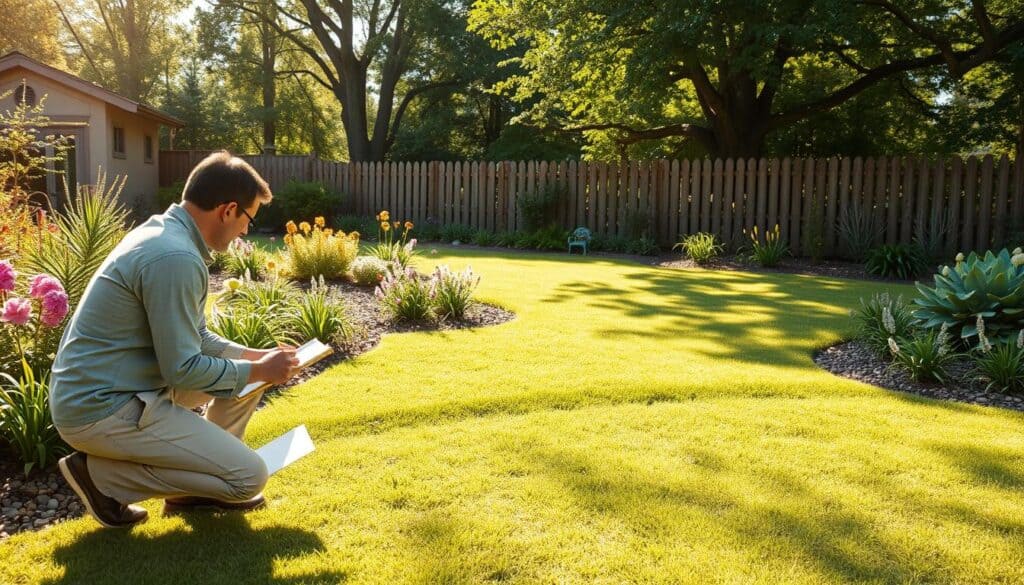
Knowing your light patterns helps you choose the right plants. For full sun garden planning, pick plants that love direct sun. For shady garden layout, choose plants that prefer cooler, filtered light. This prevents plant loss and frustration.
Also, check your ground’s health. Use this checklist before starting:
- Soil Quality: Test your soil pH and nutrient levels to see if you need to add compost or organic matter.
- Drainage Patterns: Watch where water pools after a heavy rain to avoid planting in areas that stay too soggy.
- Existing Structures: Note the location of fences, walls, and trees that might cast shadows or block wind.
- Utility Lines: Always call your local utility company to mark underground lines before you start digging.
By following residential landscape architecture principles, you can create a balanced space. Mapping out these variables lets you work with nature. This careful planning is the key to a beautiful garden all year.
Defining Your Garden Goals and Lifestyle Needs
Starting a backyard garden planning project requires a clear plan. Knowing what you want from your garden helps create a space that meets your needs. A good garden planning plan guides you in choosing the right features for your lifestyle.
Wondering how to plan your first garden? Start by making a list of what’s important to you. Do you want a place for parties or a quiet spot to unwind? A well-thought-out garden layout planning balances these needs and keeps maintenance simple.
Learning landscaping basics for beginners saves time and money. By following backyard landscaping steps, you lay a solid foundation. Focus on function first, and beauty will follow.
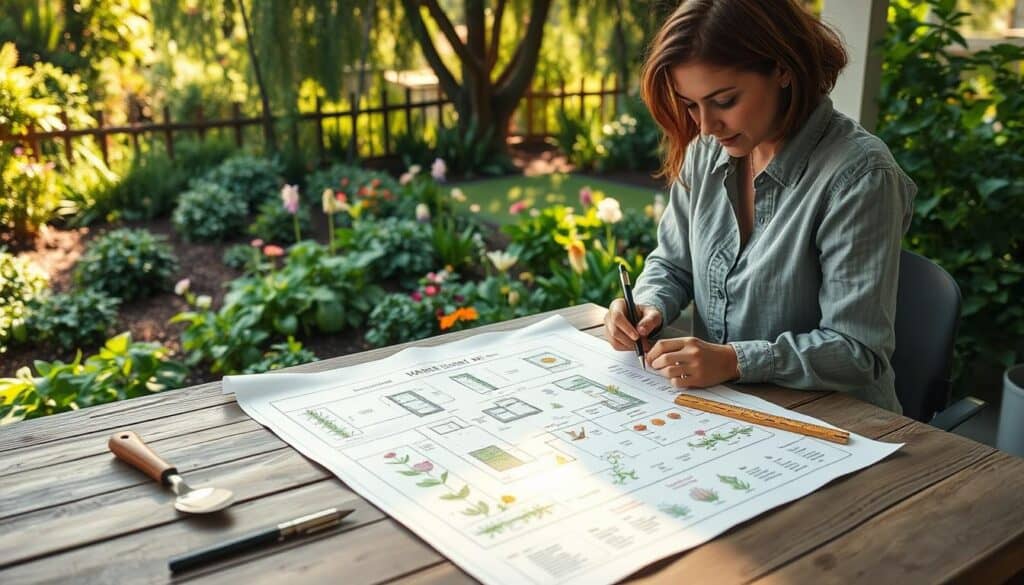
Garden planning mapping helps you see how different areas work together. It’s great for a pet friendly backyard design that keeps pets safe and plants intact. Think about these points when mapping your yard:
- Find out where pets and family members like to go.
- Set up areas for veggies and play.
- Make sure paths are wide for easy walking.
- Choose tough, safe plants for busy spots.
Defining your goals makes your garden a true reflection of you. A well-planned garden adds value and joy to your space for years.
How to Design a Backyard Garden Layout That Works for Any Yard
Creating a backyard garden layout is all about balance. You want it to look good and be useful. This way, your outdoor space becomes a cozy retreat.
Using a backyard layout planner helps you see how your space will work. It lets you try out different designs before you start digging. A good plan makes sure every part of your yard has a purpose.
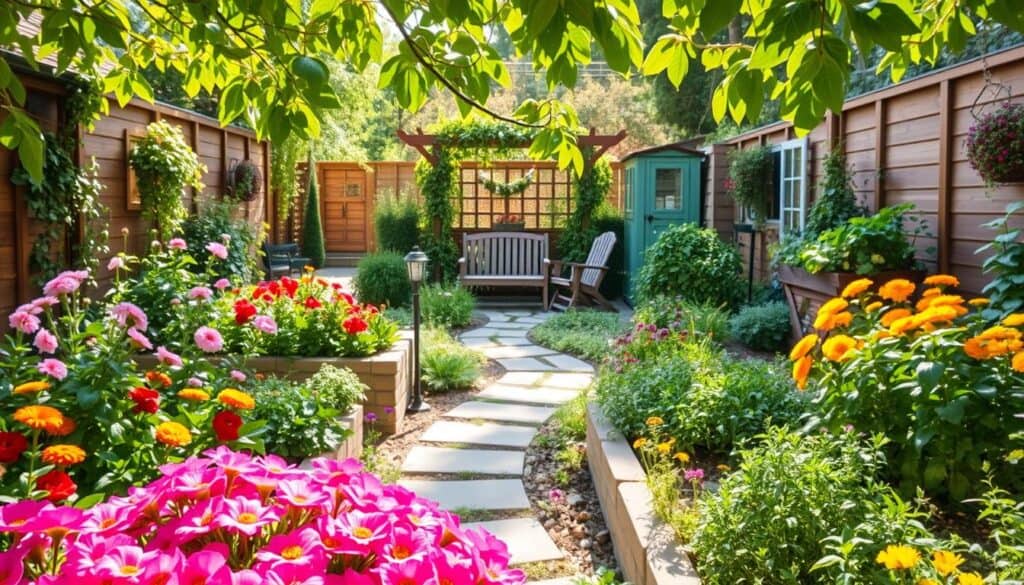
For backyard garden layout inspiration, think about how you’ll move around. Connect your indoor and outdoor spaces for a smooth flow. Strategic placement of focal points can make your yard feel bigger and welcoming.
Every yard can look professional with a few key steps:
- Set clear boundaries for flower beds and lawn.
- Make paths that guide visitors through your garden.
- Group plants by their water and sunlight needs.
- Add vertical elements for depth and interest.
The best designs grow with you. Start simple and let your garden evolve. With patience and creativity, you’ll create a space you’ll love.
Maximizing Small Backyard Landscaping
You don’t need a big estate for a stunning backyard. Even in the city, maximizing yard space is doable. Focus on vertical growth and multi-purpose zones to make any small backyard a retreat.
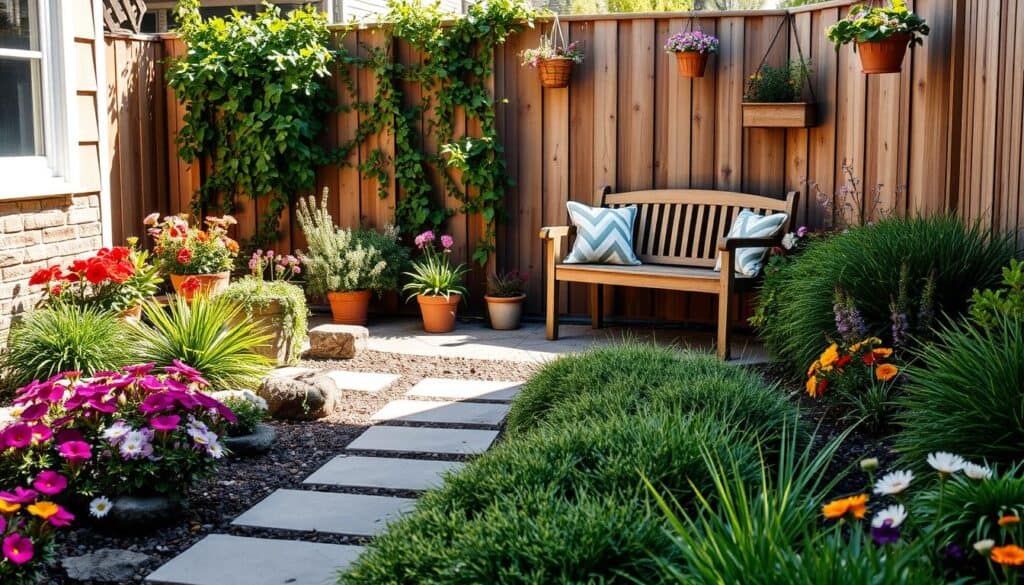
Think about how you use your outdoor space every day. Landscaping tips for small yards include choosing foldable furniture. A clean design makes your space feel bigger.
Here are key strategies for your small garden:
- Vertical Gardening: Use wall-mounted planters or trellises to draw the eye upward.
- Light Colors: Incorporate light-colored stone or paint to reflect sunlight and brighten dark corners.
- Defined Zones: Use different textures or rugs to separate dining areas from lounging spots.
- Mirrors: Place outdoor-rated mirrors on fences to create the illusion of depth.
If your backyard is long and narrow, use diagonal patterns for pavers or decking. This makes the area feel wider. For a sloped backyard, terracing creates flat levels for planting or seating.
Landscaping for small yards means working with what you have. Choose plants that fit your garden’s scale. With patience and planning, your small yard will be your favorite spot to relax.
Incorporating Hardscaping and Structural Elements
Hardscaping is the core of your outdoor space, giving it structure and function. These permanent features hold your softscaping in place and guide the flow of your outdoor areas. A well-planned layout ensures long-term stability and usability for your yard.
Think about a functional patio design as the center of your backyard. Use garden paths and walkways to connect different areas of your garden. These paths help guests navigate while keeping your flower beds safe from damage.
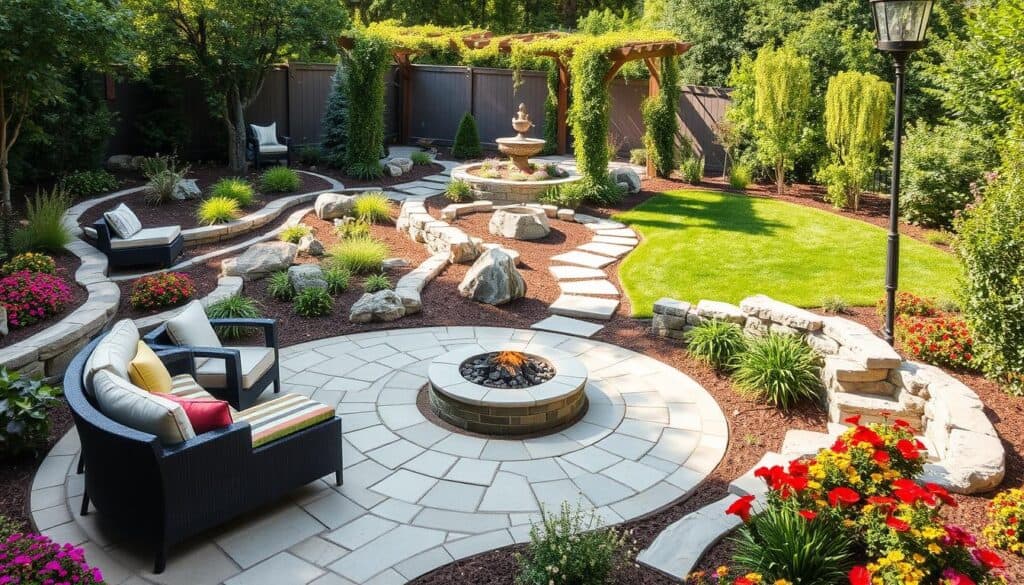
If your yard has uneven terrain, a professional retaining wall design is key to stop soil erosion. These walls add beauty and create flat spots for planting or sitting. They turn tough slopes into stunning, tiered garden spots.
There are many creative ideas for backyard hardscaping. You could add a cozy fire pit for evening fun. Or, a modern outdoor kitchen can make your patio a top spot for gatherings.
Mixing these structural elements with plants creates a balanced space. This mix of stone, wood, and greenery brings your backyard to life. Using quality materials ensures your hardscape stays beautiful for years.
Selecting Sustainable and Eco-Conscious Landscaping
Creating a beautiful backyard doesn’t harm the planet. By choosing sustainable landscape design, you can make a space that blends with nature. This way, you reduce your impact on the environment and get a lovely outdoor area.
Using water wise landscaping is a smart move. It involves picking drought tolerant landscaping plants. These plants need less water because they’re made for your local climate. They stay green even when it’s very hot.
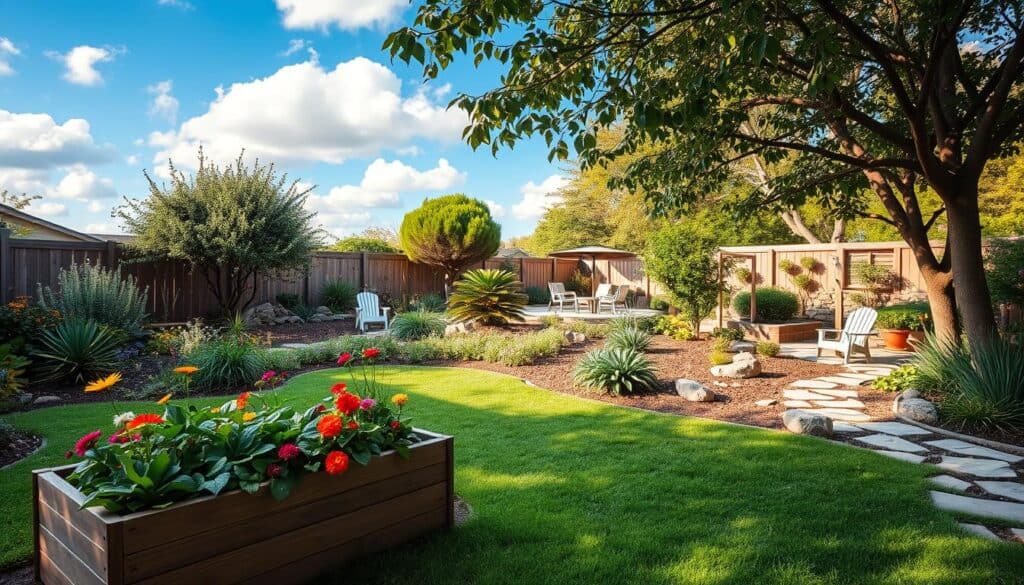
Adding native plant landscaping is also great. Native plants feed and shelter local bees and butterflies. They’re already used to your area’s weather and soil, so they need less care and fewer chemicals.
Here are some modern ways to make your garden better:
- Put in smart irrigation systems that water based on the weather.
- Use rainscaping design to catch and use rainwater, keeping your soil healthy.
- Group plants by their water needs to make sure they all get the right amount of water.
These steps help your garden be a strong ecosystem. You’ll save on water and have a yard that’s good for local wildlife. Making these changes now will make your garden better for years to come.
Creating Privacy and Ambiance in Your Garden
To make your garden a private oasis, mix smart planting with structural planning. This turns your yard into a peaceful escape from the world’s noise. It lets you enjoy your outdoor living spaces without feeling watched by neighbors or cars.
Installing a privacy hedge is a great way to block views. Choose dense, evergreen plants like arborvitae or boxwood. They create a green wall that also reduces noise. This natural barrier makes your garden feel cozy and private.
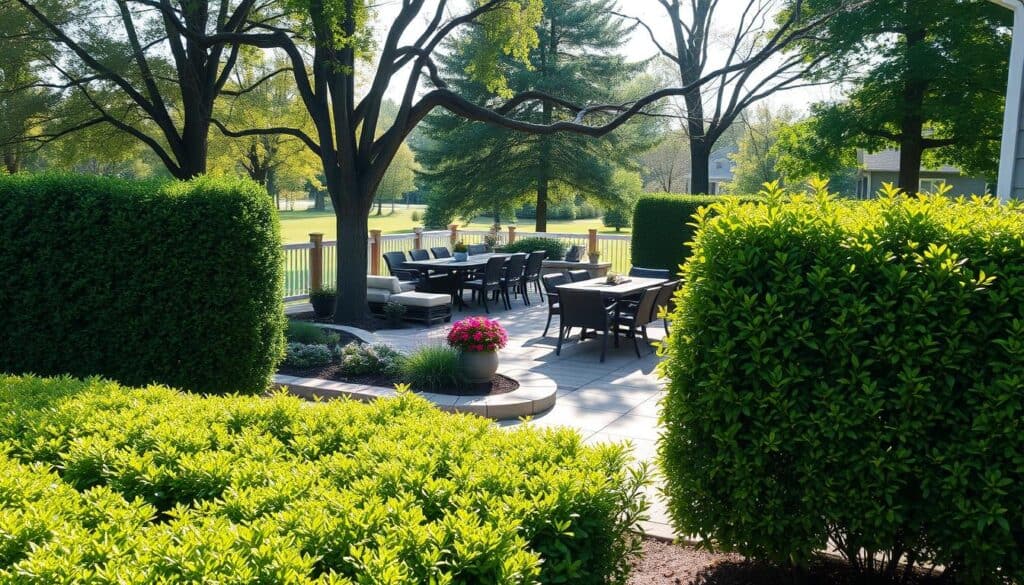
Structural elements also help define your space and add charm. Pergolas, lattice screens, and stone walls are perfect for creating cozy spots. They work well with your outdoor living spaces to make your garden feel enclosed and welcoming.
Don’t forget about lighting and soft textures for a relaxing feel. String lights, comfy seating, and water features can turn a simple yard into a luxurious retreat. Strategic placement of these elements makes your garden a cozy and inviting place all year.
Planning for Seasonal Beauty and Low Maintenance
Creating a garden that’s beautiful all year doesn’t have to be hard. By picking the right plants and materials, you can make low maintenance landscaping ideas. This way, you save time and effort. The goal is to work with nature, not against it.
An easy garden layout groups plants by their water and sunlight needs. This makes caring for your yard simpler. Happy plants need less help from you.
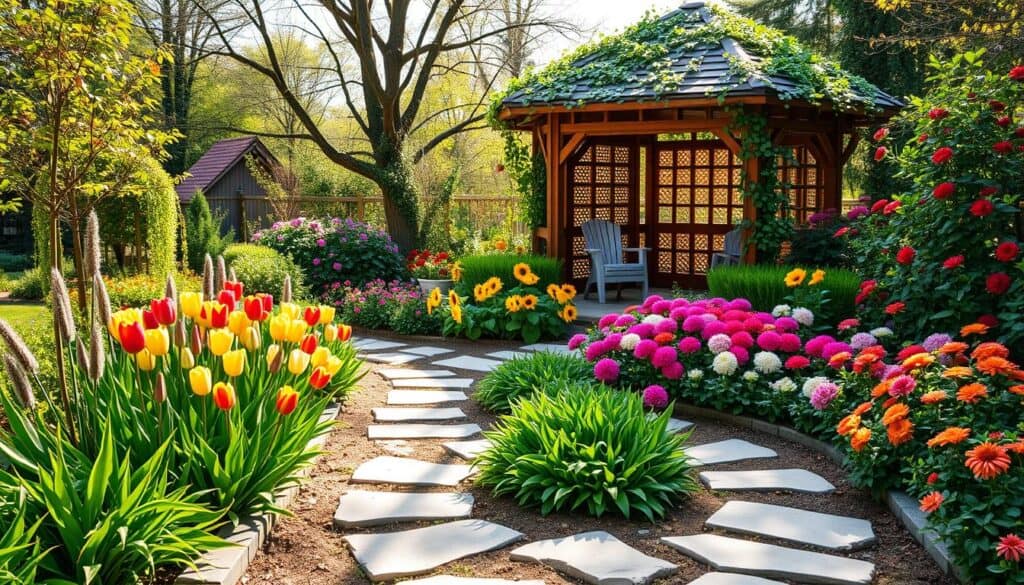
For a beautiful outdoor space, try these easy to manage garden layouts. They focus on being efficient:
- Use native plants that fit your local climate.
- Apply thick organic mulch to stop weeds and keep soil moist.
- Install drip irrigation systems for automatic watering.
- Choose slow-growing shrubs for less pruning.
A three season garden layout keeps your yard lively from spring to autumn. Mix perennials, bulbs, and ornamental grasses for changing colors and textures. Strategic plant placement showcases different features as seasons change. This keeps your garden inviting all year.
Designing Specialized Garden Beds and Zones
Turning your backyard into a productive and beautiful space is easy. Use garden bed design ideas to create different zones. This way, each plant gets the care it needs to grow well.
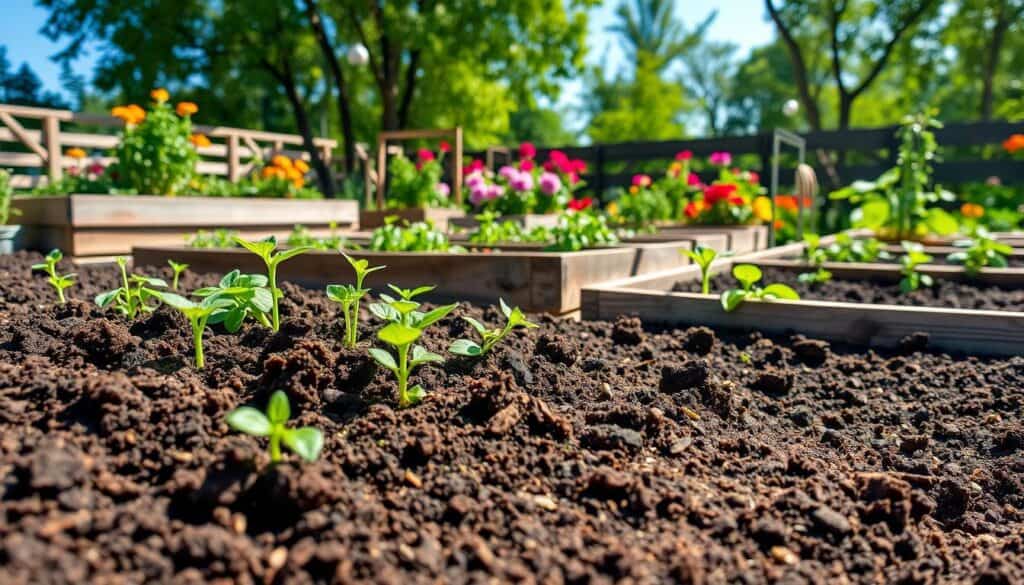
For those who love to grow their own food, a raised bed vegetable garden layout is great. It controls soil and drainage well. A square foot garden layout is also popular for its space-saving design. It helps manage weeds and keeps soil healthy.
Beginners can start with a beginner vegetable garden layout. It focuses on easy crops like lettuce and herbs. Try out different vegetable garden layout ideas to find the best spot for sunlight and water. Consistency is key for learning gardening.
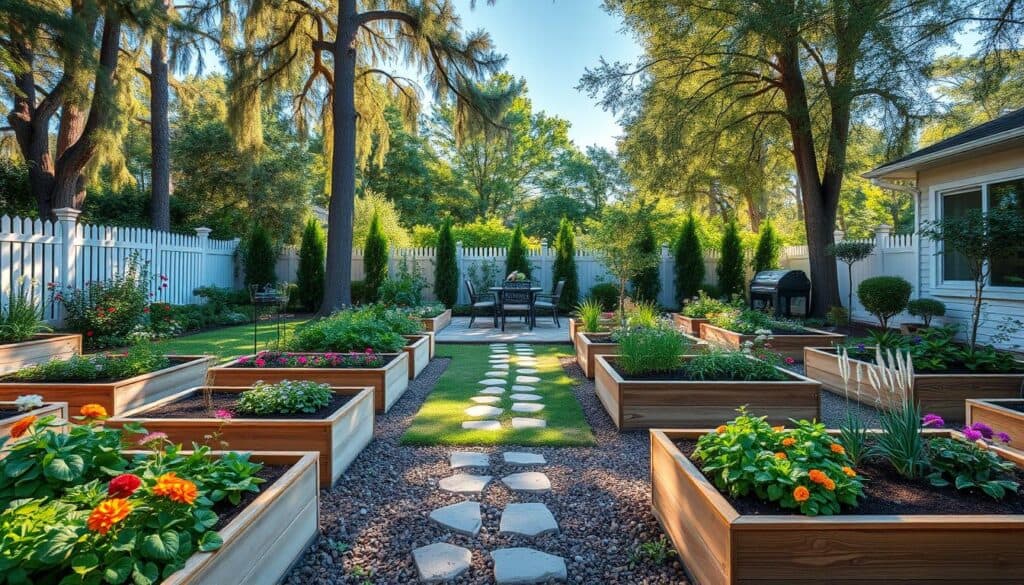
If space is tight, a vertical garden design is a great choice. Use trellises or hanging baskets for climbing plants. It’s perfect for small spaces.
Mixing edible landscaping with ornamental beds is a smart idea. Add berry bushes or fruit trees to your flower beds. It gives you fresh produce and keeps your yard looking good.
Creating a pollinator garden layout helps local wildlife. It attracts bees, butterflies, and hummingbirds. These zones are good for your garden and the environment.
- Increased yields through better pollination of your vegetables.
- Natural pest control by attracting beneficial insects.
- Visual interest with a variety of colorful, native blooms.
- Environmental impact by supporting local wildlife populations.
Container gardening layouts are very flexible. You can move pots to follow the sun or change your patio’s look. These gardens are great for trying new plants without a big commitment.
Styling Your Garden with Specific Themes
Choosing a cohesive theme is the best way to unify your garden design ideas. It gives your outdoor space a distinct personality. A clear vision helps you make better decisions about plant selection, hardscaping, and decor.
By sticking to a specific style, you ensure that every element feels intentional and harmonious. This makes your garden feel complete and well-thought-out.
If you prefer peace and balance, consider Japanese garden style ideas. These designs often feature raked gravel, moss, and carefully pruned shrubs. They create a meditative atmosphere.
Stone lanterns and water features serve as perfect focal points for this serene aesthetic. They add beauty and depth to your garden.
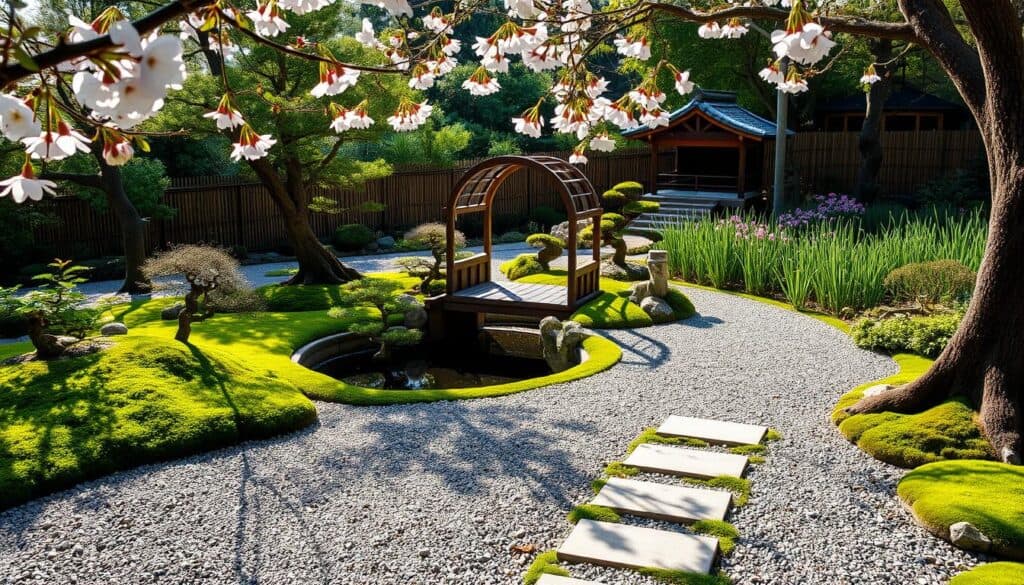
For those who love a romantic and informal look, a cottage garden layout is an excellent choice. This style embraces a lush, overflowing appearance. It features a mix of perennials, herbs, and climbing roses.
It feels welcoming and encourages a relaxed, natural flow throughout your yard. This style is perfect for those who enjoy a cozy and inviting garden.
If you lean toward a sleek and minimalist aesthetic, focus on modern patio design. This approach prioritizes clean lines, geometric shapes, and high-quality materials. It uses concrete or composite decking.
Functional outdoor furniture and integrated lighting help complete this sophisticated look. It’s ideal for those who value simplicity and elegance.
Lastly, you can bring a vacation vibe home with tropical landscaping design. This theme relies on bold, oversized foliage and vibrant colors. It creates a lush, exotic retreat.
Large-leafed plants like palms or elephant ears are essential for achieving this dramatic and immersive environment. They add a touch of tropical beauty to your garden.
Budget-Friendly Tips for Garden Design and Installation
Many people think high-end garden design costs a lot. But, it’s not true. You can get a professional look with smart, creative choices that save money. By doing DIY garden design, you can control costs and add your personal touch.
Start by making a plan for your garden design and installation. Focus on one area at a time. This way, you won’t spend too much money or get overwhelmed.
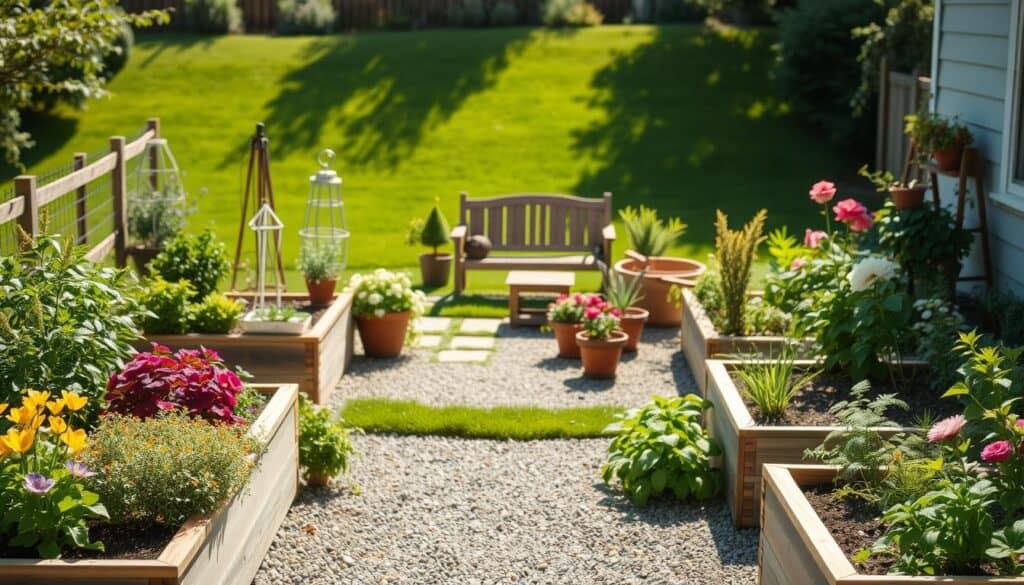
If you’re new to landscaping, look for simple garden design for beginners. Native plants are a great choice because they need less water and care. They fit well with your local climate, saving you money on fertilizers and upkeep.
Designing a small budget garden means using what you already have. Old bricks, stones, or reclaimed wood can make beautiful paths or borders. This way, you turn waste into unique features that cost almost nothing.
Building your own structures is a smart move. Follow DIY raised garden bed plans to add height and interest. These beds are great for growing veggies or flowers, making your garden look clean and organized.
Conclusion
Creating a backyard garden is a fun journey that mixes creativity with planning. You now have the tools to make a lasting outdoor space that shows off your style.
First, check out your space and pick the right plants for it. Adding features like Belgard or Pavestone helps make your garden zones clear. These elements make your yard grow with you over time.
Your garden is a canvas for changing seasons and calm. Begin your project with confidence today. Enjoy making a yard that brings happiness to your life every day.
Post your garden updates on social media. Tag your favorite landscaping brands to show off your work. Your dream backyard is ready for you to start it.