Many home growers face the challenge of small backyards. You might think you need more land to grow more. But, you can actually double your harvest without more space. Learning how to add a trellis to a raised bed garden to double your growing space is a big help for urban farmers and strawberries.
Vertical gardening lets you grow up instead of out. By training vines like cucumbers, peas, and beans to climb, you free up soil for smaller plants. This is a top way to double your garden growing space without needing more room.
Adding a strong support system does more than save space. It also improves air flow, lowers disease risk, and makes picking easier on your back. When you double garden space with vertical structures, your harvests will grow a lot. Let’s look at the key steps and design choices to take your gardening to the next level this season.
Visit The Marketplace or grab your Free Garden Starter Kit
The Benefits of Vertical Gardening in Raised Beds
Vertical gardening in raised beds turns your small backyard into a high-yield oasis. A sturdy trellis for raised bed structures doubles your growing area without extra land. Vining crops like cucumbers, peas, and pole beans climb toward the sun instead of spreading on the ground.
One key benefit of trellising in raised bed gardens is better air circulation. When plants grow up, leaves dry faster after rain or watering. This lowers the risk of fungal issues like powdery mildew. This change makes a healthier environment for your vegetables to grow all season.
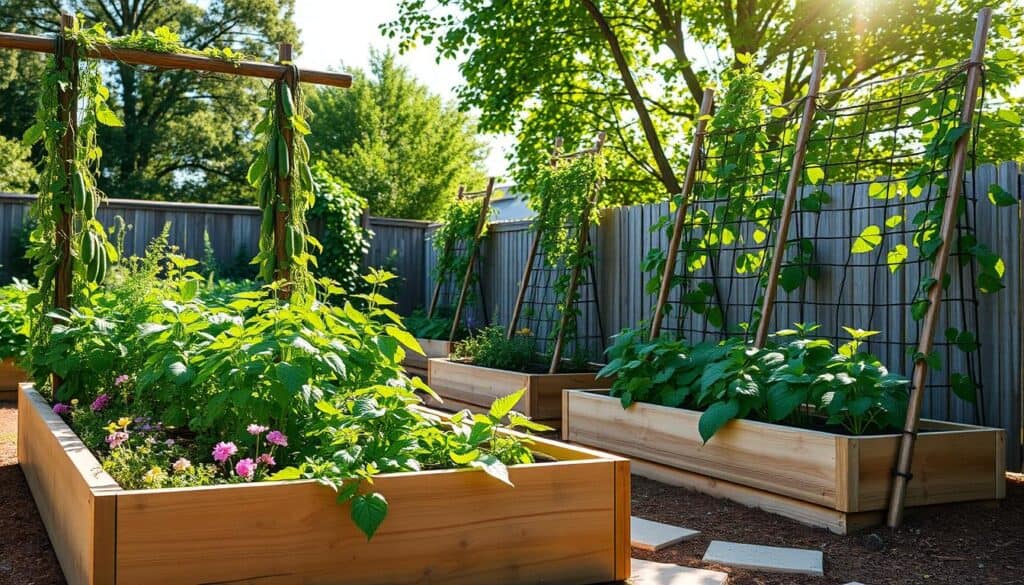
Choosing raised bed vertical gardening also keeps your harvest safe from soil-borne pathogens. Keeping foliage and fruit off damp earth reduces rot and pest damage. These vertical planting benefits keep your produce clean and healthy until you pick it.
If you’re wondering why use a trellis in a raised bed, consider these main advantages for your home garden:
- Increased Yields: More vertical space allows for higher plant density.
- Easier Harvesting: Vegetables hang at eye level, making them simple to spot and pick.
- Better Sunlight Exposure: Leaves receive more light, which boosts photosynthesis and growth rates.
- Pest Management: Elevated plants are often less accessible to ground-dwelling insects and slugs.
Adding a support system is a smart choice for any gardener wanting to make the most of their space. With the right setup, you can enjoy a more productive and manageable garden all year long.
Essential Tools and Materials for Your Trellis Project
Building a trellis for a raised bed is rewarding with the right tools. Before starting, gather basic items for a stable structure. This saves time and avoids extra trips to the store.
Think about the best trellis height for a raised bed garden. A short trellis limits plant growth, while a tall one makes harvesting hard. A good raised bed trellis balances height and access, helping plants grow and making harvesting easy.
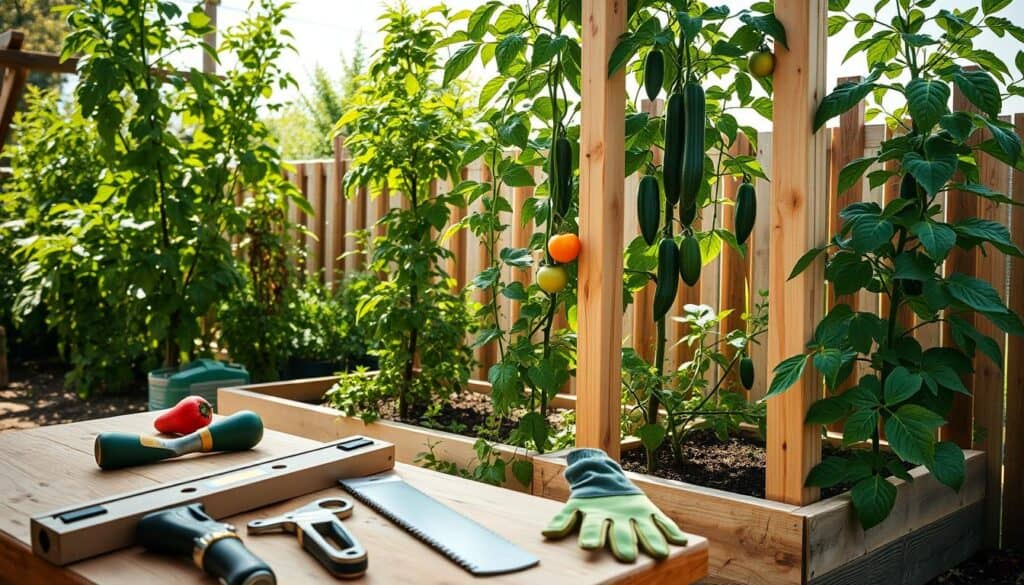
For a sturdy vegetable garden trellis, use materials that last. High-quality hardware keeps your trellis upright in wind or under heavy fruit. Here are the key items for a successful setup:
- Cordless drill: Essential for driving screws quickly and accurately into wooden frames.
- Heavy-duty exterior screws: Choose galvanized or stainless steel to prevent rust and ensure long-term durability.
- Measuring tape: Crucial for ensuring your trellis is perfectly centered and level within the bed.
- Level: Helps you verify that your vertical supports are straight for maximum structural integrity.
- Work gloves: Protects your hands while handling wire panels or rough lumber.
Choosing the right trellis supports for raised beds is key. These supports give plants the stability to grow up. By picking easy raised bed vegetable supports, you create a professional garden that boosts your harvest in a small space.
How to Add a Trellis to a Raised Bed Garden to Double Your Growing Space
Adding a trellis to a raised bed is a great way to grow more in a small space. The right trellis for raised garden bed projects lets vining plants grow up. Make sure your trellis doesn’t shade out the sun-loving plants.
For a good trellis setup for raised beds, think about your garden’s layout. Put your trellis on the north side to avoid blocking sunlight. This keeps your garden healthy and productive all season.
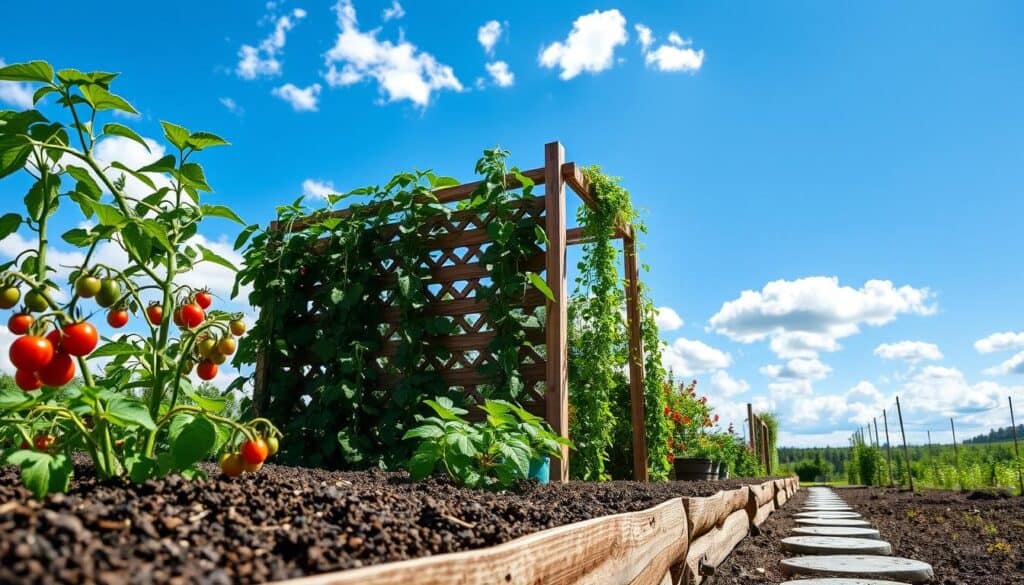
Wondering how to build a raised bed trellis for heavy crops? Use strong materials like cedar or pressure-treated lumber. These woods last long and support heavy plants. Secure your frame firmly to the bed to withstand windy storms.
Learning how to install trellis on wooden beds means attaching posts to the bed walls. Use heavy-duty carriage bolts for a strong hold. This keeps your trellis stable for years of vertical gardening.
Knowing how to add a trellis to a raised bed lets you use space for companion planting. Training vines up improves air flow and fights off diseases. This smart gardening strategy turns a simple box into a productive vertical farm.
Cattle Panel Trellis Designs for Heavy-Duty Support
Cattle panels are the top choice for heavy crops in your garden. They are made of galvanized steel and are very durable. They are the best option for trellis designs for raised bed gardens.
Learning to make a heavy-duty bed trellis is a big help for gardeners. A wire mesh panel trellis can hold big squash, pumpkins, or melons. It’s a strong support system that lasts through the weather.
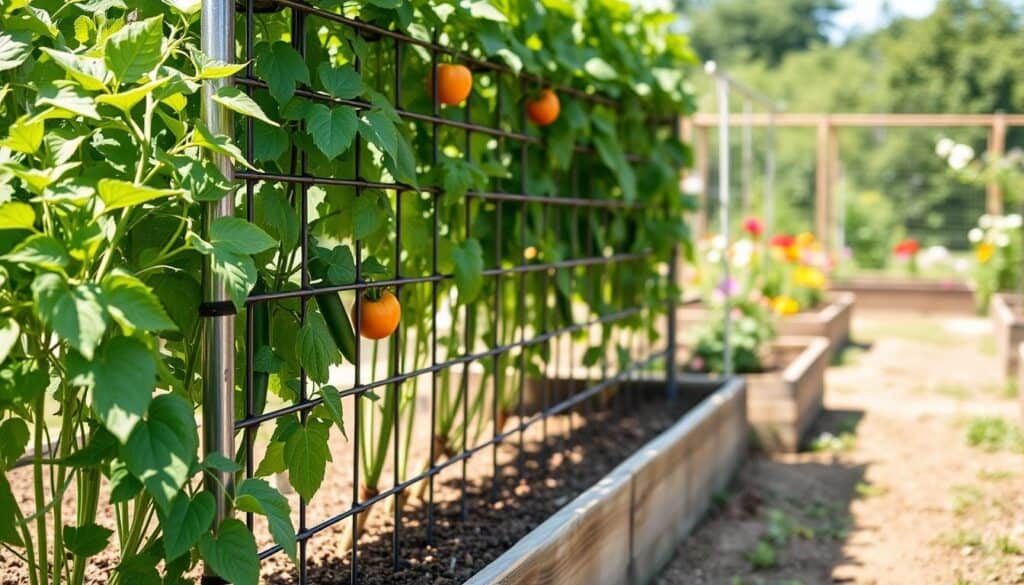
For a classic look, try making an A frame trellis. Or, cut panels into strips for a ladder mesh trellis. These designs help plants get air and sunlight.
Hog panel trellises are great for smaller vines. They have a smaller grid that keeps vines in place. The main benefits of using these panels include:
- Extreme Durability: Galvanized steel doesn’t rust and lasts long.
- High Weight Capacity: They can handle heavy harvests like winter squash.
- Versatile Shapes: Can be bent into arches or kept flat for vertical walls.
- Easy Installation: They attach quickly to most wooden raised bed frames.
Building a DIY cattle panel archway adds drama to your garden. An arch trellis for raised beds makes harvesting easier. It turns your garden into a beautiful spot.
DIY Wooden Trellis Ideas for a Natural Aesthetic
Building a DIY wooden trellis for raised beds adds a cozy, natural vibe to your backyard. Wood is a favorite among gardeners because it complements the landscape so well. These DIY trellis ideas for raised beds offer both support and a beautiful look that metal can’t match.
Creating your own supports lets you control the size and shape of your garden. A DIY garden trellis can be tailored to fit your planter boxes perfectly. This ensures your climbing plants have enough space to grow and flourish.
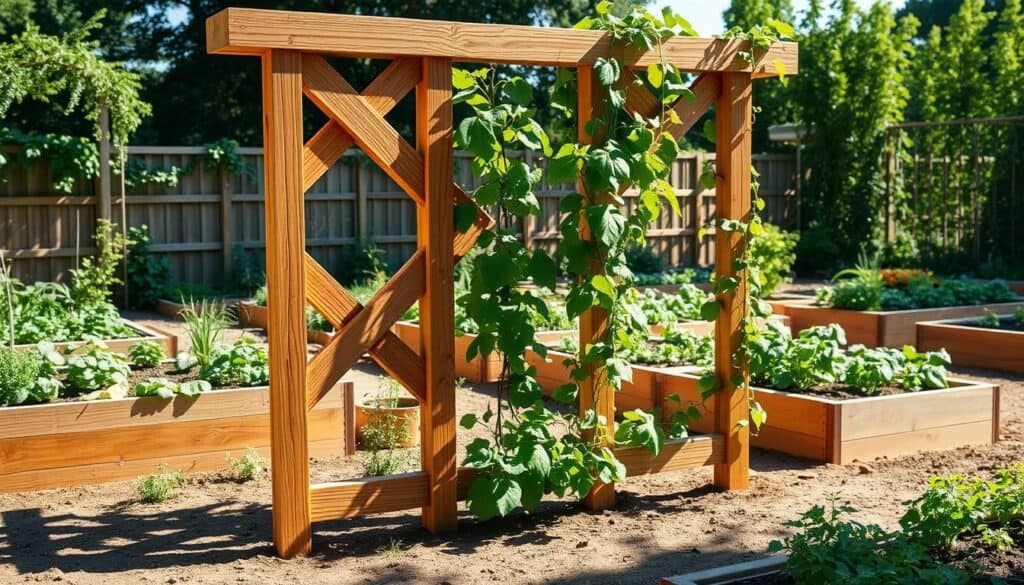
The obelisk trellis raised bed design is a hit. It offers a sturdy, pyramid-like structure that’s great for climbing beans or peas. This style creates a striking focal point that catches the eye.
For a simple project, try a homemade raised bed trellis from cedar or redwood. These woods resist rot well, making them perfect for outdoors. You can put them together with basic tools and materials for a lasting support system.
These structures are also great for DIY trellis ideas for small space gardening. They help plants grow up, not out, saving space for other veggies. Keep these benefits in mind when planning your wooden structure:
- Natural durability: Cedar and redwood handle moisture well.
- Custom fit: You can build to match your exact bed dimensions.
- Aesthetic appeal: Wood offers a classic, rustic look.
- Versatility: You can add netting or twine for extra support.
For a lighter option, build a bamboo frame garden trellis. Bamboo is sustainable and light, ideal for seasonal crops like cucumbers or morning glories. It’s easy to tie together with twine, allowing for unique shapes that support plants while keeping your garden light and airy.
String and Twine Systems for Lightweight Vining Crops
Looking for a light solution for vining crops? A DIY string trellis system is perfect. It’s affordable and great for plants that don’t need strong metal supports. Snap peas, pole beans, and small cucumbers love to climb up.
Choosing the right trellis for vining vegetables keeps your garden neat and productive. These systems are light, so they don’t stress your raised bed frames. You can adjust their size to fit your garden space.
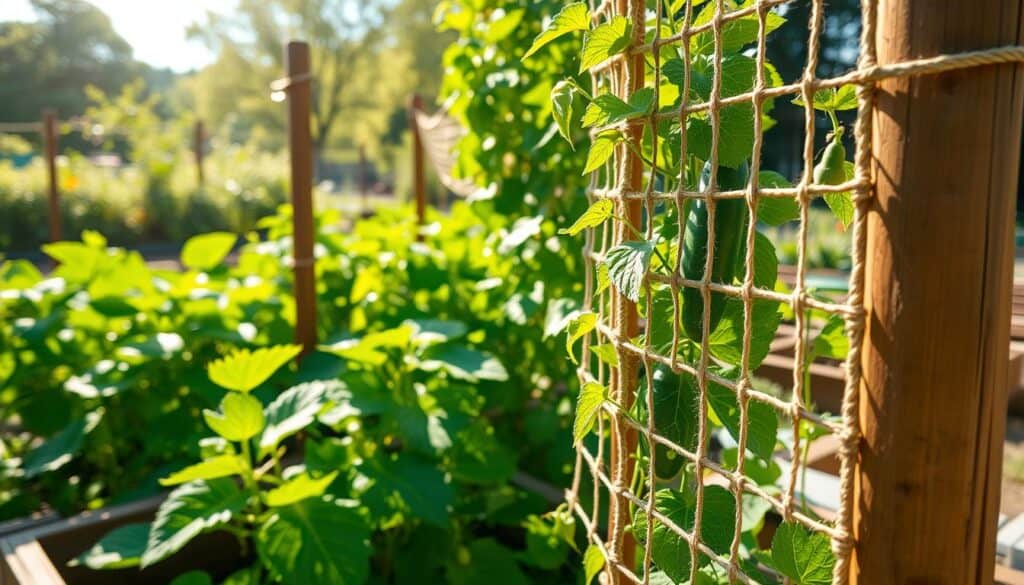
A twine and eye hook trellis is a favorite among gardeners. Just screw eye hooks into your raised bed frame. Then, run twine down to the soil. This makes a flexible ladder for your plants to climb.
When the season ends, these systems are easy to remove and store. Here’s how to set one up:
- Install eye hooks along the top edge of your raised bed frame.
- Tie durable garden twine to each hook, ensuring it is pulled taut.
- Secure the bottom of the twine to a small stake pushed into the soil.
- Use trellis netting for raised beds if you prefer a wider mesh surface for your vines to spread out.
Netting is great for a variety of plants needing more space. It gives vines a wider area to cling to. This keeps your plants off the ground, reducing disease risks.
PVC Pipe Trellis Solutions for Budget-Conscious Gardeners
A PVC pipe garden trellis is a great choice for a versatile support system. It’s very lightweight, making it easy to move or adjust as your plants grow.
PVC is modular, so you can build a cheap diy trellis for vegetable garden beds of any size. Just use standard connectors like elbows and tees to create a frame that fits your raised bed perfectly.
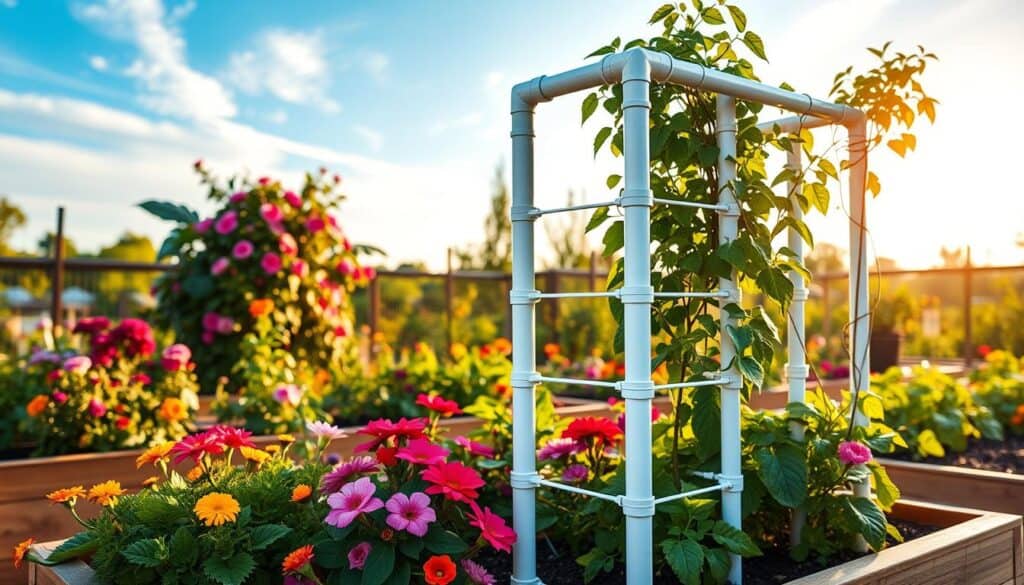
Many gardeners love how fast these frames come together. You can cut the pipes with a hand saw and snap them into place for a sturdy and reliable support system.
To save money, try using a repurposed materials garden trellis approach. Look for leftover PVC scraps at local construction sites or hardware stores for smaller projects.
By mixing new PVC parts with salvaged netting or twine, you get a cheap diy trellis for vegetable garden setup. This way, you keep costs low while maintaining a professional look.
Using a repurposed materials garden trellis lets you try out different shapes and heights. This flexibility helps you use your space better without spending a lot on expensive kits.
Best Vegetables for Vertical Gardening Success
Growing vertically in raised beds opens up a world of possibilities for your backyard. When you select the best vegetables for vertical gardening, you can significantly increase your total harvest. This keeps your plants healthy and off the ground. It also saves space and improves airflow around your foliage.
Pole beans are a classic choice for any vertical setup. A sturdy pole bean vertical support allows these vigorous climbers to reach their full height. Growing peas vertically is also a simple way to enjoy a bountiful spring harvest without taking up valuable soil space.
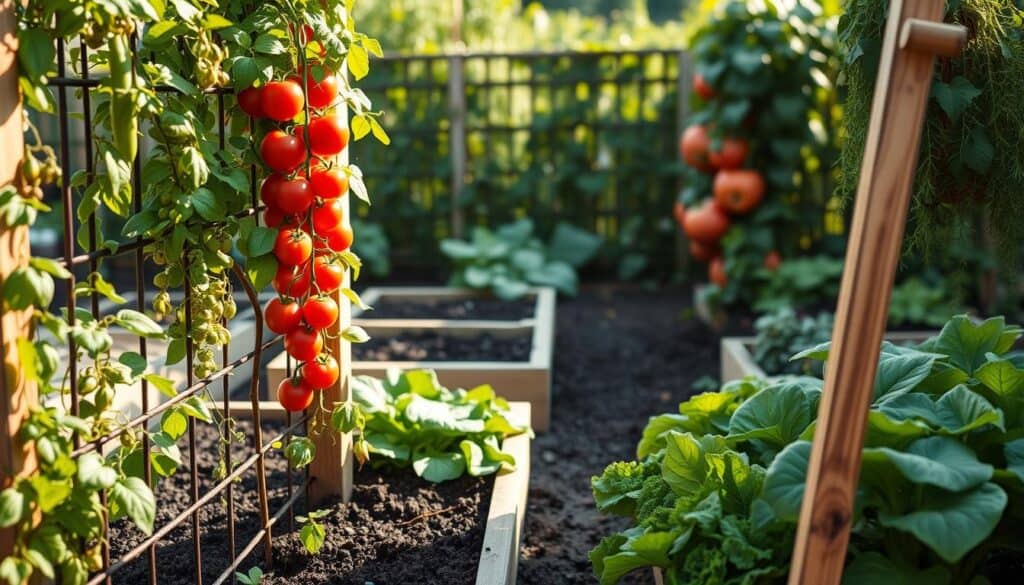
If you love fresh salads, a cucumber trellis for raised beds is a must-have addition. Vining cucumbers thrive when they can climb. This results in straighter, cleaner fruit that is easier to harvest. For those who enjoy fresh salsa or sauces, a tomato trellis raised garden bed setup is essential for indeterminate varieties.
You can explore various vertical tomato support ideas, such as heavy-duty cages or woven twine systems, to keep your plants upright. When it comes to larger crops, a proper squash and melon trellis setup is key for success. Because these fruits can become quite heavy, you must use a squash trellis in raised beds that includes soft slings or netting to cradle the fruit as it matures.
- Pole beans: Use a trellis for climbing beans to ensure easy picking.
- Indeterminate tomatoes: These require strong vertical support to prevent breakage.
- Vining cucumbers: These benefit from consistent upward training.
- Squash and melons: Always use fabric slings to support the weight of the fruit.
By choosing the right varieties and providing the correct structure, your garden will become much more productive. Focus on these climbing favorites to make the most of your limited growing area this season.
Advanced Techniques for Maximizing Small Space Yields
You can turn a small raised bed into a food powerhouse with maximizing garden space with trellises. By using vertical space, you can grow more food in the same area.
Success comes from utilizing vertical space in raised beds with smart planning. Make sure tall plants don’t block sunlight from smaller ones.
Placing trellises on the north side of beds is key for maximizing garden space. This way, plants get sunlight without casting shadows on lower-growing veggies.
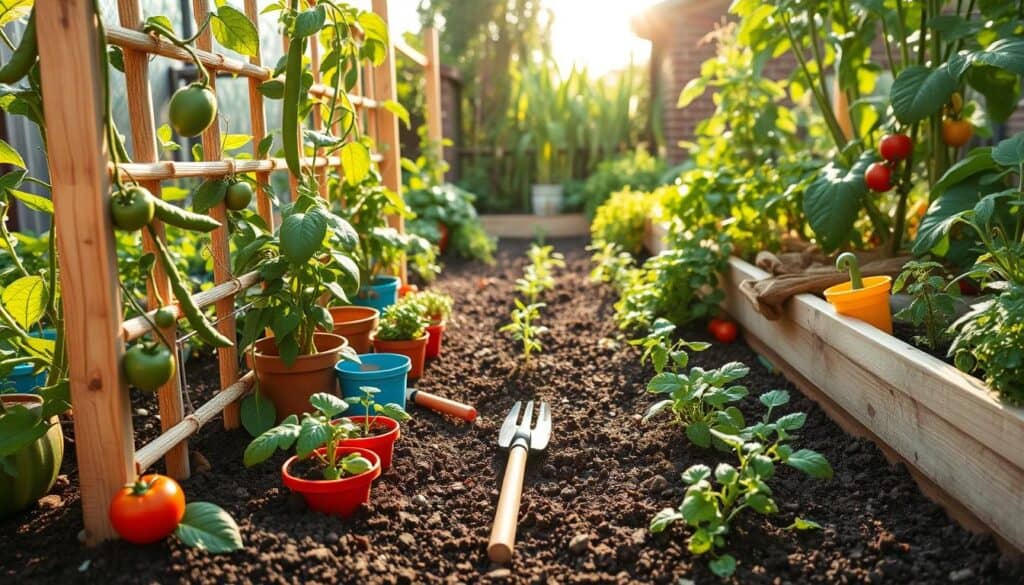
Success in how to grow more food in small space comes from succession planting. Vertical gardening in a small backyard lets you harvest one crop while another starts to grow, keeping soil productive all season.
Growing vertically to maximize yield changes the game for gardeners. Treating your trellis as a vertical gardening space saver lets you use soil for fast-growing greens or herbs.
To get more yield from raised bed systems, try a vertical layering garden technique. Plant fast-growing crops at the base and let long-season vines climb up.
Mastering these techniques lets you maximize small space yields without expanding your garden. Consistent observation and pruning keep your vertical space productive for every harvest.
Common Mistakes to Avoid When Installing Trellises
Staying clear of common mistakes is key to a thriving vertical garden. When setting up a raised bed trellis, make sure it’s anchored well. This is to handle strong winds and the weight of heavy vines. A shaky trellis can fall over, ruining your crops.
Don’t overlook vegetable garden sun exposure. A tall trellis on the south side can block sunlight for smaller plants. Always plan the sun’s path to ensure all plants get enough light.
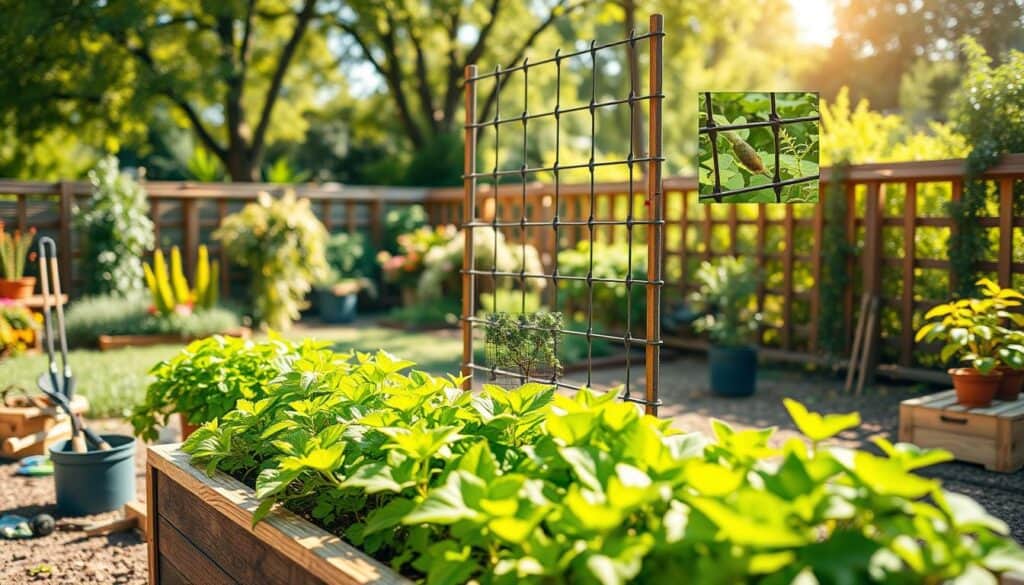
Smart raised bed gardening hacks can save you time and trouble. Modular designs make maintenance and adjustments easier. Here are some tips to keep your garden looking great:
- Secure your trellis to the bed’s frame, not just the soil.
- Use soft ties to avoid damaging stems as plants grow.
- Check fasteners and connections often to keep everything tight.
Also, think about pest prevention vertical gardening to keep your plants healthy. Good airflow is vital to prevent fungal diseases. By spacing vines right and keeping them off the ground, pests find it hard to survive.
Conclusion
Building a trellis for your raised bed changes how you interact with your backyard. It gives you control over your harvest and makes your home landscape beautiful.
Brands like Gardener’s Supply Company offer durable materials for every skill level. You can start with simple twine or go for heavy-duty cattle panels for long-term use.
Vertical gardening saves space and keeps plants healthy by improving airflow. Your veggies stay clean and dry, reducing disease risks.
Look at your garden today and find a spot for a trellis. It will support your vining crops to thrive.
Share your progress with local gardeners. Post photos of your finished structures to inspire others. Your journey to a more productive garden starts here.