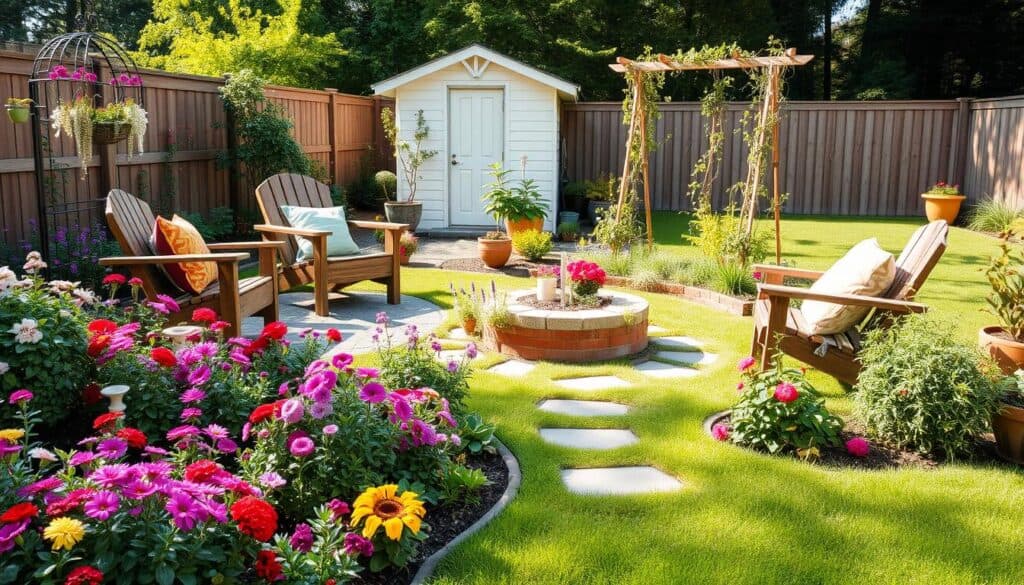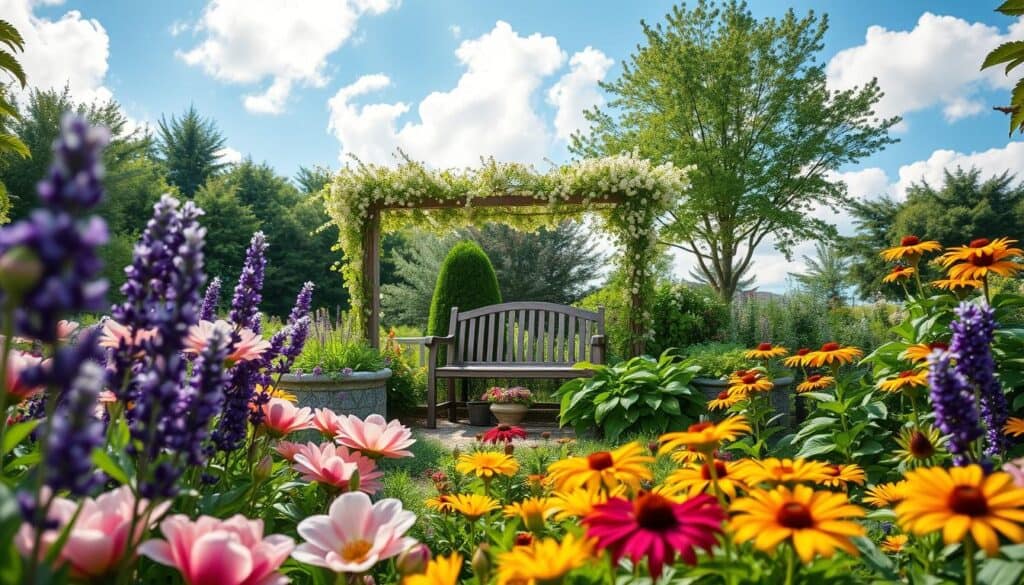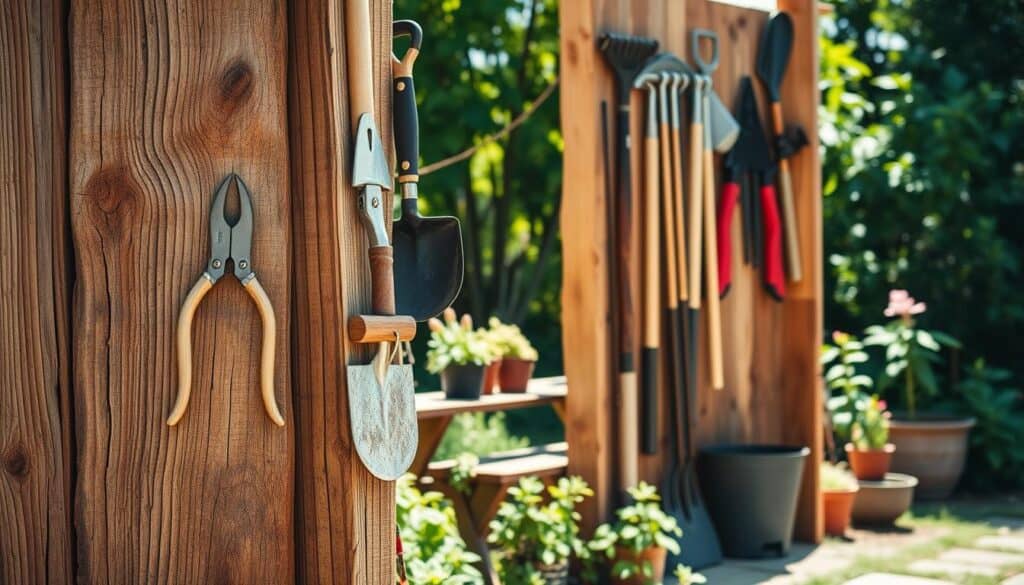
Creating a vibrant outdoor space supports local wildlife. It is a rewarding project for any homeowner looking to connect with nature.
Use these essential gardening tips to transform your yard into a sanctuary. You can easily attract butterflies and birds throughout the seasons.
Focus on native species and thoughtful design. This helps you build a backyard garden that thrives while enriching your local environment.
We guide you through every step of the process. You will learn about selecting the right plants and maintaining a healthy, pesticide-free ecosystem for your new visitors.
Key Takeaways:
- Prioritize native plant species for local wildlife.
- Provide consistent water sources for visiting animals.
- Eliminate chemical pesticides to ensure a safe habitat.
Visit The Marketplace or grab your Free Garden Starter Kit
The Foundations of a Wildlife-Friendly Backyard
Starting a wildlife-friendly backyard is a rewarding journey. It begins with careful planning and design. By focusing on habitat restoration, you can turn your outdoor space into a sanctuary. This helps support local ecosystems and create a wildlife habitat that thrives all year.
One key step is to reduce lawn space for more diverse, native plants. Replacing thirsty grass with native plants creates pollinator habitat. This attracts bees, butterflies, and beneficial insects. It’s vital for a bird-friendly garden that offers natural resources.
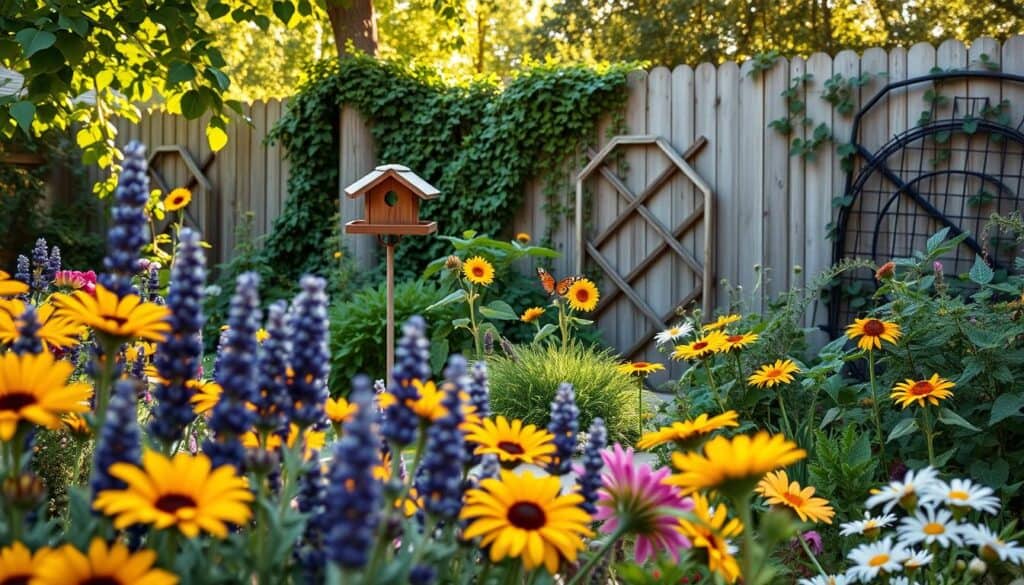
Landscaping for biodiversity means providing food, water, and shelter. Using bird friendly landscaping techniques ensures local species have what they need. Consider these key elements for your design:
- Native plant selection for natural food sources like seeds and nectar.
- Water features such as birdbaths or small ponds for hydration.
- Structural cover including shrubs and brush piles for protection.
- Sustainable practices to keep the environment healthy.
Proper planning makes your backyard garden a vital refuge for native species. By adding these elements, you create a resilient landscape. It benefits both the environment and your enjoyment of nature. Every small change helps protect our local wildlife.
How to Build a Backyard Garden That Attracts Butterflies and Birds
Creating a backyard for butterflies and birds is a fun project. It starts with good design choices. Sunlight for butterfly gardens is key, as butterflies need sun to fly. Your garden should get at least six hours of direct sunlight a day.
If you’re new to gardening, start with plants that offer nectar and host sites. Look for garden design ideas that use native flowers. These butterfly garden ideas make your space lively and support local wildlife all year.
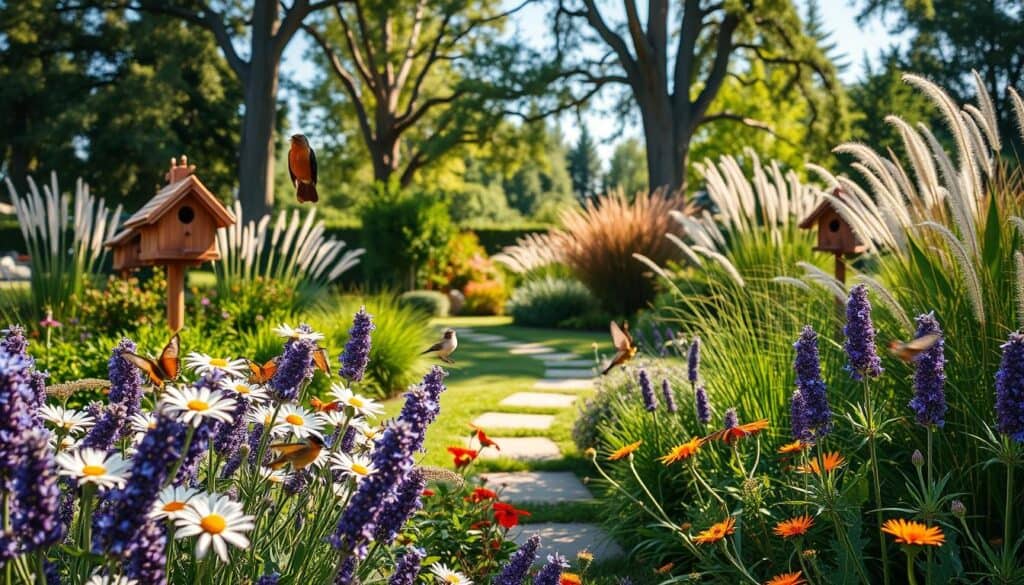
To boost biodiversity, cut down lawn space for flower beds or meadows. When designing garden layouts, group plants in clusters. This makes it easier for birds and butterflies to find food. It also looks great and supports more wildlife.
For a quick start, try a diy pollinator kit. These kits have everything you need to start a small garden. They follow native garden trends for easy care and benefits to the environment. Using native species helps your local pollinators thrive.
Think about vertical habitat gardening to use your space better. Use trellises, hanging baskets, or wall planters to add layers. Adding height to your garden supports more life, even in small spaces.
Selecting Native Plants for Maximum Pollinator Impact
Turning your yard into a bee haven starts with the right plants. A good pollinator garden design needs plants that offer nectar and pollen. Choosing native plants for pollinators creates a thriving ecosystem with little care.
These flowering perennials fit your local climate and soil. Planting native flowers helps local wildlife. It’s also key to include growing caterpillar food for butterflies.
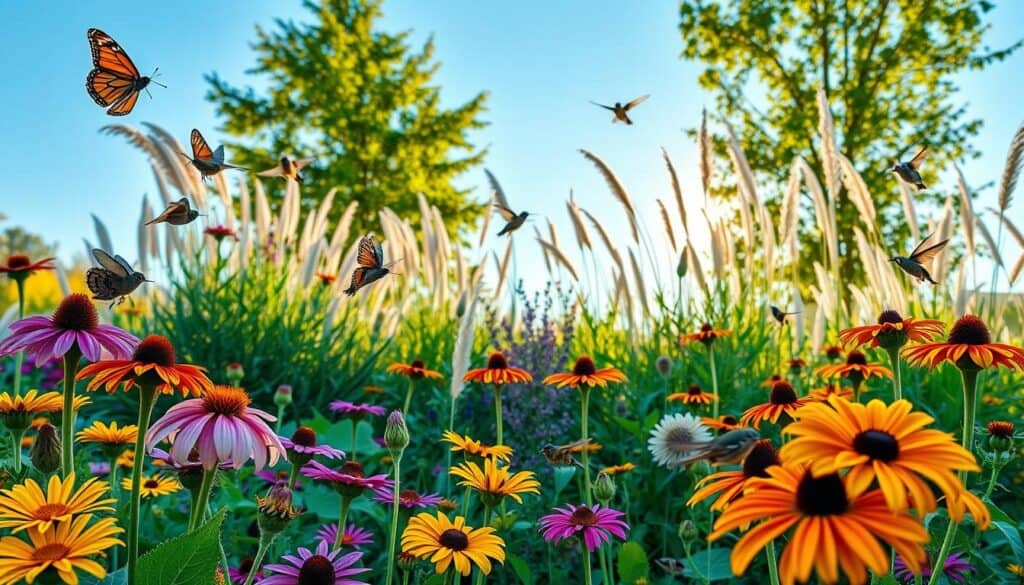
Adding butterfly host plants to your garden makes it a busy place. These plants are nurseries for larvae. This keeps your garden lively all season.
Purple Coneflower and Black-Eyed Susan Benefits
The purple coneflower is a garden favorite for its long bloom. It’s a go-to for bees and butterflies. The black eyed susan adds a bright touch, attracting many pollinators.
These plants are incredibly hardy and low maintenance. They feed pollinators in summer and improve soil health. They’re a wise choice for any gardener.
The Importance of Joe Pye Weed and Blazing Star
In late summer, joe pye weed is a key food source for pollinators. Its tall blooms are a hit with migrating butterflies. It adds height and beauty to your garden.
Blazing star flowers are also vital, with their unique spikes attracting bees. They provide food when other sources are scarce. They keep your garden welcoming until the first frost.
Even with small spaces, you can help pollinators. Many native plants for small spaces offer big benefits. Compact species can make a big difference, no matter your garden size.
Designing for Continuous Nectar and Seasonal Blooms
Your garden can be a key spot for local wildlife, providing food from spring to autumn. To keep your garden lively, focus on a continuous nectar supply. Good garden design ideas will make your space vibrant all year.
A pollinator garden should have different plants to ensure food is always available. By picking nectar-rich flowers, you feed bees, butterflies, and hummingbirds. This keeps your garden a safe haven through every season.
Choosing eco-friendly plants means picking ones that grow well in your area with little care. Butterfly bushes are great for summer nectar. Choosing the right plants also means less watering and fertilizers.
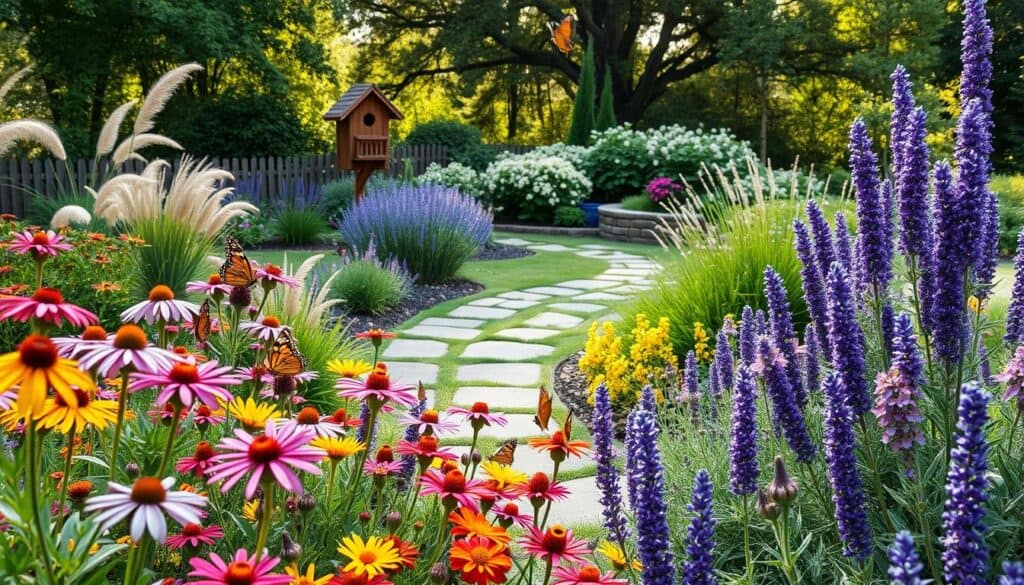
For ongoing color, use flowering perennials that come back every year. Zinnias and lantana are good for quick, seasonal color. They last until the first frost.
Planting native flowers is key. They fit your area’s soil and weather. Native plants are essential for local pollinators.
Don’t forget about sunlight for butterfly gardens. Most plants need at least six hours of sun. Use trellises or hanging baskets for vertical gardening. These ideas keep your garden lively and beautiful.
Essential Water Features for Birds and Butterflies
A bird-friendly garden needs more than just food; it needs fresh, clean water. Water is key for local wildlife, serving as a drinking spot and a place for bathing. By providing a steady water supply, you’ll soon attract birds to your garden all year.
If you want to build a birdbath, focus on safety and easy access. Shallow basins with a rough bottom help birds stay on their feet while they splash. Place these features in an open area to attract birds to garden zones safely.
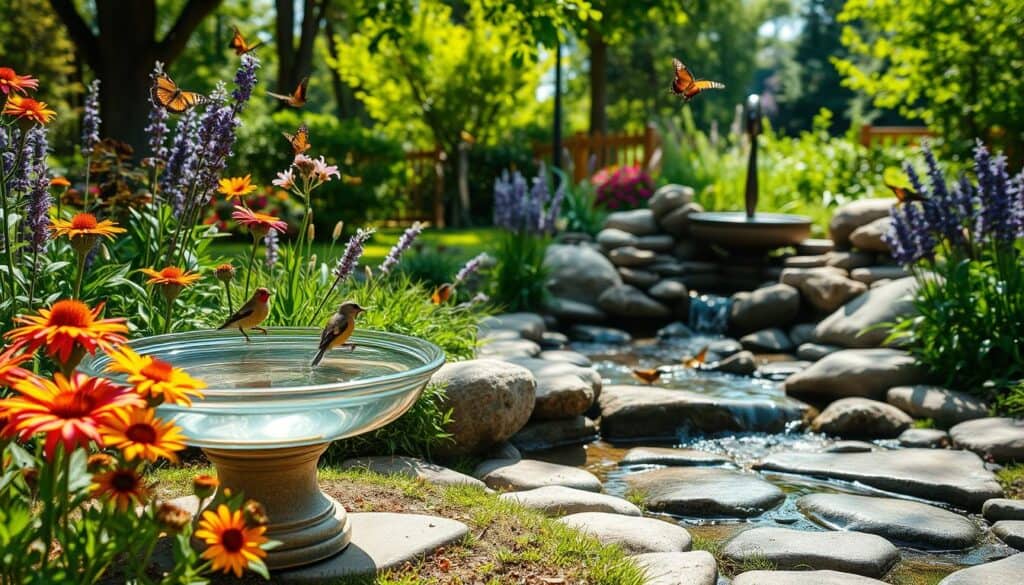
Butterflies need water differently than birds. You can help them by creating puddling stations in a sunny, sheltered spot. These stations offer essential minerals that butterflies get from damp soil or sand.
- Keep your birdbath water fresh by cleaning it at least twice a week.
- Add a few flat stones to the center of the bath to create perches.
- Ensure your puddling station remains moist but not flooded.
- Place water features near native shrubs to provide quick cover for visitors.
Properly installing water features will bring more visitors to your yard. These additions complement your backyard bird feeding guide setup, creating a complete habitat. Consistent access to water is the key to a vibrant and healthy ecosystem right outside your window.
Providing Shelter and Nesting Sites for Local Wildlife
Wildlife needs a safe place to rest and raise their young all year. When you create a wildlife habitat, you do more than just decorate. You build a real ecosystem that keeps your garden lively for local animals.
Providing bird shelter is key to great bird friendly landscaping. Dense shrubs and thickets protect small birds from wind and predators. Layering plants gives different birds safe spots.
Adding nesting sites for birds helps them stay in your yard to breed. You can use birdhouses or leave dead trees if they’re safe. Here are some must-haves for your garden:
- Native evergreen shrubs for year-round cover.
- Custom-sized nesting boxes for cavity-nesting birds.
- Dense hedges that provide hidden pathways for small animals.
- Tall grasses that offer protection for ground-nesting species.
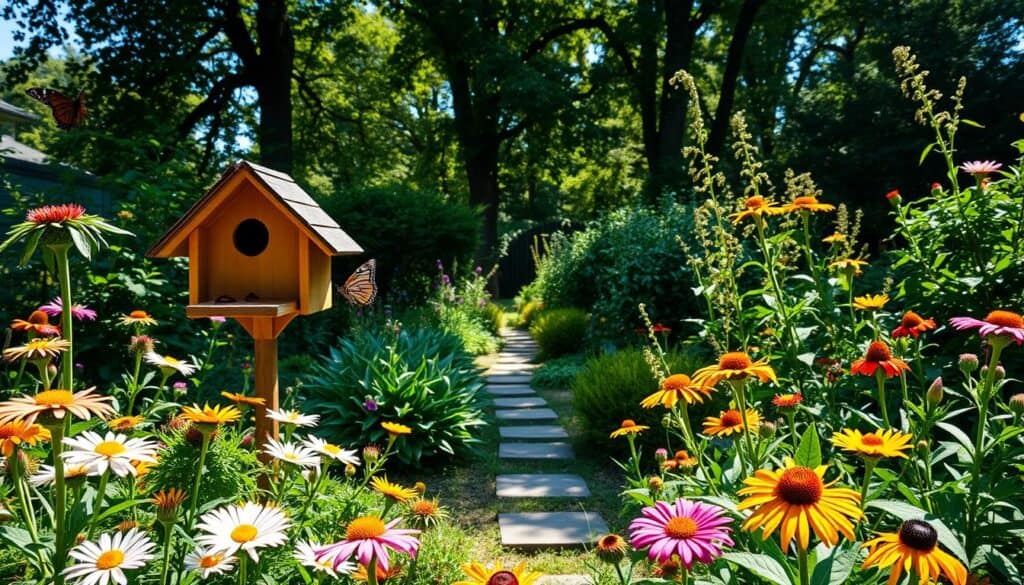
Creating brush piles in quiet spots of your yard is vital. They provide winter shelter for insects and small mammals. Installing water features like building a birdbath keeps animals hydrated. These piles turn unused areas into biodiversity hotspots.
Keeping a backyard wildlife sanctuary means balancing wild and managed areas. A good backyard bird feeding guide helps during tough times. With shelter, food, and water, your garden becomes a true nature haven.
Creating Specialized Habitats for Monarchs and Hummingbirds
You can make your outdoor space a vibrant haven for pollinators. Focus on their unique needs. A backyard garden layout design for a butterfly garden is key for species in urban areas. It attracts butterflies and hummingbirds by supporting their life cycle.
To meet monarch waystation requirements, include specific elements. Planting native milkweed for monarchs is essential. It’s the only host plant for their larvae, without it, they can’t migrate or reproduce.
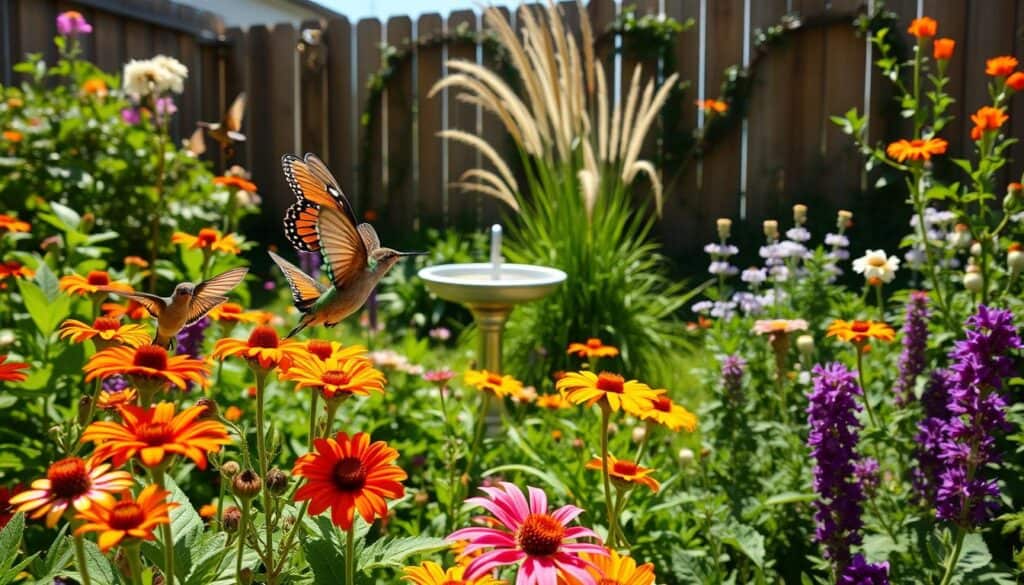
Keeping a continuous nectar supply is vital. Use nectar rich flowers to feed visitors all season. Add these hummingbird garden plants to your garden:
- Zinnias for butterflies bloom from summer to fall.
- Lantana for pollinators offers dense nectar clusters.
- Native perennials fuel long-distance travelers.
Salvia and Bee Balm Varieties
Hummingbirds love tubular flowers for hummingbirds. Plant salvia for hummingbirds to attract them daily. Bee balm for birds is also great, providing energy and color.
Cardinal Flower for Attracting Migratory Birds
The cardinal flower is great for supporting migratory birds. Its deep red, tubular blooms are perfect for hummingbirds. Don’t forget to create puddling stations with shallow water and sand for butterflies.
Implementing Sustainable and Organic Garden Maintenance
You can turn your backyard into a lush haven with sustainable backyard garden practices. Using natural garden maintenance helps keep your local ecosystem in balance. These gardening tips help your plants grow strong without harmful chemicals.
Keeping your backyard pesticide-free is key for birds and beneficial bugs. Avoiding harsh chemicals lets natural predators control pests. These wildlife gardening tips help create a strong environment where nature helps you.
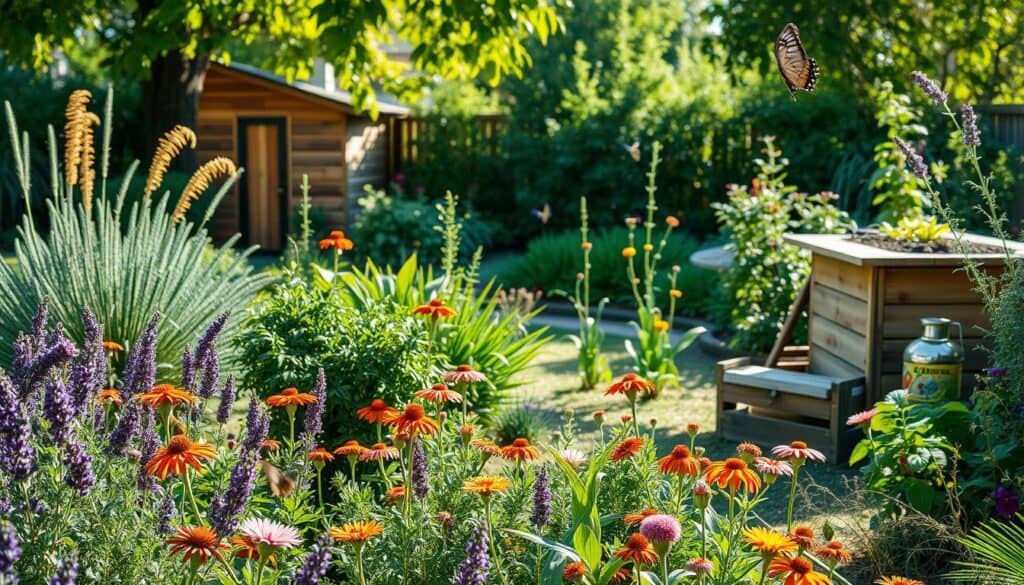
Starting with butterfly gardening for beginners is a great way to begin. Choose eco-friendly garden design by planting similar water needs together. This saves time and resources, making your garden beautiful and easy to care for.
To help your local visitors, try these important steps:
- Install a DIY pollinator kit to help native bees.
- Leave leaf litter and hollow stems for winter shelter for insects.
- Use organic compost instead of chemical fertilizers to enrich your soil.
- Mulch your garden beds to keep moisture in and weeds out without chemicals.
Healthy soil is the foundation of a great garden. Organic matter feeds the earth, making roots strong against disease. This dedication to sustainability keeps your garden a vibrant, safe space for years.
Managing Pests Without Harmful Chemicals
A sustainable backyard garden needs balance, not synthetic sprays. By using natural garden maintenance, you help plants and wildlife live together. Organic pest control lets you keep pests away without harming your garden’s health.
Keeping your backyard pesticide free is key for pollinators’ safety. Avoiding toxic chemicals keeps your hummingbird garden plants safe. Plants like bee balm for birds and salvia for hummingbirds do best without harmful chemicals.
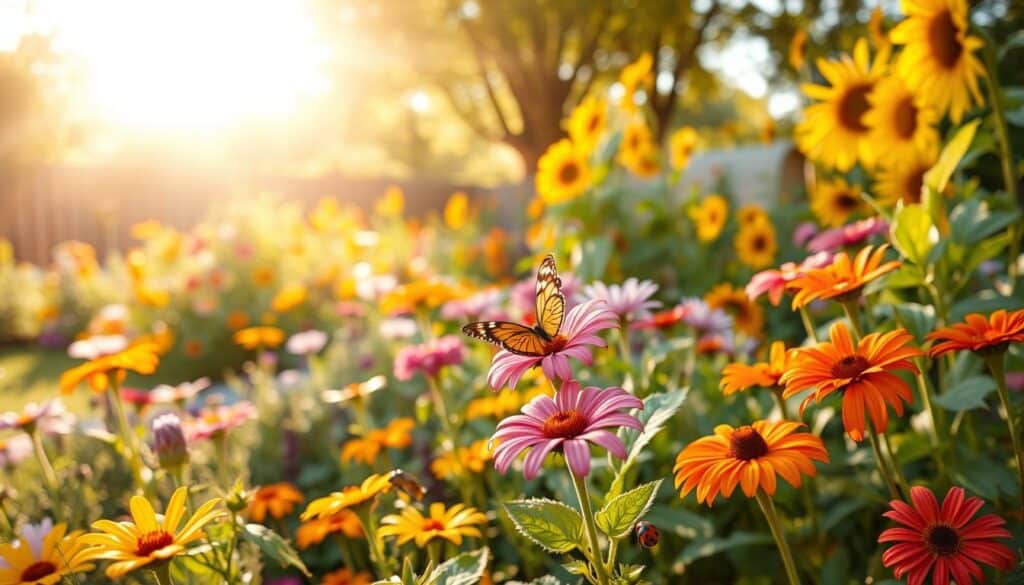
The best way to fight pests is by attracting beneficial insects. These insects hunt aphids and other pests. Also, creating brush piles in your yard gives them a place to hide. These steps protect your milkweed for monarchs and other plants, making your garden a safe haven.
Think about inviting these helpful insects into your garden:
- Ladybugs, which eat lots of aphids.
- Lacewings, which love mites and whiteflies.
- Hoverflies, which pollinate and control pests.
- Parasitic wasps, which naturally target pests.
Incorporating Trees and Shrubs for Biodiversity
Trees and shrubs are key to a wildlife garden. They add vertical layers that boost landscaping for biodiversity. This multi-layered approach is best for attracting birds and creating a healthy ecosystem.
When planning, pick the best trees for butterflies like native oaks. These trees are essential for many caterpillar species. Even in small spaces, you can find native plants for small spaces that offer similar benefits.
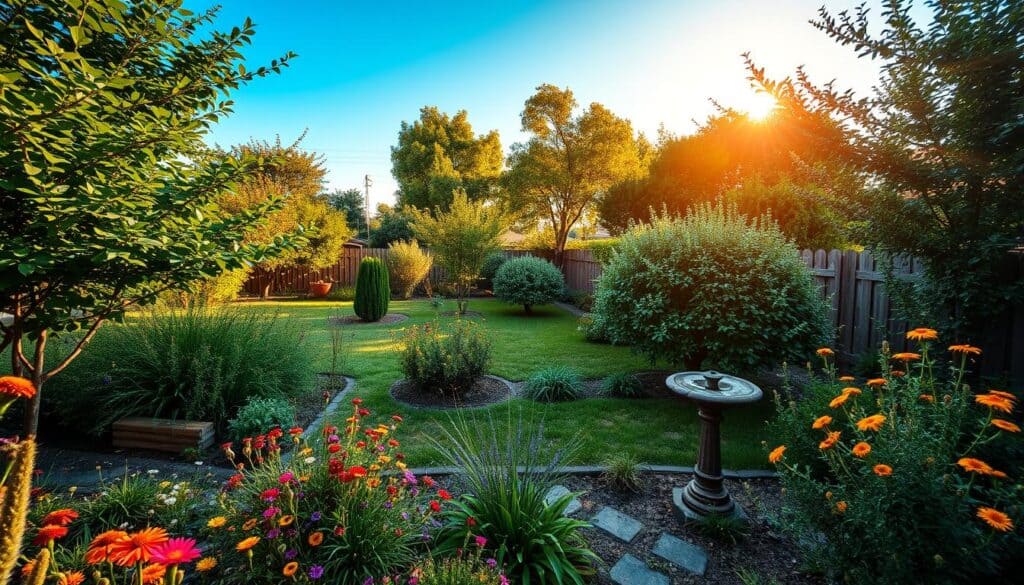
Don’t forget berry producing shrubs for local wildlife. They provide food for attracting migratory birds. A good bird friendly landscaping design uses these shrubs for food and shelter.
Serviceberry Benefits for Local Birds
The serviceberry is great for supporting local fauna. Serviceberry for birds offers nectar for pollinators and berries for birds. These shrubs also offer bird shelter and nesting sites for birds.
Plant a cardinal flower near your shrubs for color. This mix supports many species all year. By using native woody plants, your garden will be a vibrant sanctuary for years.
Expanding Your Garden into a Wildlife Corridor
Imagine your garden as a bridge for local wildlife. By establishing wildlife corridors, you make it a key link for birds and insects. These paths help them find food and shelter all year.
To create a good connection, focus on planting for seasonal bloom. A native wildflower meadow attracts many pollinators. Also, include berry producing shrubs for birds in winter.
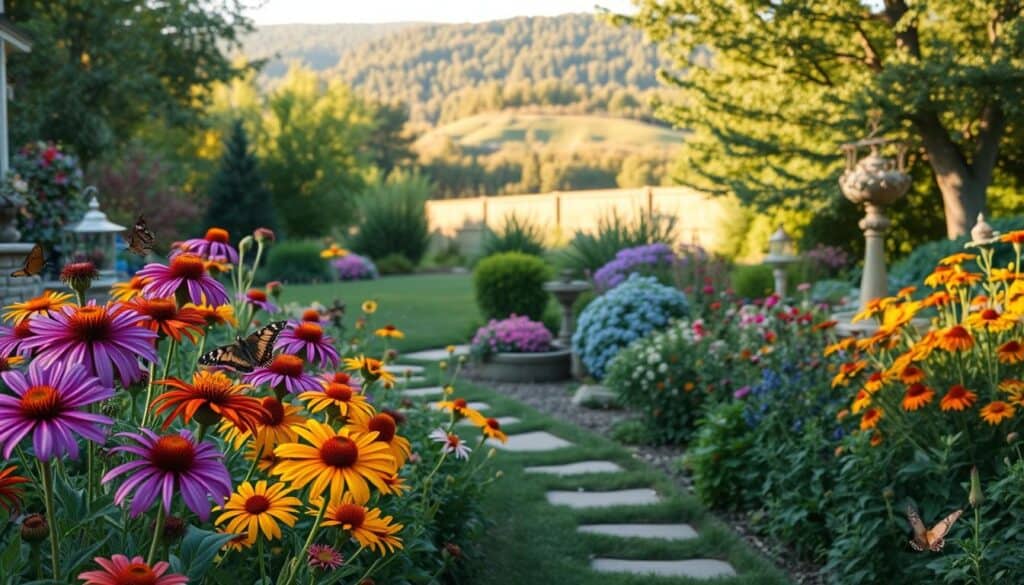
Your backyard wildlife sanctuary can be a safe haven. Choose oak trees for butterflies for the best results. They support many caterpillars, feeding birds too.
Here are key steps for your garden’s role in conservation:
- Remove invasive species to protect local ecosystems.
- Use organic pest control for a safe environment.
- Follow native garden trends by choosing local plants.
- Connect your garden to neighbors for a bigger habitat.
By expanding your garden, you join a big effort to protect nature. Every native habitat helps link wild spaces. Your efforts help wildlife thrive in our urban world.
Conclusion
Your backyard can become a vibrant sanctuary for nature. By choosing native plants and sustainable practices, you support local ecosystems. Every garden bed is a vital link in environmental health.
Helping pollinators has a lasting impact. You might consider meeting official monarch waystation requirements. This provides essential resources for migrating butterflies.
Think about creating wildlife corridors that connect habitats across your neighborhood. This helps species thrive despite urban growth. Your efforts attract beneficial insects, keeping your landscape vibrant all year.
Share your progress with neighbors to start a community movement for nature. A network of connected gardens offers a safe haven for birds and pollinators. Your commitment to this green journey creates a lasting legacy for the planet.