Do you dream of a lush garden but lack space on your patio? You’re not alone. Many urban gardeners face the same challenge. But, you can turn your balcony into a green oasis by using height.
This diy vertical planter tutorial is a smart solution for those who love eco-friendly projects. Using old materials is good for the planet and adds charm to your home. This easy diy vertical planter is perfect for beginners looking for a weekend project.
Learning how to build a strawberry vertical planter/tower lets you make the most of your outdoor space. Whether you’re starting a diy ladder planter or curious about how to make vertical garden displays, this guide makes it easy. We’ll show you how to create a beautiful ladder planter that becomes a highlight of your space.
Visit The Marketplace or grab your Free Garden Starter Kit
Why Upcycling Old Boards for a Vertical Garden is a Smart Choice
Upcycling old boards for a vertical garden is both stylish and sustainable. It turns old items into something new and useful for your home. This makes your garden truly special and unique.
There are many good reasons to repurpose old wood for vertical planters. It saves money and helps the environment by reducing waste. It also adds a rustic touch to your outdoor area.
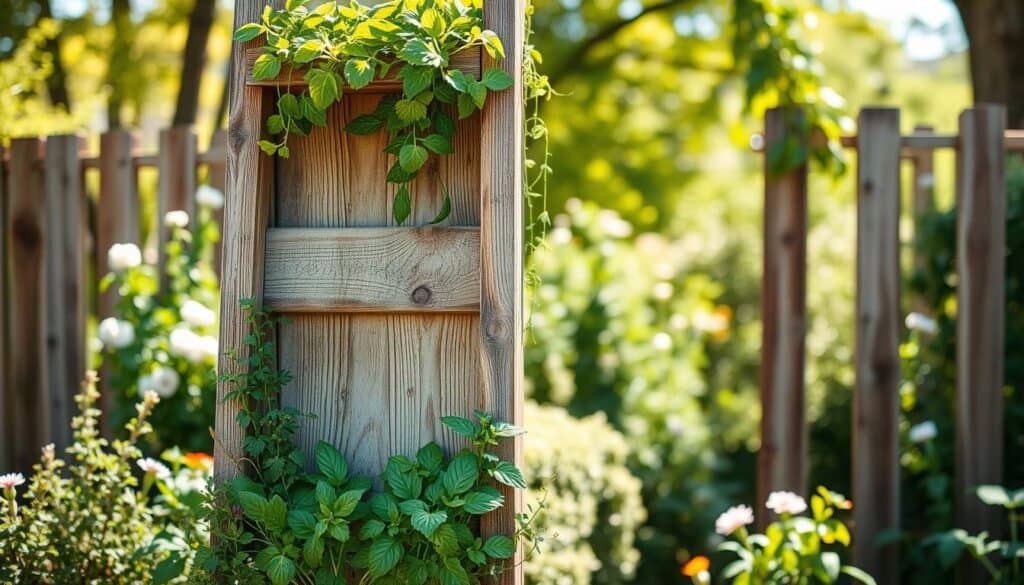
An upcycled wood planter has a unique charm that new wood can’t match. The weathered look and grain patterns give it a high-end feel. It makes your patio or balcony look fancy without costing a lot.
Choosing to repurpose old wood for planters is budget-friendly. It shows you can have a beautiful garden without spending a lot. It’s a smart way to use space and save money.
Building a cheap diy vertical planter is rewarding for DIY fans. These planters are strong and show your dedication to the environment. They help create a sustainable garden that lasts for years.
Essential Tools and Materials for Your DIY Project
Starting a woodworking project right means having the right tools and materials. Before diving into your diy vertical planter tutorial, make sure you have everything you need. These beginner woodworking projects are easy to follow, making it simple for newbies to succeed.
To make your scrap wood ladder planter or pallet wood ladder planter stand out, you’ll need some basic tools. Choosing a project that’s right for beginners helps you learn while saving money.
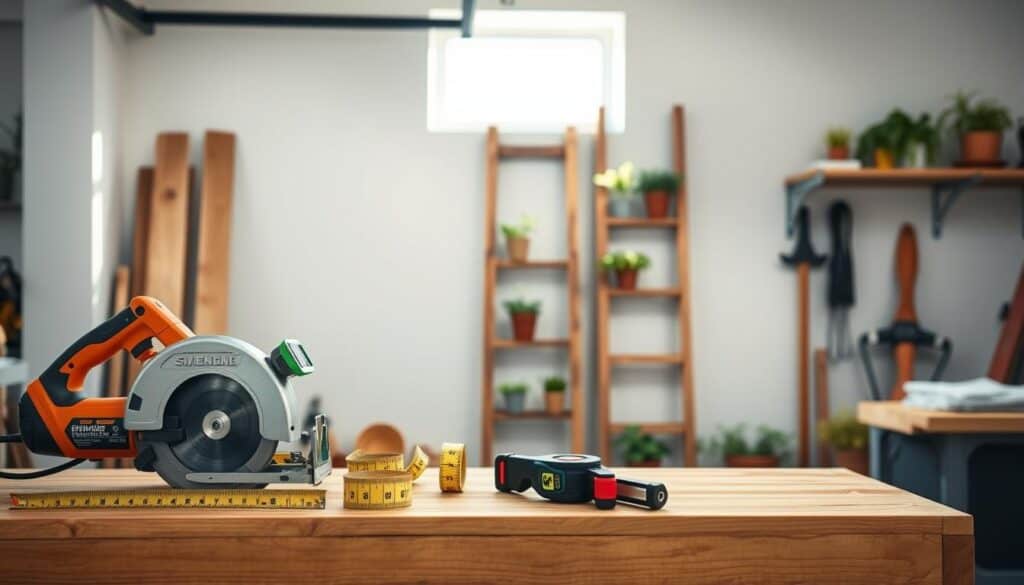
Here’s what you’ll need to make your project a success:
- A reliable hand saw or circular saw for cutting your boards to size.
- A power drill with a set of bits for pilot holes and driving screws.
- Corrosion-resistant exterior screws to hold your structure together.
- Medium-grit sandpaper to smooth out rough edges and splinters.
- A measuring tape and pencil for accurate marking.
Looking into scrap wood upcycle ideas can make your scrap wood garden projects unique and useful. These easy scrap wood projects show that you don’t need a fancy workshop to create something beautiful.
By focusing on vertical gardening on a budget, you can create a beautiful display without spending a lot. A cheap diy vertical planter is easy to make with the right tools and a clear plan.
How to Build a Ladder-Style Vertical Planter from Two Old Boards
Building a ladder-style vertical planter from two old boards is easier than you think. It’s great for beginners who want to make something professional-looking. This guide will help you turn scrap wood into a beautiful garden feature.
First, make sure your boards are the same length for balance. A handmade ladder planter needs precise measurements for stability. Always check your angles to avoid wobbling.
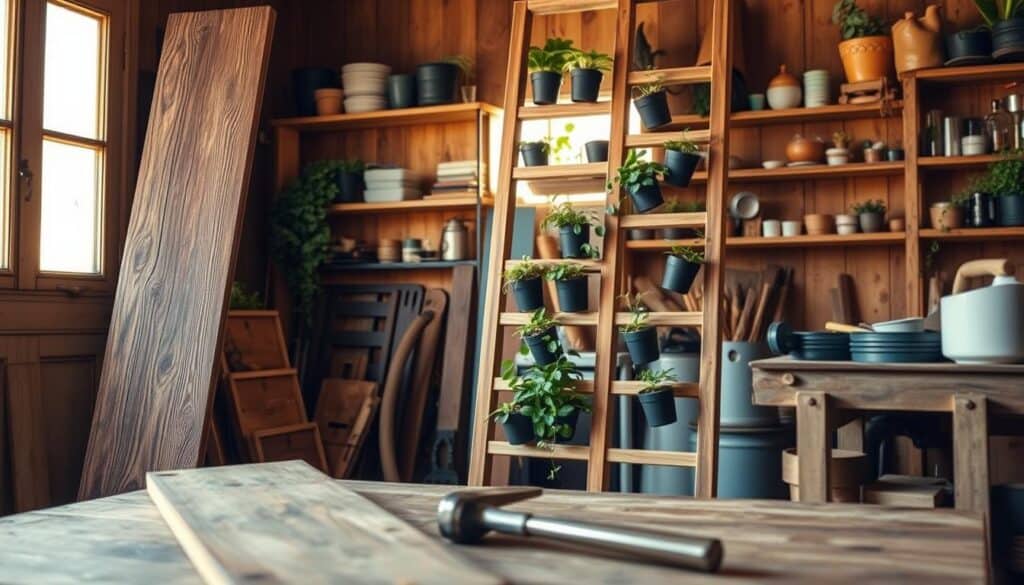
Here are the step-by-step vertical planter instructions to build your frame:
- Place your two main boards side by side on a flat surface as the ladder sides.
- Measure and mark where your horizontal rungs will go, making sure they’re even for plants.
- Use weather-resistant screws to attach the rungs, a key step in building a diy vertical planter stand.
- Add a support brace at the base for a free standing ladder planter diy that won’t fall over.
This woodworking project for beginners can be adjusted for any space. Whether it’s for a balcony or patio, the basic steps are the same. Learning to build a vertical planter lets you grow more plants without using much space.
When following a diy plant ladder tutorial, focus on stability. Use a level to make sure your step by step ladder planter is flat. Building a vertical planter is very rewarding. Your easy diy vertical planter will be a lasting home for your plants.
Preparing Your Reclaimed Wood for Construction
Getting your reclaimed wood ready is key to a lasting and stunning vertical planter. When upcycling old boards for a vertical garden, check each piece for rot or bugs. If it’s soft or breaks easily, throw it out to keep your planter strong.
This vertical planter construction guide tells you to remove old hardware first. Use a hammer or pliers to take out rusty nails and screws. This step is vital for a safe building process.
After removing debris, clean and smooth the wood. Repurposing old wood for vertical planters means sanding to get rid of splinters. A medium-grit sandpaper is best for a smooth finish for your plants.
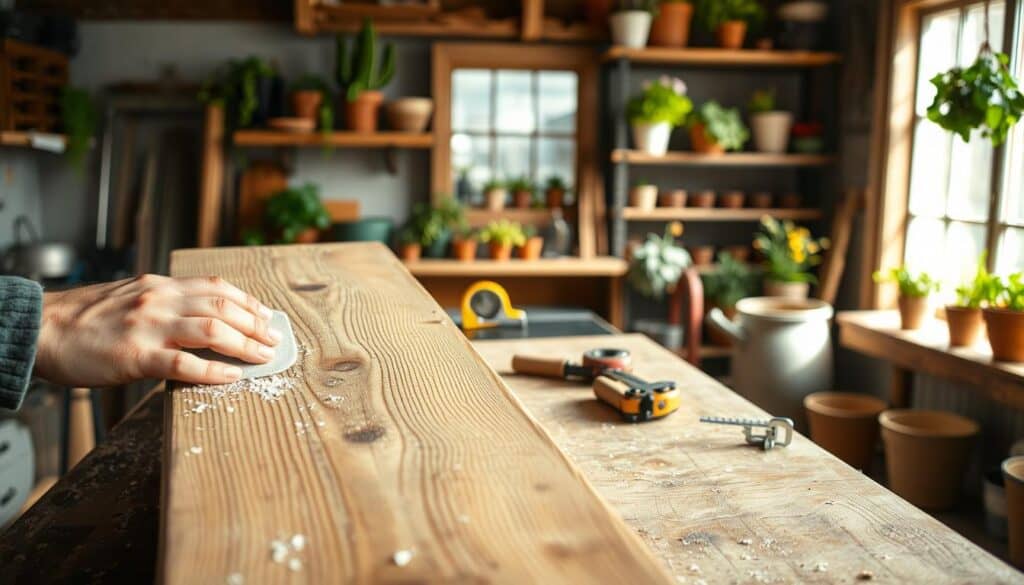
Whether making a pallet wood ladder planter or a custom frame, make sure the wood is dry. If you’re repurposing old wood for planters, remember these steps:
- Check for structural stability and cracks.
- Remove all hidden metal fasteners.
- Sand surfaces to prevent future splinters.
- Ensure the wood is free from chemical treatments.
Building a reclaimed wood planter box needs careful attention at the start. Good vertical planter construction means using stable, dry wood. These steps help avoid warping and keep your project weather-resistant.
By properly preparing your materials, you support eco friendly gardening projects that last. Your upcycled garden planters will look great and be safe for your plants.
Designing the Perfect Tiered Structure for Small Spaces
Small space gardening diy projects often start with the need for better organization and vertical height. Creating a tiered structure is a great idea for making the most of limited space. It turns a blank wall into a lush oasis.
Want to transform a tiny balcony? Building a diy vertical garden ladder is a great start. Learning to stack pots is simple. These ideas help you grow herbs and flowers without taking up floor space.
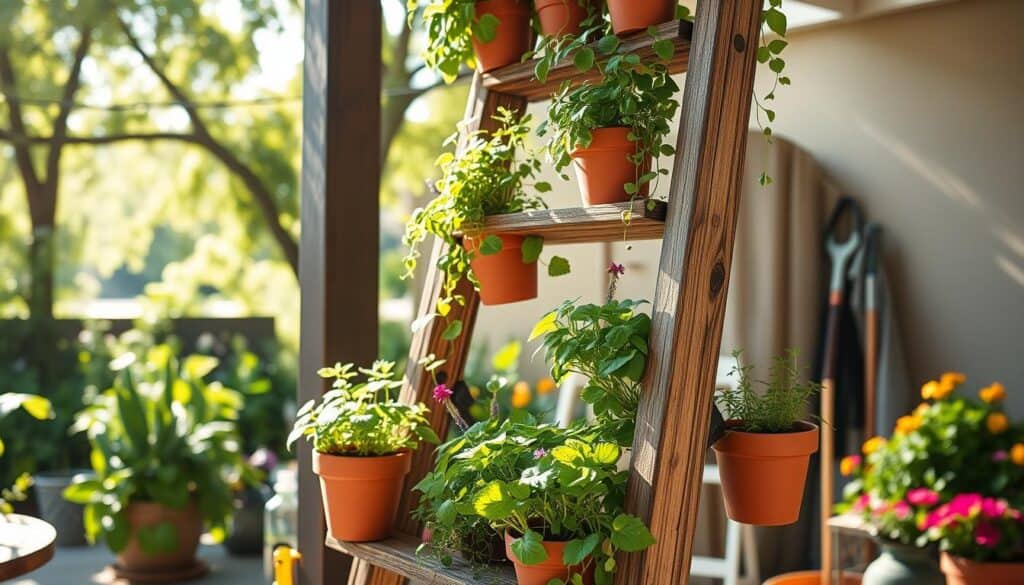
Using a vertical planter with shelves helps organize your greenery. These ideas ensure each plant gets enough sunlight. Proper spacing between tiers is key to prevent shading.
Learning to build a tiered planter opens up endless possibilities for your home. These space-saving ideas keep your area tidy and attractive. A well-made vertical planter becomes a focal point that draws the eye upward.
Whether you choose a diy tiered ladder planter or a simple tiered plant stand, consistency is key. A sturdy planter design will last many seasons with proper care. Consider these design elements for your project:
- Ensure the base is wide enough to provide stability for the entire structure.
- Angle the shelves slightly to allow for better water drainage and light access.
- Use lightweight materials to make the unit easy to move around your patio.
- Space your tiers at least 12 inches apart to accommodate growing foliage.
Safety Tips for Working with Scrap Wood
Working with reclaimed materials needs a careful approach to keep your workshop safe. When making your scrap wood ladder planter, remember the lumber’s history. Old boards might have hidden nails, staples, or brittle parts that can cause accidents when cutting.
When doing scrap wood garden projects, safety is key. Always wear the right protective gear before using a saw or sander. This helps prevent injuries from flying debris or sharp edges.
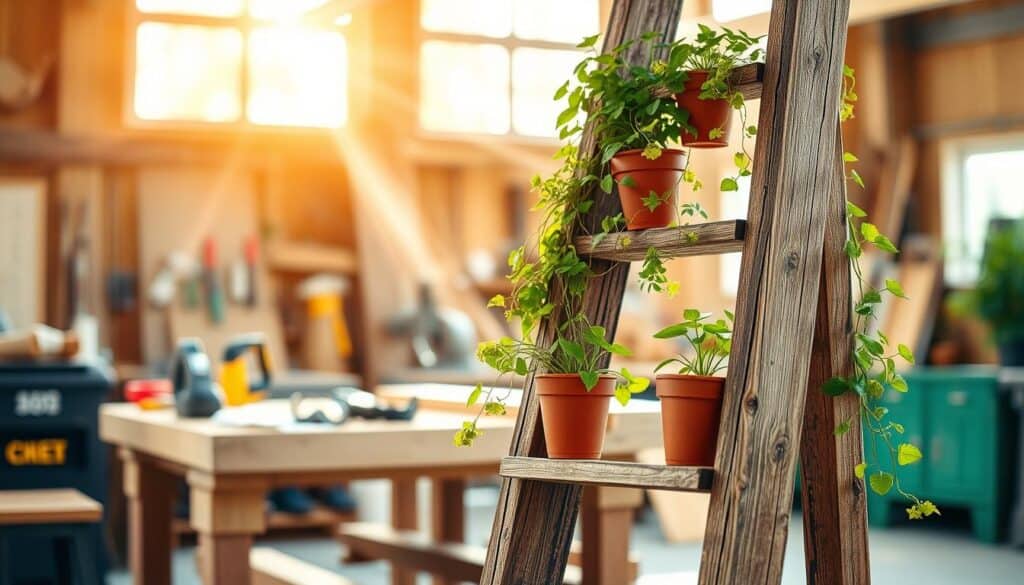
To keep your workspace safe while working on easy scrap wood projects, follow these important safety tips:
- Wear protective eyewear at all times to shield your eyes from sawdust and wood chips.
- Use heavy-duty work gloves to protect your hands from splinters and rough surfaces.
- Check for hidden metal like nails or screws before you start cutting your boards.
- Ensure proper ventilation in your shop when applying stains, paints, or protective sealants.
- Keep your tools sharp and well-maintained to prevent the blade from binding or kicking back.
By focusing on safety with your scrap wood upcycle ideas, you make your building process fun and safe. These precautions are vital for any DIY enthusiast. A clean and organized workspace leads to a better final result for your garden.
Creative Ways to Finish and Protect Your Rustic Planter
A beautiful finish makes a simple build look professional. It brings your creative vertical garden ideas to life. It also keeps the wood looking good through the seasons.
For a natural look, use a high-quality exterior oil or wood stain. These products protect the wood from rot and water damage. A clear UV-resistant sealant is great for a rustic ladder planter diy to keep it looking weathered.
You can also paint your flower ladder stand diy to match your home. Use outdoor paint to protect it from moisture and pests. A painted rustic wooden plant stand can be a colorful highlight on your patio or balcony.
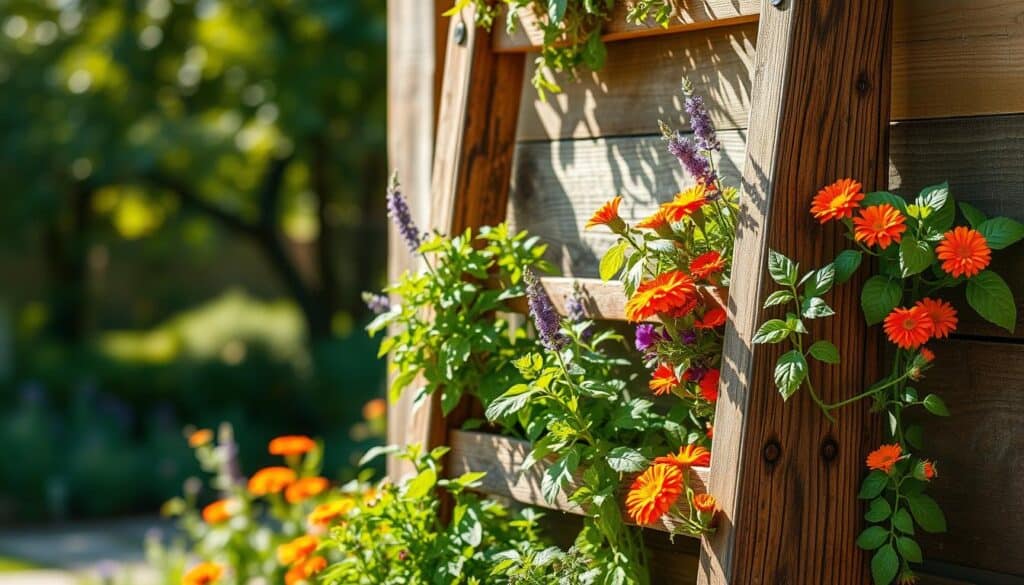
When making a handmade ladder planter, focus on the joints and end grains. These areas collect water. Apply a lot of wood preservative here to keep it durable.
The right finish protects your hard work. Choosing the right products keeps your rustic vertical garden looking great. Sealing your wood well is key to protecting your investment and keeping plants healthy.
Selecting the Best Plants for Your Vertical Ladder Stand
Turn your wooden ladder into a living work of art by choosing the right plants. When looking at vertical gardening ideas, think about the light and water each plant needs. Picking the best plants for ladder planters keeps your project looking great all year.
For a vertical herb garden, pick herbs you love to cook with. A diy tiered herb garden is great for kitchens or sunny spots. It lets you easily pick fresh herbs like basil and mint from your wooden ladder herb garden.
Direct sunlight is key for a vertical strawberry planter. Strawberries do well in tiered setups and give you yummy fruit. Make sure they get at least six hours of sun a day.
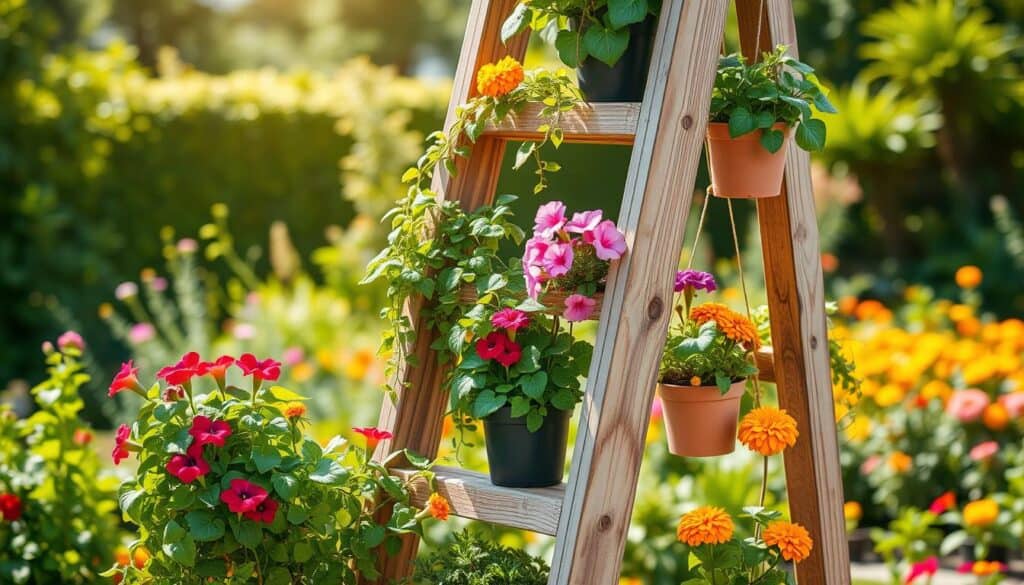
A succulent ladder planter is perfect for those who don’t want to water much. Succulents are great for small spaces and need little care. They come in many colors and textures, making a beautiful display with little effort.
If you have more space and sunlight, try a tiered vegetable planter. Plants like cherry tomatoes need support, so make sure your ladder is strong. Here are some great plants for your setup:
- Herbs: Basil, chives, cilantro, and oregano.
- Flowers: Petunias, pansies, and trailing lobelia for a diy tiered flower planter.
- Vegetables: Lettuce, spinach, and dwarf tomato varieties.
- Succulents: Echeveria, sedum, and jade plants.
Think about using an indoor outdoor ladder planter to move your plants with the seasons. Matching your plants to their environment ensures they thrive. Whether you choose flowers or vegetables, your ladder stand will be a beautiful part of your home.
Optimizing Your Vertical Garden for Balconies and Patios
Turning a small balcony into a lush oasis is easier than you think. When building a diy vertical planter stand, first check your outdoor area’s conditions. Sunlight, wind, and space are key for success.
A vertical planter for small spaces lets you grow plants without losing space. It uses height to create a dense, green area. This is perfect for those with little outdoor space.
A diy vertical garden ladder is portable and lightweight. You can move your vertical patio planter to catch the sun. This ensures your plants get the light they need.
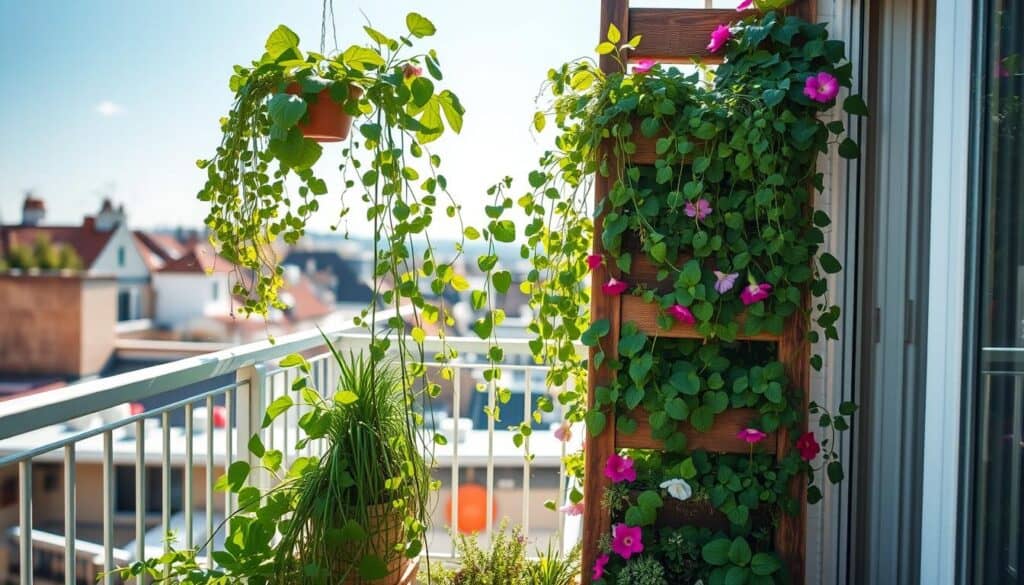
For vertical garden ideas for balcony, try an indoor outdoor ladder planter. It’s stylish and keeps the floor clear. You can adjust its size to fit your needs.
For space saving garden ideas, try a patio vertical planter diy project. It’s great for city dwellers who want to bring nature home. Here are some tips:
- Make sure your structure is level to avoid tipping in wind.
- Use lightweight potting mix to reduce weight on your balcony.
- Group plants with similar water needs together.
When planning your balcony garden diy, think about plant access. Use apartment balcony garden ideas that make maintenance easy. A vertical planter with shelves helps keep tools organized.
For a backyard vertical planter or balcony display, stability is essential. Secure your planter to a wall or railing in windy areas. With proper placement, your vertical garden will be a beautiful addition to your home.
Maintenance Tips to Keep Your Wooden Planter Thriving
After you build a ladder planter, the real work starts. Keeping your planter healthy is key. Follow our guide to keep your wooden planter looking great.
Check your planter often to make sure it’s stable. If you have a tiered herb garden or strawberry planter, watch the soil. These containers dry out quickly, so watering is critical.
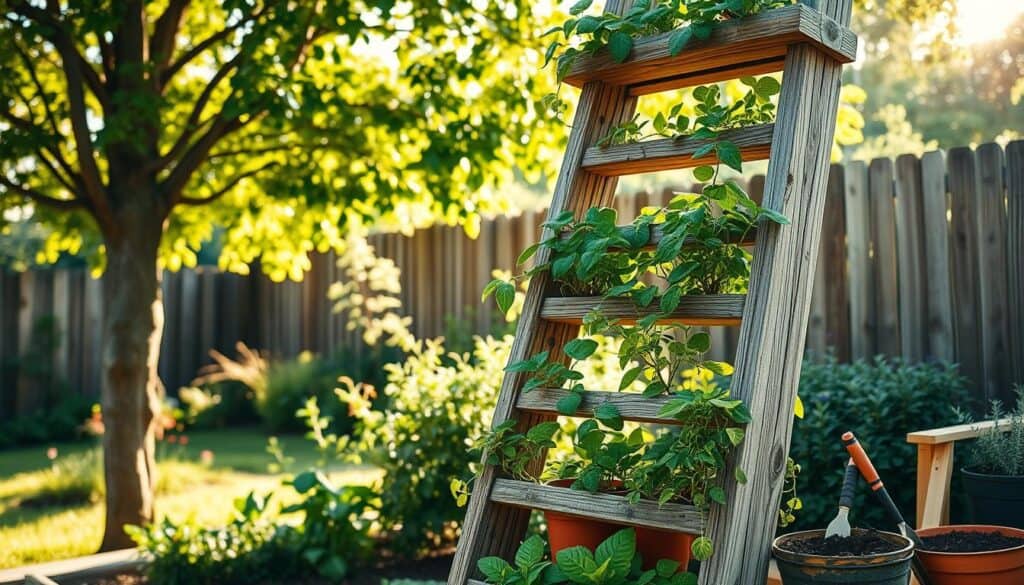
Keeping your planter in good shape is easy. Here are some tips:
- Check all fasteners and joints every few months to ensure the frame remains sturdy.
- Apply a fresh coat of weather-resistant sealant annually to protect the wood from rot.
- Monitor your step by step ladder planter for any signs of wood decay or pest damage.
- Ensure proper drainage holes remain clear to prevent water from pooling in the bottom of your containers.
By following these tips, your planter will last for years. It can be a beautiful centerpiece for your backyard. Regular care protects your investment and keeps your plants healthy.
Conclusion
Building your own rustic ladder planter diy project adds a special touch of nature to your home. You now know how to make simple boards into a beautiful centerpiece for your patio or balcony.
Learning to build a tiered planter helps you use space well. You can choose between a diy tiered ladder planter for vines or a vertical succulent garden for a modern vibe. Your custom piece adds a personal touch to any space.
Using these diy plant stand plans keeps your structure strong for years. A well-made rustic wooden plant stand is perfect for your favorite plants. You can try different heights to make a flower ladder stand diy display that stands out.
Picking the right plants for your ladder planters makes your garden flourish. A diy tiered flower planter opens up endless possibilities for color and texture. Your hard work shows that style and function can go together.
Start your next diy tier planter project today to improve your outdoor space. Share your finished work with friends to inspire them to try gardening. Your garden shows off your creativity and commitment to living sustainably.