Living in South Florida, as well as other warm climate states, weeds are a year-round battle. Here’s what I’ve learned actually works — and what doesn’t. Do you dream of a beautiful landscape that requires less back-breaking labor? Many gardeners spend countless hours pulling stubborn plants from their soil. But, there’s a smarter way to manage your yard.
By applying a simple layering strategy, you can suppress unwanted growth throughout the entire growing season.
Effective garden maintenance relies on blocking sunlight from reaching weed seeds. When you combine organic materials with living plants, you create a natural barrier. This keeps your beds pristine.
This approach not only saves you energy but also improves soil health over time.
We will explore the best practices for installing these protective layers. You will learn which materials work best for your specific climate. And how to maintain them for long-term success.
If you want a completely free alternative, I tried smothering weeds around my Japanese Olive tree using cardboard and mulch — here’s exactly how I did it with photos from my own yard in Florida.
Get ready to transform your outdoor space into a low-maintenance sanctuary. It will stay vibrant all year long.
Visit The Marketplace or grab your Free Garden Starter Kit
The Science of Weed Suppression
Physics plays a big role in fighting garden weeds. Many wonder, does mulch actually stop weeds? The truth is in how these materials work with the environment. They offer key mulch benefits for your garden.
The main idea is to block sunlight. Most weed seeds need sunlight to grow. By using a thick layer of organic material, you create a dark spot. This makes the seeds think it’s always night, keeping them from growing.
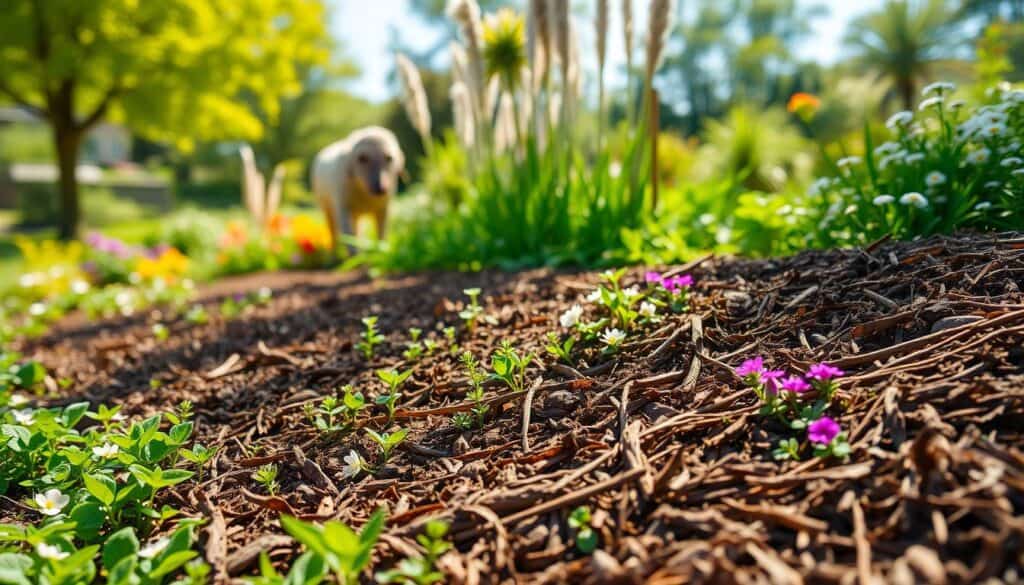
Learning garden mulching techniques is more than just putting down wood chips. You need to make sure the layer is thick enough to block sunlight. But it also needs to let water and air through to the soil. This is a powerful way to control weeds naturally.
When you figure out how to use mulch to stop weeds, you’re stopping weeds from growing. Without sunlight, weed seeds can’t grow roots. This method is a green way to keep your garden weed-free all year.
How to Use Mulch and Ground Cover to Cut Weeding Time in Half
Turning your garden into a low-maintenance space is easy. Start by using mulch and ground cover to reduce weeding. A dual-layer strategy blocks sunlight from weed seeds. This lets you enjoy your garden more and weed less.
Using ground cover reduces weeding by filling gaps between plants. These plants act like a living carpet, shading the soil. This natural method is both beautiful and effective for your garden’s health.
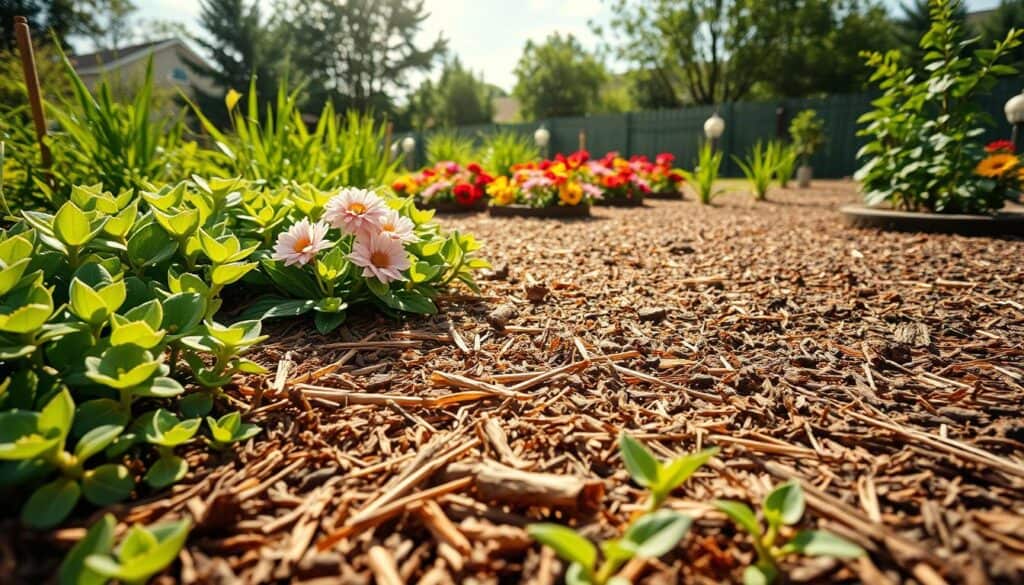
Mulch is the second key to a weed-free garden. A thick layer of organic material, like wood chips, suppresses weeds. It also keeps the soil moist. With dense plants, your garden beds stay weed-free.
To keep your garden looking great with less work, follow these steps:
- Remove all weeds before adding materials.
- Choose the best ground covers for weed control, like creeping phlox, for your area.
- Spread a two-to-three-inch layer of organic mulch around plants to block light.
- Water well to help the mulch settle and the ground cover grow.
By following these steps, you’ll cut weeding time in half. You can focus on enjoying your garden instead of weeding. This method keeps your garden healthy, vibrant, and easy to care for all season.
Choosing the Best Organic Mulch for Your Garden
Choosing the right organic mulch is key to a thriving garden. It makes your garden look great and stay healthy. Mulch acts as a shield, keeping soil moist and full of nutrients.
Knowing the benefits of organic mulch is important. The right mulch layer blocks sunlight, stopping weeds from growing. This saves you a lot of time and effort.
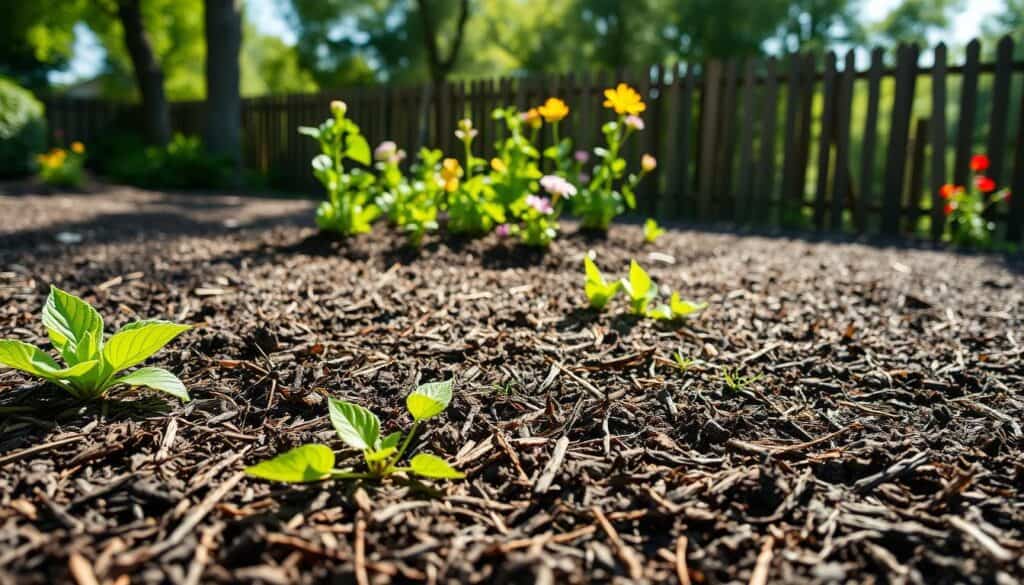
When picking the best mulch for flower beds, consider your soil and plants. Here are some top picks for weed prevention:
- Shredded Bark: Great for slopes as it stays put.
- Wood Chips: Lasts long and improves soil structure.
- Compost: Best for veggies as it feeds them right away.
- Pine Straw: Light and good for acidic plants.
For a decorative touch, try dark bark or cedar chips. They keep their color and look great. These mulches make your garden look polished and inviting.
The right mulch is a smart investment for your garden. It protects your plants and makes your garden beautiful. A well-mulched garden is the heart of a stunning outdoor space.
Essential Techniques for Laying Mulch Properly
Getting a weed-free garden starts with how you lay mulch. Knowing the organic mulch benefits shows that proper installation is key. It makes your garden look great without needing constant care.
To reduce garden weeding time with mulch, start with a clean garden. Remove all weeds by their roots before adding mulch. This stops weeds from growing through your mulch.
Learning how to lay mulch properly to prevent weeds is simple. Follow this guide to keep your garden beds healthy and weed-free:
- Clear the area of all debris and existing weeds.
- Water the soil thoroughly to lock in moisture.
- Apply a consistent layer of mulch, usually two to three inches deep.
- Keep the mulch a few inches away from the base of your plants to prevent rot.
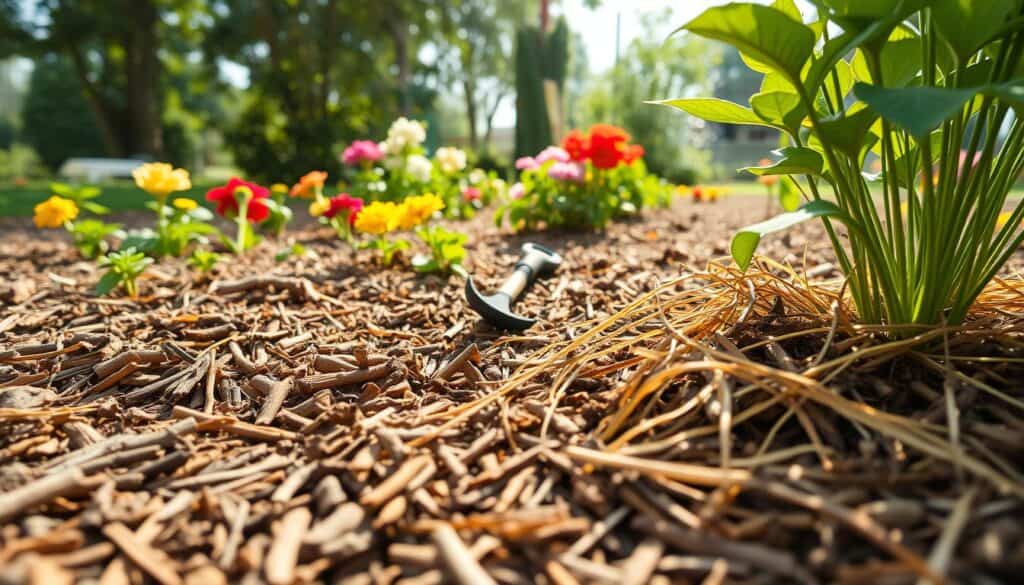
These mulching techniques for weed prevention are key for success. The right depth blocks sunlight, stopping weed seeds from germinating.
Choosing the right weed blocking mulch is also important. Pick wood chips, shredded bark, or straw that’s clean and weed-free. A good product will stay in place, even in heavy rain.
Lastly, focus on mulching garden beds to promote plant health. Don’t pile mulch against trees or plants, as it can cause disease. With these tips, your garden will stay beautiful and easy to care for all season.
Top Perennial Ground Covers for Weed Prevention
Using living ground cover plants is a smart way to fight weeds naturally. These plants form a dense layer that stops sunlight from reaching weed seeds. By picking the right plants, you can block weeds and make your yard look beautiful.
Many gardeners say using these plants is the best way to cut weeding time in half. Once they grow, these plants need little care. They act as a living shield, protecting your soil and keeping your garden beds clean all season.
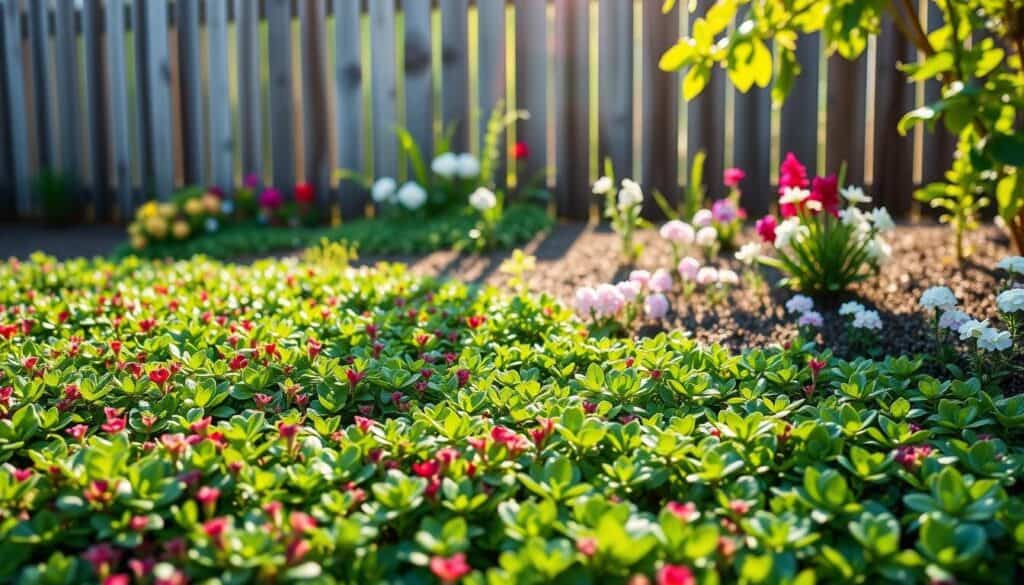
When picking the best ground covers for weed control, think about your garden’s needs. Some plants love the sun, while others prefer shade. Here are some top picks for your garden:
- Creeping Phlox: A fast-growing ground cover to block weeds that offers vibrant spring colors.
- Ajuga (Bugleweed): Known for its ability to spread quickly and form a thick mat that suppresses weeds.
- Sweet Woodruff: An excellent choice for shady areas that provides a delicate, fragrant carpet.
- Sedum: A drought-tolerant option that works well in rocky or dry soil conditions.
- Periwinkle (Vinca): A hardy, evergreen choice that provides year-round coverage.
Adding these ground cover plants to your garden is a smart mulching technique. They cover bare soil, stopping weed seeds from growing. This method saves you time and effort, and makes your outdoor space look lush and professional.
Living Mulch vs. Traditional Mulch
Knowing the difference between living mulch vs traditional mulch can change your gardening. Traditional mulch, like wood chips or bark, blocks sunlight from weeds. It keeps moisture in and controls soil temperature well.
Living mulch, on the other hand, uses plants like clover or creeping thyme. When looking at mulch vs ground cover for weed control, living mulch has special benefits. These plants fight weeds and make the soil better by fixing nitrogen.
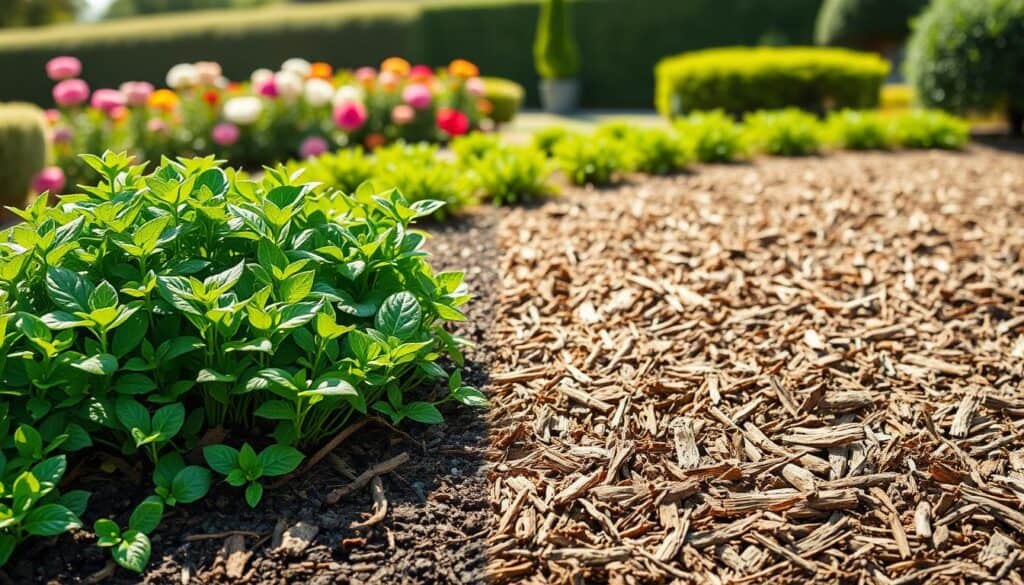
Traditional mulch is great for vegetable beds where you need to clear the soil fast. It looks clean and breaks down to enrich the soil. But, you need to add more often to keep weeds away.
For a lasting, low-care option, consider buying living mulch seeds online. This method needs less upkeep and adds color and life to your garden. Both methods work well, so pick what fits your plants and gardening plans.
Managing Weeds in Vegetable Gardens
Learning how to use mulch in vegetable gardens saves time and boosts harvests. The right mulch acts as a barrier, stopping weeds from taking nutrients and water. This lets your veggies grow strong without competition.
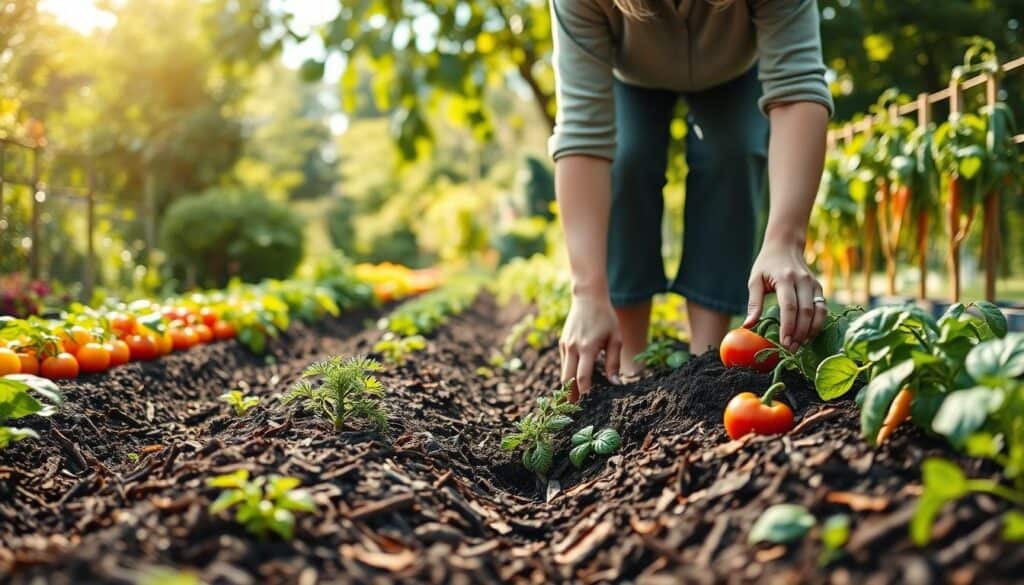
For success, pick organic mulches that improve soil health. Straw, untreated grass clippings, and compost are great for veggies. They keep weeds away, cool the soil, and keep it moist in summer.
Good garden weed management needs regular mulch and proper spacing. Leave a small gap around plants to avoid rot and ensure air flow. This way, you’ll get more from your garden with less effort.
- Apply a two-inch layer of straw to keep soil moisture consistent.
- Use weed-free compost to add nutrients while blocking sunlight from weed seeds.
- Ensure your garden weed management strategy includes regular monitoring for new sprouts.
- Understand how to use mulch in vegetable gardens by avoiding thick piles against plant stems.
Comparing Landscape Fabric and Mulch
Choosing between landscape fabric and organic mulch is a big decision for gardeners. Landscape fabric blocks weeds by acting as a physical barrier. Organic mulch, on the other hand, suppresses weeds by blocking light and enriching the soil.
Many gardeners look for the best weed barrier fabric under mulch for lasting results. The best fabric lets water and air reach the soil, which is key for plant health. But, a non-permeable plastic sheet can harm plants and cause drainage problems.
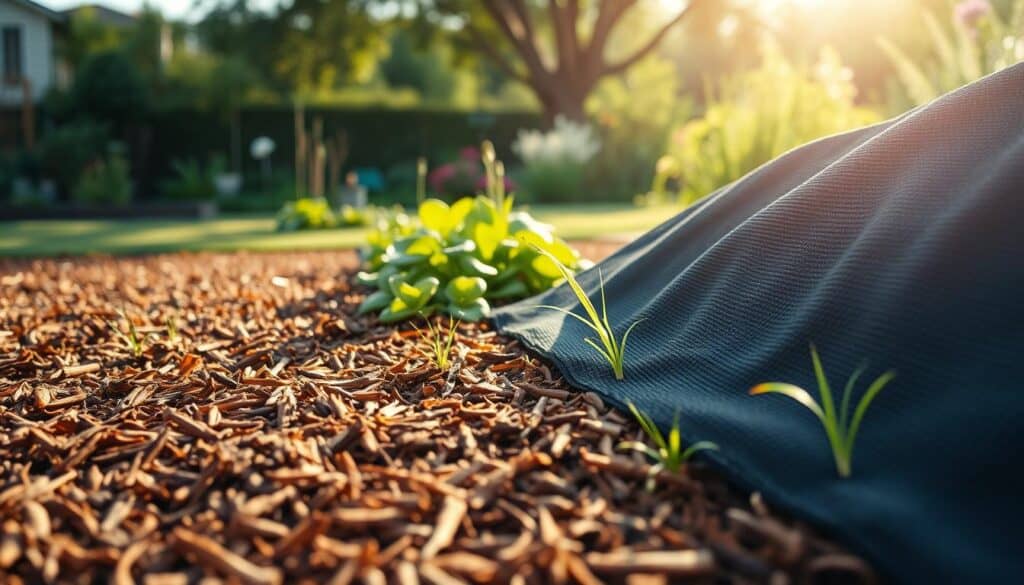
Choosing between rubber mulch vs wood mulch for weeds is also a common debate. Wood mulch breaks down to feed the soil. Rubber mulch, though durable, doesn’t offer the same benefits and can harm the soil over time.
For a natural solution, consider landscaping ground cover instead of synthetic barriers. These plants compete with weeds and shade the soil. Using landscaping mulch with these plants creates a strong system that keeps your garden beds neat and healthy all season.
- Organic Mulch: Improves soil structure and adds nutrients.
- Landscape Fabric: Provides a semi-permanent barrier against deep-rooted weeds.
- Living Ground Cover: Offers natural suppression and aesthetic appeal.
- Maintenance: Requires periodic replenishment for organic options.
Selecting Ground Cover for Shady Areas
Turning dark, neglected garden spots into lush landscapes is easier than you think. Shady areas often present unique challenges because many plants struggle to grow in low-light conditions. By choosing the right species, you can install low maintenance ground covers for landscaping that effectively block sunlight from reaching weed seeds.
Implementing diy weed control with ground cover is a smart way to keep your garden looking pristine without constant labor. These plants grow vigorously, creating a dense mat that outcompetes invasive species. Once established, they act as a living barrier that saves you hours of manual weeding every season.
If you are working with a large budget, you might look for cheap ground cover for large areas to cover ground quickly. Many shade-loving varieties spread rapidly, allowing you to buy fewer starter plants while achieving full coverage. This approach is both economical and highly effective for long-term maintenance.
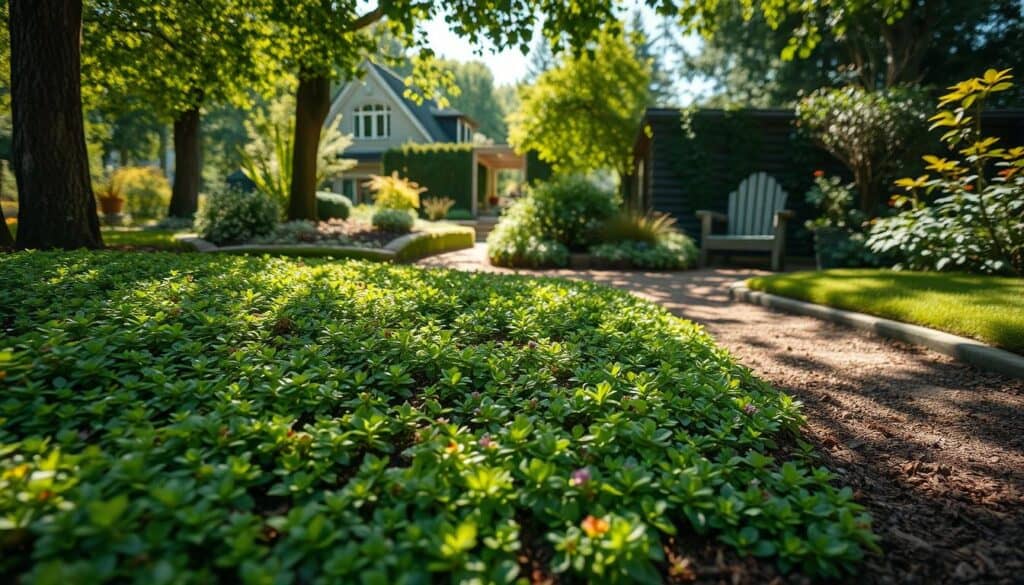
When searching for the best creeping ground cover for shade, consider options like Sweet Woodruff or Ajuga. These plants are famous for their ability to thrive in deep shade while maintaining a tidy appearance. They spread across the soil surface, leaving no room for weeds to take root.
For year-round coverage, look into evergreen ground covers for weed control. These plants provide color even during the winter months, ensuring your garden never looks bare. Consider these popular choices for your shady corners:
- Japanese Spurge: Excellent for deep shade and very hardy.
- Wintercreeper: A versatile option that handles various soil types.
- Wild Ginger: Offers beautiful foliage and spreads slowly but surely.
- Periwinkle: A classic choice that creates a thick, flowering carpet.
Exploring different ground cover ideas will help you find the perfect match for your specific soil and light conditions. Whether you need a plant that handles foot traffic or one that offers delicate flowers, there is a solution for every shady spot. Investing in these plants today will result in a healthier, more beautiful garden for years to come.
Maintenance Tips for Long-Term Weed Control
Even the most perfect garden beds need extra care to stay weed-free. By using mulching tips and tricks, you can keep your garden looking great. This way, you prevent weeds from growing. Keeping up with maintenance is key to a beautiful outdoor space.
Regularly check your garden to catch weeds early. When using ground cover for weed prevention, trim back any overgrown parts. This makes the plants thick enough to block sunlight and prevent weed seeds from germinating.
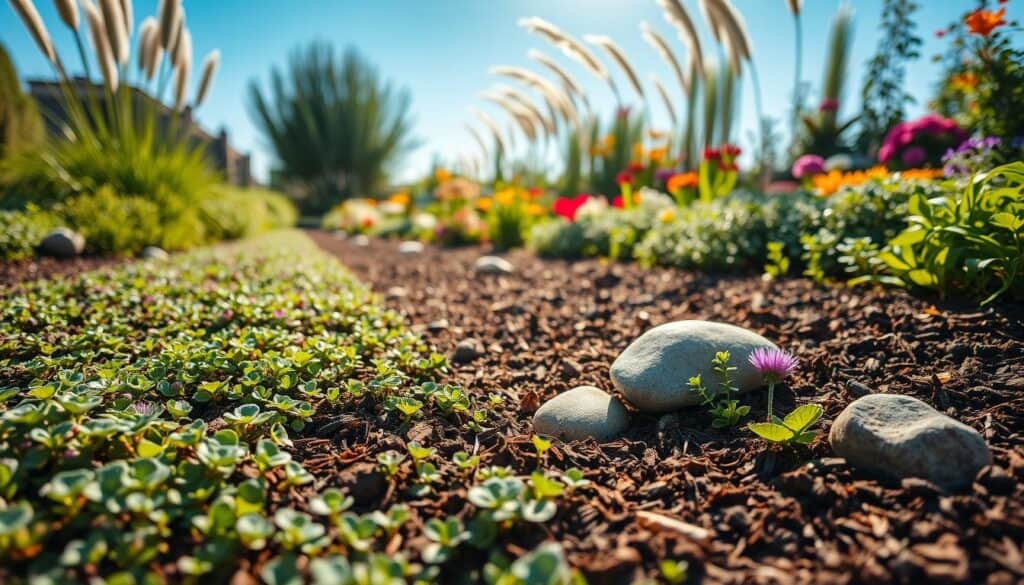
Choosing between rubber mulch vs wood mulch for weeds means different upkeep. Wood mulch breaks down, adding nutrients to the soil, so you’ll need to replenish it every spring. Rubber mulch lasts longer but might need occasional raking to remove debris that weeds can grow in.
For big projects, sometimes you need expert help. Whether you did the weed control ground cover installation yourself or hired a team, professional mulch installation services can give your beds a fresh look. They have the right tools to create a protective layer that lasts through tough seasons.
To keep your yard looking great, follow these important weed prevention tips:
- Spot-treat weeds right away by pulling them out by the root.
- Refresh your mulch layer every year to keep it two to three inches deep.
- Monitor your lawn weed prevention methods to match the seasons.
- Clear away fallen leaves and organic debris to prevent them from becoming weed food.
Small, consistent efforts all year can save you a lot of work later. By staying on top of things, your garden will stay vibrant and weed-free for years.
Sourcing Quality Materials Locally
Getting mulch and ground cover from local sources helps your plants do well in your area’s climate. A local organic mulch supplier in Boca Raton offers materials that fit your soil and weather. This is often better than what big-box stores sell.
Deciding between pine straw vs wood mulch for weeding gets easier with local advice. Experts know which materials work best in Florida’s sun and humidity. You can order bulk landscaping mulch or bagged mulch for sale nearby for any project size.
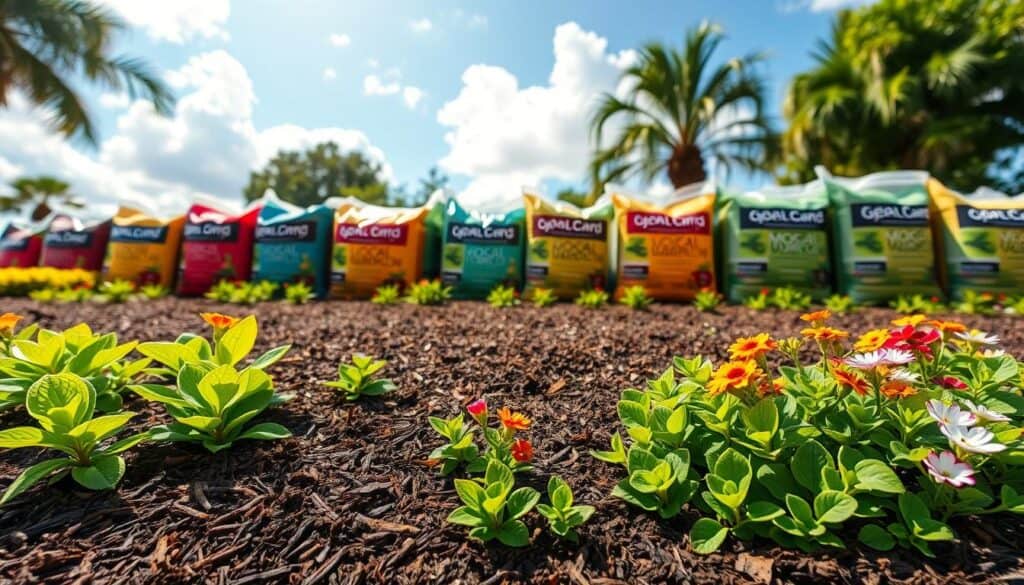
Choosing the right local landscaping supply for mulch changes your garden care. Many suppliers offer local mulch delivery near me, saving you time and effort. Whether it’s a little for a flower bed or a lot, professional mulch delivery makes it easy.
Adding living ground covers is also a good idea. Visiting a local garden center for ground cover lets you see the plants’ health before buying. You can purchase perennial ground covers or ground cover plugs for sale that fit your area well.
Here are some tips for shopping:
- Find a reputable organic mulch supplier in Boca Raton for chemical-free products.
- Compare prices to buy cheap garden mulch without losing quality.
- See if the company offers delivery of pine straw in Boca Raton to save on transport.
- Ask about professional installation if you’re buying bulk mulch in Boca Raton, FL for big areas.
- Talk to staff at your local garden center for ground cover for advice on your soil.
Supporting local businesses helps your garden in the long run. They offer better advice on mulch in Boca Raton than big stores. Start looking today for the best materials for a beautiful, easy-to-care-for landscape.
Conclusion
Strategic mulching and the right ground cover plants can save you time. You’ll spend less time pulling weeds and more time enjoying your outdoor space.
A beautiful garden doesn’t need constant hard work. By using the techniques and materials we’ve shared, you can create a strong landscape. Your plants will grow well, and weeds will be kept away all year.
Brands like Scotts or Earthgro offer good options for your soil. Local nurseries have native ground covers that fit your climate. These choices help your local ecosystem and keep your beds neat.
Begin these simple strategies today. You’ll see a big drop in garden weeding time and effort. Your yard will turn into a peaceful spot, not a constant chore.
Share your progress with other gardeners in your area. Tell us which ground covers worked best for your soil. Your success will encourage others to create sustainable and efficient gardens.
## FAQ
### Q: How can I effectively use mulch and ground cover to cut weeding time in half?
To cut weeding time in half, start with fast-growing ground cover. Then, add a thick layer of organic mulch. This creates a barrier that stops weeds by blocking sunlight.
### Q: Does mulch actually stop weeds from growing?
Yes! Mulch stops weeds by blocking sunlight. Products like Scott’s Nature Scapes shredded bark are effective. They may not stop all seeds, but they reduce weed growth significantly.
### Q: What is the best mulch for weed suppression in flower beds?
The best mulch for flower beds is organic, like shredded hardwood or pine straw. Wood chips are heavier, while pine straw is good for acid-loving plants. Organic mulch also improves soil health.
### Q: How do I lay mulch properly to prevent weeds from returning?
To lay mulch right, clear the area first. Use a Hula Ho for weed control. Apply a 3-inch layer, keeping it away from plant stems. This keeps your barrier effective all season.
### Q: Which are the best ground covers for weed control in sunny and shady areas?
In sunny spots, creeping thyme or sedum are great. For shade, Pachysandra or Ajuga reptans work well. These plants create a living mulch that prevents weeds.
### Q: Should I use landscape fabric vs mulch for weed control?
Using landscape fabric can add protection, but it may block nutrients. Organic mulch often provides better benefits like moisture retention. For pathways, fabric can be helpful.
### Q: How can I manage weeds in vegetable gardens without chemicals?
Use organic materials like weed-free straw or leaf mold in vegetable gardens. Living mulch, like clover, can also control weeds and add nitrogen.
### Q: Where can I find quality landscaping mulch and ground cover plants for sale?
For bulk mulch in Boca Raton, FL, try Big Earth Landscape Supply or Sunniland Corporation. Bagged mulch is available at The Home Depot or Lowe’s. You can also find ground cover plugs and seeds online.
### Q: What are some low maintenance ground covers for landscaping?
Low maintenance options include Mondo Grass or Creeping Phlox. They require little pruning and control weeds well. For large areas, consider cheap options like clover.
### Q: Can I get professional help for weed control ground cover installation?
Yes. Many prefer professional mulch installation for a job well done. A local supplier in Boca Raton can handle delivery and installation. This ensures your weed control strategy works well.