Watching your favorite blooms wilt in the July sun is frustrating. Many gardeners struggle with keeping plants moist. But, learning the right container garden watering tips can make all the difference. It ensures your plants stay lush and vibrant, even when it’s hot.
Knowing how to hydrate your container garden is key to success. Whether you’re new or experienced, the right watering techniques are vital. They prevent stress and keep roots healthy. A good summer care routine can greatly improve your garden’s yield.
We’ll share simple ways to water your potted plants during summer. These tips will help you keep your garden alive, even in the hottest months. Follow this guide to turn your balcony or patio into a lush oasis that thrives, even in extreme heat.
Visit The Marketplace or grab your Free Garden Starter Kit
Understanding Why Container Plants Dry Out So Fast
Knowing how a container works is key to keeping your plants happy all summer. Containers lose water faster than garden beds because they have less soil. To prevent container plants from drying out, you need to check them more often.
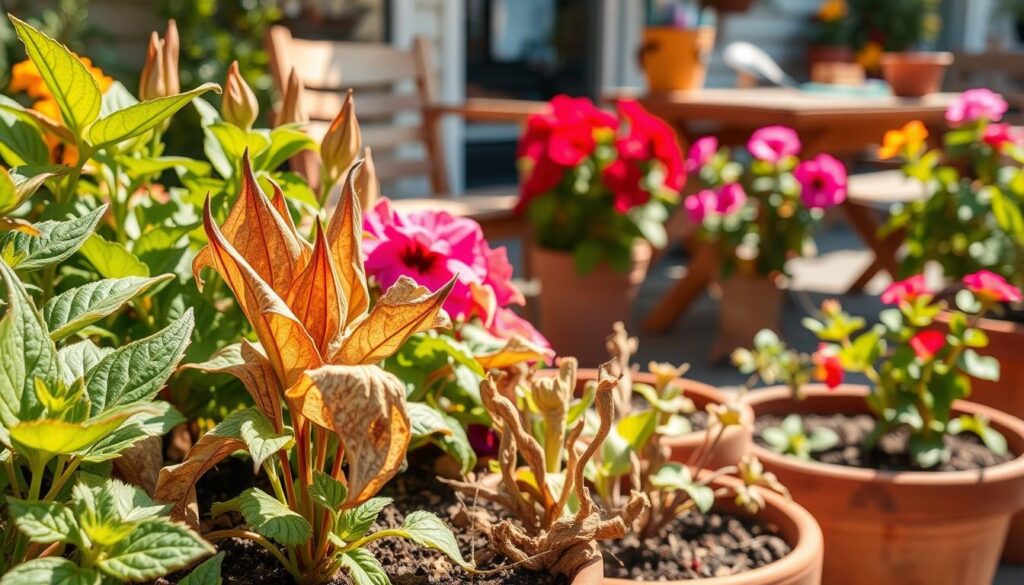
It’s important to know when your plants need water. If you wait too long, they can get stressed. Look for these signs that your plant is thirsty:
- The soil surface feels dry or pulls away from the edges of the pot.
- Leaves begin to lose their luster or appear slightly dull.
- The container feels noticeably lighter when you lift it.
- New growth starts to wilt during the hottest part of the afternoon.
Another problem is the roots. Preventing root bound plants is vital. When roots fill the pot, there’s little room for soil and water. This makes the plant dry out quickly.
By moving your plants to bigger pots or trimming roots, you help them hold water better. This keeps your garden looking great all season. Regular care and watching your plants are essential.
Selecting the Best Potting Soil for Maximum Water Retention
Getting the right potting soil is key to keeping your container garden moist. A good mix holds water well, even when it’s hot. But a bad mix drains too fast, leaving plants dry and stressed.
When looking at soil mix for water retention, you’ll see coconut coir and peat moss often. It’s important to know how they compare. Coconut coir is eco-friendly and keeps water well. Peat moss is a classic choice for its moisture and acidity.
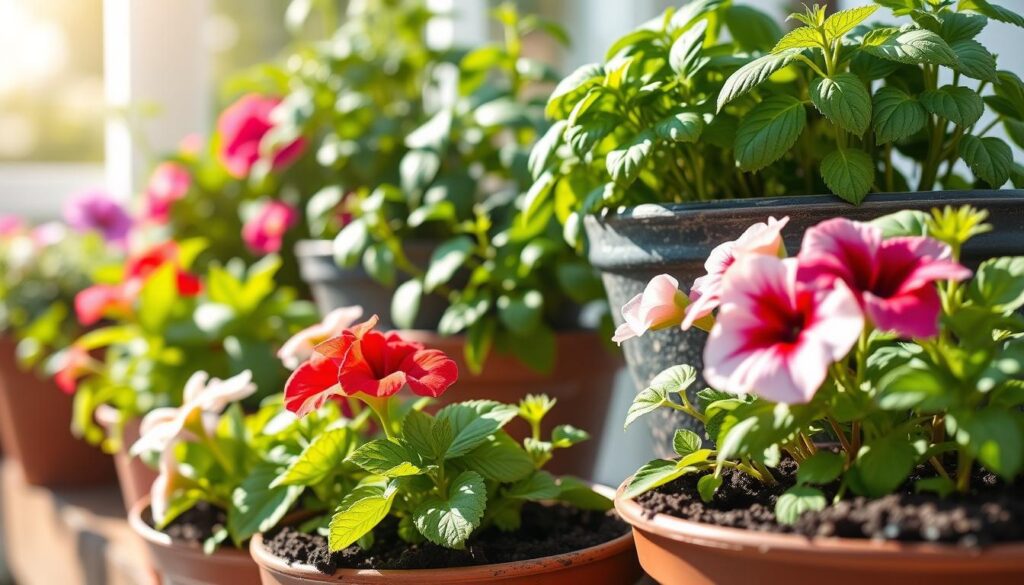
To make a drought resistant potting mix, mix these with other ingredients. This mix works well to keep soil moist all summer. You can adjust it so it stays damp but doesn’t get too wet.
Many gardeners also use water retaining soil additives to help. For example, hydrogel for potted plants is very effective. It absorbs water and slowly releases it back to the roots as the soil dries.
- Mix in organic compost to improve soil structure.
- Add vermiculite to help hold onto essential nutrients.
- Incorporate perlite to maintain proper aeration.
- Use hydrogel crystals for long-lasting hydration.
By following these soil moisture retention tips, your garden will do great. Choosing the best potting soil for water retention helps your plants grow well. A well-prepared container is the first step to a lush, vibrant garden that can handle summer heat.
Mastering the Art of Deep Watering for Potted Plants
Getting vibrant container plants needs more than just a quick splash of water. Many gardeners only water the surface, leaving the roots dry and stressed. It’s key to use deep watering container plants methods to help roots grow strong and get enough water.
Using the right watering techniques for container plants lets moisture reach the roots. This stops dry spots that can cause wilting. By following best practices for watering container gardens, your plants will stay watered all summer.
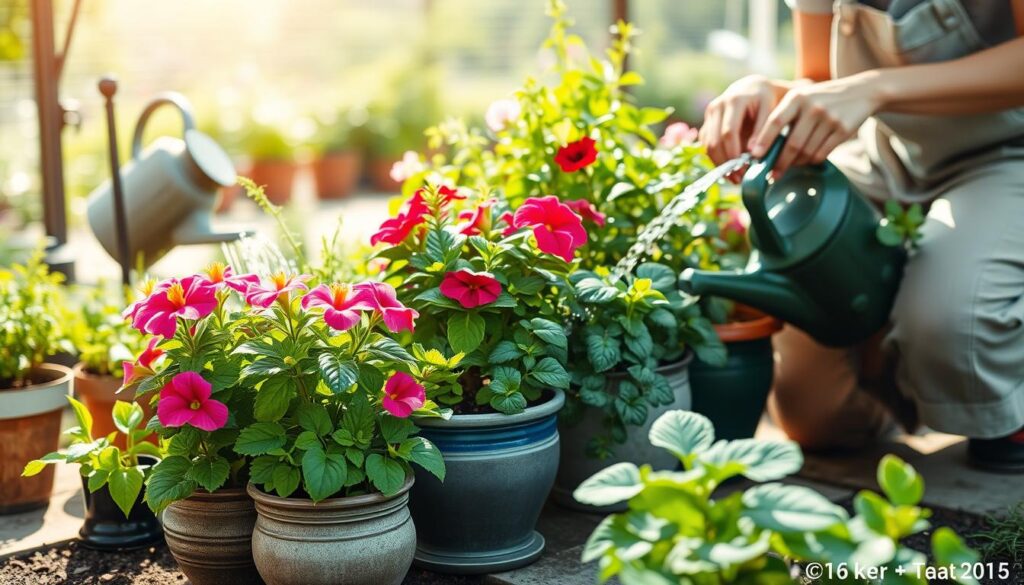
Learning how to water container garden setups well takes patience. Water slowly until you see it draining from the bottom. This makes sure the soil is moist and air pockets are filled with water.
Keeping your potted plant hydration consistent is key to avoiding heat stress. Using specific container watering techniques helps create a moisture reservoir. This supports deeper roots, making your plants more adaptable to changes.
Using a moisture meter for pots can help. It shows how damp the soil is deep down. Check it often to avoid overwatering or underwatering.
- Check soil moisture at least two inches deep.
- Water slowly to allow for even absorption.
- Wait for drainage to confirm the pot is saturated.
- Adjust your frequency based on current weather conditions.
Getting good at these habits is the best way to keep potted plants hydrated all season. Deep, thorough watering gives your garden the base for lush, healthy growth. With consistent care, your containers will thrive, even in the summer sun.
Optimizing Your Watering Schedule for Summer Heat
When summer temperatures rise, your container plants need more water. A detailed summer watering guide for potted plants helps them grow well. A regular watering schedule for potted plants in summer ensures they get water when they need it most.
Good summer watering strategies for container plants mean watching how fast the soil dries. Use summer watering tips for pots like checking moisture two inches down before watering. This stops overwatering and keeps plants hydrated.
Dealing with a container gardening heatwave means being very careful. You might ask how often to water container plants in summer. The answer depends on the plant and pot size. Smaller pots dry out faster, so they need more water.
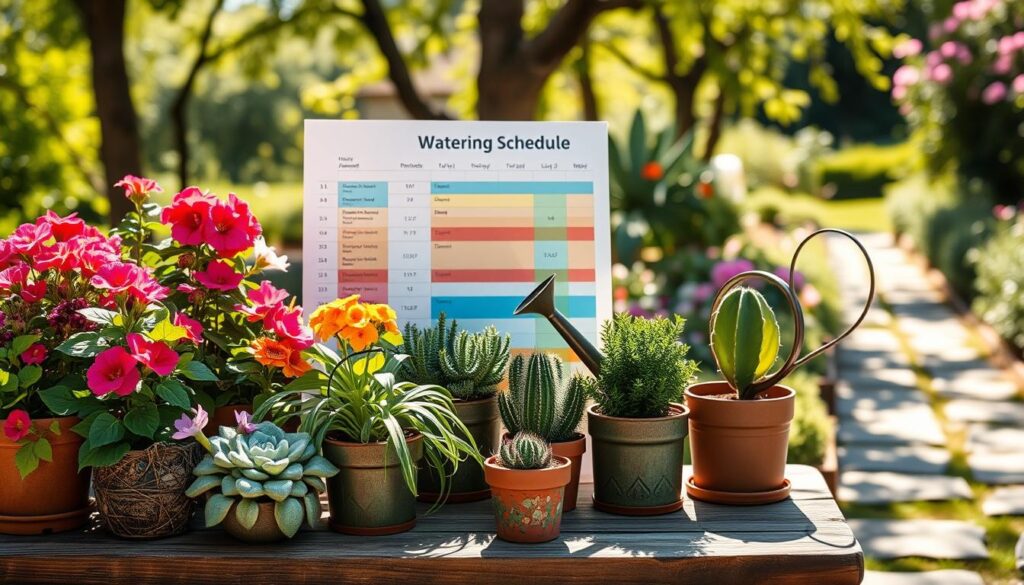
During the hottest weeks, daily watering for container gardens is often needed. Watering in the early morning is best. This lets roots soak up water before it evaporates quickly.
When watering patio plants, remember that concrete can make plants lose more water. Greenhouse container watering also needs careful watching because heat gets trapped. Always adjust your watering based on your garden’s specific conditions.
Learning these watering techniques for summer heat will keep your garden bright all season. A reliable container garden watering schedule gives your plants the stability they need. Consistency is the key to keeping plants healthy and your garden beautiful.
Utilizing Mulch to Lock in Moisture
Using organic mulch is a top tip for keeping your container garden hydrated. It protects the soil from the summer sun’s heat. This simple step keeps the soil cool and prevents it from drying out.
When picking the best mulch for container gardening, choose slow-decomposing materials. Shredded bark, pine needles, or cocoa hulls are great options. Organic mulch not only holds water but also adds nutrients to the soil as it breaks down.
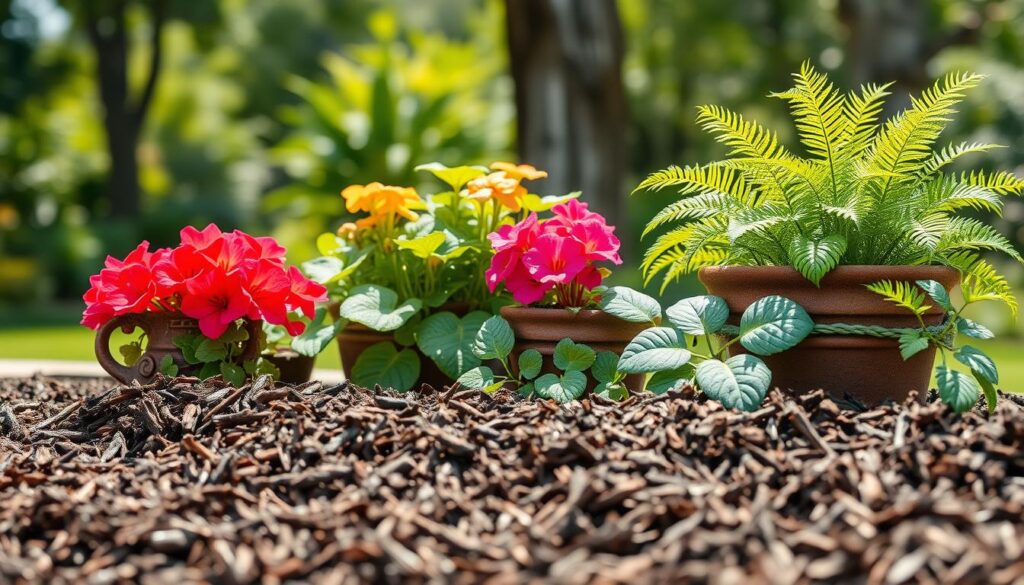
For the best results, your mulch should work well with your soil. A good soil mix for water retention is the base. Add water retaining soil additives like hydrogels or vermiculite to hold moisture. Together, they create a moisture-locking system that keeps your plants healthy.
By following these soil moisture retention tips, you’ll make gardening easier during hot months. Here are some water saving gardening tips to keep your containers hydrated:
- Apply a two-inch layer of mulch to the top of your potting soil.
- Leave a small gap around the plant stem to prevent rot.
- Refresh your mulch layer mid-summer if it begins to thin out.
- Water deeply before applying fresh mulch to seal in the moisture.
Implementing Slow-Release Watering Methods
If you find it hard to keep your plants watered when you’re busy, slow-release watering methods are a great fix. These systems give your plants a steady flow of water right to their roots. This way, you can stop your container plants from drying out, even on the hottest days.
Getting self watering container systems is a smart move for keeping your plants hydrated. These pots have a built-in water tank. The soil pulls up water as it needs it. This method works well, keeping large pots moist without much effort.
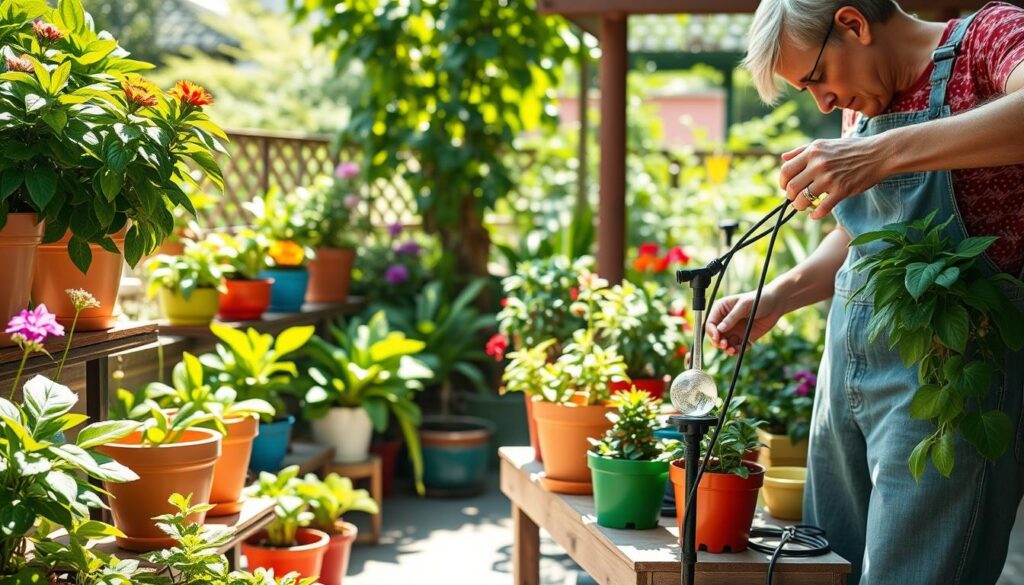
If you like to take it easy, automatic watering for potted plants is a big help. You can use drip emitters or gravity-fed globes to water your plants slowly. These tools are great for those who don’t want to water every day.
Building a diy drip irrigation container garden is easy and fun. You can link small emitters to a hose or rain barrel with simple tubing. This setup has many benefits for your garden:
- Consistent moisture levels that help roots grow strong.
- Reduced water waste by watering exactly where it’s needed.
- Time savings by not having to water by hand every day.
- Versatility for use in hanging baskets or big patio planters.
Good container irrigation is key to keeping your plants watered all season. Whether you pick a ready-made system or make your own, your plants will appreciate it. With steady moisture, they’ll bloom brightly and stay green all summer.
Adapting Watering Techniques for Different Container Types
Your choice of planter affects how often you water. Knowing the best way to water containers depends on the material and size. By adjusting your watering techniques for container plants, you keep your garden green.
Plastic vs clay pots water needs differ a lot. Clay or terra cotta pots lose moisture quickly because they are porous. To use terra cotta pots effectively, check the soil daily. These pots dry out faster than others.
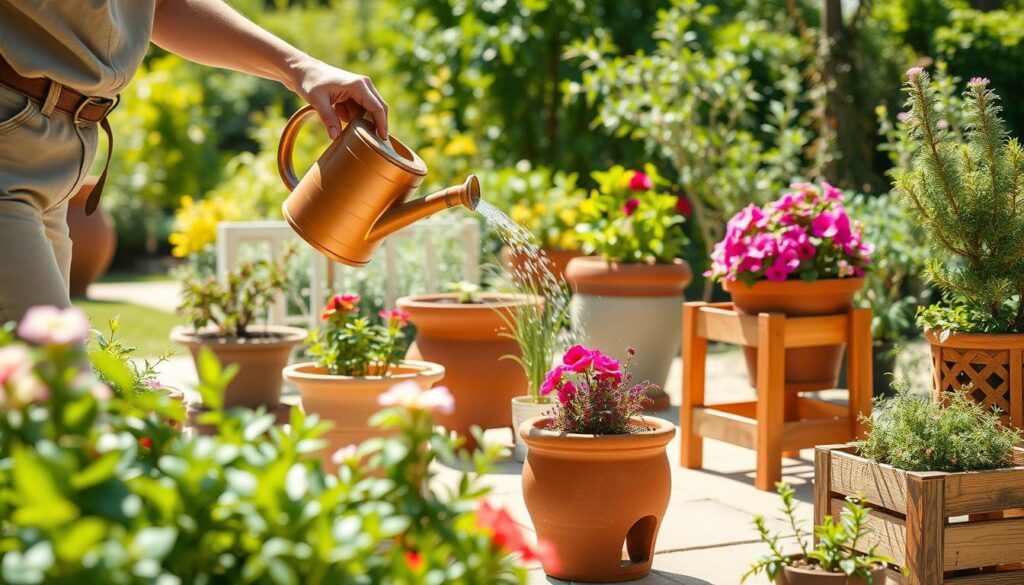
Watering hanging baskets and water hanging planters is critical. They lose moisture fast due to wind and sun. You might need to water them twice a day in summer. Using container watering techniques like self-watering reservoirs helps keep moisture steady.
Large planters hold more soil, which means they keep water longer. But, watering large planters requires a deep soak. This ensures water reaches the roots. For rooftop garden setups, remember that wind and sun increase evaporation, so water more often.
Different plants need different amounts of water:
- Watering potted vegetables: Heavy feeders like water potted tomatoes need consistent moisture to prevent blossom end rot.
- Watering perennials in pots: These plants need deep, thorough watering to establish strong roots that can survive the winter.
- Watering succulents in pots: These plants prefer a “soak and dry” method, allowing the soil to dry out completely between waterings to prevent root rot.
By adjusting your watering based on your containers and plants, you’ll see better growth. Watching your plants closely is key to success.
Protecting Your Container Garden from Wind and Sun
When a heatwave hits your container garden, your plants need more than water. They need effective summer watering strategies for container plants to fight off evaporation. Adjusting your watering techniques for summer heat helps keep your plants green and alive.
Wind and direct sun cause moisture loss in elevated spaces. If you’re watering balcony garden in summer or how to water rooftop garden, protect your pots from wind. Use lattice screens or tall, hardy plants to shield your delicate flowers.
Knowing the plastic vs clay pots water needs is key. Plastic holds moisture longer, but clay dries out faster in sunlight. To use terra cotta pots well, keep them shaded or group them for a cooler, more humid spot.
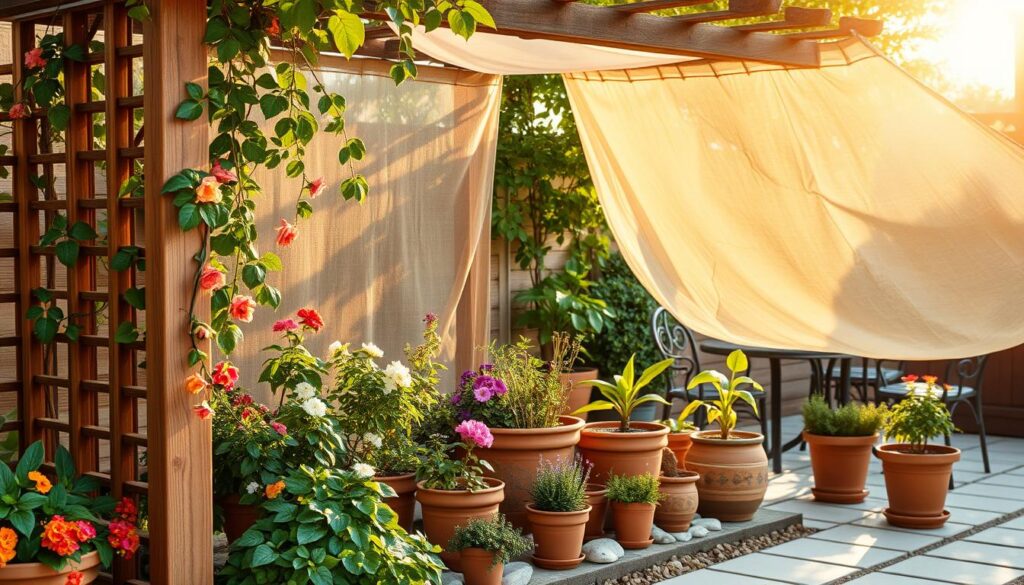
Using the best mulch for container gardening helps protect your soil. Organic mulch, like straw or wood chips, slows down evaporation. This keeps the soil cool and prevents it from getting too hot under the sun.
When watering small pots in sun, place them carefully. They lose moisture quickly. Move watering patio plants to dappled shade during the hottest part of the day. Even in a greenhouse container watering setup, proper ventilation and shade cloth are essential to avoid heat stress.
How to Water a Container Garden So Plants Never Dry Out in Summer
To keep your container garden vibrant in summer, follow a watering plan. Understand your pots’ needs, whether they’re watering hanging baskets or watering potted vegetables. Consistency is key, even when the sun is strongest.
Water your containers early in the morning. This way, moisture reaches the roots before evaporation. If plants wilt by afternoon, check them but avoid wetting leaves to prevent disease.
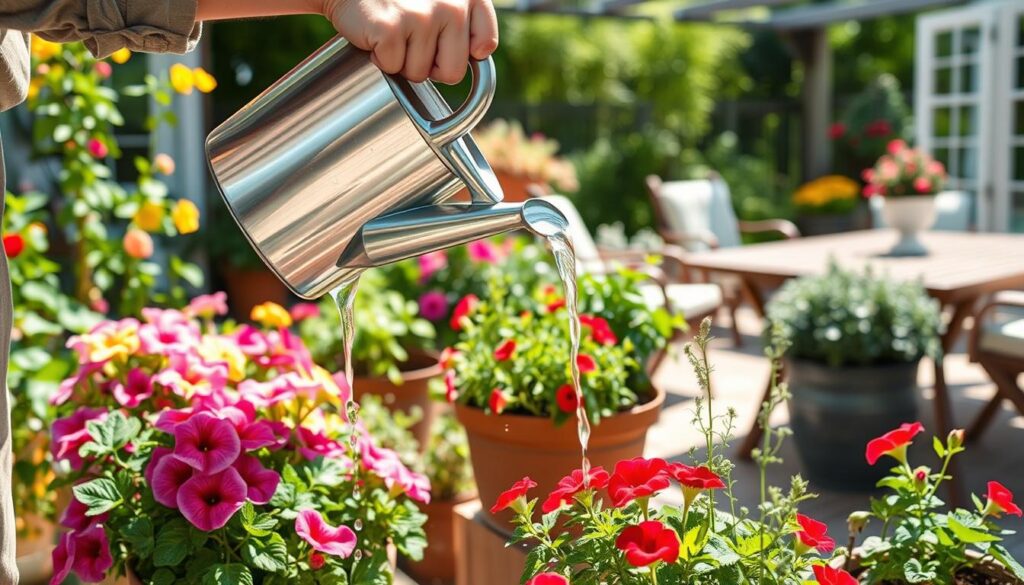
Creating a container garden watering schedule keeps you organized. While daily watering for container gardens is common in heatwaves, it varies by plant and pot size. Here’s a guide to help you water right:
- Watering hanging baskets and small pots: These dry out quickly and may need watering twice a day.
- Watering potted tomatoes and vegetables: Keep the soil moist to prevent blossom end rot and ensure a bountiful harvest.
- Watering large planters: These hold more moisture, so check them daily but only water when the top inch is dry.
- Watering perennials in pots: They need deep watering to develop strong roots that survive winter.
- Watering succulents in pots: Let the soil dry completely between waterings to avoid root rot.
Deep watering is vital for long-term health. Water until it drains from the bottom. This ensures the roots get enough moisture, essential for watering potted plants summer long.
Wondering how often to water container plants in summer? Use the finger test. If the soil feels dry an inch down, it’s time to water. This container garden watering schedule helps keep your garden lush and healthy all season.
Troubleshooting Common Watering Mistakes
Even the most dedicated gardeners sometimes struggle with their container plants. Using container garden watering tips helps keep your plants looking great. By following best practices for watering container gardens, you can fix problems quickly.
So, why do container plants dry out so fast? It’s often because of small pots, hot weather, and dry soil. When the roots outgrow the pot, there’s less soil to hold water.
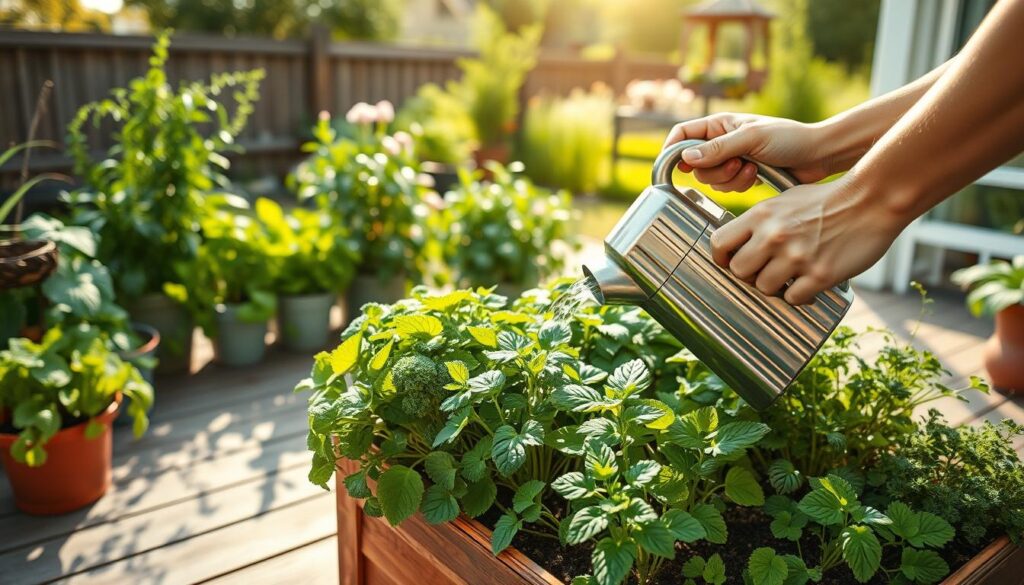
If your plants look wilted on a hot day, don’t worry. A deep, slow water soak can help. Move the pot to a cool spot and water it slowly until it drains. This helps the roots recover.
Using a moisture meter for pots makes watering easier. It shows when your plants need water, even if the soil feels dry. This way, you water them just when they need it.
At times, potting soil can push water away instead of soaking it up. To fix this, soak the whole pot in water for thirty minutes. This rehydrates the soil and helps the roots get the moisture they need.
But, if you’ve watered too much, you need to know how to fix waterlogged pots. Make sure the drainage holes are clear and lift the pot. This lets excess water drain off. By checking the soil’s moisture, you can avoid overwatering and keep your garden healthy.
Preparing Your Garden for Vacation Watering
Getting your garden ready for vacation is key to coming back to a lush oasis. Many gardeners fret about their plants in the hot months. But, a good summer watering guide for potted plants can make all the difference. With a few steps ahead, your containers will stay hydrated even when you’re away.
Using automatic watering for potted plants is a smart move. It removes the need to guess when to water and ensures a steady supply. For a more lasting solution, self watering container systems are great. They have a reservoir that lets plants get water as they need it.
If you like DIY projects, setting up a diy drip irrigation container garden is easy. You can also use slow release watering methods like water-absorbing crystals or terracotta spikes. These are great for short trips and give you peace of mind.
Before you leave, remember these key summer watering tips for pots:
- Move containers to a cooler spot using potted plant shade tips to reduce evaporation.
- Group your pots together to create a microclimate that holds humidity.
- Focus on protecting pots from wind by placing them against a wall or fence.
- Apply a thick layer of mulch to the top of the soil to lock in moisture.
- Check your container irrigation setup one last time before you head out the door.
These steps help you avoid the stress of finding dry, damaged plants when you return. Whether you opt for tech solutions or DIY tricks, knowing how to water while on vacation lets you relax. Your garden will be healthy and vibrant when you get back.
Conclusion
Your journey to a lush outdoor space needs consistent habits and smart observation. You now have the tools to keep your container plants from drying out, even in July and August’s heat.
Good container plant care in summer means balancing water and soil health. By using these water-saving tips, you protect your plants’ beauty and health. Small changes in your daily routine can make a big difference for your plants.
It’s just as important to know how to avoid overwatering your plants. Good drainage and soil quality keep roots strong. If you see signs of stress, you can now save your plants before it’s too late.
Your dedication to these practices will keep your plants looking great all season. Use these tips to keep your container garden alive and thriving. Share your success with other gardeners and enjoy the fruits of your labor.