Creating a beautiful garden shouldn’t be a full-time job. Many homeowners dream of a vibrant yard. But they dread the endless weeding or watering schedules.
You can easily cultivate a thriving ecosystem by choosing the right species. These selections support local wildlife. They are incredibly easy to manage throughout the seasons.
We have gathered 7 native plants that attract pollinators and need almost no care. These hardy options provide essential nectar for bees, butterflies, and hummingbirds.
By picking these varieties, you ensure your landscape stays healthy with minimal human intervention. Discover how these plants that need almost no care can transform your outdoor space into a low-maintenance sanctuary for years to come.
Visit The Marketplace or grab your Free Garden Starter Kit
Why Native Plants Are the Secret to a Low-Maintenance Garden
Gardening with minimal care starts with choosing the right plants for your local environment. Native plants have evolved over thousands of years to thrive in the specific soil, moisture, and climate conditions of their regions.
These species are already adapted to your area, making them no-fuss garden plants that require very little intervention. Unlike exotic ornamental species, they do not demand constant attention to survive.
By selecting these varieties, you can embrace low irrigation landscaping that saves both time and money. Once established, these plants rarely need supplemental water or synthetic fertilizers to look their best.
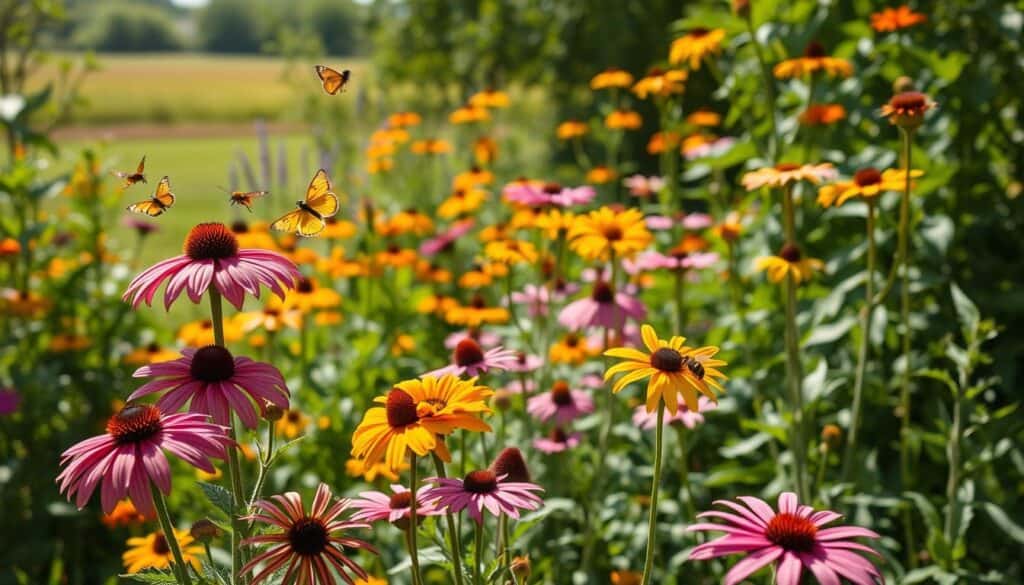
Choosing native flora is the ultimate strategy for pollinator-friendly gardening. These plants naturally resist local pests and diseases, which eliminates the need for harmful chemical pesticides.
When you compare native vs non-native pollinator plants, the benefits of local species become clear. They provide the most effective native ecosystem support for bees, butterflies, and other beneficial insects.
These self-sufficient garden plants create a balanced environment that manages itself throughout the seasons. They are truly the best easy landscape plants for homeowners who want beauty without the heavy workload.
Ultimately, incorporating native plants into your yard is a smart investment. You will enjoy a vibrant, healthy space while spending less time on chores and more time enjoying your low maintenance plants.
7 Native Plants That Attract Pollinators and Need Almost No Care
Starting a bee and butterfly-friendly garden is easy with hardy, native plants. These low maintenance pollinator plants grow well in many places. They give vital food to support local pollinators. By picking the right pollinator plants, your garden will look great with little effort.
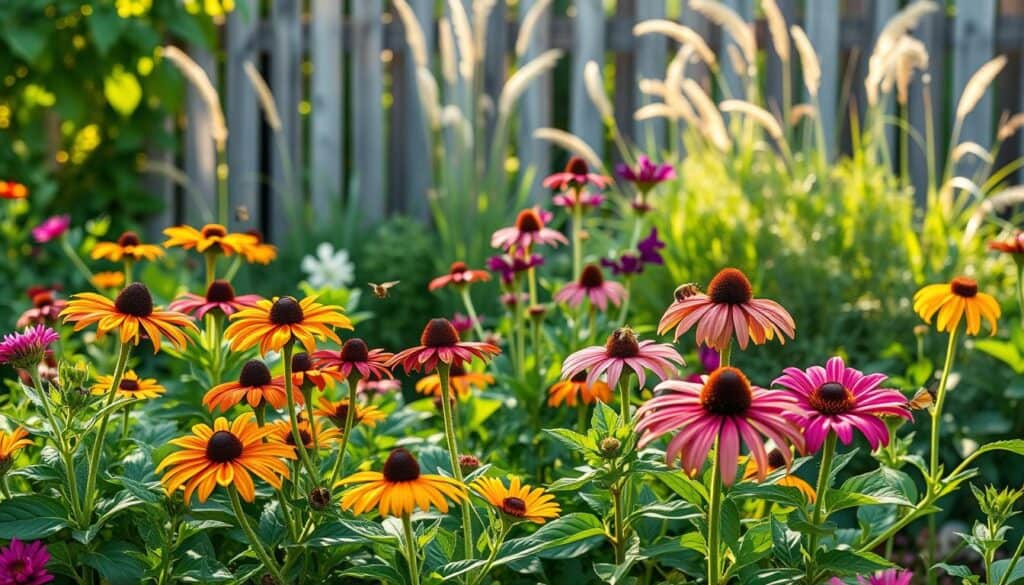
Picking the right plants is key to a great garden. Each plant is a strong pollinator attractant, full of nectar all season. Adding these native plants for pollinators makes your garden a safe haven for wildlife.
These easy care flowers can handle common garden problems. Choosing easy care pollinator-friendly plants makes gardening simple. They’re ideal for those who want to help the environment without spending a lot of time on gardening.
Here are some benefits of picking the best plants for a pollinator garden:
- Native plants to attract pollinators fit your local climate and soil perfectly.
- They offer steady food for bees, butterflies, and other helpful insects.
- They need much less water and fertilizer than other plants.
- A well-planned garden with these plants becomes a thriving ecosystem that lasts for years.
Black-Eyed Susans: The Sun-Loving Garden Staple
Black-Eyed Susans are a standout choice for gardeners. They are low maintenance plants that require little care. Their bright yellow petals and dark centers add a sunny touch to any garden.
These flowers are great for pollinator flowers for sunny gardens across the U.S. They are perfect for black-eyed susans for bees because they offer a safe landing spot. Your garden will buzz with life from mid-summer to autumn.
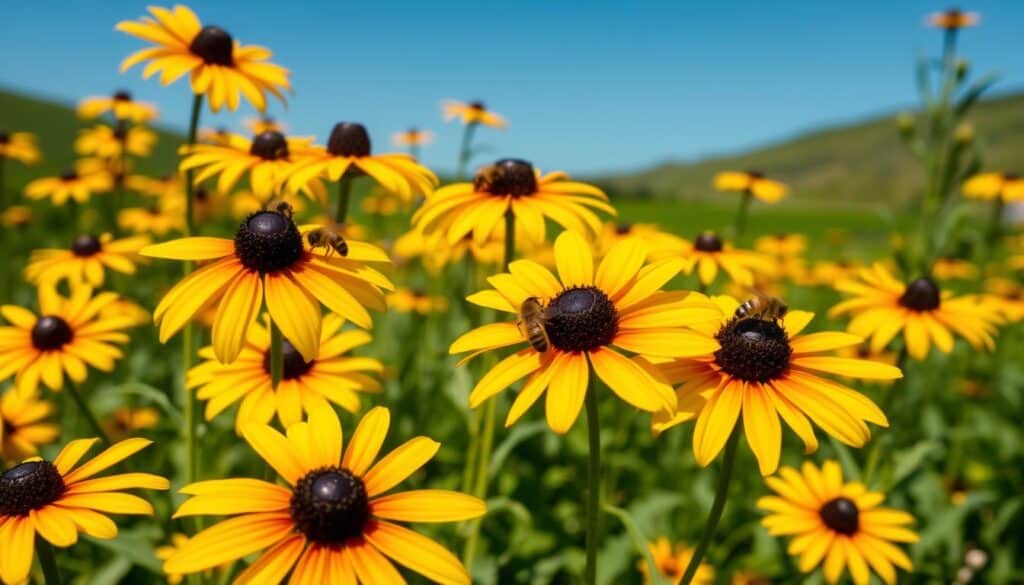
As sun-loving native perennials, they love bright, open spots. They are drought-tolerant once established, saving you water during hot months. This makes them perfect for busy people.
Choosing these flowers means you get pest resistant native plants without harsh chemicals. They offer natural pest control, keeping your garden healthy and organic. They make gardening easy and enjoyable for everyone.
Wild Bergamot: The Bee Balm Favorite
Wild Bergamot is a top choice for attracting pollinators to your garden. Known as wild bergamot bee balm, it’s essential for boosting local biodiversity. Its lavender flowers are not only beautiful but also vital for the ecosystem.
It’s a reliable bee friendly plant that needs little care once it’s established. Its nectar-rich blooms make it a favorite among hummingbirds too.
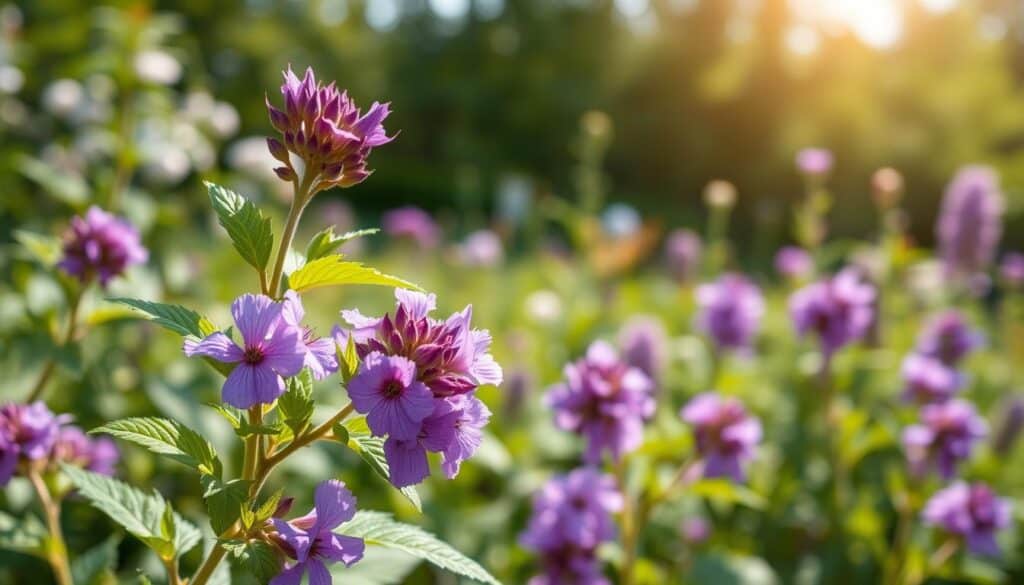
This plant is great for attracting bees and butterflies in warmer months. It thrives in the Southeast’s humid conditions. Its ability to withstand summer heat keeps your garden lively even when it’s hot.
Adding this species to your garden offers a valuable food source for local wildlife. It’s a top choice for supporting healthy ecosystems. Choosing native varieties like this one makes your garden more resilient and beneficial for nature.
Native Milkweed: Essential Support for Monarchs
Native milkweed for monarchs is incredibly valuable. It’s the only food for Monarch butterfly larvae. By picking the right butterfly plants, you help these butterflies lay eggs and grow.
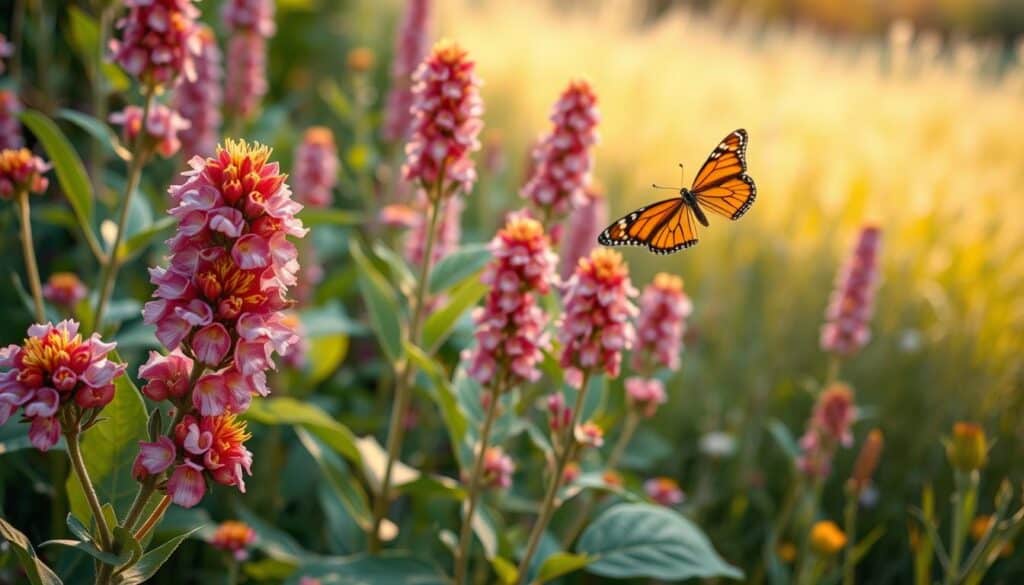
To attract butterflies naturally, learn about their life cycle. Milkweed is key for their growth. It also feeds adult butterflies with nectar.
Choose from different Asclepias species for your garden. They grow well in various conditions. Planting milkweed helps pollinators in your backyard.
- Provides a necessary nursery for the next generation of butterflies.
- Offers high-quality nectar for adult pollinators.
- Thrives in a wide variety of soil and moisture conditions.
- Supports long-term biodiversity in your local ecosystem.
Blanket Flower: Drought-Tolerant Coastal Charm
The native blanket flower is a top pick for tough, sandy spots. These easy care flowers are great for those who don’t want to spend a lot of time gardening. Their bright red and yellow flowers add a sunny feel to any area outside.
This plant is a superstar when it comes to handling dry, sandy soil. It’s a top choice for native flowers that don’t need rich soil. Plus, as coastal sand pollinator plants, they grow well in poor soil without needing extra help.
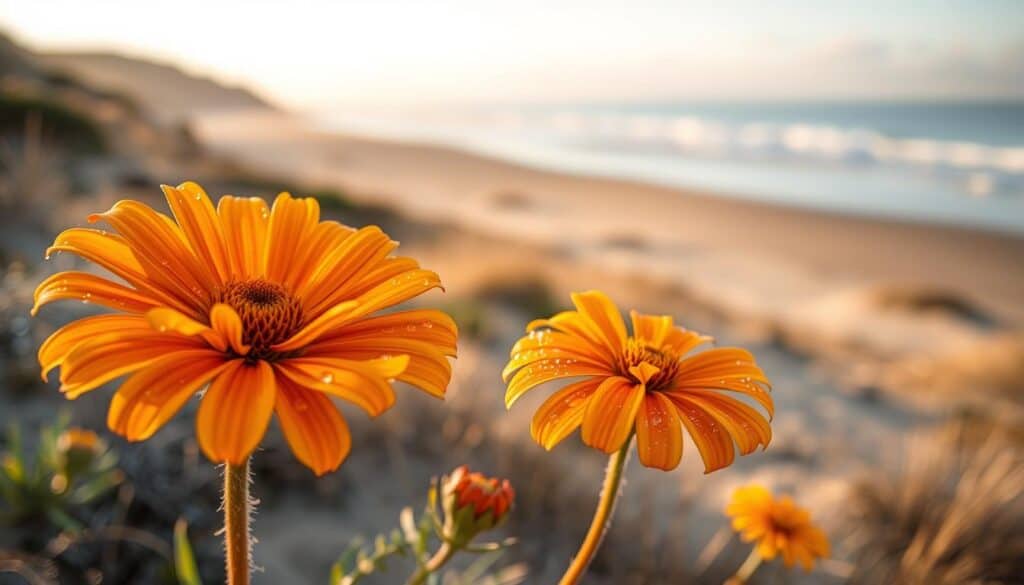
These plants are key drought tolerant nectar plants in the summer. They attract butterflies and bees, even when other flowers are gone. They’re a reliable source of food for these pollinators all summer long.
Thinking about a low water pollinator garden? Here’s why you should include these flowers:
- Exceptional heat resistance for sunny spots.
- Minimal water needs once they’re established.
- High adaptability for sandy soil.
- Consistent blooming that helps local wildlife.
Florida Butterfly Weed: A Pollinator Magnet
If you want a vibrant splash of color that draws in butterflies, look no further than Florida butterfly weed. This brilliant orange-flowered perennial acts as a powerful pollinator attractant for gardens across the state. Its striking appearance makes it a favorite for those who want beauty without the constant upkeep.
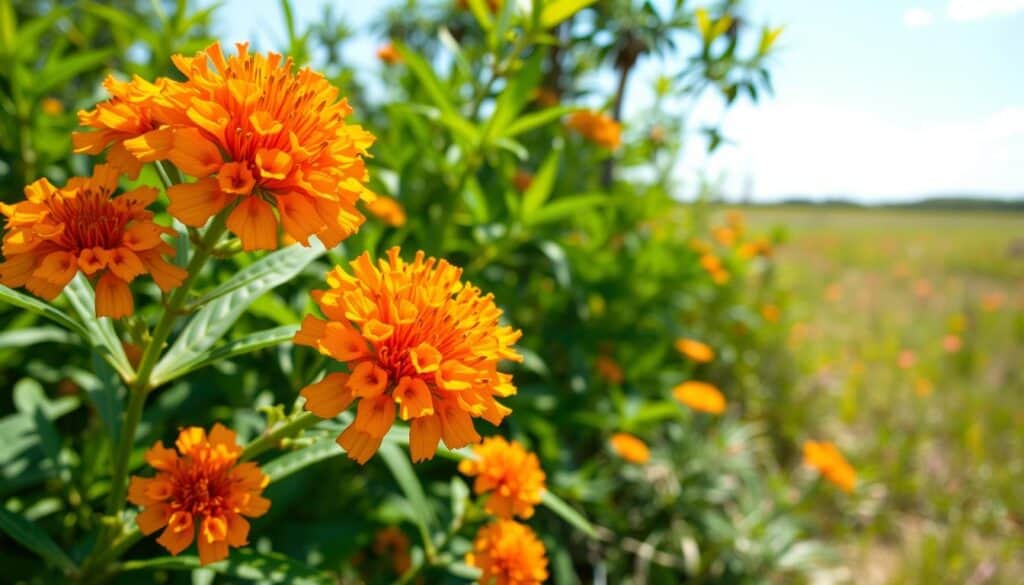
This species is perfectly suited for the sandy soils and warm climate found in the region. It ranks among the best florida native pollinator plants for those working in challenging environments. Because it thrives in heat, it is one of the most reliable native plants for south florida bees and serves as an essential addition to any collection of pollinator plants for zone 10.
The Florida Wildflower Foundation highly values this plant for its role in supporting diverse butterfly species. It is a critical host plant for the iconic Monarch, making it a must-have for anyone interested in florida native plant gardening. By choosing native florida wildflowers, you provide a natural food source that helps local ecosystems flourish.
Whether you are managing central florida native plants or starting a new project, this perennial is incredibly easy to grow. Its drought-tolerant nature ensures it requires minimal care once established. It is truly an excellent choice for creating a sustainable, low-maintenance deep south pollinator garden that looks great all season long.
Purple Coneflower and Goldenrod: The Dynamic Duo
Pairing Purple Coneflower with Goldenrod is a smart move for a strong, pollinator-friendly garden. These low maintenance pollinator plants offer a steady food source for wildlife. Your garden will stay lively from early summer to the first frost.
Purple Coneflowers are a great source of nectar for butterflies and bees in summer. When these flowers fade, Goldenrod steps up to give a vital energy boost in late season. These easy perennials need little care once they’re settled.
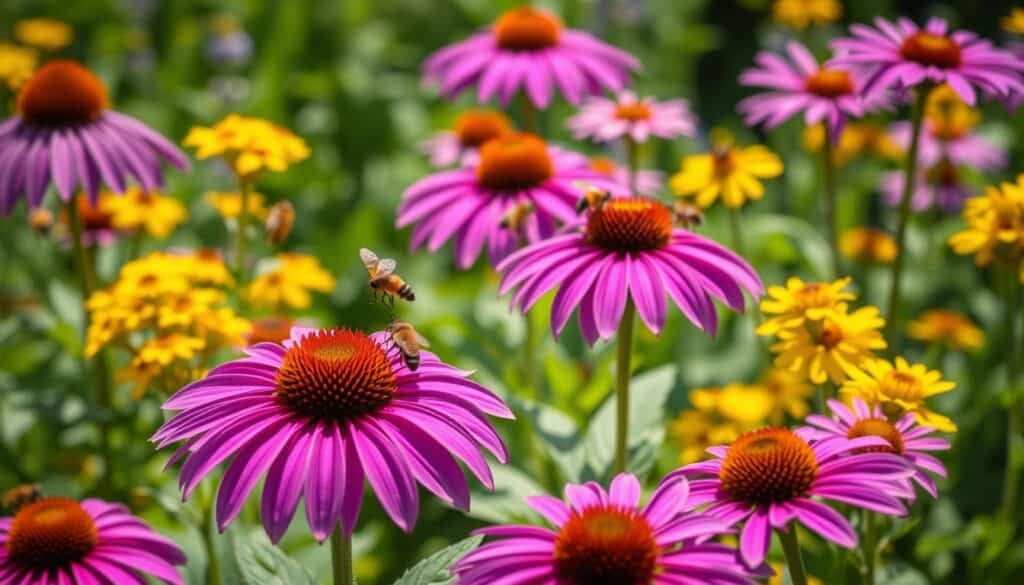
Many gardeners seek nectar-rich native shrubs to fill gaps. But this duo offers similar benefits with less work. They’re also resistant to common garden diseases, perfect for those with little time to garden. They grow well in different soils and handle the summer heat easily.
Think of these plants as the core of your pollinator garden. You might add native ground covers for pollinators to control weeds. But Coneflower and Goldenrod add height and structure. This mix is not only beautiful but also supports bees, butterflies, and other beneficial insects all year.
Conclusion
Switching to native plants in your yard is a great step for the environment. It makes your space beautiful and supports local wildlife with little work.
Native plants show you can have a stylish garden without much effort. Letting nature do the work means you get to enjoy the beauty without the hassle. Your garden becomes a key part of the ecosystem.
Begin by adding a few native plants to your yard this year. Seeing bees and butterflies in your garden is very rewarding. This small change helps your garden grow strong and healthy for years.
A pollinator garden needs less water and fewer chemicals than a regular lawn. Your choices help the planet and support local wildlife. Your garden becomes a haven for nature, making a big difference in your community.