Imagine picking a fresh snack from your balcony. You don’t need a big backyard to grow your own food. Urban gardening lets anyone in the U.S. grow tasty produce at home.
Choosing dwarf varieties can turn a small patio into a fruit paradise. These small plants need the right care and spot to grow well. With the right pots and soil, you can have your own mini-orchard.
This guide gives you tips for your local weather. We’ll show you how to keep your plants healthy and fruitful all season. Whether you have a small deck or a sunny porch, you can enjoy fresh produce. Let’s get you started on growing your own food today.
Visit The Marketplace or grab your Free Garden Starter Kit
Why Container Gardening is Perfect for Fruit Lovers
Modern gardening brings the orchard to your balcony or patio. You don’t need a big farm to grow your own fruit. With container gardening, you can harvest in the city.
This method is great for those without big gardens but want fresh food. It turns small spaces into green havens. Many find it calming to care for city apartment fruit trees.
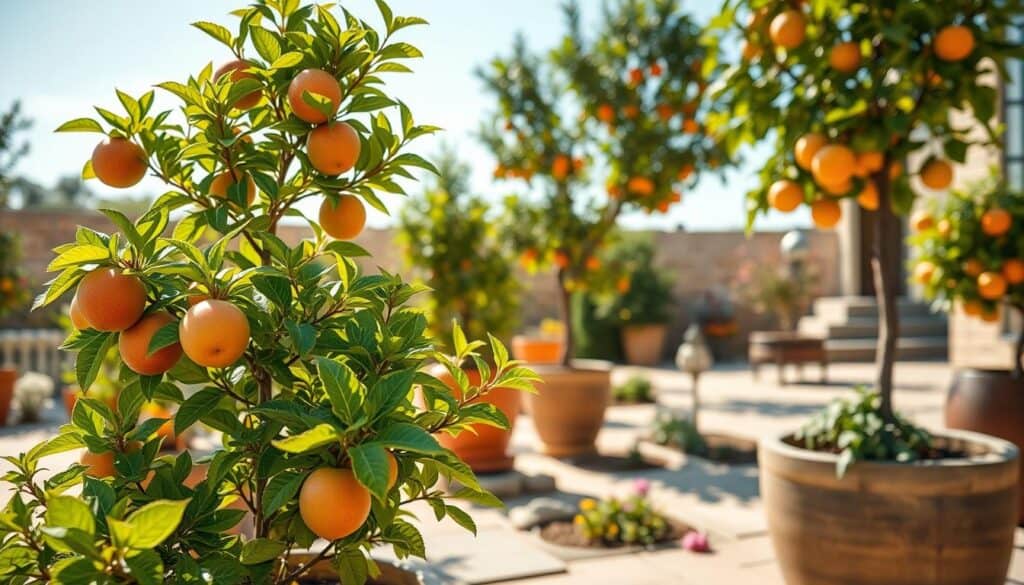
Using back yard orchard culture makes the most of small spaces. It focuses on planting lots in little containers. Your plants will look good and taste great with compact edible landscaping.
Here’s why container gardening fruits is loved by many:
- Flexibility: Move pots to catch the sun.
- Control: Easier to manage soil and water in pots.
- Accessibility: Harvest at a height that’s easy and fun.
- Aesthetics: Adds color and life to any outdoor space.
It’s perfect for beginners and experts alike. Compact edible landscaping brings fresh food right to your door. Start your urban fruit growing journey today and enjoy your harvest.
The Best Compact Fruit Trees to Grow in Large Containers
Starting a container garden means picking the right fruit trees. Dwarf fruit trees are perfect because they grow small but produce lots of fruit. They’re made to do well in small spaces, like patios and balconies.
Self-pollinating dwarf fruit trees are great because they don’t need another tree to grow fruit. This is perfect for small spaces where you want to grow a lot of fruit. It also makes caring for your trees easier.
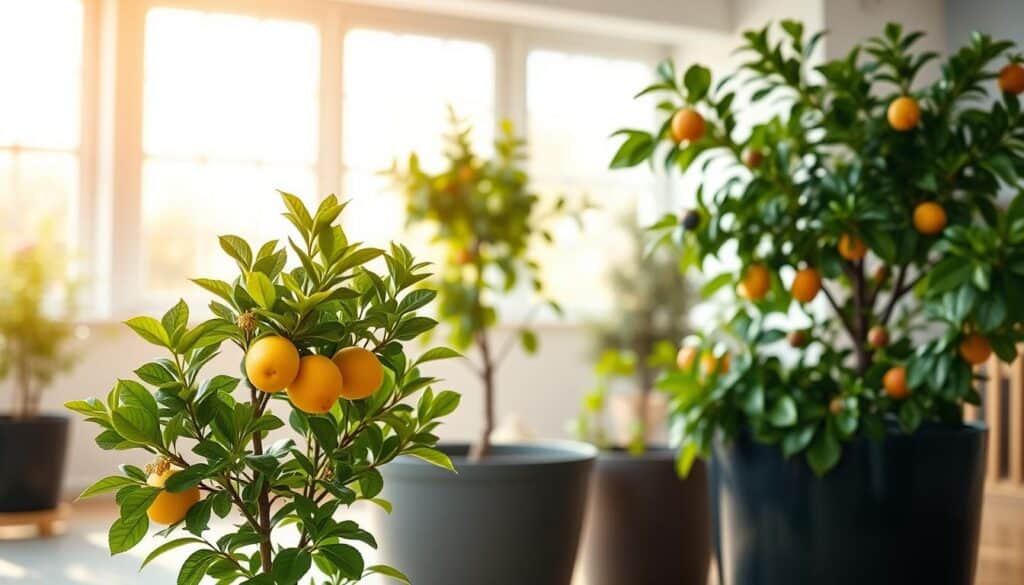
When you’re picking out trees, look for ones with shallow roots. These are the best for beginners because they’re easy to care for. You can find trees that grow fast or ones that look beautiful all year.
Here are the top 10 fruit trees for containers. They’re the perfect size and produce a lot of fruit:
- Meyer Lemon: A classic choice that is highly self-fertile and produces fruit year-round.
- Columnar Apple Trees: These grow straight up, making them perfect for tight corners.
- Dwarf Fig Trees: Known for being some of the most productive container fruit trees available.
- Patio Peaches: Specially bred to stay small while providing delicious, juicy fruit.
- Dwarf Cherry Trees: These compact fruit trees in pots provide beautiful blossoms and sweet harvests.
Choosing the right tree is key. By picking the best fruit trees for containers, you’re setting yourself up for success. These self-fertile fruit trees for pots will give you fresh, homegrown snacks for many seasons.
Top Citrus Varieties for Sunny Patios
Patio fruit gardening is a fun hobby that brings fresh flavors and beautiful scents to your home. Citrus trees are great for sunny patios because they have evergreen leaves and fragrant flowers. They are perfect for making the most of your outdoor space with greenery.
A dwarf meyer lemon tree in pot is perfect for beginners. These small trees are easy to care for and can even grow indoors in cold weather. They produce juicy lemons that are great for cooking.
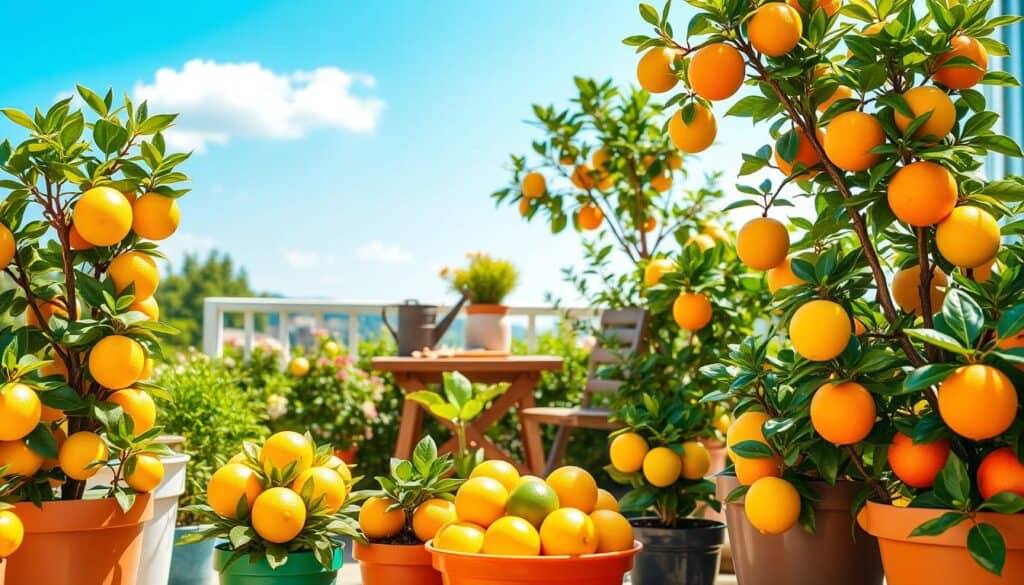
Kumquat trees for containers are a unique choice. You can eat the whole fruit, which tastes tart and sweet. A key lime tree in large planter adds a tropical scent to your home.
Choosing high yield patio fruit trees means you’ll get lots of fruit all season. The best citrus for patio containers grow well in small spaces. By picking the best tropical fruit trees for large pots, you can create a lush oasis at home.
Stone Fruits That Thrive in Potted Environments
Many gardeners think stone fruits need big orchards. But, with the right dwarf varieties, you can grow them on your patio. These trees are bred to be small but produce big, tasty fruit.
When picking dwarf peach trees for containers, choose self-pollinating types for best results. They need full sun and well-draining soil to avoid root rot. Make sure to water them often in summer for juicy peaches.
Dwarf plum trees for pots are great for enjoying stone fruits without a big yard. These trees are tough and do well in containers if given a big pot. Regular pruning keeps them shaped and boosts fruit each year.
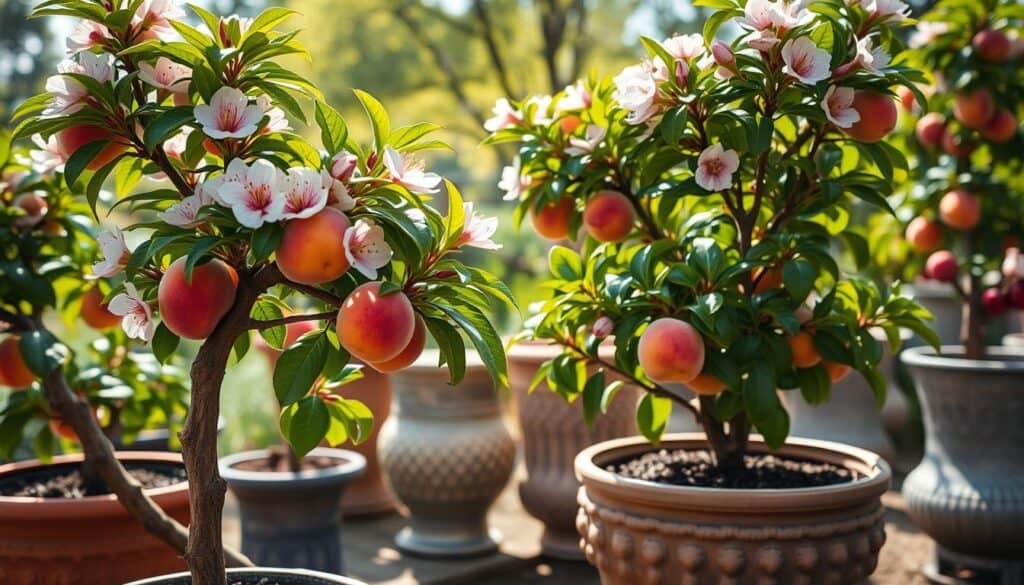
Fig trees in large pots are perfect for hardiness and high yields. Figs are very productive and do well in containers. They bring a Mediterranean feel to your outdoor space and give you plenty of sweet fruit.
A dwarf cherry tree for patio settings is ideal for small balconies. These trees are small, bloom with beautiful flowers, and then produce tasty fruit. Use a good potting mix to help them grow all year.
Adding a pomegranate tree in container is a great choice for its beauty. They have stunning orange-red flowers that make any garden brighter. Plus, they’re easy to care for and add elegance to your container garden.
Pome Fruits and Berries for Small Space Orchards
Creating a productive urban orchard is easier than you might think. Choose the right pome fruits and berries for compact growth. This way, you can enjoy a bountiful harvest even with just a few square feet of outdoor space. These small space fruit trees help you grow a thriving urban orchard trees environment without needing a traditional backyard.
Columnar fruit trees in large planters are a game-changer for narrow areas. They grow vertically, perfect for balcony fruit trees or tight terrace fruit trees. They offer a striking look while producing full-sized fruit in a small space.
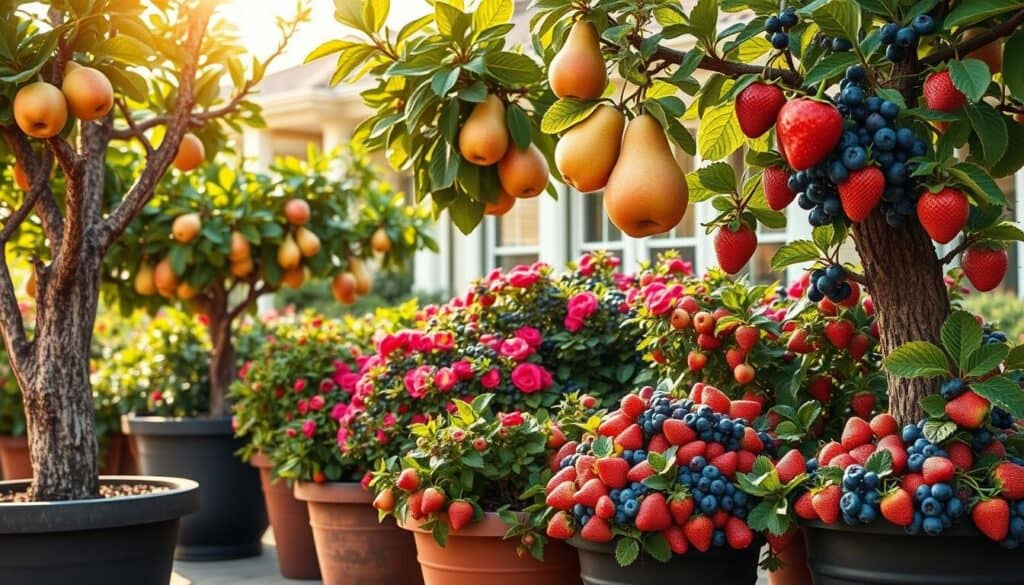
When picking apples, look for best dwarf apple trees for pots for success. These varieties are grafted to stay small, making them ideal for top dwarf fruit trees for small backyards. They also do well in containers, making them great for best dwarf fruit trees for balconies. For fruit trees for small yards, these compact options are perfect.
Berries are also great, like blueberries in containers. They are the best fruiting bushes for large tubs because of their shallow roots. Adding these fruit trees for small spaces and berry bushes creates a diverse and healthy ecosystem.
- Columnar Apples: Ideal for vertical growth and narrow spaces.
- Dwarf Pears: Excellent for adding height to your balcony fruit garden.
- Highbush Blueberries: Perfect for rooftop fruit trees setups due to their compact nature.
- Self-Pollinating Varieties: Essential for maximizing yield in isolated containers.
By choosing these specific plants, you turn your limited outdoor area into a functional and beautiful space. Whether you start with a single pot or a full collection, these selections ensure your home orchard stays productive year after year.
Selecting the Right Containers and Soil for Success
Choosing the right home for your fruit trees is key in container gardening. Growing fruit trees in large pots gives roots room to grow and hold the plant firmly. A pot that’s too small can slow growth, while a too-large one can cause waterlogged soil.
Finding the best pot sizes for fruit trees means considering both the sapling’s current size and its future growth. Dwarf varieties usually do well in 15 to 20-gallon containers. These large container fruit trees need enough space to hold moisture but also allow roots to breathe.
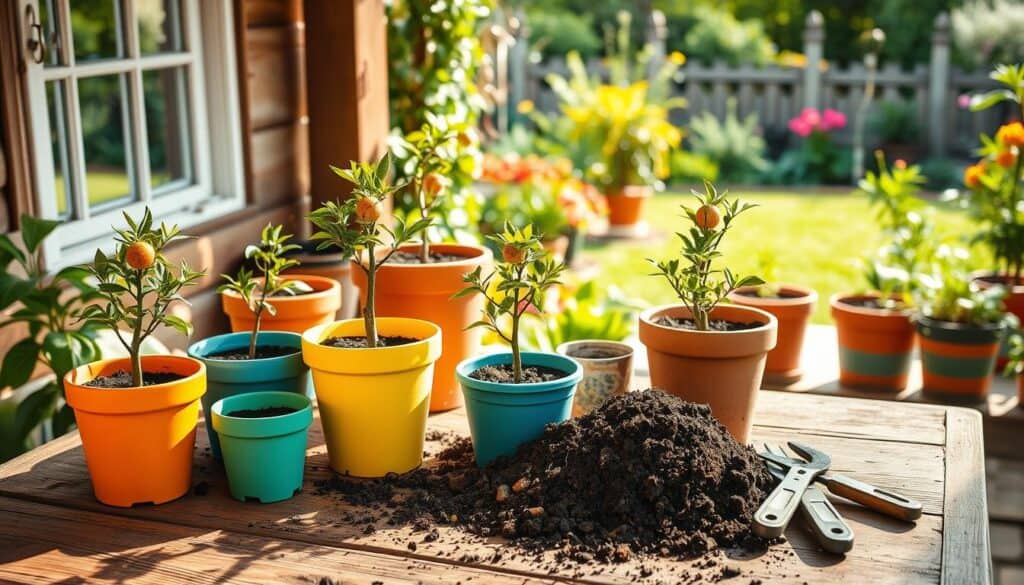
Good drainage for container fruit trees is key to avoiding root rot. Make sure your pots have big holes at the bottom for water to drain fast. You can also put your pots on bricks or special feet to boost airflow.
The soil mix you pick is vital for your plant’s nutrients and water. For the best potting soil for citrus and other fruits, choose a high-quality, draining mix with organic matter. Don’t use regular garden soil, as it can compact too much in containers.
To keep your trees healthy and fruitful, follow these important tips for soil and container care:
- Use a mix with perlite or pumice for better aeration.
- Add slow-release organic fertilizer for steady nutrient uptake.
- Check moisture levels daily in summer.
- Refresh the top two inches of soil every spring to add vital minerals.
- Make sure your container can handle temperature changes.
Essential Care and Maintenance for Potted Trees
Success with container fruit tree care starts with knowing your plants’ needs. Potted fruit trees need you for water and food because their roots are limited. Learning to grow fruit in pots is rewarding if you start with a good routine.
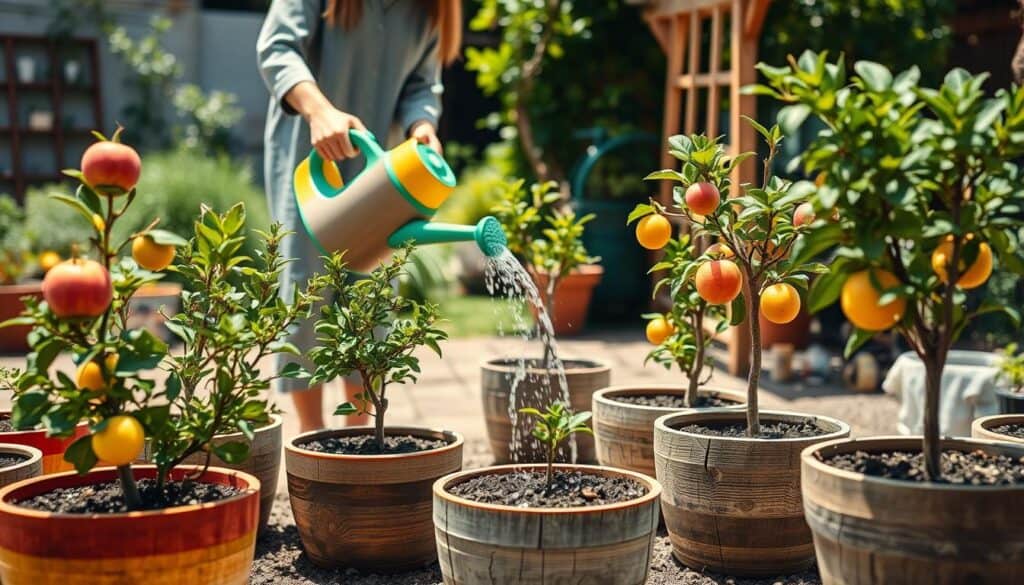
Watering is key for anyone learning how to grow fruit trees in pots. Containers dry out fast, more so in hot US summers. Check the soil daily by sticking your finger in an inch deep. If it’s dry, it’s time to water.
Feeding potted fruit trees is also important. Nutrients can wash away quickly with lots of watering. Use a slow-release fertilizer to give your trees steady nutrients. This keeps your trees healthy and green.
These tips make it easy to grow fruit trees in pots and get good yields. Remember these care tips to keep your trees healthy:
- Monitor soil moisture daily to prevent heat stress.
- Apply a balanced liquid fertilizer every few weeks during the active growth phase.
- Ensure your pots have excellent drainage holes to prevent root rot.
- Rotate your containers occasionally to provide even sunlight exposure to all sides.
By following these simple steps, you can have a thriving orchard on your patio. Your trees will thank you with beautiful flowers and tasty fruit for years.
Managing Growth Through Pruning and Repotting
Regular care keeps your potted trees healthy and small for years. Growing dwarf fruit trees means you need to control their size. This way, they stay perfect for your patio. By focusing on fruit, not leaves, they stay productive.
Pruning dwarf fruit trees is easy once you get the hang of it. Cut off dead, damaged, or crossing branches. This improves air flow and lets sunlight reach the fruit.
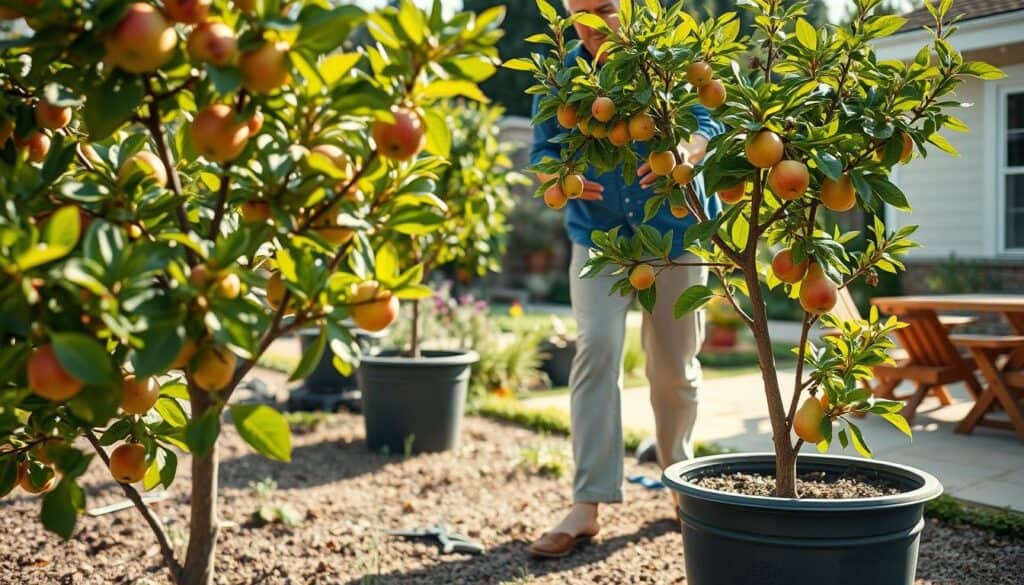
Watching the roots is also key to avoid root-bound fruit trees in pots. Roots can circle the pot, limiting growth. Repot your trees every two to three years to give them room to grow.
When roots start coming out of the pot, it’s time to repot. Gently trim circling roots before moving to a bigger pot. This keeps your trees healthy and stops them from becoming root-bound fruit trees in pots.
Doing these tasks seasonally makes them easier. Prune in late winter and repot in early spring. With these steps, your dwarf fruit trees will flourish in their space for years.
Overwintering Strategies for US Climate Zones
Living in a cold or mild area, your indoor/outdoor fruit trees need special care in winter. Adjusting your care routine to your local climate is key. This way, your trees stay healthy and keep producing fruit, no matter the weather.
In colder areas, overwintering potted fruit trees is critical. Move pots to a garage, shed, or basement when the first frost hits to protect the roots. If they must stay outside, cover them with burlap or bubble wrap for insulation.
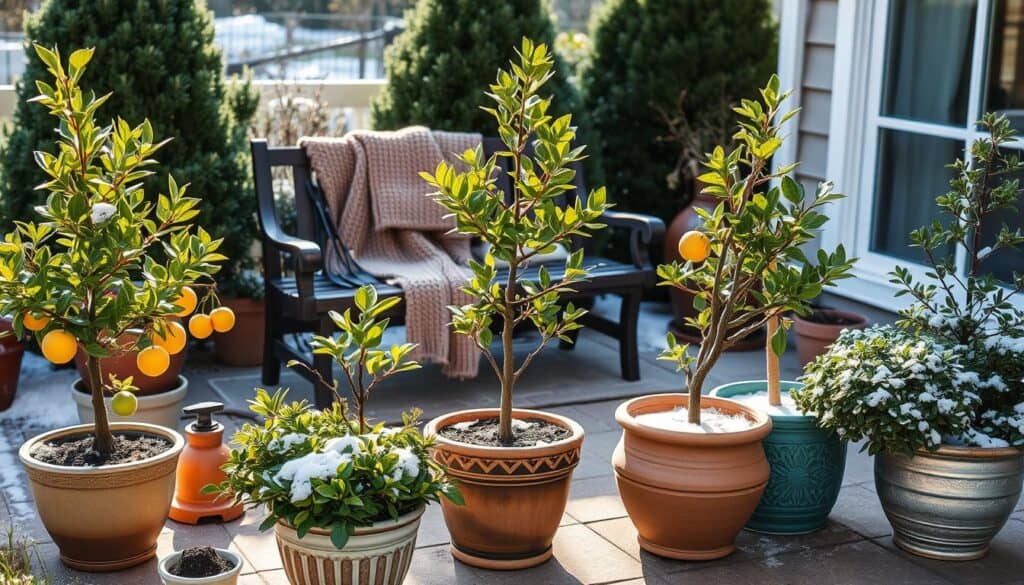
Those in warmer zones have an advantage. If you grow dwarf fruit trees for zones 9-10, you can leave them outside all year. These trees do well in mild winters, but watch for extreme weather or sudden cold.
Many people bring their plants inside for fruit-bearing house plants during winter. A sunny window or a greenhouse fruit trees setup is ideal. This way, you can enjoy your orchard even when it’s snowing.
Thinking of starting an indoor collection? Here are some great choices:
- Meyer Lemons, which do well in indoor light.
- Fig trees, which are tough and easy to care for in pots.
- Calamondin oranges, among the best dwarf fruit trees to grow indoors.
Consistent care during winter will reward you in spring. The right protection or indoor spot keeps your trees strong and ready for the next growing season.
Conclusion
Growing fruit trees in containers turns small spaces into productive havens. This journey brings fresh, home-grown flavors right to your kitchen.
Success comes from consistent care and watching your plants closely. Companies like Stark Bro’s and Burpee have great dwarf varieties for containers. With the right watering and care, your trees will flourish for years.
Patience is key as you grow your plants from tiny saplings to fruit producers. Every new leaf or flower is a victory in your gardening journey. Enjoy the journey of watching nature grow in your space.
Share your gardening journey with others to get tips and advice. Your small orchard connects you to the seasons and the food you eat. Put on your gardening gloves and start planting your favorite fruits this weekend.