Turning plain fences into lush, vibrant spots is easier than you think. Many homeowners in the U.S. want to boost privacy and add beauty to their yards. By picking the right plants, you can make any fence or wall look great in just one season.
Choosing the right fence covering plants is key to a lasting landscape. You might like climbing flowers for walls or vines for vertical gardens. Knowing how each plant grows helps you succeed. These wall climbing plants add beauty and soften harsh lines.
We look at different plants to make your property look better. Finding the top climbers for fences lets you create a living backdrop that grows every year. With the right choice, your yard becomes a peaceful spot that shows off your style and makes your home better.
Visit The Marketplace or grab your Free Garden Starter Kit
Understanding Your Vertical Gardening Needs
Starting a vertical garden means first checking your space. Before picking vines, make sure your fence or wall can handle it. A strong structure is key for a living wall to thrive.
Look for any weak spots in your boundary. If wood is rotting or masonry is crumbling, it can’t hold heavy plants. Structural integrity is the most important factor before starting.
Then, think about your local climate and yard environment. Every garden has unique light, wind, and temperature spots. Picking plants that fit your conditions will save you time and effort.
Don’t forget to check the ground where your plants will live. You need enough soil depth and good drainage for your plants’ health. Follow these steps for long-term success:
- Check the fence stability to confirm it can hold the weight of dense foliage.
- Analyze your sunlight patterns to match plants with the right exposure.
- Evaluate soil quality to ensure it provides enough nutrients for climbing species.
- Install proper drainage to prevent water from pooling at the base of your wall.
These steps help avoid problems like root rot or damage to your property. By setting a solid foundation, you’ll have a beautiful, healthy display for years.
The Best Climbing Plants to Cover a Fence or Garden Wall
Choosing the right climbing plants for fences is key. You want them to look good and be easy to care for. A good vine can turn a plain fence into a beautiful part of your garden.
Clematis is a top pick for its beautiful flowers and easy care. It adds stunning seasonal color and fits well on wire or wooden supports. It’s perfect for making a fence look softer without taking over the garden.
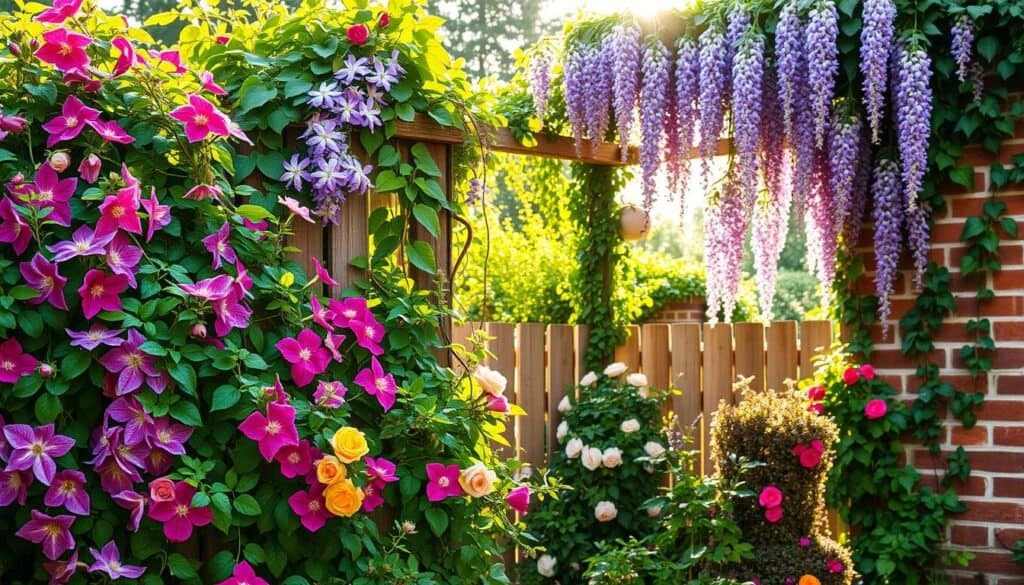
Boston Ivy is great for a classic look on garden walls. It sticks well to masonry, making a lush green wall that turns red in fall. It’s perfect for covering big walls.
Star Jasmine is a great choice for a fragrant option. It has white flowers that smell sweet in summer. It creates a private and inviting garden all year.
For shaded areas, Climbing Hydrangea is the way to go. It grows well in low light and has beautiful blooms. It adds lush greenery to dark spots, making your garden feel complete.
Fast Growing Vines for Instant Coverage
Gardeners often look for ways to hide ugly fences with climbing plants that grow at record speeds. These plants can quickly transform your outdoor space. They make a plain barrier into a lush, green feature.
When considering living wall fence ideas, choose species that thrive in your climate. For large areas, Virginia creeper for large fences is great. It spreads quickly and has stunning autumn color. For a decorative look, wisteria for fence coverage offers beautiful blooms.
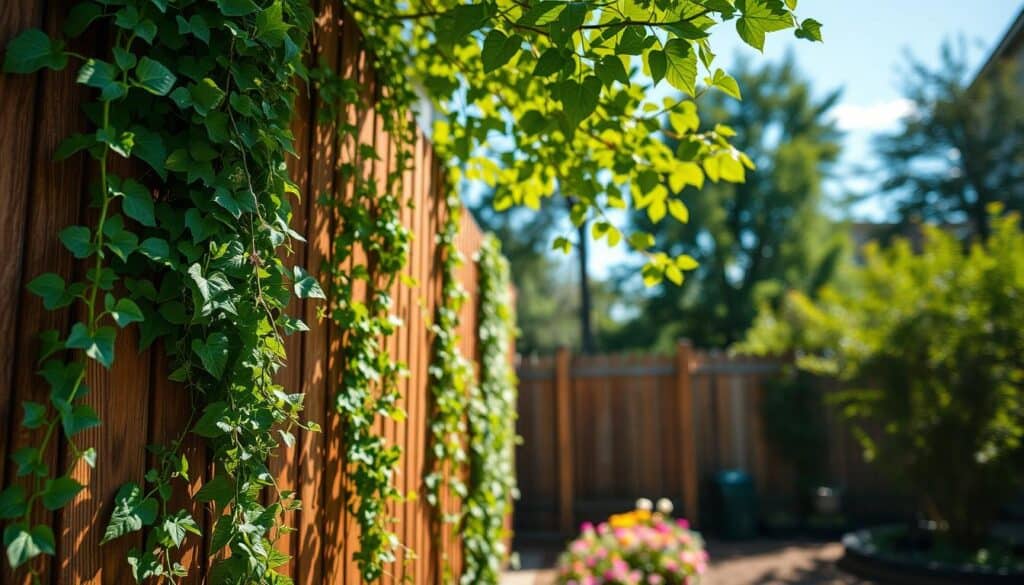
To successfully implement vertical gardening on fences, provide adequate support. These plants grow quickly and need heavy-duty trellises or wire systems. Without support, they can become heavy and pull down weaker structures.
Here are some tips for managing your fast growing privacy screen vines:
- Install sturdy, weather-resistant hardware before planting.
- Select heat tolerant climbing vines for sunny, exposed locations.
- Choose south facing wall climbing plants for summer growth.
- Regularly prune your vines to prevent them from overwhelming nearby garden beds.
Whether for fast growing vines for chain link or solid wood, proper maintenance is key. Keep your plants well-trimmed for a dense, green screen. These top climbing vines for garden walls are the best vines for garden walls for quick results.
Evergreen Climbers for Year Round Privacy
Turn your outdoor area into a private oasis with evergreen climbers. These plants keep your garden looking lush, even in cold weather. Unlike plants that lose their leaves, these year round climbing vines offer a steady, dense screen for winter privacy.
Choosing the right plant can block your neighbor’s view and add texture to your yard. They also act as sound muffling climbing vines, reducing street noise. Whether your wall is brick or metal, there’s a perfect match for you.
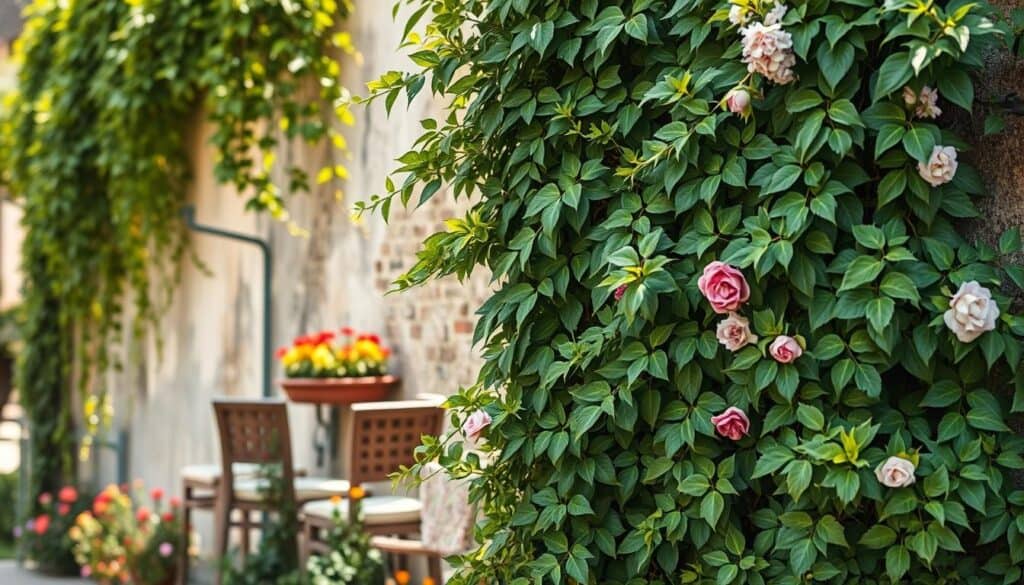
Here are some top picks that do well in different conditions:
- Star jasmine on garden wall: This fragrant climber has beautiful white flowers and glossy leaves all year.
- Ivy for brick garden walls: A timeless choice, English ivy is tough and looks great.
- Frost resistant climbing plants: These plants stay colorful even in cold weather.
- Low maintenance evergreen climbers: Great for those who don’t have time to prune, these plants stay in shape with little effort.
For screening plants for chain link fences, pick fast-growing ones. These natural privacy wall climbing plants adapt to various light conditions. By using these evergreen vines for fences, your garden stays private all year.
Choosing winter climbing plants boosts your home’s look. These evergreen privacy vines are a reliable choice for enjoying your outdoor space year-round. With some planning, you can have a beautiful, living privacy screen for years.
Flowering Climbers to Enhance Garden Charm
Adding flowering climbers to your garden walls makes them come alive with color. These garden wall vine plants do more than cover walls; they offer a sensory experience that changes with the seasons. By picking the right species, you can turn a simple barrier into a stunning focal point that draws the eye and invites relaxation.
When picking climbing flowers for walls, think about when they bloom. This way, your garden stays colorful from spring to autumn. Mixing different varieties ensures a constant flow of flowers. For example, climbing roses for fences add a classic touch, while bougainvillea for garden wall installations bring a vibrant splash of color to sunny spots.
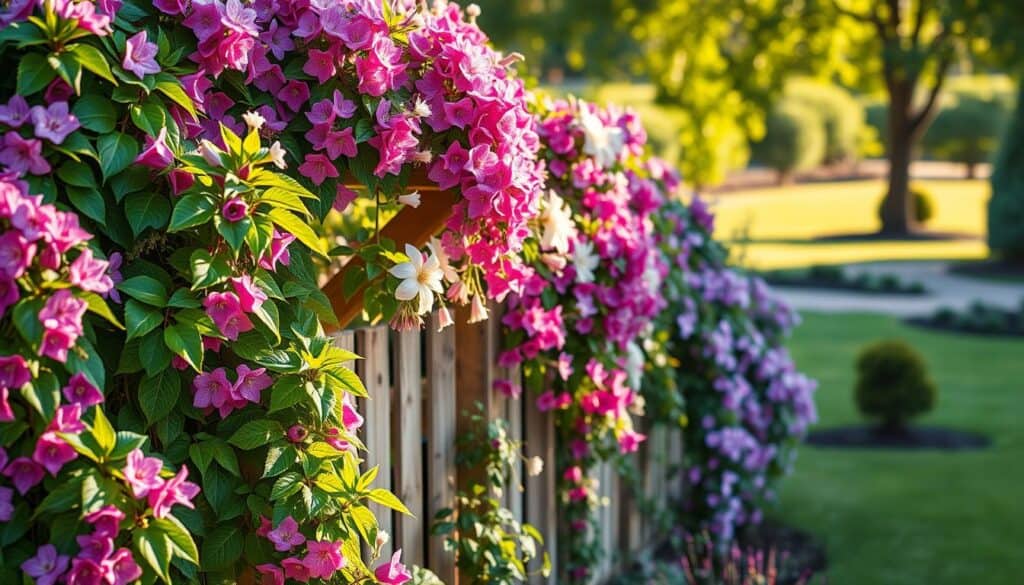
Don’t forget about fragrance when planning your outdoor space. Adding fragrant climbing flowers like confederate jasmine on fence panels or honeysuckle vine for privacy creates a lovely atmosphere. These plants are great for areas near patios or windows, where you can enjoy their sweet scents on warm evenings.
Looking for specific options for your structure? Here are some popular choices:
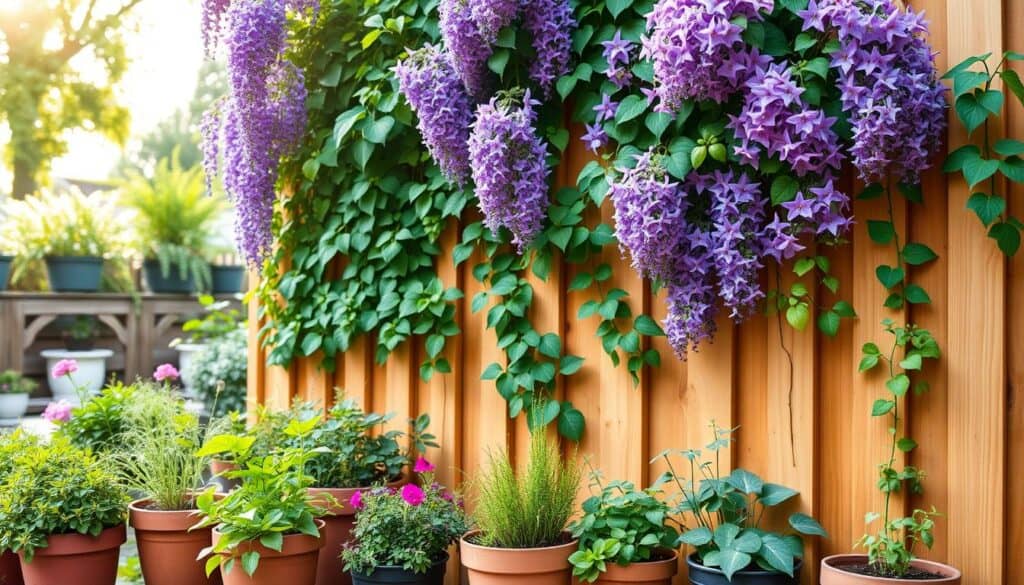
- Wisteria for fence coverage: Known for its dramatic, cascading purple or white blooms.
- Clematis varieties for garden walls: These offer diverse colors and are excellent for growing clematis on wood fence structures.
- Trumpet vine for garden wall: A vigorous grower that attracts hummingbirds with its bold, tubular flowers.
- Crossvine for fences: A hardy option that thrives in various conditions and provides early-season color.
Many of these colorful climbing plants thrive in full sun, making them perfect wall shrubs for sun spots. Whether you choose fast growing vining flowers for quick results or prefer the refined look of wisteria sinensis on wall surfaces, your garden will gain texture and beauty. Even on solid structures, consider creeping fig on brick wall spaces to add a lush, green backdrop that complements your flowering vines for trellises.
Selecting Plants Based on Light Requirements
Starting a vertical garden is easy if you know how much sun your wall gets. It’s key to pick plants that match your wall’s light. This way, your vines will grow well and bloom beautifully.
South-facing walls need heat tolerant climbing vines that can handle strong sun. These spots are great for plants that love warm weather and lots of light. You can find many beautiful vines for these sunny areas.
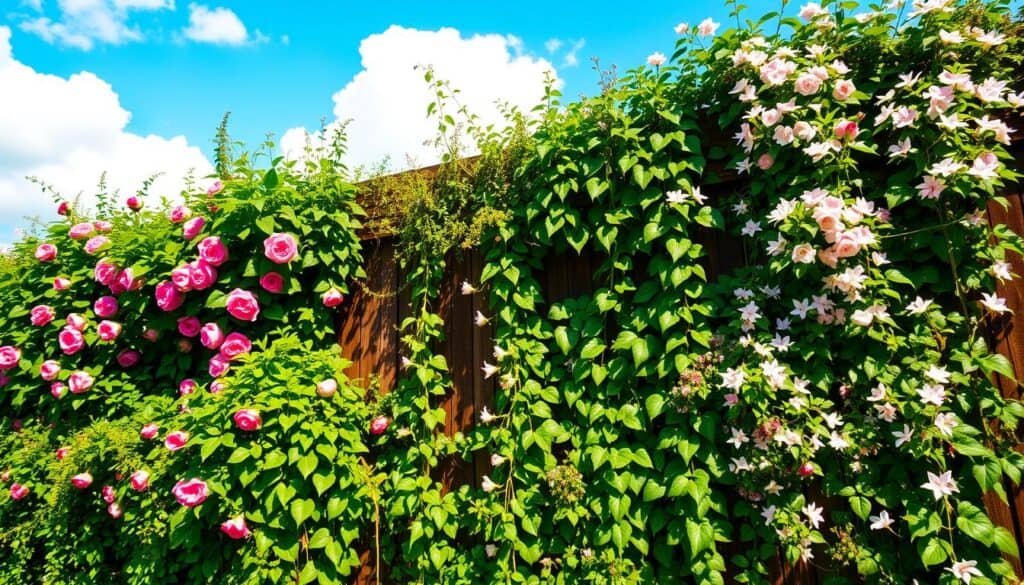
For best climbing plants for garden wall in full sun, here are some top picks:
- Bougainvillea for garden wall displays: These are excellent for vibrant, sun-drenched areas.
- Trumpet vine for garden wall coverage: A vigorous grower that loves the heat.
- Crossvine for fences: A reliable choice that handles direct sun with ease.
- Drought tolerant climbing plants: Ideal for walls that dry out quickly during the summer.
- Wall shrubs for sun: These provide a woody, sturdy base for your vertical display.
North-facing walls need shade tolerant creeping vines that do well in cooler, darker spots. These areas stay moist longer, perfect for lush green plants. Choose plants that don’t need lots of sunlight to stay healthy.
For climbing plants for shady walls, here are some good choices:
- North facing wall climbers: These plants are made for lower light levels.
- Evergreen climbing plants for walls: Many stay green even in little sunlight.
- Clematis varieties for garden walls: Some types prefer the cooler roots found in shaded spots.
- Climbing plants for full sun: Avoid these in deep shade to prevent stunted growth.
- South facing wall climbing plants: These should be reserved for your brightest garden zones.
Understanding your garden’s light patterns helps avoid common mistakes. Whether your wall is bright or shaded, there’s a perfect climber for it. By placing plants right, your vertical garden will be beautiful and easy to care for for years.
Low Maintenance Choices for Busy Gardeners
Keeping a garden beautiful doesn’t have to be a big job. For those short on time, picking low maintenance climbing vines that need little pruning is wise. These plants are often the easiest climbing plants to grow, letting you have a lush, green wall with little effort.
When looking for the best fence covering plants, choose ones that grow easily. Picking drought tolerant climbing plants keeps your garden looking good even when it’s dry. Also, go for non invasive climbing plants to avoid them spreading too much or harming your fences.
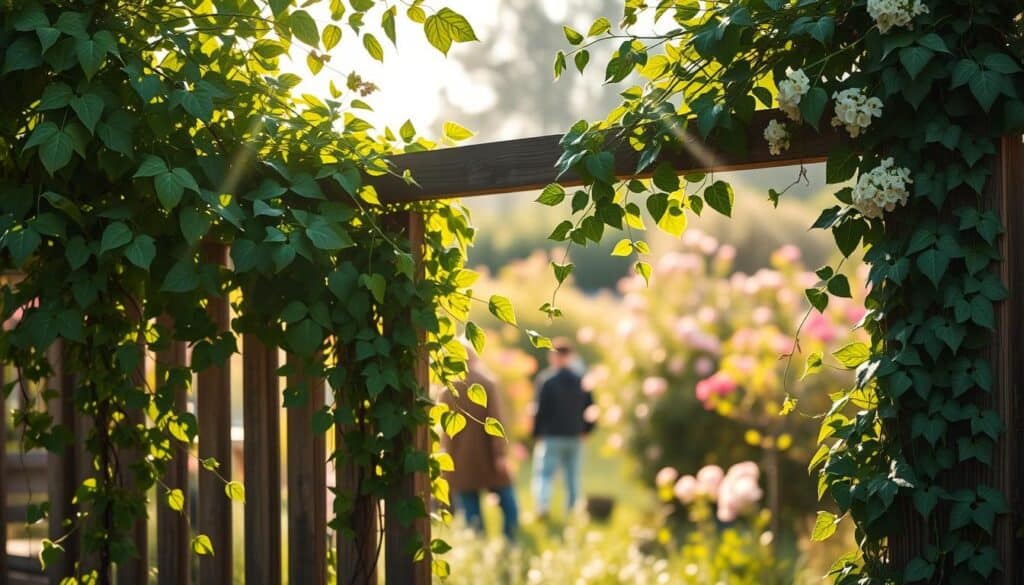
Evergreen privacy vines are great for year-round coverage. These evergreen vines for fences keep your garden looking good all year. Many low maintenance evergreen climbers are tough and need only occasional care to stay beautiful.
Here are some hardy options for your garden:
- Star Jasmine: A fragrant, evergreen choice that thrives in many climates.
- Virginia Creeper: Known for its stunning fall color and rapid, reliable growth.
- Climbing Hydrangea: A classic, elegant option that is surprisingly easy to manage.
- Boston Ivy: Perfect for those looking for self clinging vines for masonry walls.
In colder areas, find frost resistant climbing plants that can handle cold. These winter climbing plants stay strong and pretty even when other plants don’t. If you have a wooden fence, choose vines that won t damage wood fence surfaces, like those with tendrils instead of aggressive roots.
Vertical Gardening Techniques for Success
To start a lush living wall, you need the right support. When you do vertical gardening on fences, make sure your setup can hold the weight of full-grown plants. High-quality vertical vine support for walls protects your property and gives your vines for vertical gardens a solid base to grow.
Choosing the right hardware is key for lasting success. Whether picking best trellis plants or flowering vines for trellises, your support system must be securely fixed. For metal structures, pick climbing plants for wire fences that naturally weave through, making a dense, beautiful screen.
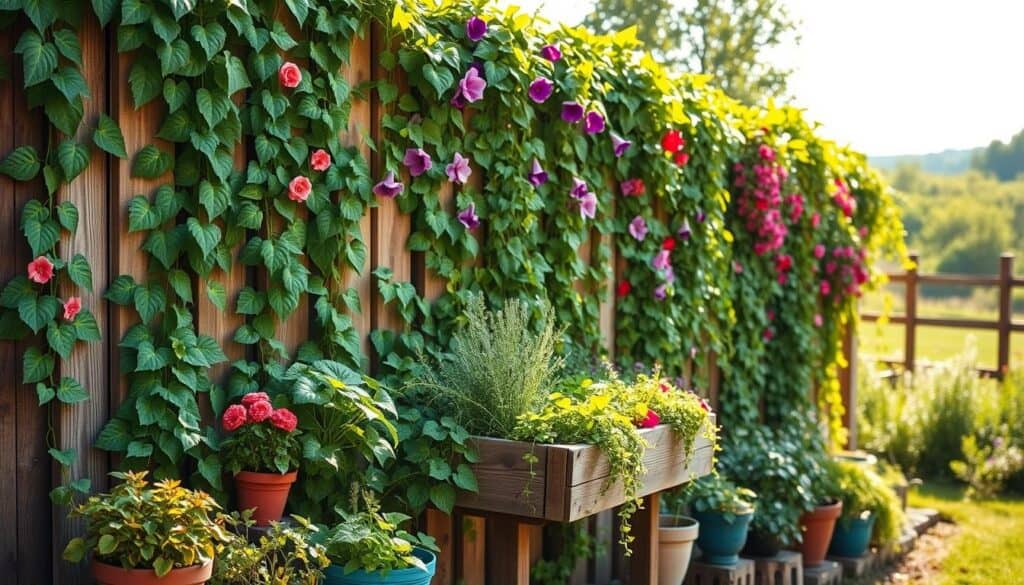
When growing clematis on wood fence panels, use a standoff trellis for airflow. This stops moisture buildup and keeps the wood healthy. Many gardeners prefer best climbers for trellis on fence that grow fast growing vining flowers. These quickly fill gaps, giving instant privacy.
For those with little time, choose low maintenance climbing vines. These are often the easiest climbing plants to grow because they need little care. Follow these tips for a professional look:
- Space your plants evenly for balanced coverage.
- Use soft garden ties to gently guide new growth toward the support.
- Check your supports annually to ensure they remain sturdy.
- Monitor for signs of stress or overcrowding during the peak season.
Learning how to prune climbing vines is the last step in keeping your display healthy. Regular trimming keeps plants from becoming too heavy or tangled. This protects your fence. Some gardeners also use vines for soil cover at the base to keep moisture in and weeds out, making their garden look complete and polished.
Solving Common Fence and Wall Challenges
Turning a bad garden wall or fence into something beautiful is simpler than you might think. Many gardeners face problems like ugly chain-link fences, damaged brickwork, or small spaces. The right wall climbing plants can make these issues disappear.
To hide an ugly fence, start by thinking about the fence’s material. For chain-link fences, screening plants for chain link fences like honeysuckle or clematis work great. These vines grow fast and cover the fence, making it private and looking better.
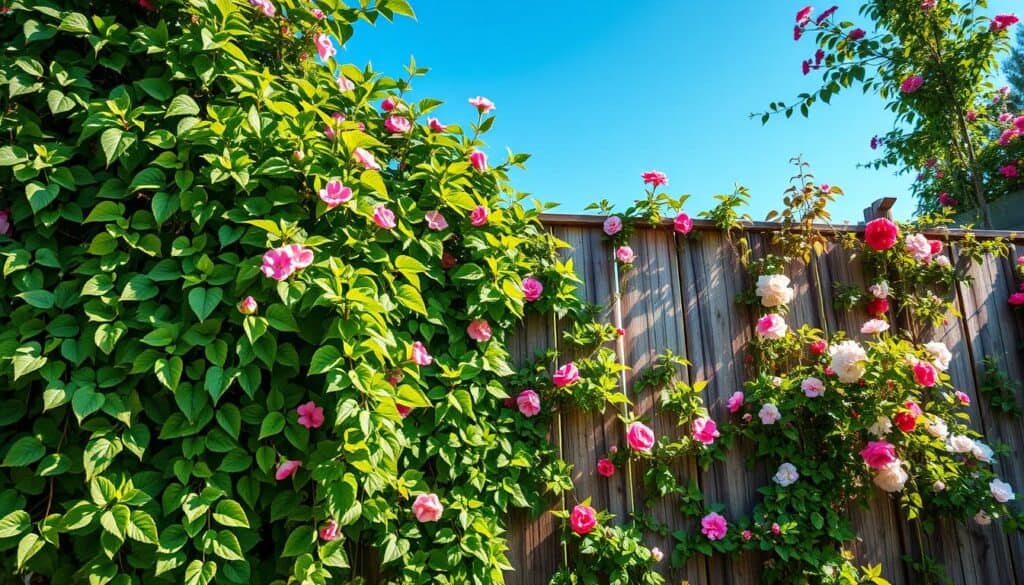
Choosing the right plants for masonry is key. While ivy for brick garden walls is a timeless choice, check the mortar first to avoid damage. For a more refined look, creeping fig on brick wall surfaces is a good option. It’s self-clinging and stays flat.
For safety, pick non invasive climbing plants that won’t harm wood fences. These plants usually need a trellis, not to cling to the wood. You can also use vines for soil cover to keep weeds away and the area neat.
For noise issues, some sound muffling climbing vines can help. Even in dark spots, there are climbing plants for shady walls and north facing wall climbers that do well without sunlight.
- Shade tolerant creeping vines brighten up dark, north-facing spots.
- Self clinging vines for masonry walls add green beauty without extra support.
- Wisteria sinensis on wall structures is stunning and fragrant, if you have enough space.
- Tall privacy shrubs for fences work well with vines for a layered barrier.
By picking the right plants, you can make your garden a peaceful spot. Always check the growth habits of your plants to keep your vertical garden healthy and easy to manage.
Design Tips for a Living Privacy Wall
Creating a lush, green barrier is an art that blends beauty with privacy needs. When you learn how to cover a fence with vines, match your landscape style for a unified look. There are many living wall fence ideas to transform a simple fence into a stunning feature.
To add depth, layer different natural privacy wall climbing plants. Mixing textures and growth habits keeps the screen interesting. Using various vines for garden privacy screen setups lets you control the density through seasons.
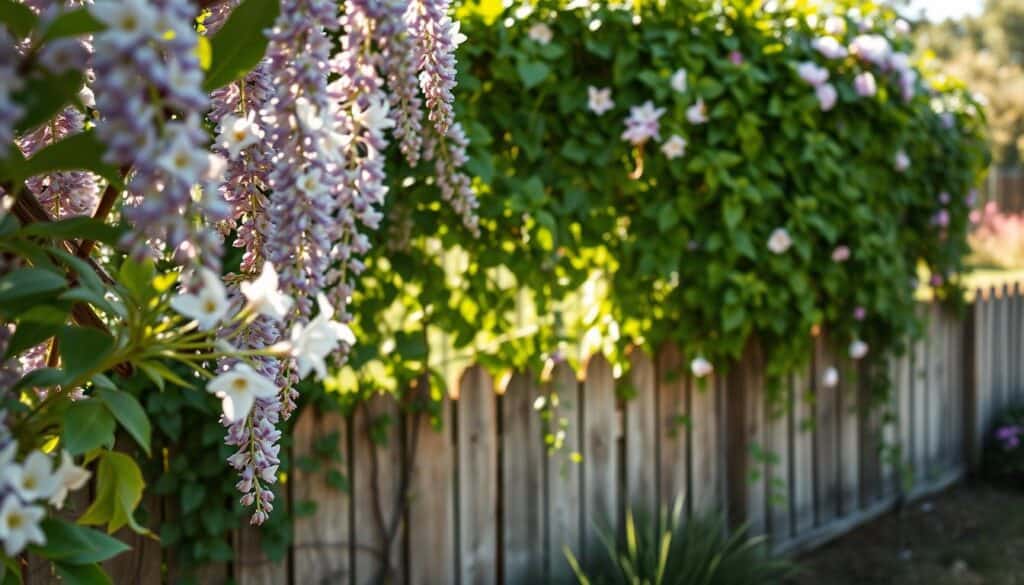
To block neighbors’ view, pick vigorous plants for thick foliage all year. For a romantic touch, climbing roses for fences add beauty and a classic garden vibe. These plants need space to spread and sunlight to thrive.
Make your garden unique with colorful climbing plants that bloom at different times. Add fragrant climbing flowers near seating for a better outdoor experience. A well-chosen color scheme will make your privacy wall a deliberate design choice.
Choose the best climbers for trellis on fence for stability. Proper vertical vine support for walls is key for healthy growth and upkeep. With careful planning, you’ll get a beautiful, lasting privacy screen.
Conclusion
Turning a plain fence or garden wall into a lush, living masterpiece brings life to any backyard. This project offers a simple way to boost your home privacy while adding natural beauty to your landscape.
Success starts with choosing the right plants for your specific environment. Brands like Proven Winners offer excellent varieties that thrive in diverse climates. Match your plant selection to your local sunlight patterns and soil quality to ensure your vertical garden remains healthy for years.
Consistent care keeps your greenery vibrant and strong. Regular pruning and proper watering habits prevent common issues and encourage dense growth. You will enjoy a private sanctuary that changes with the seasons.
Take the first step toward your dream garden this weekend. Pick a sunny spot, select your favorite climbing vines, and watch your outdoor walls come alive. Your neighbors will surely admire the transformation of your home exterior.