Keeping your garden looking great can be tough. Many people want to keep their soil healthy and their plants growing well.
Choosing how to remove weeds without chemicals is key. It keeps your family, pets, and local pollinators safe. Using natural weed control helps create a lasting, beautiful garden.
You don’t need harsh chemicals to have a clean garden. We’ll show you non-chemical weed control methods that are easy and safe.
These simple, green solutions help your garden stay a peaceful place. Enjoy a garden that grows well with nature’s help.
Visit The Marketplace or grab your Free Garden Starter Kit
Understanding Your Backyard Garden Weeds
Starting with a clear view of your soil’s growth is key to weed management. By identifying common backyard weeds early, you can stop them before they spread. Knowing which weeds are competing with your plants is essential for effective backyard garden weed management.
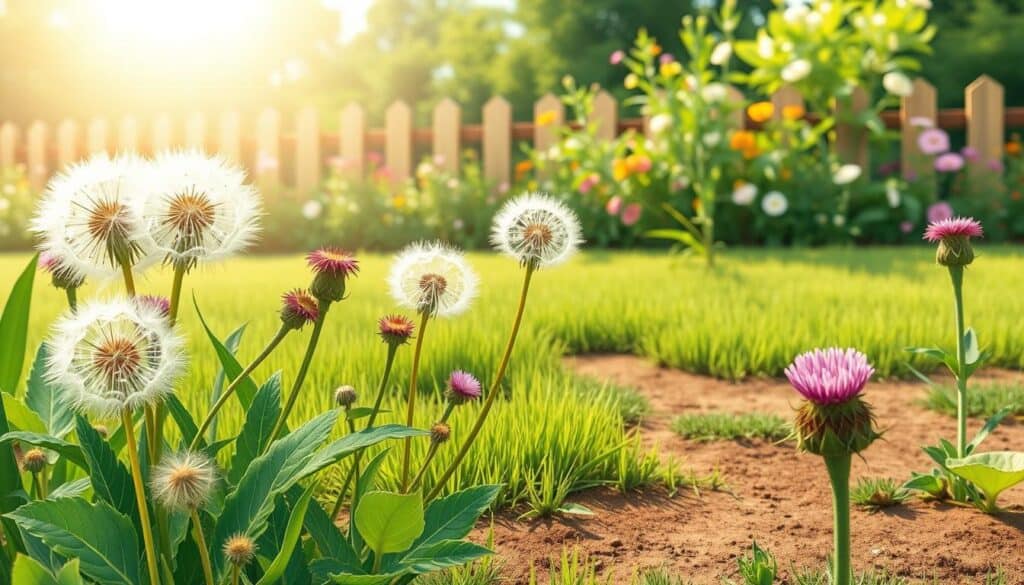
To pick the best backyard weed control methods, understand the weed’s life cycle. Weeds are mainly annuals or perennials, each needing a different approach:
- Annual weeds: These plants grow, reproduce, and die in one season, spreading through seeds.
- Perennial weeds: These come back every year from roots, needing deep removal.
- Biennial weeds: They take two years to grow, focusing on leaves in the first year.
Choosing natural lawn and garden care works with nature, not against it. Knowing how weeds grow helps you disrupt their cycles more effectively. This saves time and effort during the growing season.
These organic gardening tips for beginners help build a strong landscape. By practicing eco-conscious garden maintenance, you create a dense, healthy garden. This naturally keeps out unwanted weeds.
Essential Manual Tools for Organic Weed Removal
Quality hand tools make weeding easier. Organic weed removal keeps your soil and ecosystem healthy. First, learn to identify common backyard weeds to weed more effectively.
A hori hori garden knife is great for digging deep. To use a garden trowel for weeds, insert it at an angle to loosen the soil. This helps when getting rid of dandelions naturally by pulling out the whole root.
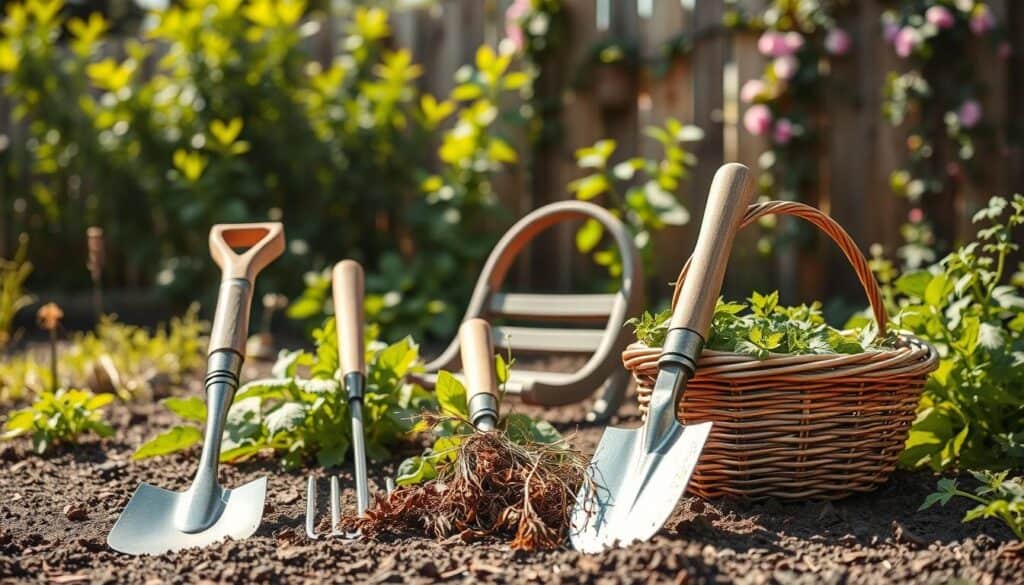
Learning hand weeding techniques is key. A manual dandelion weeder helps pull weeds from tight spots. Here are some must-haves for your shed:
- Hori Hori Garden Knife: Great for digging and cutting roots.
- Stand up weed puller: Good for pulling weeds while standing to avoid back strain.
- Oscillating hoe for weeding: Excellent for cutting small weeds in big garden beds.
- Long handle weeding tools: Necessary for reaching across wide rows without straining.
Knowing how to use garden hoe uses can speed up your gardening. An oscillating hoe for weeding works well because it cuts on both strokes. Long handle weeding tools help you weed comfortably and quickly. These tools make organic gardening easy and fun for everyone.
How to Get Rid of Weeds in a Backyard Garden Without Chemicals Using Natural Sprays
You can manage weeds easily with natural methods from your kitchen. Making a diy organic weed killer is great for those who want non-toxic weed elimination. It helps keep your garden beautiful without synthetic products.
There are many natural weed killer recipes that can tackle tough weeds. These non-chemical weed control methods are perfect for a natural weed control for gardens that’s safe for the environment. By mixing simple ingredients, you can make strong solutions that kill weeds at the root.
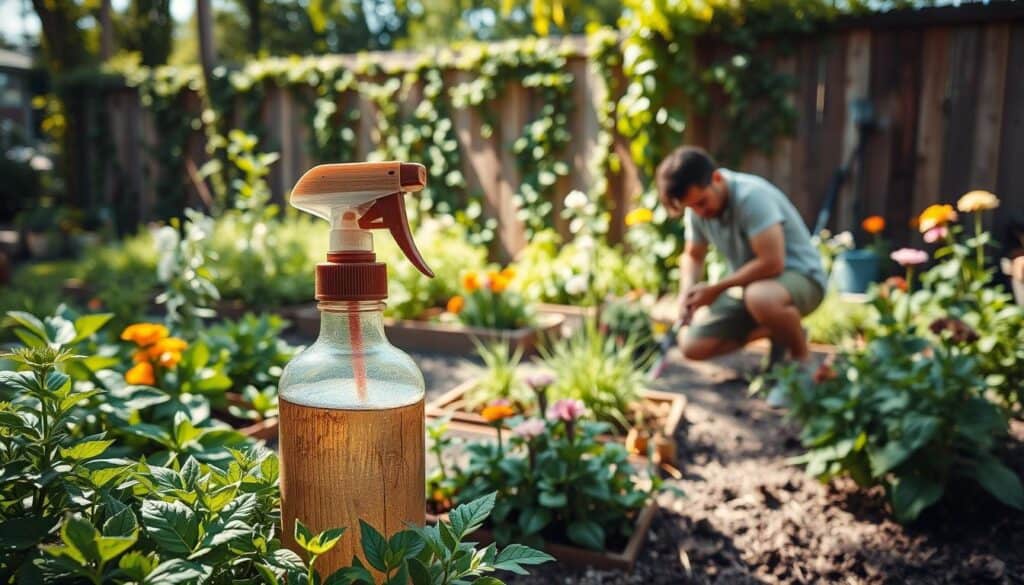
The most popular choice is a homemade vinegar weed killer, best used on sunny days. To make this dish soap and vinegar weed spray, just mix:
- One gallon of white vinegar
- One cup of table salt
- One tablespoon of liquid dish soap
This homemade herbicidal soap sticks to weed leaves, letting vinegar dry them out fast. When using it as a safe weed killer for vegetable gardens, be careful not to get it on your plants.
For weeds in sidewalk cracks or driveway gaps, try baking soda to kill weeds by sprinkling it. For different areas, epsom salt weed control works well, and rubbing alcohol weed spray is good for spot treatments. These methods are a reliable diy weed killer without roundup that’s safe for pets and kids.
Smothering Techniques for Long-Term Weed Suppression
Smothering is a great way to manage weeds without harming the environment. It blocks sunlight, stopping weeds from growing. This method is perfect for those who prefer not to use harsh chemicals.
Choosing eco-friendly weed control makes your garden healthier. A layer of organic material acts as a natural barrier. It keeps the soil moist and weeds at bay.
Learning how to smother weeds with cardboard is a big help for gardeners. Just lay down cardboard, wet it, and cover the area. You can also use newspaper weed barrier to fight off weeds and grasses.
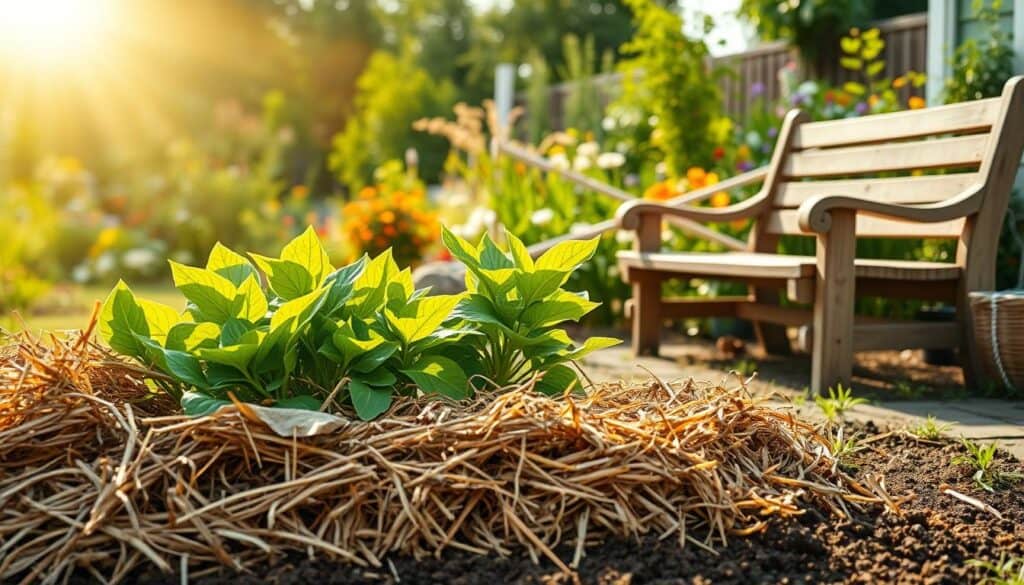
These methods are great for preventing weeds in raised beds. You can also use organic weed barrier fabrics. These fabrics let water and air in while keeping weeds out.
These strategies are perfect for suppressing weeds in vegetable patches. You can use straw or wood chips as barriers. They keep your garden clean with little effort.
Using these methods leads to sustainable weed management. Your backyard will be healthier. You’ll spend less time on weeds and more time enjoying your garden.
Soil Health and Cultural Practices to Prevent Regrowth
Starting a thriving garden begins with the soil. Rich soil means your plants grow strong and healthy. This makes them outcompete weeds. Focus on soil health and weed prevention for effective organic weed removal. These tips help keep your garden a haven for your plants.
Adopting eco-friendly garden habits helps eliminate weeds for good. Instead of constantly fighting weeds, create a space where they can’t thrive. This approach saves you time and energy all season long.
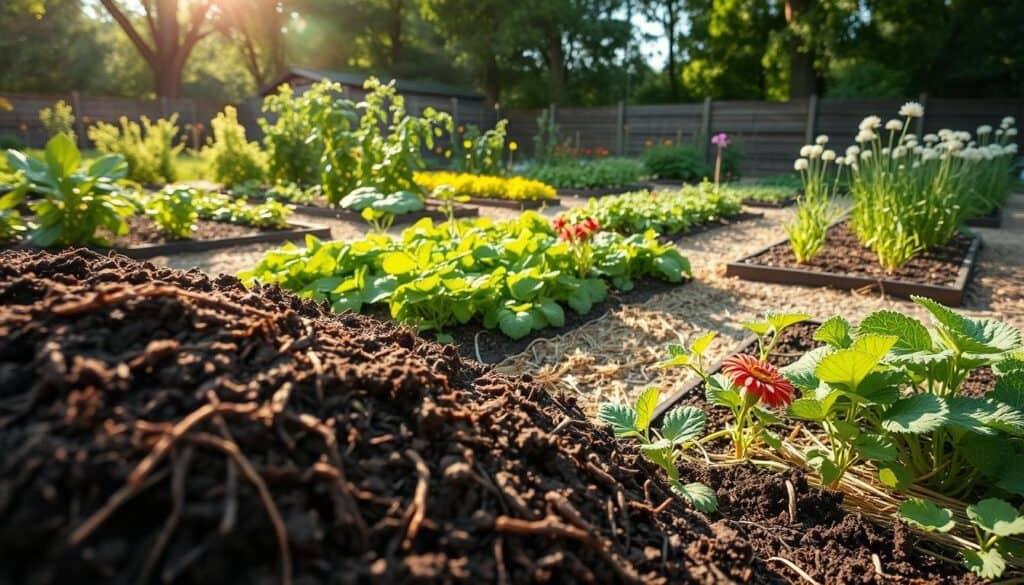
Mulching is a great way to keep weeds away. You can also smother weeds with cardboard or newspaper. These methods block sunlight, preventing weed seeds from germinating.
Strategic planting is another effective strategy. Thick planting for weed control shades the soil, preventing weeds. Companion planting fills gaps, and cover crops protect the soil off-season.
Even with good planning, some maintenance is needed. Knowing how to use a garden hoe helps control small weeds. Tapestry weeding with ground covers keeps the soil weed-free.
These organic gardening tips are easy to follow. They help create a garden that naturally fights weeds. Follow these steps for a beautiful, easy-to-care-for garden all year.
Targeted Strategies for Stubborn Perennial Weeds
Dealing with deep-rooted perennial weeds in your backyard garden can feel like a never-ending battle. These weeds often return year after year because their roots stay buried deep in the soil. To achieve sustainable weed eradication, you need a mix of physical removal and ongoing maintenance.
When tackling naturally removing quackgrass or eliminating bindweed, manual removal is key. These plants can thrive if even a small piece of root is left behind. Using the best manual weed removal tools, like a hori hori garden knife or a stand up weed puller, helps you reach deep to remove the entire root.
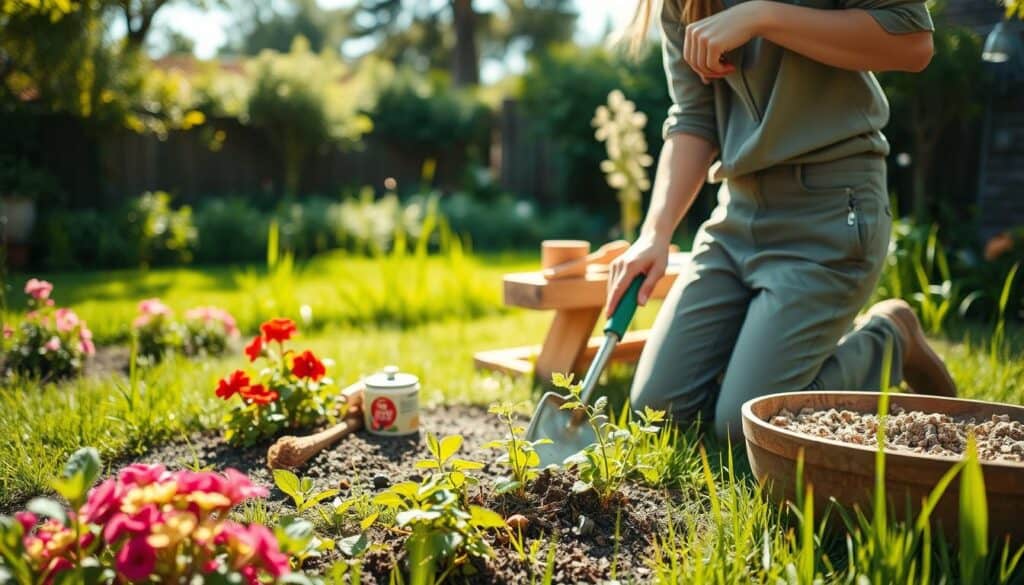
For broadleaf invaders, several effective hand weeding techniques can keep your garden beds clean. If you prefer a diy organic weed killer, here are some targeted approaches:
- Organic thistle control: Use a manual dandelion weeder to cut the taproot several inches below the surface.
- Getting rid of wild onions organically: Carefully loosen the soil with a garden trowel before pulling to ensure the bulb comes out intact.
- Natural way to kill crabgrass: Apply a homemade vinegar weed killer directly to the foliage during the hottest part of the day.
- Killing clover without chemicals: Use an oscillating hoe for weeding to slice through young sprouts before they establish deep roots.
If you need a stronger solution, mix a dish soap and vinegar weed spray to help the liquid stick to waxy leaves. This homemade herbicidal soap is great for eradicating broadleaf weeds naturally without synthetic toxins. You can also try baking soda to kill weeds in sidewalk cracks or epsom salt weed control for stubborn patches.
Remember, getting rid of dandelions naturally or managing other perennials takes patience. Using long handle weeding tools saves your back while keeping your garden pristine. Whether you use a rubbing alcohol weed spray or manual labor, these methods offer a diy weed killer without roundup that keeps your backyard safe and healthy.
Using Heat and Solarization for Eco-Friendly Eradication
Heat is a powerful tool for non-toxic weed elimination in your backyard. It’s a safe and effective way to control weeds without using harmful chemicals. By using heat, you can target and kill weeds without harming your garden.
A flame weeder propane torch is great for removing weeds from paths and driveways. This method, called flame weeding in the garden, kills weeds by heating them up. It’s perfect for getting rid of killing clover without chemicals in areas where you don’t want any plants.
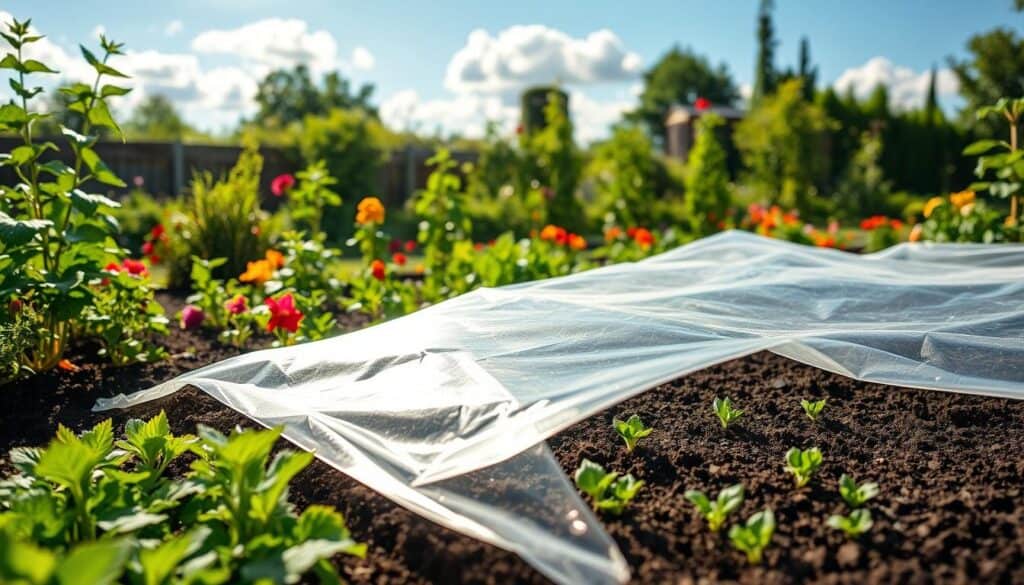
Soil solarization for weeds is a good choice for bigger garden beds. It uses the sun’s heat to kill weeds and harmful bugs. Covering moist soil with plastic in hot months can kill weed seeds and pathogens. It’s also great for natural way to kill crabgrass before planting.
For weeds in tight spots, try these eco-friendly weed control methods:
- Boiling water for weeds: Pouring near-boiling water on weeds instantly kills them.
- Salt and water weed killer: A salt and water mix stops plants from growing in specific areas.
- Safety first: Always wear protective gear when using heat tools to keep your garden work safe.
These methods help you keep your garden clean while protecting the environment. By choosing heat over chemicals, you make your backyard a safe place for your family and pets.
Organic Pre-Emergent Methods for Weed Prevention
Starting early with eco-friendly weed management saves you a lot of work. It stops weeds from growing in the first place. These tips help you save time and energy all season long.
Organic pre-emergent weed control is a great tool for gardeners. Using corn gluten meal for weeds stops seeds from growing. It’s safe for your veggies and flowers because it doesn’t harm them.
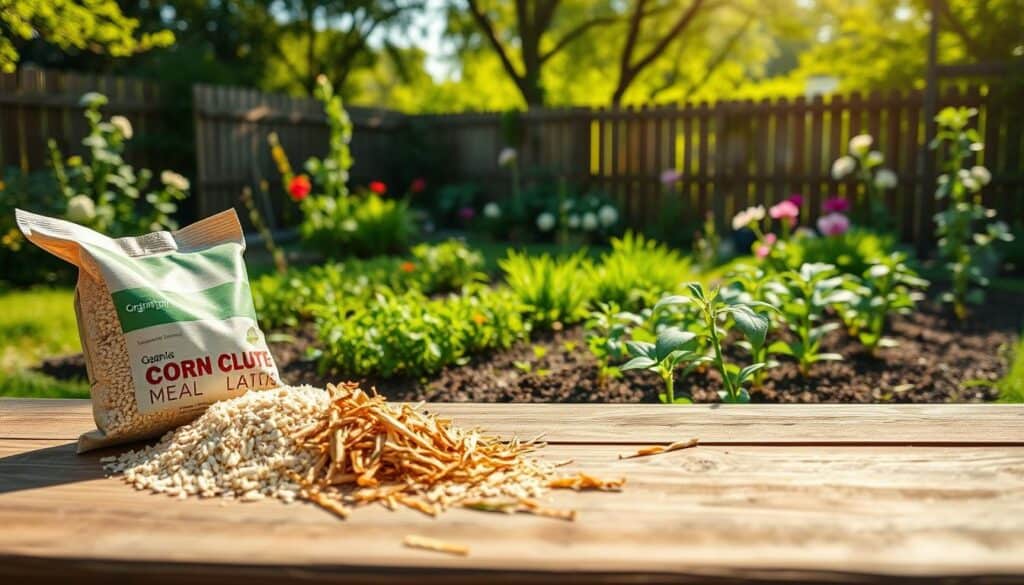
Biological methods can also fight weeds. Cover crops to prevent weeds keep the soil covered and rich. Thick planting for weed control shades the soil, stopping weeds from growing.
Here are more ways to keep your garden weed-free:
- Try tapestry weeding with living ground covers.
- Use preventing weeds in raised beds with good compost and avoid digging.
- Put in organic weed barrier fabrics like jute or coconut coir to block sunlight.
Focus on soil health and weed prevention for a balanced garden. Companion planting for weed control pairs plants that fight weeds and help each other grow. These habits keep your garden weed-free and beautiful.
Conclusion
To have a lush landscape, you must commit to getting rid of weeds for good. Focus on soil health and care for your plants well. This makes your backyard a haven for wildlife.
Tools like a flame weeder propane torch help control weeds. Boiling water can clean paved areas of weeds. These methods are good for your garden without using harsh chemicals.
Planning is key to fighting specific weeds. Corn gluten meal is a great organic weed control. With patience, you can remove quackgrass and thistles naturally.
Soil solarization is a strong method to clean your garden beds. Flame weeding is quick and eco-friendly. Eliminating bindweed and wild onions takes time but is worth it.
Getting rid of broadleaf weeds lets your flowers shine. Keeping moss under control makes your garden paths look great. Sustainable weed management is good for your garden and the environment.
Share your organic gardening tips with others to make your community greener. Your efforts to avoid chemicals help the planet. Enjoy a garden that thrives because of your care.