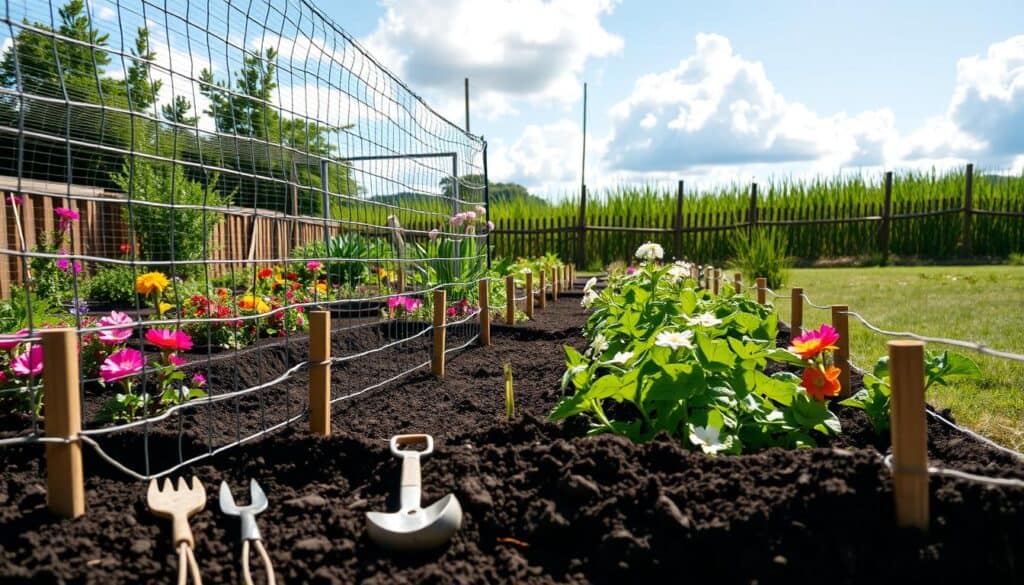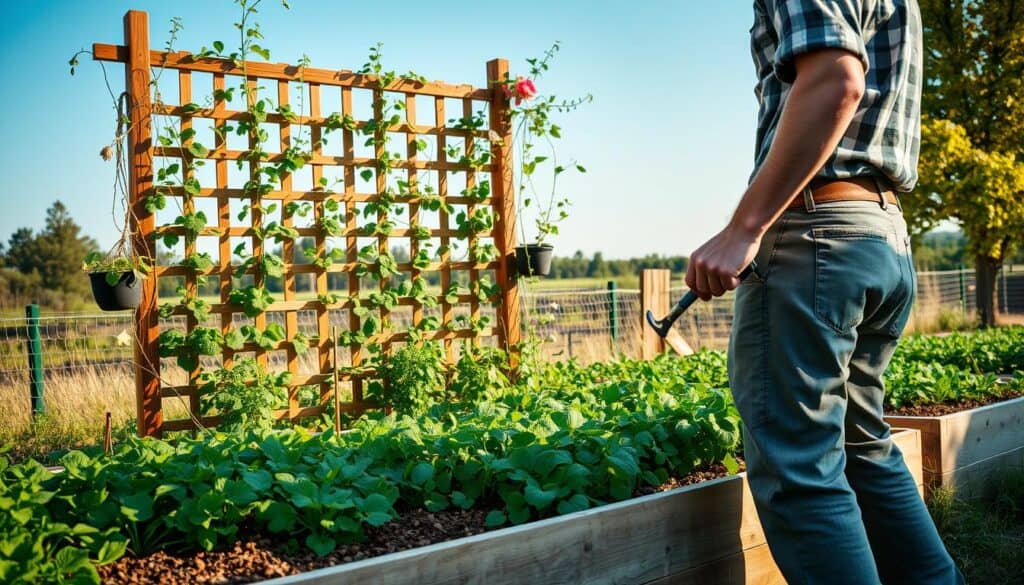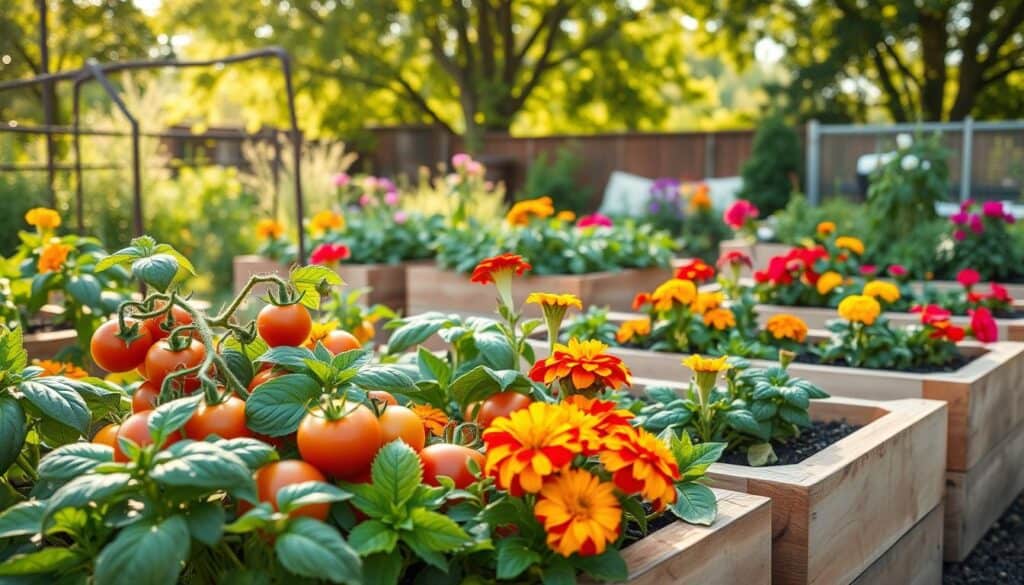
Picture yourselves picking sun-warmed, juicy fruit right from your backyard. Learning how to grow strawberries in a raised bed for a summer-long harvest makes this dream come true. These elevated containers are perfect for your plants to grow well from spring to autumn.
Raised beds offer superior drainage and soil control, keeping your plants healthy. They help you grow more while keeping pests away. Our expert tips will keep your garden vibrant and fruitful, no matter your skill level.
This guide will teach you everything to grow a lot of berries at home. Just follow these easy steps to set up your garden right. Enjoy fresh berries all season long.
Visit The Marketplace or grab your Free Garden Starter Kit
Select the Best Strawberry Varieties for Continuous Production, Easy to Find
Raised bed gardening lets you pick the best strawberry varieties for your needs. Knowing how different plants grow helps you manage your garden. This ensures a steady supply of fruit. Choosing the right varieties is key to growing strawberries successfully.
To grow strawberries all summer, sort your plants by their fruiting cycles. Each type has its own benefits for your garden:
- June-bearing strawberries: They give one big harvest in early summer, lasting two to three weeks. They’re great for canning or freezing.
- Everbearing strawberry varieties: They have two main crops—one in early summer and another in late summer or early fall. They offer a break in production during the hottest months.
- Day neutral strawberries: These plants keep producing fruit as long as it’s not too hot. They’re perfect for constant snacking.

When planning your garden, remember to use companion planting for strawberries. Pairing your varieties with herbs or flowers creates a balanced garden. This protects your plants and makes the most of your space.
By mixing different types, you can have a staggered harvest. This keeps your kitchen full of fresh berries. Whether you like the big yield of June-bearing or the steady output of day neutral, your choice shapes your gardening journey. Research which cultivars do well in your climate for the best results.
Planning and Building Your Ideal Strawberry Raised Bed
Creating the perfect home for your berries requires careful planning and the right materials. But its really not hard at all. And if you are in doubt, just check out You Tube, where you will find many how to videos. When you focus on growing strawberries, choose a location that gets full sun. A well-planned backyard strawberry patch will give you fresh fruit for many seasons.
Learning how to build a raised bed for strawberries is rewarding. Start by measuring your space to ensure the structure fits. A sturdy frame keeps your plants organized and makes harvesting easier.
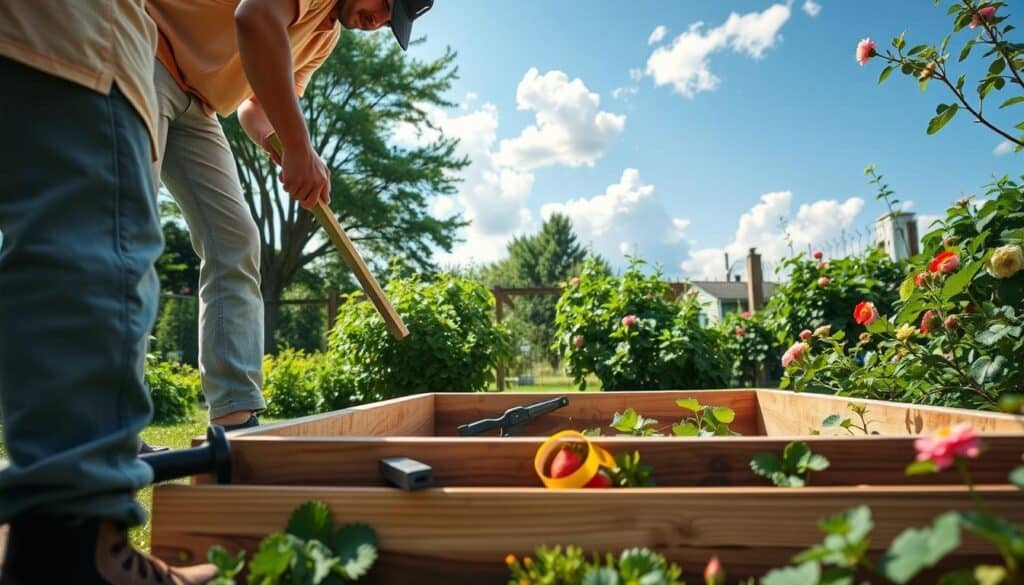
When selecting materials, think about the longevity of your garden. Cedar raised beds for strawberries resist rot and insects well. Galvanized raised beds for strawberries offer a modern look and are durable against harsh weather.
You can choose different styles based on your taste and space. A 3-tier raised garden bed for strawberries is great for small areas. The raised mound method for strawberries creates elevated rows that warm up quickly in spring.
Regardless of design, raised bed drainage for strawberries is key to prevent root rot. Use a high-quality mix for the best soil for raised bed strawberries. It should be loose and rich in organic matter. Proper preparation ensures your plants thrive all summer.
Preparing Your Perfect Soil Environment for Strawberries
Your journey to delicious berries starts with the soil in your raised bed. It’s key to have the best soil pH for strawberries, between 5.5 and 6.5. This ensures your plants get the nutrients they need. Good soil care is the first step to a bountiful strawberry harvest.
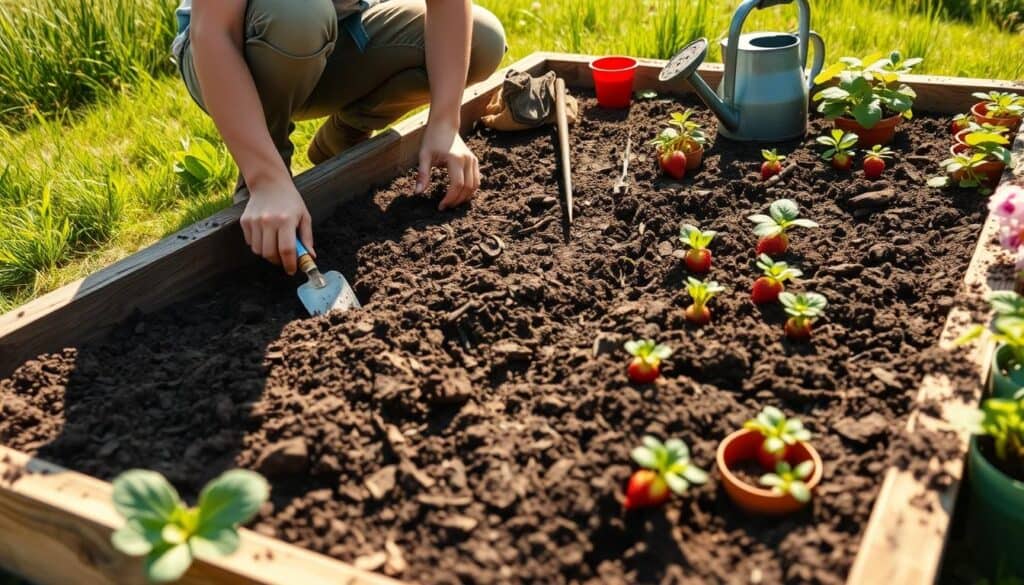
When planting, focus on the crown. Knowing how deep to plant strawberry crowns is important. Planting too deep can cause rot, while too shallow can dry out the roots. If in doubt and they come with little instruction, just a fast check on google can answer all your question is seconds..
Spacing is also critical to prevent disease and ensure each plant gets enough energy. Here’s how to organize your garden:
- Space plants 12 to 18 inches apart for good airflow.
- Know how to space strawberries in a raised bed to avoid overcrowding.
- Rows should be about 2 feet apart if planting multiple lines.
- Plant so the crown is at the soil surface level.
Consider your plants’ energy needs. Learning how to pinch strawberry flowers early helps your plants grow strong. By removing these blooms, you help your plants focus on growing roots. This leads to a bigger harvest later in the summer.
How to Grow Strawberries in a Raised Bed for a Summer-Long Harvest
Enjoy fresh fruit all season by following the best strawberry growing practices in your raised bed. A consistent summer berry harvest needs careful plant health and regular care. These habits lead to a productive and rewarding garden.
For a summer long harvest strawberries, pick day-neutral or everbearing varieties. These plants bloom as long as the weather is good. Keep them healthy with consistent moisture and organic fertilizer.
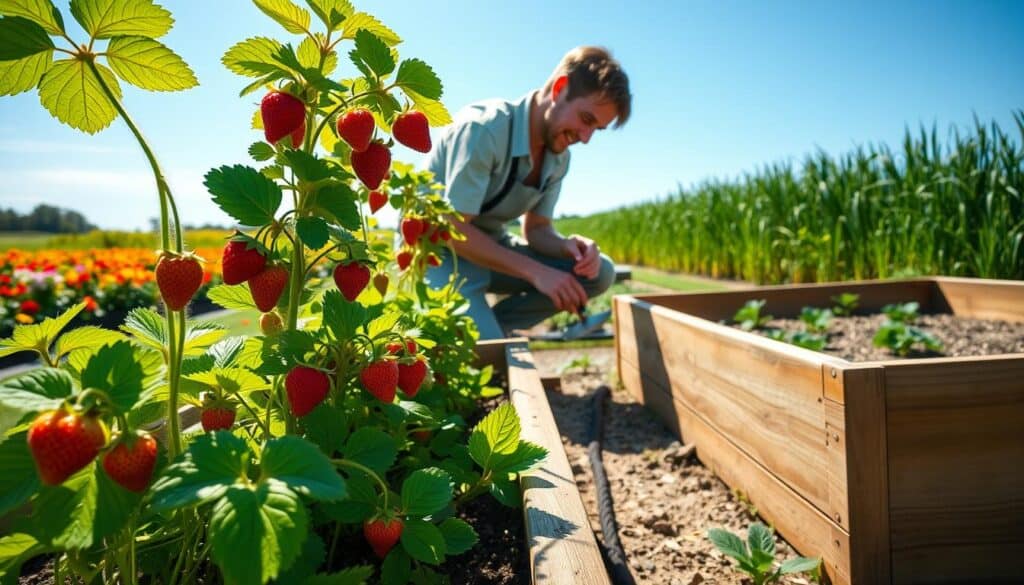
Learning how to use strawberry runners helps expand your garden without spending more. Pin these small plantlets into the soil to grow new, strong plants. This keeps your garden full and replaces old plants with new ones.
To harvest endless strawberries, follow these maintenance tips:
- Remove dead or damaged leaves to improve airflow and prevent disease.
- Pinch off early blossoms on newly planted runners to help them establish strong roots.
- Apply a fresh layer of organic compost mid-season to provide a nutrient boost.
- Keep the soil consistently moist but avoid waterlogging the roots.
To extend strawberry harvest season, protect your plants from extreme heat. Use a light shade cloth during the hottest weeks. This prevents berries from scorching and keeps plants productive. Enjoy a bounty of sweet, homegrown fruit from early summer until the first frost.
Understanding Watering and Fertilization Schedules
Growing strawberries in a raised bed changes how you water and feed them. Raised beds lose moisture faster than regular gardens. Keeping the soil moist is key to prevent stress and keep the fruit juicy.
To water strawberries in a raised bed well, be proactive. The soil should be damp, not wet. A drip irrigation system or soaker hose is great for delivering water right to the roots.
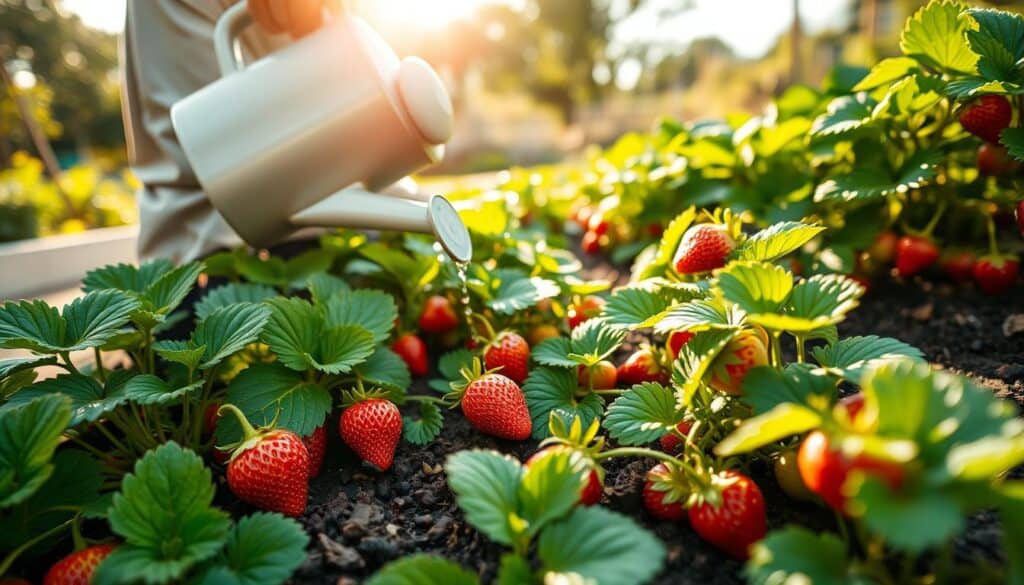
Fertilizing raised bed strawberries is also critical for a long harvest. Raised beds lose nutrients quickly, so plants need a steady supply. Choose slow-release, balanced fertilizers that feed plants for weeks.
For the best fertilizer for endless strawberries, pick products with more phosphorus. These help with flower and fruit growth, not just leaves. Here are some tips for fertilizing:
- Use a balanced liquid fertilizer every two weeks in the growing season.
- Add organic compost to the soil in early spring.
- Don’t over-fertilize, as it can harm berry production.
- Water well after using granular fertilizers to avoid root damage.
Whether you have a diy strawberry garden bed or a kit, these tips apply. Consistency is key. By keeping an eye on soil moisture and feeding plants regularly, you’ll have a bountiful strawberry patch all summer.
Companion Planting Ideas for Your Strawberry Patch
Growing a thriving strawberry patch is more than just soil and water. It’s about choosing the right plant neighbors. This creates a balanced ecosystem that supports growth.
Using companion plants for strawberries in raised beds boosts your garden’s health and productivity. These plants protect against pests and attract beneficial insects. This makes your strawberry bed a vibrant, self-sustaining space all season.
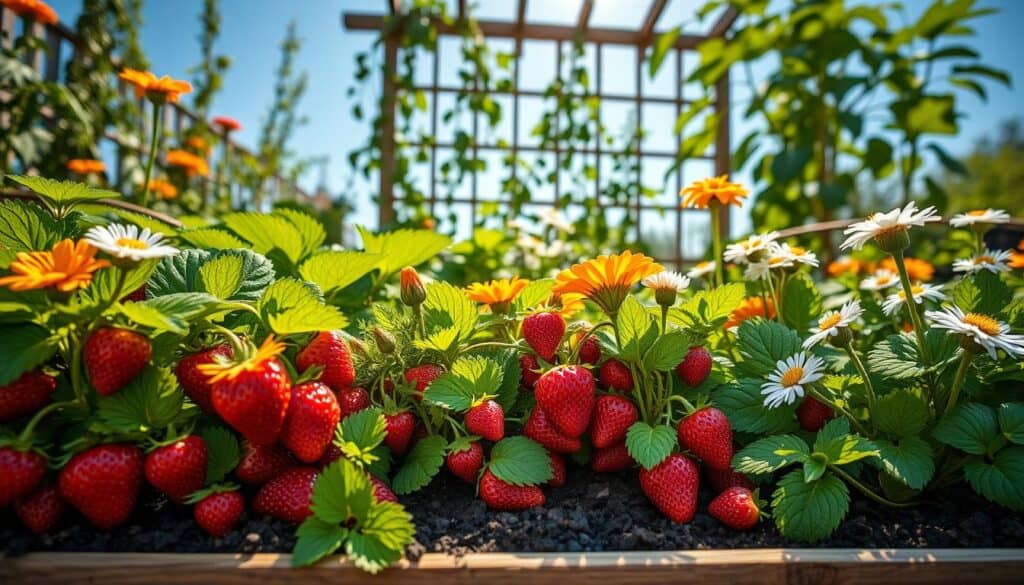
Some plants are great for boosting berry vitality. Onions or garlic repel aphids and spider mites. Borage improves strawberry flavor and attracts pollinators.
In strawberries in wooden planters, space is limited. Interplanting herbs like thyme or chives saves space and retains moisture. These strawberry companion plants also provide ground cover.
Strategic placement of these companions can help get strawberries to fruit the first year. They reduce pest stress and improve soil nutrients. This lets your plants focus on berry production. Here are some beneficial pairings for your next planting:
- Borage: Enhances flavor and attracts bees for better pollination.
- Garlic and Onions: Act as natural pest deterrents against common garden insects.
- Bush Beans: Help fix nitrogen in the soil, providing a natural boost for your plants.
- Lettuce: A great shallow-rooted companion that thrives in the shade of strawberry leaves.
By integrating these diverse species, you create a resilient garden. It’s less reliant on chemicals. This method promotes healthier soil, essential for long-term success. Your efforts will reward you with a more abundant and delicious harvest.
Essential Maintenance to Get Productive Strawberry Plants all The Time
To enjoy an endless strawberry harvest, you need to know a few key maintenance steps. Taking care of your strawberry patch in raised bed environments is very rewarding. It leads to a bounty of sweet, juicy fruit all summer.
First, learn how to prune strawberry plants. Regularly cutting out dead or damaged leaves helps. It improves airflow and stops fungal problems. This way, your plants focus on growing new leaves and berries.
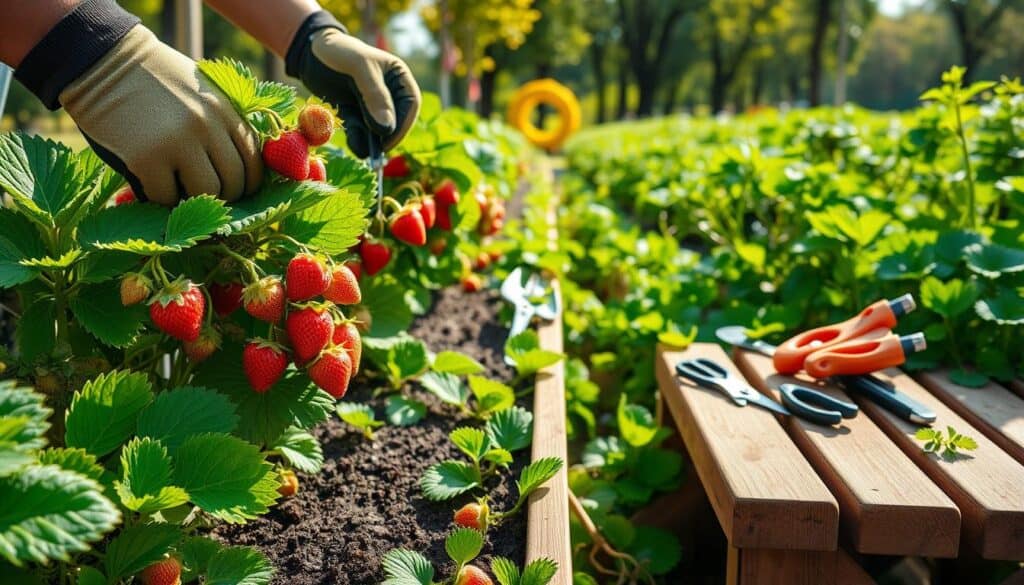
Another important step is mulching strawberry raised beds. Use straw or pine needles to keep weeds away and soil moist. This barrier also keeps fruit off damp soil, preventing rot.
To get the best taste, know how to harvest strawberries correctly. Pick berries when they’re fully red and firm. Use garden shears to cut the stem, not pull the fruit. This gentle method protects the plant’s crown.
Expanding your garden is easy by propagating strawberries for free. Use the runners plants naturally produce. Pin these runners into the soil to grow new plants without spending money. Follow these essential tips to keep your garden thriving:
- Prune regularly to remove old leaves and encourage fresh growth.
- Apply mulch to retain moisture and keep berries clean.
- Harvest carefully by cutting stems to avoid plant stress.
- Propagate runners to increase your plant count for next season.
Mulching and Weed Control for Healthier Berries
Mulching your strawberry bed keeps berries clean and tasty. When you focus on proper strawberry planting techniques, adding a layer of organic material is key. This simple practice keeps the ripening fruit off the damp soil, reducing rot and fungal issues.
If you are committed to growing organic strawberries, choosing the right mulch is essential. Natural materials break down over time, enriching the soil while suppressing unwanted growth. Consider using these effective options for your raised bed: One of my favorites is simple, free carboard, not to mention the rest:
- Clean wheat straw
- Pine needles
- Shredded bark
- Dried grass clippings
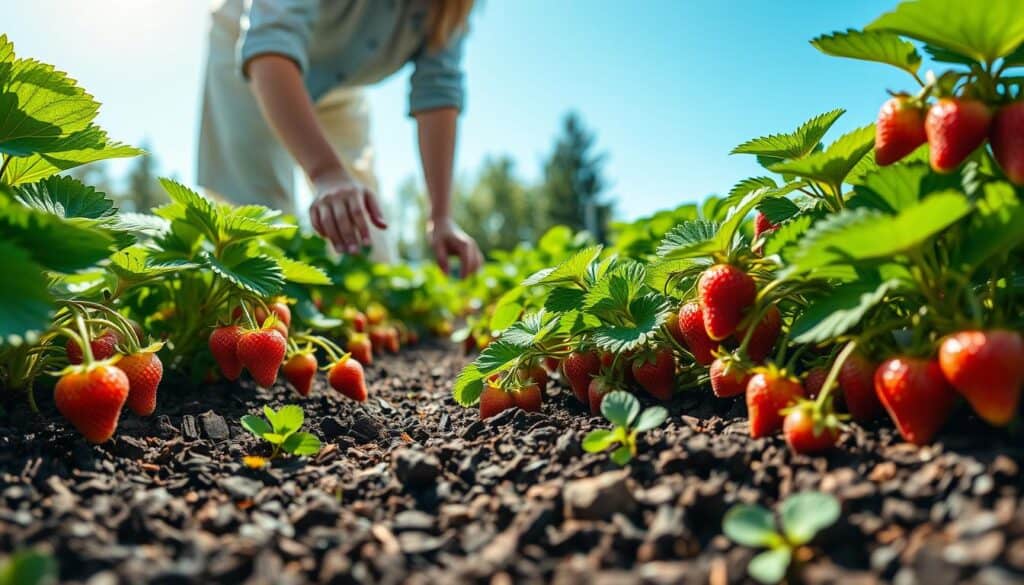
Weed control is just as important as mulching for your patch’s health. Weeds compete for water and nutrients, hurting your plants’ ability to produce a heavy harvest. A thick layer of mulch blocks sunlight from reaching weed seeds, preventing them from growing.
Regularly inspecting your raised bed for invasive plants is a smart habit for successful strawberry planting. Even with a good mulch layer, a few persistent weeds may occasionally break through. Pulling these by hand early ensures they don’t harm your berry plants.
A clean and well-mulched environment is perfect for organic strawberries to thrive. Your berries will stay cleaner during heavy rains and be protected from soil-borne pathogens. Investing a little time in these maintenance tasks will reward you with a much larger and more flavorful harvest throughout the summer.
Protect Your Harvest from Pests and Wildlife
Want to grow sweet strawberries at home? Be ready for unwanted visitors. Local wildlife and insects are always on the lookout for a snack. A good plan for growing strawberries for summer harvest helps you enjoy your hard work, not pests.
Effective raised bed strawberry pest control begins with knowing your enemies. Slugs are a big problem because they love the damp, dark spots mulch creates. Here are some easy ways to get rid of strawberry slugs:
- Use copper tape around the edges of your raised bed to deter slugs.
- Set out shallow dishes of beer to trap them overnight.
- Remove excess mulch near the base of the plants to reduce hiding spots.
- Hand-pick slugs in the early morning or late evening when they are most active.
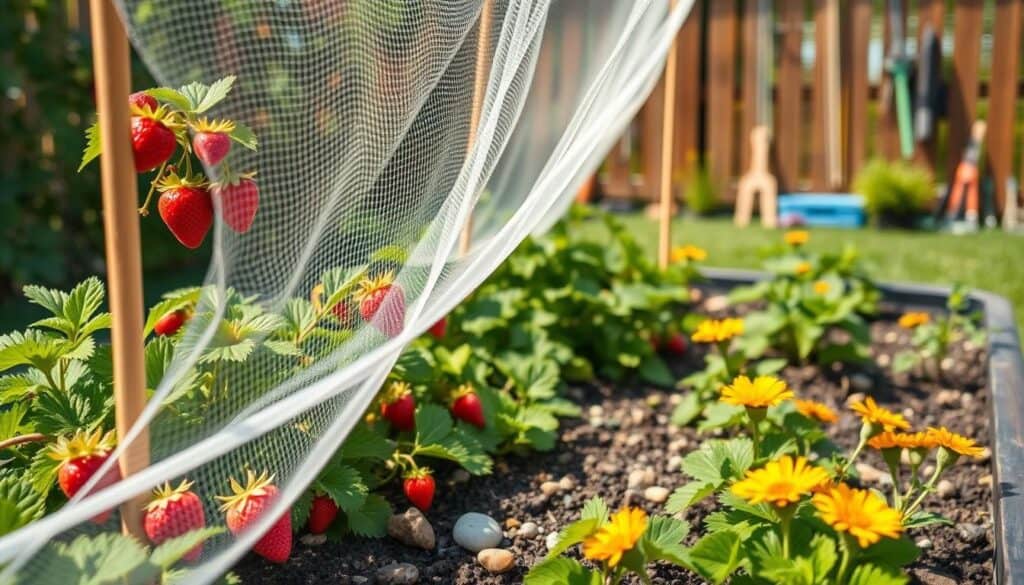
Birds and squirrels are the main threats to your strawberries. Protecting strawberries from birds is best done with lightweight garden netting. It lets sunlight and water through while keeping birds out.
To keep squirrels away from squirrels and other small animals, use sturdy hardware cloth or wire mesh cages. These cages are hard for animals to chew through. By setting up your patch early, your berries stay safe until they’re ripe.
Troubleshooting Common Growing Issues With Strawberries
Even the most dedicated gardeners face occasional hurdles when growing strawberries. By following expert raised bed strawberry gardening tips, you can quickly identify and resolve most plant health concerns before they impact your harvest.
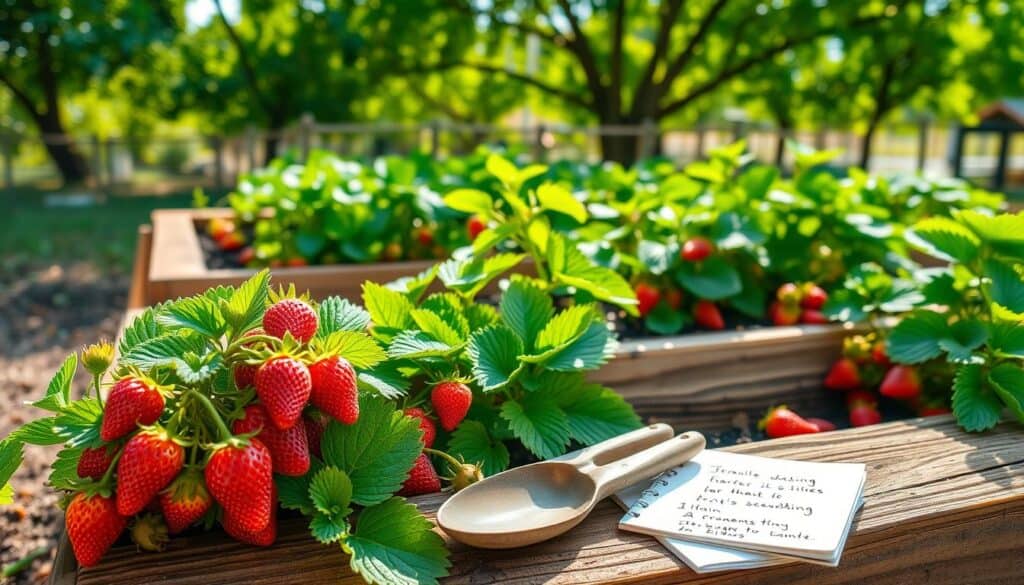
Many beginners often ask, “do strawberries grow well in raised beds?” The answer is a resounding yes, provided you manage the soil moisture and nutrient levels effectively.
If you notice your plants looking sickly, you might ask, “why are my strawberry leaves turning yellow?” This symptom frequently points to a nitrogen deficiency or iron chlorosis caused by high soil pH levels.
You can often correct this by applying a balanced, organic fertilizer or adjusting the soil acidity. Ensure your soil remains well-draining to prevent the roots from sitting in stagnant water.
Learning how to prevent root rot in strawberries is essential for long-term success. This condition usually stems from overwatering or soil that lacks proper aeration.
To keep your plants thriving, follow these simple steps:
- Ensure your raised bed has adequate drainage holes or a gravel base.
- Water only when the top inch of soil feels dry to the touch.
- Use high-quality potting mix that promotes healthy root oxygenation.
- Avoid overcrowding plants to allow for better airflow between leaves.
Overwintering Your Raised Bed Strawberries
Keeping your plants alive through winter is key to growing strawberries in raised beds for years. These plants are tough, but raised beds make their roots colder than soil at ground level. By taking early steps, you protect your garden and help it grow strong when spring comes.
To overwinter strawberries in raised beds, start when they stop growing. Wait for the first hard frost before covering with straw or pine needles. This keeps the soil warm and stops the crowns from freezing out. Once you get a hang of it, it’s pretty easy to do, year after year.
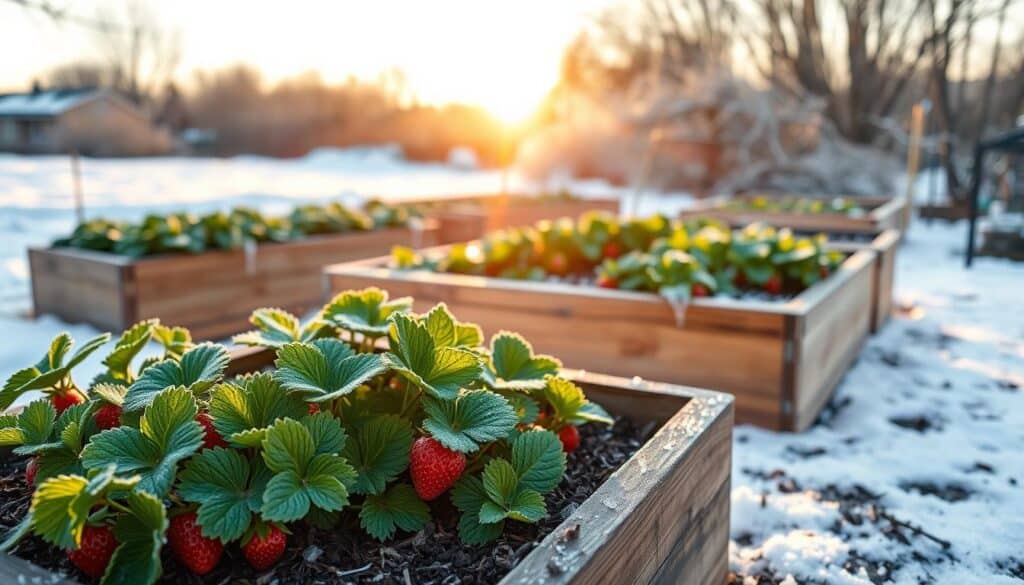
Before winter, manage your garden by propagating strawberry runners. Remove young plantlets or protect them well. Strong plants are more likely to make it through winter than small, new ones.
Good winter care is essential for a summer-long strawberry harvest for many seasons. By following these steps, you prepare your plants for a strong spring. They’ll be ready to produce tasty fruit as soon as it gets warmer.
- Apply 3-4 inches of clean straw mulch over the crowns.
- Remove any dead or diseased foliage to prevent fungal issues.
- Ensure the soil remains slightly moist but not waterlogged.
- Use a frost blanket if temperatures drop significantly below freezing.
Conclusion
Fresh strawberries taste best when picked from your backyard. You now know how to make a simple raised bed into a fruit paradise. Check the internet for different types of raised beds to grow your strawberries.
Success begins with knowing when to plant strawberries in raised beds. This matches your local climate. Timing is key to strong roots before summer heat.
Consistent care turns a small patch into a reliable food source. You have the tools to keep strawberry plants producing all season.
Regularly check soil moisture and nutrient levels. This keeps your plants strong. Watch your garden grow with these methods.
Share your garden progress with others. Your journey to a sustainable harvest starts with these steps in your raised bed.