Starting your own vegetable patch is exciting, but many rush into it without a plan. Learning how to plan a backyard garden layout is key for success. Skipping this step can waste time and effort. There is an old woodworkers saying: Measure twice, cut once. Same goes here. Before digging your first hole or adding your first screw to your raised flower bed, measure, then measure again..
Deciding on the right garden bed size and depth is important. It helps your plants grow well and keeps maintenance easy all season. Before you start planning, try our free Garden Calculator to help with spacing and measurements — it takes the guesswork out of the process.
We aim for your outdoor space to be both productive and beautiful. This article will help you organize your garden well. We’ll cover the important steps Before You Dig a Single Hole. Follow these to have a great harvest from the start.
Visit The Marketplace or grab your Free Garden Starter Kit
Assessing Your Backyard Environment and Site Conditions
Before you start digging, get to know your backyard. A detailed site evaluation for garden design is key. It shows which plants will do well in your space.
Good backyard garden planning means knowing how you’ll use your outdoor space. For beginners, start by observing your yard. Use backyard garden zoning ideas to keep busy areas separate from quiet spots.
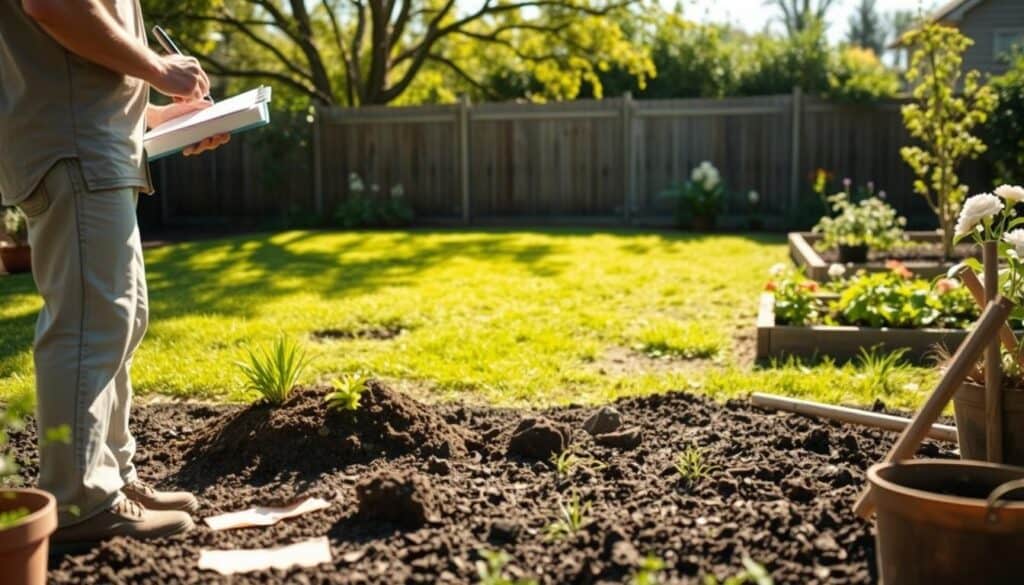
Think about how your yard changes throughout the day. For an intensive vegetable garden layout, choose a spot that gets lots of sun. Make sure sun-loving plants aren’t stuck in the shade.
Placing raised garden beds wisely is important. It keeps the soil healthy and air flowing. By avoiding wind-blocking fences, you prevent diseases. A well-planned layout for home garden saves time and effort later.
Mapping Out Your Garden Space
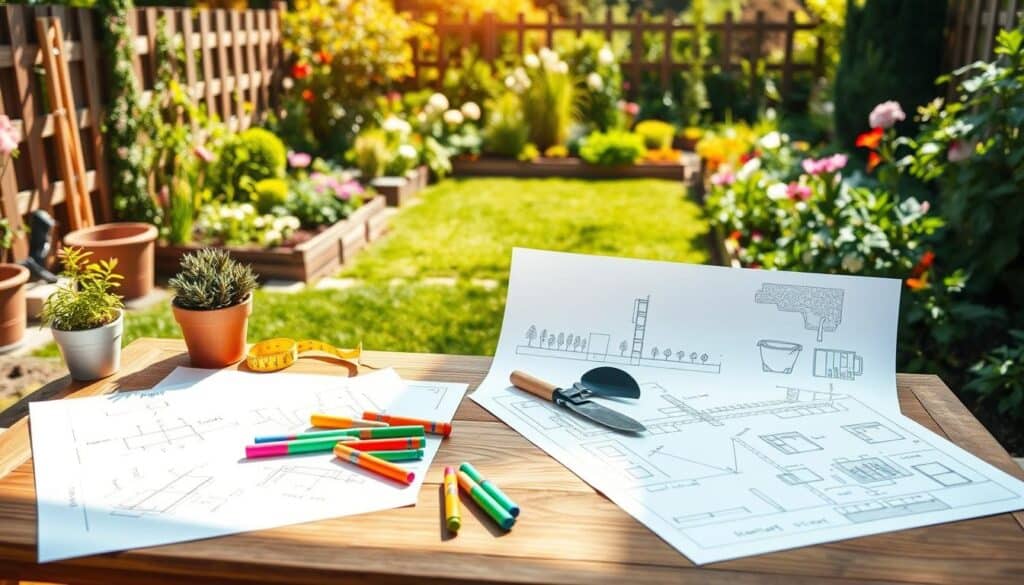
Mapping out your garden is key to a successful harvest. Sketching your ideas gives you garden design tips to avoid mistakes. A clear plan helps you see how different zones will work together.
Always put safety first when planning. Make sure to locate utility lines before digging to avoid damaging pipes. Once you know it’s safe, you can plan your vegetable garden layout efficiently.
Efficiency is important for a low-maintenance garden. Think about where to place your garden water source early on. This saves you time and effort during the summer.
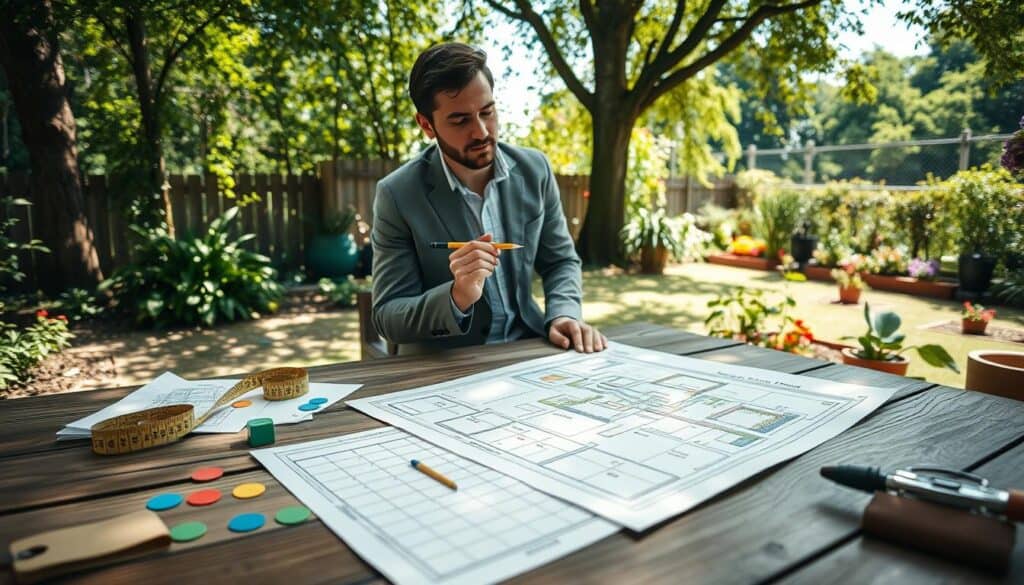
Good backyard garden mapping balances function and beauty. To keep your garden looking good all year, consider these tips:
- Find spots with full sun for your veggies.
- Set aside areas for composting and tools.
- Include a 3-season perennial garden plan for color all year.
- Make sure beds are big enough for easy movement.
- Group plants by water needs to simplify watering.
By following these steps, you create a garden that grows with you. A well-planned garden is more than plants; it’s a part of your home. Taking these steps now will make gardening more rewarding for years to come.
Choosing the Right Garden Bed Style
Choosing the right garden bed style is key in your yard design. You might prefer a formal look or a wild, natural vibe. Your choice greatly affects your landscaping ideas. Proper bed selection ensures long-term plant productivity and visual harmony.
For beginners, raised beds are a great choice. They offer many creative layout ideas for small spaces. These beds help keep soil quality high and control the growing medium for healthy roots.
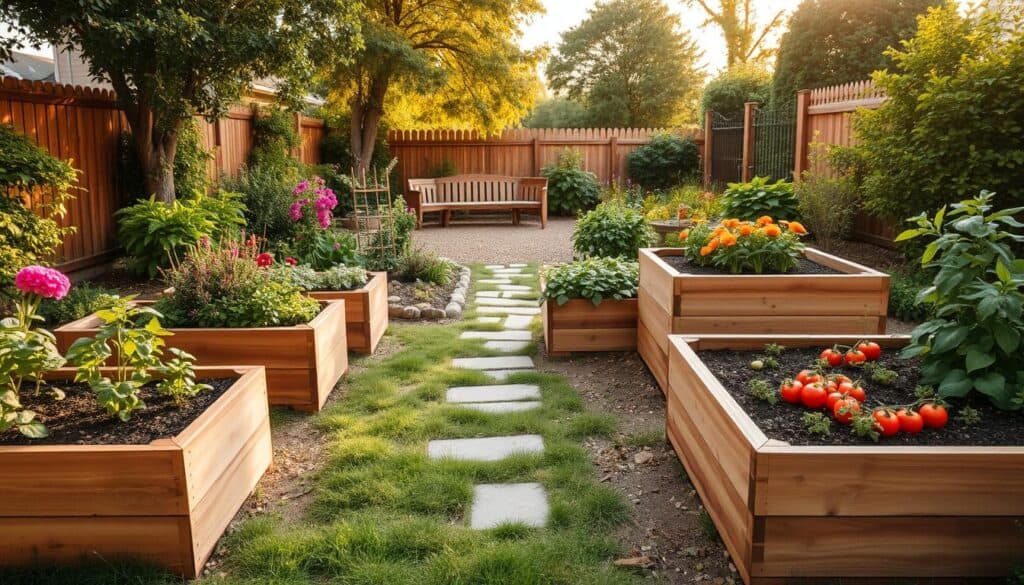
Narrow backyard garden layouts are perfect for small spaces. They use vertical space or long beds along fences. This way, you can grow a lot without cluttering your yard. These layouts keep your plants accessible while maintaining a clean, organized look in your yard.
Before building, clear the backyard space for garden beds. Remove weeds, rocks, and debris to prevent competition for nutrients. A clean area lets your plants grow well without invasive grasses.
Don’t forget about drainage solutions for backyard gardens. Proper soil elevation and drainage prevent root rot in heavy storms. Investing time in these structural details now will save you significant effort during the growing season.
Selecting the Best Planting Arrangement
Your garden’s layout affects how much upkeep it needs. When starting a new garden, how you arrange your plants is key. A well-thought-out garden design layout makes managing weeds, water, and harvest easier.
Choosing between block and row gardening is a common dilemma. Row gardening suits big machinery but wastes space in small areas. On the other hand, block gardening uses dense squares that shade the soil and fight weeds.
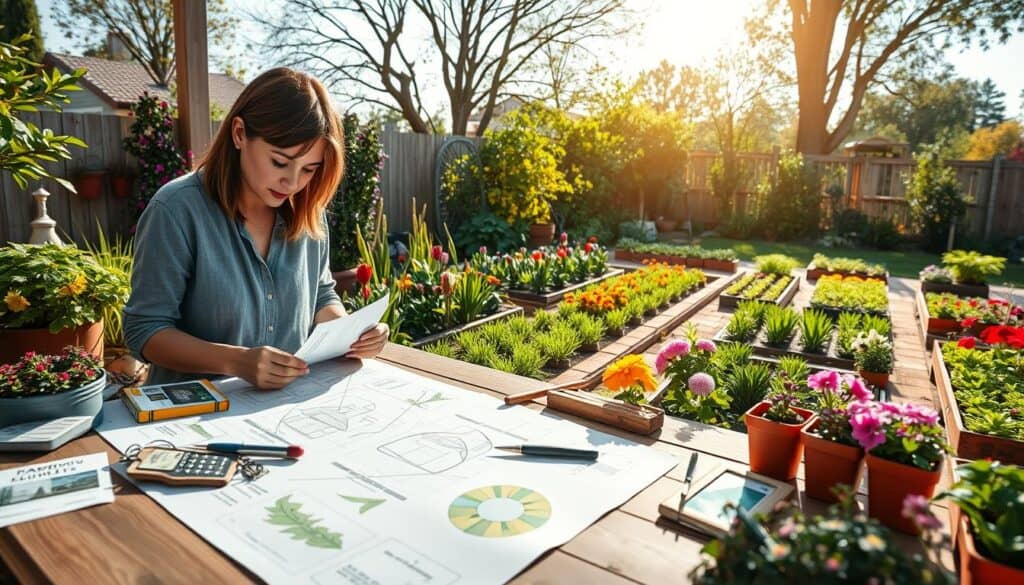
When picking a garden spot, think about your outdoor space layout to help plants grow well. Proper sun and shade garden planning is vital. For instance, tomatoes and peppers need lots of sun, while leafy greens prefer some shade.
For a high-yielding home garden, consider block planting’s benefits:
- Increased soil moisture retention from dense foliage.
- Higher harvest density per square foot of space.
- Reduced labor from less weeding.
Grouping plants by their water and light needs creates a more efficient garden. This approach keeps your outdoor space layout productive from spring to autumn. Planning your beds now saves you from future headaches.
Optimizing Plant Health Through Companion Planting
Companion planting turns your backyard into a thriving ecosystem. By placing certain plants together, you create natural pest defenses. This boosts soil health, a key part of any garden plan.
Starting a step by step backyard garden planning means understanding your space. You need to track sunlight to avoid shading out sun-loving plants. This ensures each plant gets the right amount of sunlight to grow well.
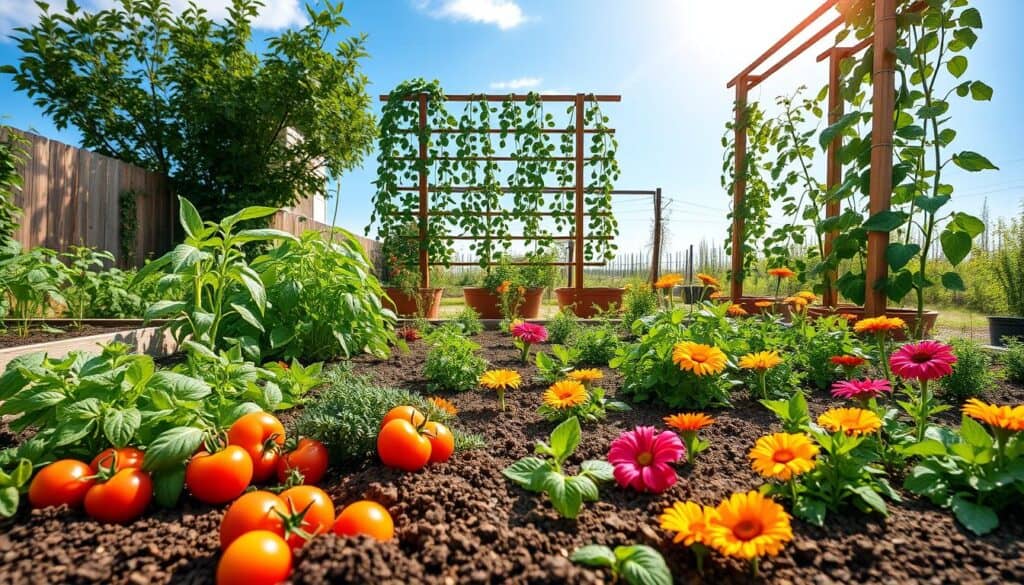
For simple backyard garden planning, group plants with similar needs. Pair fast-growing greens with slower-growing root vegetables. This strategy maximizes space and keeps your garden productive.
In your companion planting arrangement, think about attracting pollinators. Use flowers to draw in beneficial insects. These diy garden design tips lead to a balanced garden that needs fewer chemicals. A diverse garden is healthier and more resilient.
When using containers or wooden frames, follow a raised beds spacing guide to avoid overcrowding. Good airflow between plants prevents diseases and promotes strong growth. These backyard garden ideas create a vibrant, productive space that adds joy to your day.
Designing Functional Pathways and Borders
Think of your garden paths as the essential arteries that keep your landscape healthy. By creating clear walkways, you ensure easy access to every plant without stepping on and compacting the soil. These backyard gardening tips help you maintain a loose, aerated growing medium that roots love.
When you are planning a garden layout before planting, consider the width of your paths. A path that is at least two feet wide allows you to move comfortably with a wheelbarrow or garden tools. This simple step prevents damage to your delicate vegetable beds.
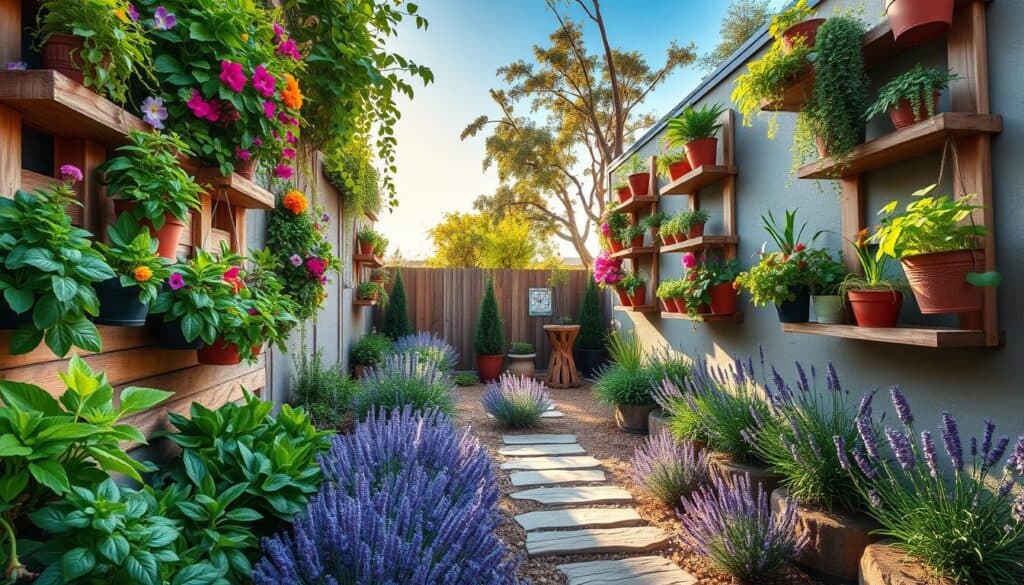
If you are short on space, consider incorporating vertical gardening layout ideas into your design. Using trellises or wall-mounted planters allows vining crops like peas and cucumbers to grow upward. This strategy keeps your ground space open and adds a beautiful, layered look to your yard.
Successful harvests often rely on a well-organized companion planting chart and layout. By grouping compatible plants together, you can naturally deter pests and improve soil fertility. Strong plant partnerships are a cornerstone of a thriving, organic garden.
Before you place a single seed, focus on garden soil preparation before digging. Adding organic compost or aged manure creates a nutrient-rich foundation for your vegetables. Healthy soil is the most important factor in ensuring your plants grow strong and resist disease.
A thoughtful vegetable garden layout is a game-changer for any home grower. Whether you are a seasoned pro or looking for garden planning for beginners, keeping your design simple is best. Start with a few manageable beds and expand your borders as you gain more experience.
How to Plan a Backyard Garden Layout Before You Dig a Single Hole
Mastering garden planning is key to your plants’ success. It takes patience and a clear vision of your space. Organizing your beds well creates a space that rewards you with a rich harvest.
Proper vegetable garden spacing is vital for plant health. Enough space between plants improves airflow and lowers disease risk. A row planting vegetable garden setup is easy to maintain and water efficiently.
Adding companion flowers in vegetable gardens boosts your success. These flowers attract pollinators and beneficial insects that control pests. Mixing flowers with vegetables creates a balanced ecosystem that thrives without chemicals.
There are many garden layout ideas to use your backyard well. Choose between raised beds or in-ground rows, focusing on accessibility and sunlight. Planning your layout carefully before digging saves work and ensures your garden thrives for years.
Tailoring Your Layout to Specific Garden Types
Every backyard is different, so your garden should match your goals and space. Good backyard garden planning starts with knowing what you want to grow and how much time you can spend on it. By creating a garden blueprint, you can see your vision before you start digging.
Choosing the right spot for your garden is key. Look for areas that get at least six to eight hours of sunlight a day. Also, make sure it’s close to water to keep your plants hydrated during hot summers.
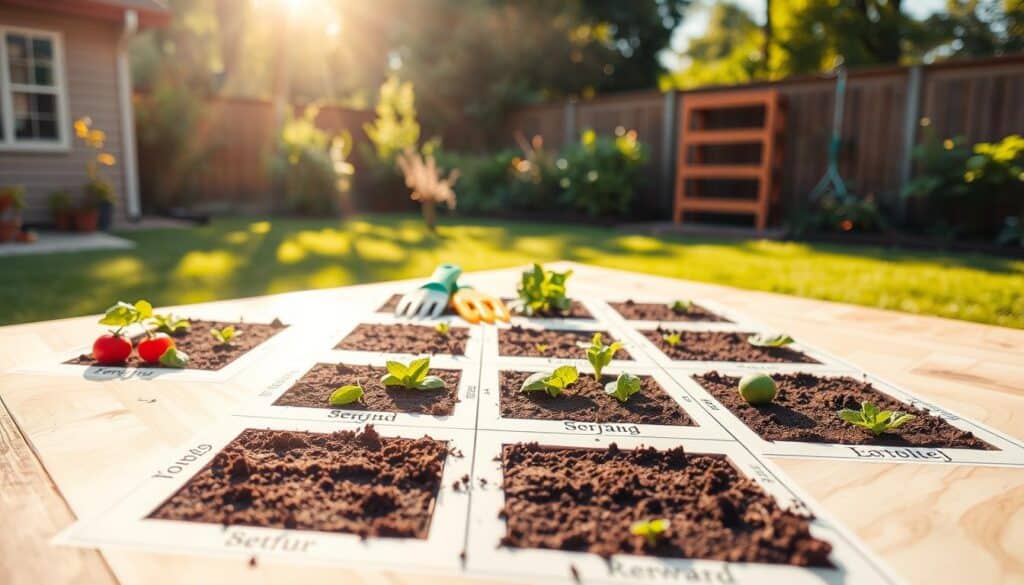
If you have a small area, a square foot garden layout plan is great. It uses a grid to fit more plants in a small space. It’s perfect for beginners who want an organized and productive garden.
For those with little ground or poor soil, a container garden layout design is a good choice. You can put pots on decks, patios, or balconies to create a green space. Container gardening lets you control the soil, making sure your plants get what they need.
Your backyard landscape layout design should be both beautiful and useful. Using these backyard landscaping ideas helps you create a space that looks good and works well. A well-planned garden brings joy for many years.
Budget-Friendly Backyard Garden Planning Tips
Creating a beautiful garden doesn’t have to cost a lot. By using diy garden planning, you can make your outdoor space lovely without spending a lot. Making smart choices lets you create a garden that shows your style without breaking the bank.
For beginners, start with these beginner tips for garden design. Begin with small areas to save money on supplies. As you get better, you can grow your garden bigger.
Try a keyhole garden layout to save money and time. This design has a central compost basket that feeds your plants. It’s efficient for soil health and water use in one spot.
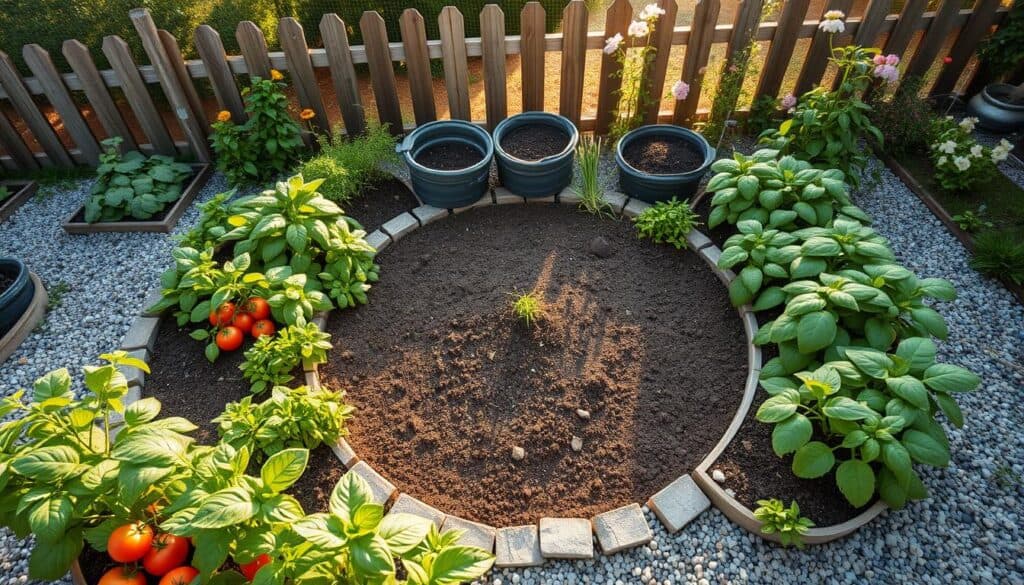
Look for garden walkway and pathway ideas using recycled materials. Use old bricks, gravel, or wood chips instead of new pavers. These add a rustic look and mark your garden beds.
For backyard layout ideas on a budget, spend on good seeds and soil. Wait to buy fancy decorations until your plants are strong. Simple frames or reused containers are just as good as expensive ones.
Starting a vegetable garden is rewarding. Focus your budget on important things:
- Quality compost to improve your soil.
- Heirloom seeds for future gardens.
- Basic hand tools that last long.
- Mulch to keep weeds away and save water.
Be patient and clever, and you’ll have a garden that brings happiness for years. The best gardens come from careful planning, not expensive tools.
Conclusion
Effective backyard garden planning turns a simple patch of dirt into a thriving ecosystem. You now have the knowledge to organize your space for maximum growth and visual appeal.
Start by planning a small backyard layout that fits your specific needs. Whether you prefer traditional rows or creative potager garden design layouts, your choices define the character of your landscape.
Pay close attention to garden borders and edging to give your beds a polished, professional finish. These details keep your soil contained and make maintenance much easier throughout the growing season.
A thoughtful vegetable garden design serves as the foundation for every successful harvest. Use your new map to guide your planting schedule and ensure every crop gets the sunlight it requires.
Pick up your shovel and begin your transformation today. Your dream garden awaits your personal touch and careful attention to detail.