As the cost of Real Esate increases, having and turning a small outdoor space into a big oasis is not only possible, but may be necessary. You can do this with smart tricks and design choices.
Maximizing small backyard space lets you have a green retreat without needing lots of land. Something many of us do not have. By using certain backyard landscaping ideas, you make your space feel bigger and welcoming.
Many people face challenges with small garden spaces, not only throughout this country,but in many other contries around the world as well. But, using small backyard design tips can change your view right away.
We’ll look at how to make a small backyard seem bigger with the right plants. These tips help you create a beautiful, functional space that goes beyond your dreams.
Visit The Marketplace or grab your Free Garden Starter Kit
The Psychology of Space: How to Make a Small Backyard Feel Twice as Large with the Right Plant Layout
Our view of outdoor spaces is often more about psychology than size. By understanding how our eyes see depth, we can make small backyards feel twice as large. Our brains look for edges, but we can soften them to make space seem endless.
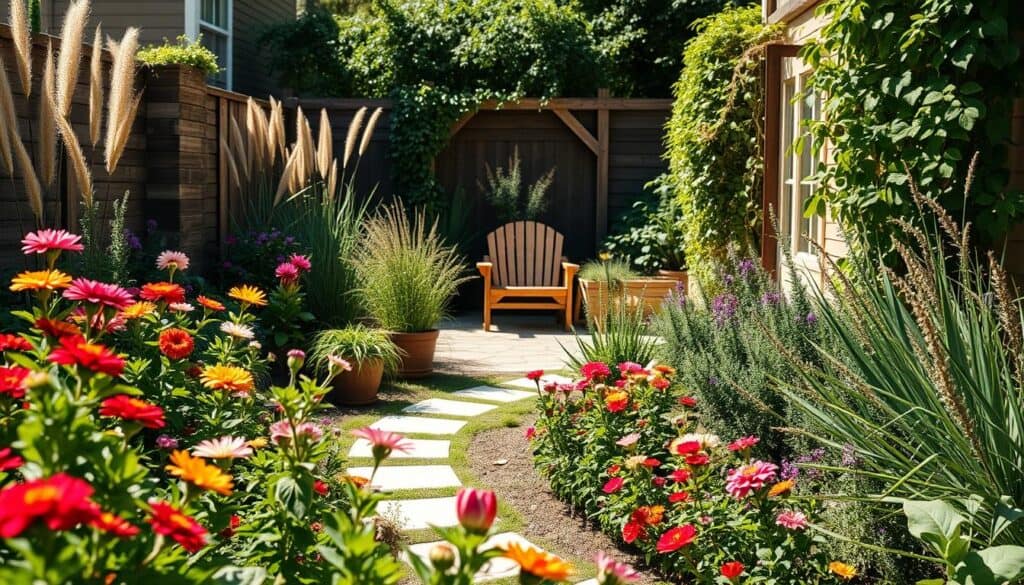
Choosing the right plant placement for small yards is key. Place big, bold plants near the house and smaller ones towards the back. This trick makes your eye travel further, creating a wider space.
A well-thought-out small backyard plant arrangement does more than look good. It changes how we see our surroundings. Here are some benefits of using design psychology in your garden:
- Softening hard boundaries to make fences disappear.
- Drawing the eye outward to increase the yard’s depth.
- Creating a relaxing atmosphere by removing clutter.
- Blurring the lines between your garden and the outside world.
By enhancing backyard space with plants, you can turn a small area into a peaceful retreat. By focusing on how our minds see distance, we can design a garden that feels open and welcoming. Your backyard will become a place to relax and escape the daily stress.
Utilizing Vertical Gardening to Draw the Eye Upward
When you don’t have much floor space, growing up is the best option. A vertical garden is a top choice for small backyards. It turns your patio into a lush, vibrant space.
Vertical planting makes use of walls and fences. You can grow herbs, succulents, or flowers without using any ground space. This keeps your walkways open and clear.
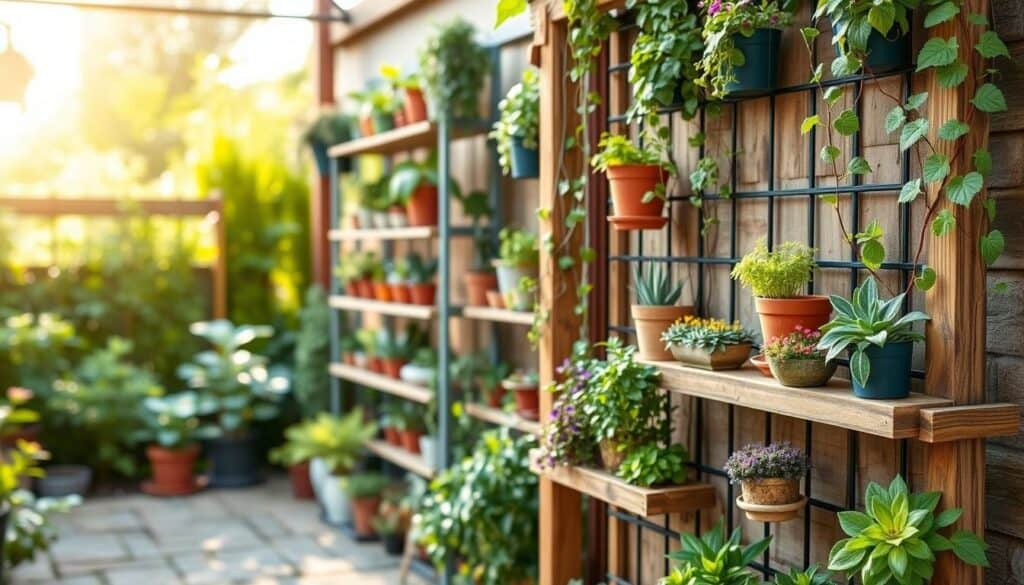
For height, use climbing plants for small spaces. These vines grow along trellises, creating a beautiful living screen. Trellises act as structural anchors that make your space feel taller.
Hanging baskets small yard displays are another great idea. They draw your eye upward and add depth to your garden. You can rotate these baskets to keep your garden looking fresh all season.
Columnar trees small space varieties are also a good choice. They add elegance and scale without spreading out. Strategic placement of these trees frames your view and adds grandeur.
Exploring vertical gardening ideas changes how you see your outdoor space. Whether it’s living walls small backyard features or tiered shelves, it makes your garden feel bigger and more welcoming. Embracing the vertical plane makes your garden feel larger and more inviting.
Creating Depth Through Layered Landscaping
Layered landscaping turns a small yard into a lush retreat. It uses plants of different heights to trick the eye into seeing more space. This method is key for small garden design, adding mystery and scale to tight spots.
Designers often use the rule of 3 in landscaping. This means grouping plants in odd numbers for a natural look. In small yards, place tall plants at the back, medium ones in the middle, and low-growing ones at the front.
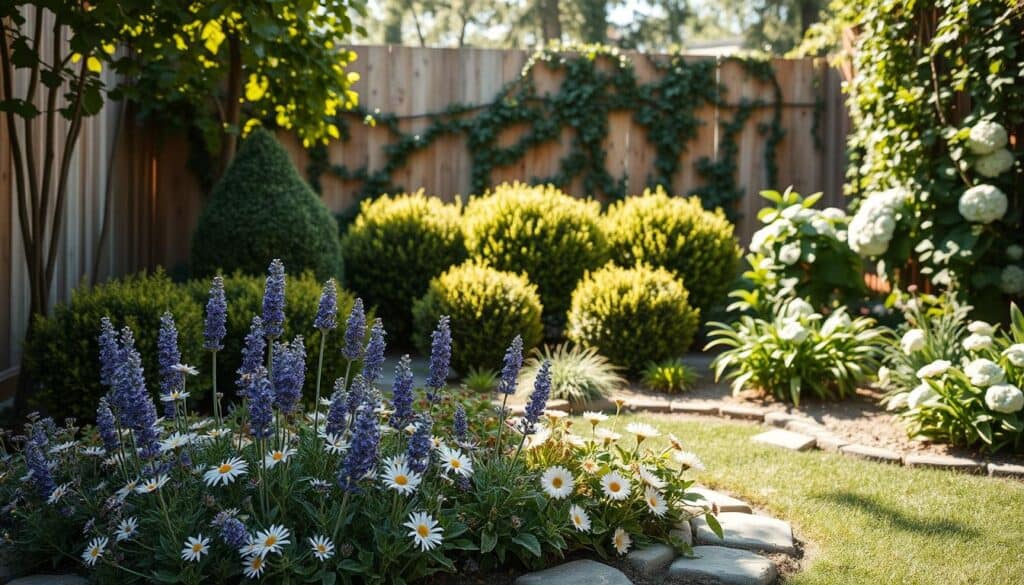
This tiered approach makes small gardens feel bigger. Tall foliage hides fences or walls, making the space seem larger. This trick makes your outdoor area feel welcoming and open.
Looking for new backyard landscaping ideas? Layering offers many benefits:
- Increased visual interest with different textures and shapes.
- Improved flow that guides the viewer’s gaze.
- Intentional design that makes every inch count.
- Softened edges that hide boundaries and create a lush backdrop.
By focusing on layers, your garden becomes a carefully designed landscape. This planning makes your home’s outdoor space feel larger.
The Power of Curved Garden Beds to Soften Boundaries
Many homeowners face challenges with small backyards. Yet, the answer often lies in using fluid shapes. Curved garden beds can make a yard’s edges feel softer. They hide sharp corners, making the space feel bigger.
These curves make the area look more open. It feels less cramped and more welcoming. Garden design ideas like these help avoid a boxy look.
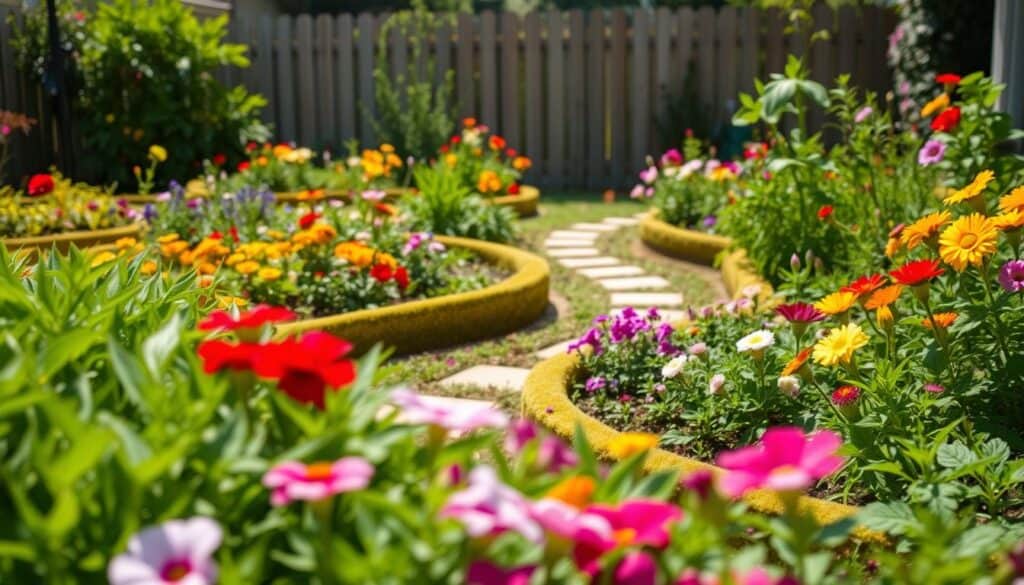
To make the most of these curves, think about border planting for small spaces. Planting along the edges adds depth and texture. This keeps the center of your lawn open, making it feel bigger.
Here are some backyard design ideas to improve your outdoor area:
- Use sweeping, kidney-shaped beds to create natural focal points.
- Plant taller shrubs at the back of the curve to add height and privacy.
- Incorporate low-growing perennials at the front to soften the transition to the lawn.
- Ensure the curves are wide enough to accommodate healthy root growth for your plants.
The aim is to create a landscape that looks intentional and elegant. By using curves, you turn a small area into a lush, expansive space. It feels much larger than it is.
Strategic Use of Focal Points to Anchor the Space
A small space garden can feel cramped until you add a standout feature. A well-chosen element gives the eye a place to rest, making the area feel more thoughtful. This eye-drawing landscape design is key to turning a small area into a special retreat.
For focal points small garden lovers, it’s all about choosing quality over quantity. You don’t need many items to make a big impact. In fact, one or two strong pieces can define the whole yard. Choosing a single, bold element like a sculptural stone or a unique tree creates order and prevents the space from feeling too busy.
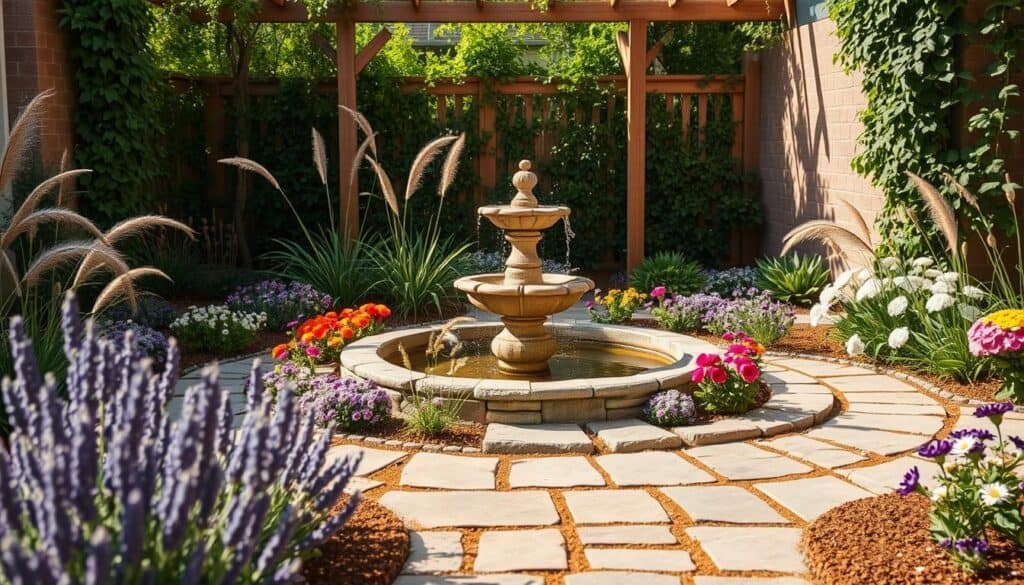
These landscaping ideas help anchor your design and give the yard a clear purpose. By placing your focal point at the end of a sightline, you draw the viewer’s gaze across the entire area. This creates the illusion of more depth. It’s a simple yet effective way to improve your outdoor living spaces without big renovations.
The goal is to create a balanced environment where every feature has a role. When you anchor your design with a deliberate focal point, you turn a tiny backyard into a sophisticated part of your home. Intentional placement makes your garden feel like a peaceful sanctuary, not a crowded collection of plants.
Enhancing Perspective with Diagonal Paths
Designing a garden path on a diagonal is a classic trick for adding depth to small spaces. By shifting your walkway away from straight, parallel lines, you can effectively how to make small yard look bigger without expensive renovations. This simple change forces the eye to travel across the longest possible distance in your garden.
When you guide movement through a diagonal route, you create a journey that makes the area feel much more substantial. This technique is a proven way to make small garden feel larger by breaking up the rigid boundaries of a square or rectangular plot. It turns a confined space into an engaging landscape experience.
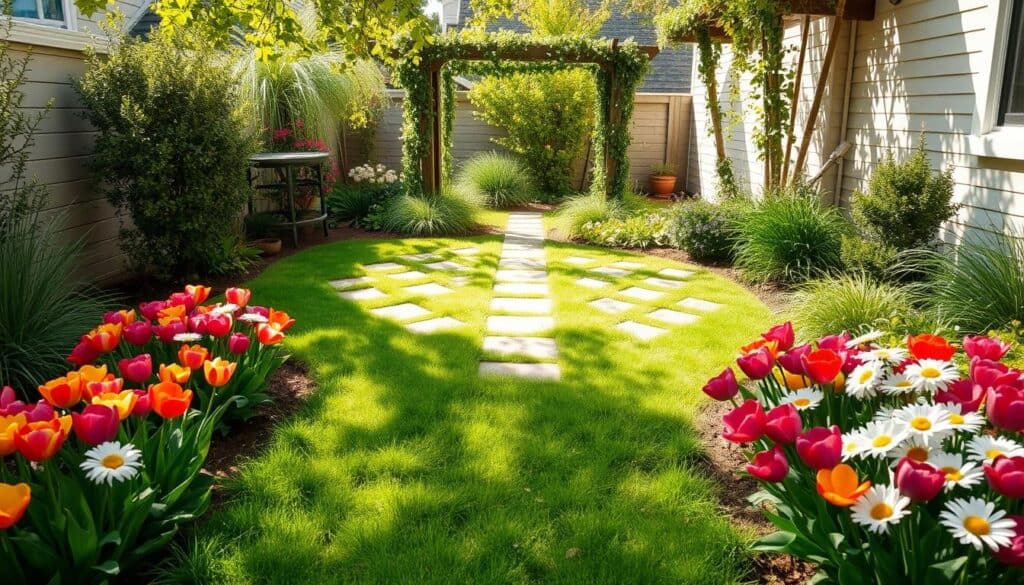
Implementing a small backyard layout that prioritizes these angled lines is surprisingly straightforward. You can use materials like gravel, pavers, or stepping stones to carve out a path that cuts across the lawn. Diagonal paths small yard designs work best when they lead to a hidden focal point, such as a bench or a decorative planter.
By choosing this layout, you successfully manipulate the viewer’s perception of distance. The path acts as a visual guide that stretches the perceived dimensions of your property. This is one of the most effective methods to maximize your outdoor space while maintaining a clean and organized aesthetic.
Choosing the Right Plant Varieties for Compact Spaces
When you have a small garden layout for small space, picking the right plants is key. Choose species that don’t spread out too much. This keeps your outdoor area looking neat and tidy.
For a small backyard layout, pick plants that grow slowly or stay small. Dwarf plants small gardens are great because they add beauty without taking up too much space. This way, your garden looks full and healthy, not messy.
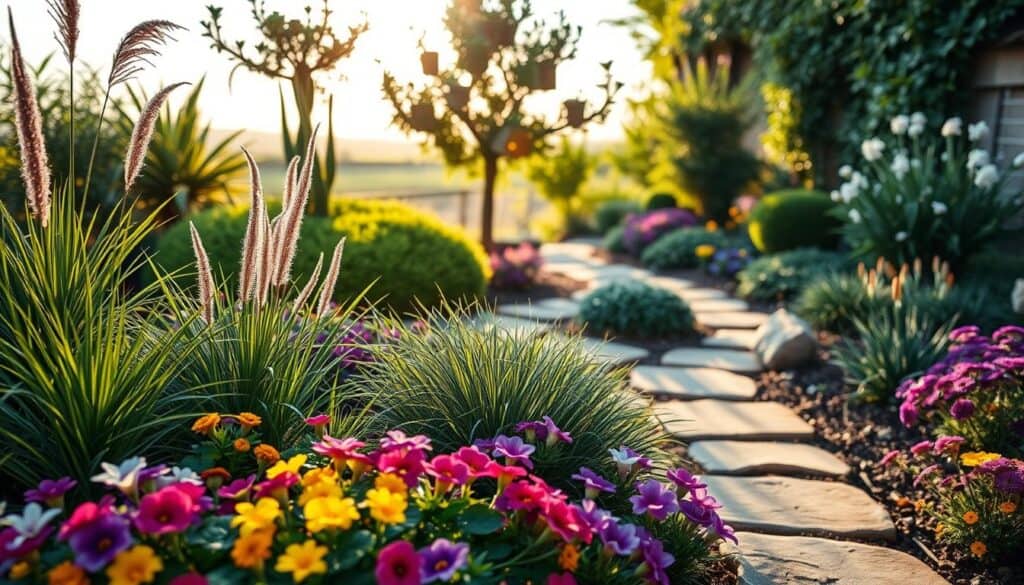
When placing plants in small yards, think about how they fit with your design. Choose plants that match the size of your garden. This makes your space feel bigger and more balanced.
Good small garden design means picking plants for a reason, like adding color or texture. Don’t put too many big-leafed plants in a small space. They can make it feel cramped. Instead, use plants with thin leaves to make your garden look bigger.
Maximizing Utility with Container and Potted Gardens
Looking to make the most of your small backyard? Container gardening is the way to go. It’s perfect for tight spaces or areas with poor soil. With pots, you can change up your garden layout for any season or event.
A small space garden shines with mobile plants. Potted gardens let you group plants by light needs. This keeps your garden lively and changing all year.
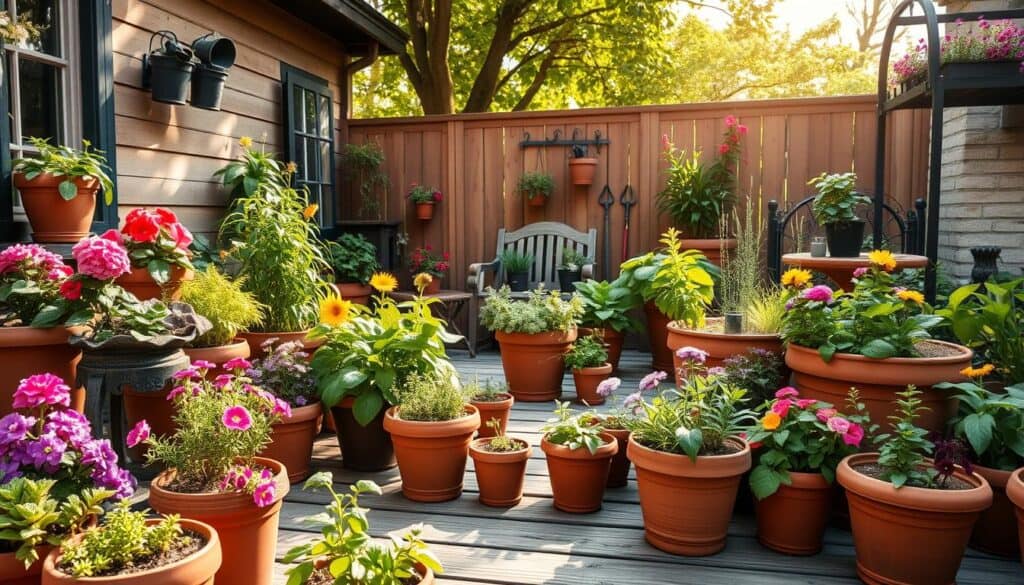
Small patio planters make your yard look bigger. They keep the ground clear and organized. By lifting plants, you clear space and make your yard feel bigger.
- More room for seating or dining.
- Easy to move pots to catch the sun.
- Soil is easier to manage for sensitive plants.
- More visual interest with different pot heights and textures.
Don’t forget to add edible landscaping small yard features to your containers. You can grow herbs, peppers, or tomatoes near your seating. This makes your small space work hard and gives you fresh food for your kitchen.
Implementing Symmetrical Layouts for Visual Balance
Want to make your small yard look bigger? Try symmetry. A symmetrical plant layout uses mirrored elements to create a clean look. It makes small areas feel bigger and more organized.
For your small backyard plant arrangement, pick matching pairs. Place identical pots on both sides of a doorway. This creates a clear focus and makes your space feel open.
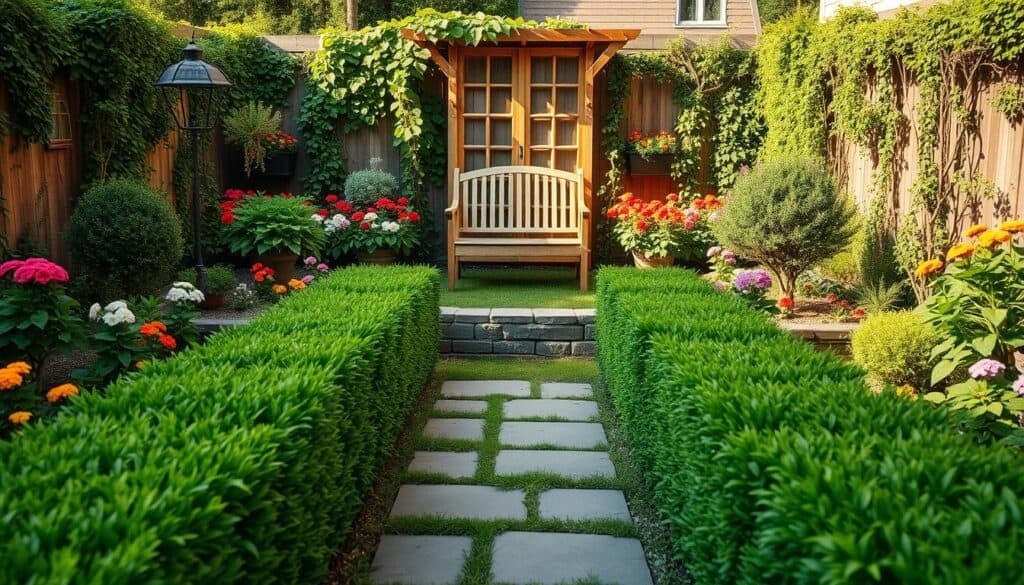
Don’t think symmetry has to be stiff. Add plants with soft textures or different heights. This keeps your garden balanced and inviting.
A symmetrical design frames your outdoor space. It turns a messy yard into a peaceful, planned area. This simple change makes your yard feel bigger.
Privacy Hedges That Do Not Overwhelm the Yard
Creating a private space in a small yard needs careful plant selection. Seclusion is key for outdoor living, but big hedges can make areas feel small. By picking the right privacy hedges small yard varieties, you can block views and enhance backyard space with plants.
Good backyard design ideas focus on vertical growth. Choosing plants that grow up, not out, keeps your space open. These plants create soft boundaries, making your area feel like a cozy room.
Choosing low maintenance small gardens keeps your yard looking great with little work. Many evergreen shrubs can be kept narrow with minimal effort. They won’t take up your seating or paths. Here are some top picks for a neat, space-saving look:
- Sky Pencil Holly: Great for tight spots because it’s very narrow and upright.
- Emerald Green Arborvitae: Offers a dense, lush screen that stays compact and needs little shaping.
- Taylor Juniper: Has a beautiful, slender shape that adds height without using much space.
- Boxwood ‘Graham Blandy’: A slow-growing, columnar variety that looks formal and tidy.
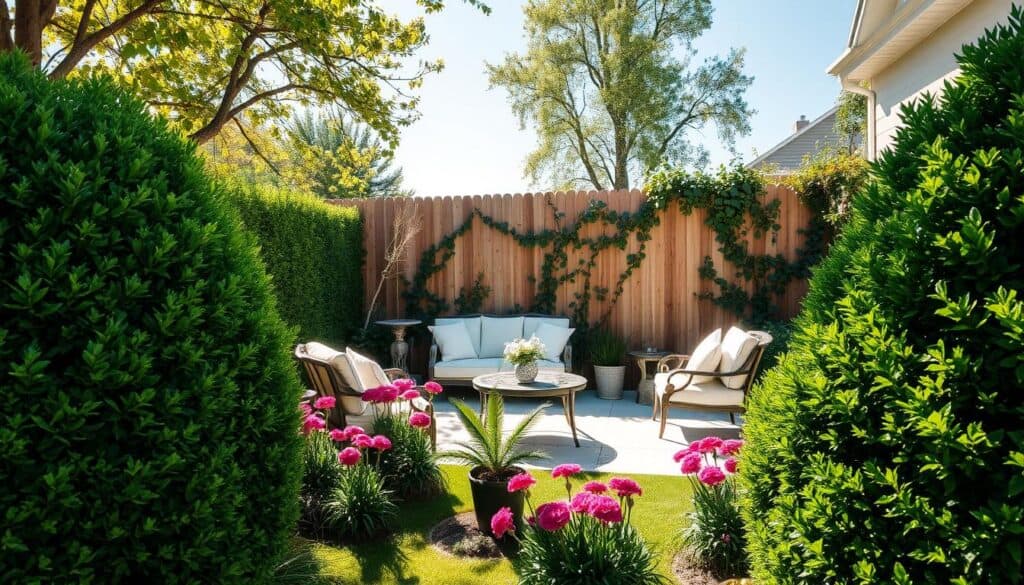
Proper backyard spatial planning is key to making these hedges work for your yard. By placing them right, you can make small garden feel larger. This makes your outdoor space feel both deep and cozy, like a peaceful retreat.
Smart Hardscaping and Raised Bed Integration
Smart hardscaping and raised bed integration are great for organizing your outdoor space. They use durable materials and plants to manage your yard well. This makes even small areas feel open and clear.
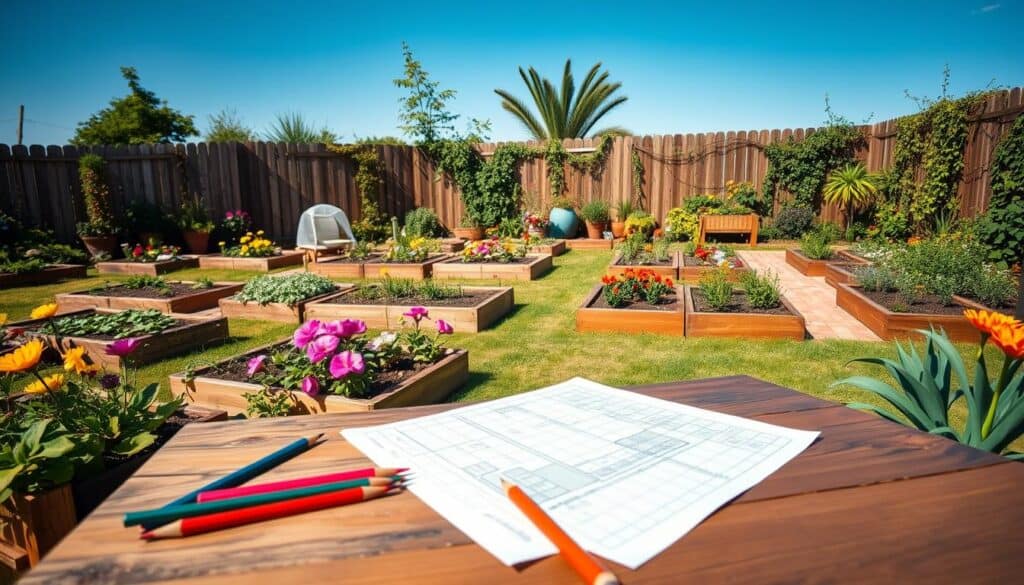
For small yards, it’s key to balance plants with solid structures. Raised garden beds help control soil and add height. This way, every part of your yard has a purpose, like growing herbs or showing off flowers.
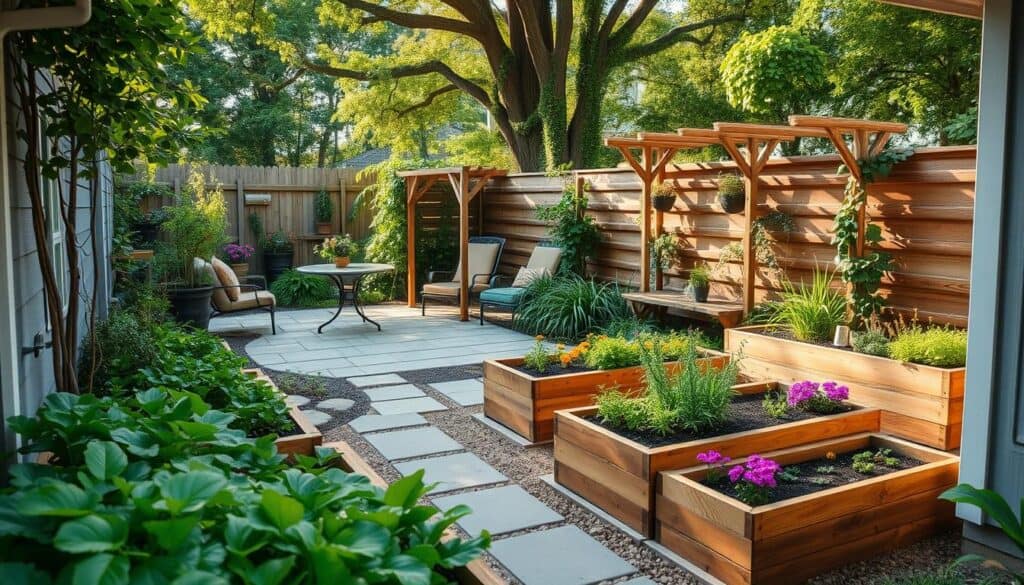
There are many creative ways to use stone, wood, and metal in your garden. Space saving raised beds from cedar or composite materials look modern and last long. Think about these benefits when planning your garden:
- Defined zones: Hardscaping makes paths that separate areas, like seating from plants.
- Reduced maintenance: Raised beds keep weeds out and make gardening easier.
- Visual depth: Different bed heights add depth to flat yards.
- Durability: Stone and wood last longer than just soil.
Using these small space landscaping strategies makes your outdoor area durable, beautiful, and efficient. Choose materials that match your home for a smooth transition. A well-planned garden is a peaceful spot, not a constant chore.
Conclusion
Your dream yard is within reach with these small backyard design tips. Whether you do it yourself or get professional help, you can make a small space beautiful. It becomes a lush sanctuary.
To make small backyards feel bigger, focus on scale and vertical growth. These ideas help create outdoor spaces that feel large. Good landscape design makes every inch count.
Think about hiring local garden designers or landscapers to help. They bring big ideas to your small space. Landscape contractors can also install features that make the most of your area.
Check out local garden centers or nurseries for the right plants. Reliable landscaping services can help bring your design to life. Start today and enjoy a beautiful outdoor space right outside your door.