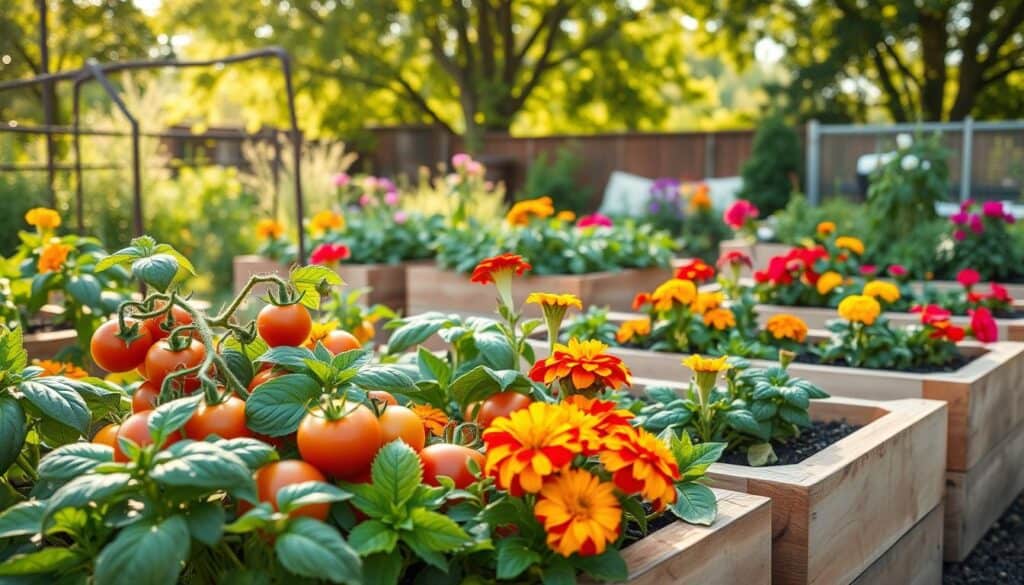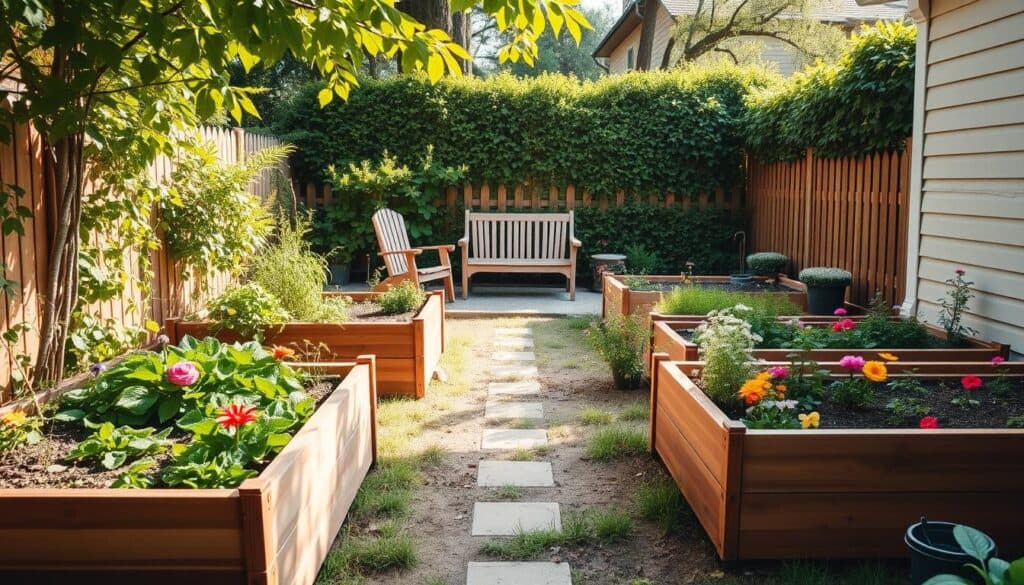
Do you dream of growing fresh vegetables but lack a traditional backyard? You’re not alone. Many urban dwellers face the challenge of hard surfaces for their outdoor space. But, you can turn these areas into lush, productive green zones easily.
Learning how to build a raised bed garden on a concrete patio or deck is a game-changer. It’s perfect for apartment living or small homes. You can grow herbs, flowers, and vegetables without native soil.
By choosing the right containers and drainage solutions, you protect your home. And you get to enjoy the harvest.
Embracing raised bed gardening is a clean, accessible way to grow your own food. It reduces weeds and pests and keeps plants at a comfortable height. With a few simple steps, you can transform your gray, empty space into a vibrant sanctuary. It brings nature right to your doorstep.
Visit The Marketplace or grab your Free Garden Starter Kit
Understanding the Challenges of Gardening on Hard Surfaces
Urban gardening on concrete comes with its own set of challenges. You need to think about how weight and moisture will affect your garden. A good plan is key to keeping your property safe and your plants healthy.
Many people worry, will a raised bed ruin a concrete patio? The main issue is moisture, which can stain or erode the surface. To avoid this, use barriers or risers to keep water away from the concrete.
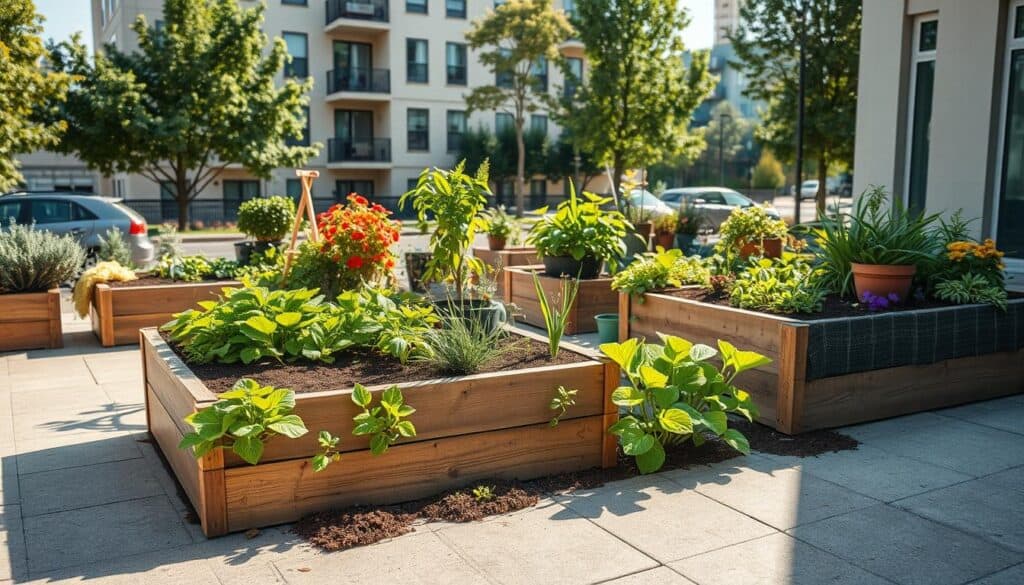
Choosing between container gardening and raised beds depends on your space and needs. Containers are easy to move, but raised beds give plants more room to grow. This means better yields and more consistent moisture for your plants.
Can you put a raised garden bed on a deck? Yes, but you must check the deck’s weight limit. Spread the weight evenly to avoid damage to the wood.
Lastly, are elevated planters better than raised beds? Elevated planters make gardening easier on your back and knees. They also drain well, keeping your deck or patio dry.
How to Build a Raised Bed Garden on a Concrete Patio or Deck
Building a raised bed garden on a concrete patio or deck needs focus on stability and layout. When gardening on a patio, the ground lacks natural drainage and root depth. So, your structure must sit perfectly level on hard surfaces.
Creating diy raised garden beds turns empty space into a green area. A clear plan ensures your garden stays secure through seasons. Proper assembly stops soil weight from bowing the sides.
To build a raised garden bed on concrete, start by measuring your space carefully. Make sure the bed’s footprint allows easy movement around it. A well-planned layout is key to a successful urban garden.
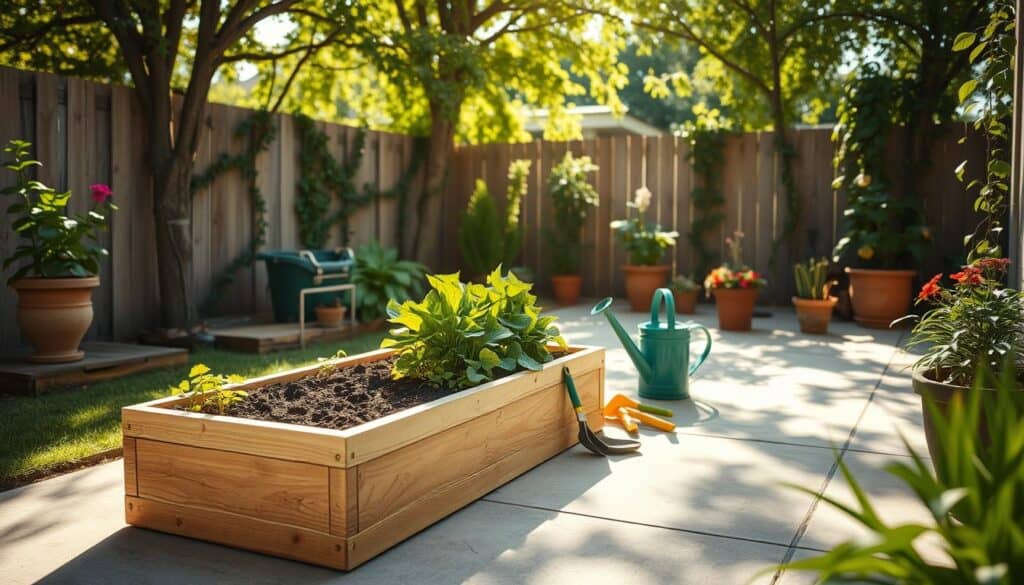
When making your diy raised garden bed for patio use, follow these steps:
- Measure and mark your desired dimensions directly on the patio surface.
- Choose rot-resistant lumber for your structure’s longevity.
- Use heavy-duty corner brackets for maximum structural integrity.
- Level the frame with shims if your patio slopes for water runoff.
- Secure the frame to the surface in high-wind areas.
A raised bed garden on concrete patio setups often need a bottom liner. This liner protects the surface and keeps soil contained. It also helps maintain moisture for healthy plant growth.
When building a raised bed on a patio, focus on quality fasteners. Use galvanized screws or stainless steel to prevent rust and keep your bed sturdy. This detail makes your project functional and attractive.
Lastly, your concrete patio raised bed diy project should show your style. Paint or stain the exterior to match your home decor. With the right foundation, your elevated garden will be the outdoor space’s highlight.
Selecting the Best Materials for Patio and Deck Planters
Choosing durable and lightweight materials is key for a thriving garden without harming your deck. When planning your diy raised garden beds, think about the soil and water weight. It’s important to find the best material for patio raised beds that lasts long and supports your outdoor space.
Wondering how to build a raised garden bed on concrete? Start by checking the weight of your materials. Many gardeners choose lightweight raised garden beds to avoid stressing deck joists. A well-thought-out diy raised garden bed for patio use keeps plants stable and your surface safe.
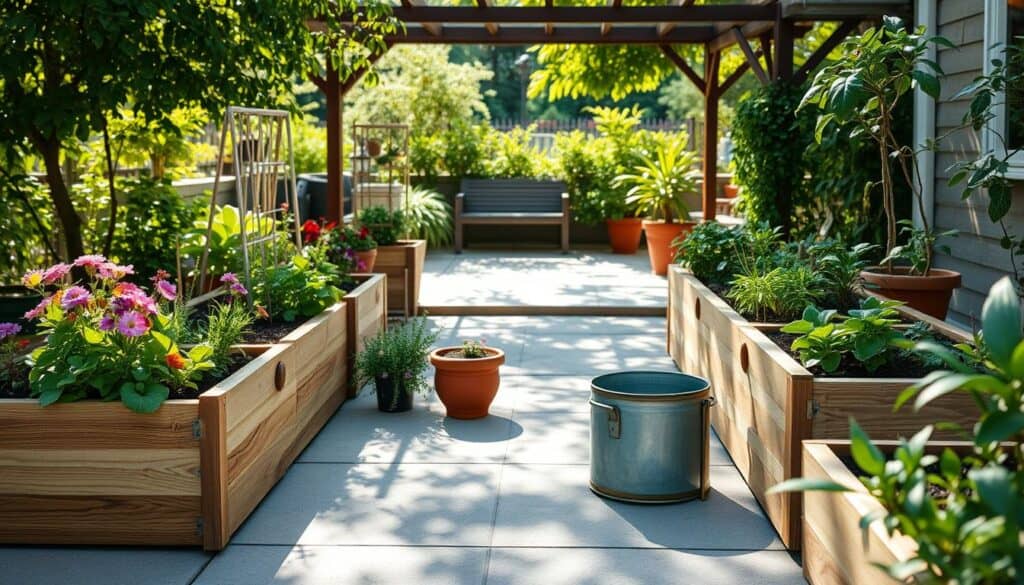
When building a raised bed on a patio, pick materials that fight rot and moisture. A raised planter box for deck surfaces should be slightly raised for airflow. This prevents moisture from damaging decking boards over time.
- Cedar wood for natural decay resistance.
- Composite materials for low maintenance.
- Cinder blocks for a sturdy, permanent look.
- Fabric containers for maximum portability.
For a cinder block raised bed on patio, use concrete safe raised planter boxes to avoid flooring damage. These blocks are heavy, so check if your deck can handle the weight. They’re easy to assemble without complex tools.
Looking for a classic look? Wondering what is the best wood for a deck planter box? Cedar is often recommended for its natural resistance to insects and rot. A diy cedar planter box for deck projects will last many seasons with a good, food-safe sealant. Proper sealing is the key to keeping your garden beautiful for years.
Protecting Your Deck and Patio from Water Damage
Many gardeners worry about moisture damage when building a raised garden bed over a deck. The best way to prevent water damage is through proper water management. This ensures your deck stays safe for years.
When choosing raised garden beds, pick materials that resist rot. For a temporary setup, go for lightweight options that are easy to move. Regularly shifting your planters helps the wood or concrete underneath dry out.
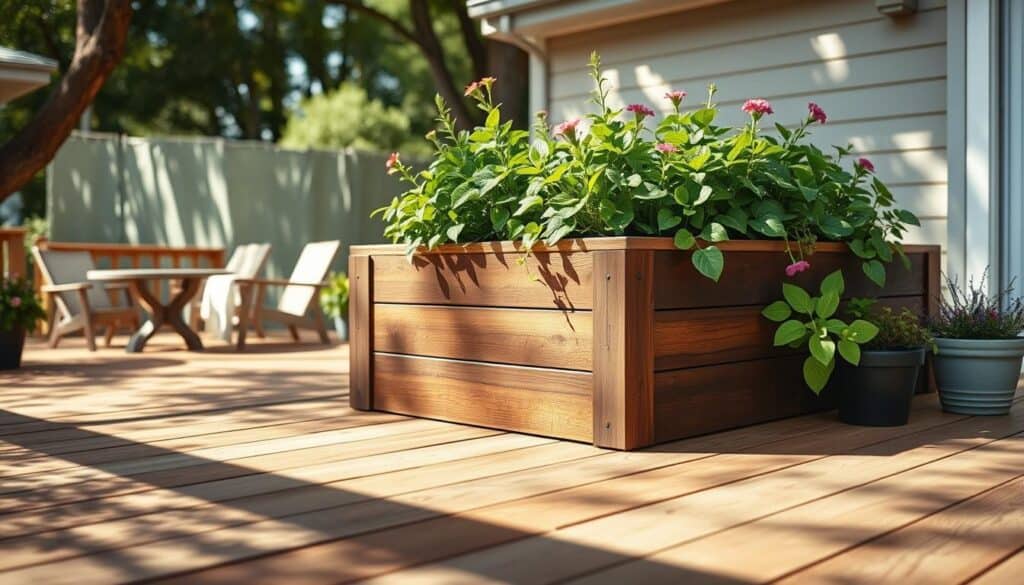
Always use a raised bed with a bottom to protect your deck. Apply a high-quality waterproofing to create a shield against leaks. A durable water barrier on your deck stops moisture from seeping into the wood.
Do raised beds stain patio floors? Yes, without care, they can leave permanent marks. To prevent this, use pot feet or risers to lift containers off the ground. This keeps your deck and patio safe from stains.
Can you build a raised bed without touching the deck? Yes, by using a frame with legs or casters. Increased air circulation keeps your deck dry and prevents mold or mildew.
Essential Drainage Solutions for Concrete-Based Beds
Many gardeners face the challenge of keeping raised beds on concrete dry. This is key for a raised bed garden on a concrete patio to thrive. Without proper drainage, plants can rot and the patio can stain.
Do raised beds stain patio floors? Yes, they can if water pools underneath. To avoid this, a raised bed drainage layer patio system is needed. It directs water to drains, keeping your patio clean.
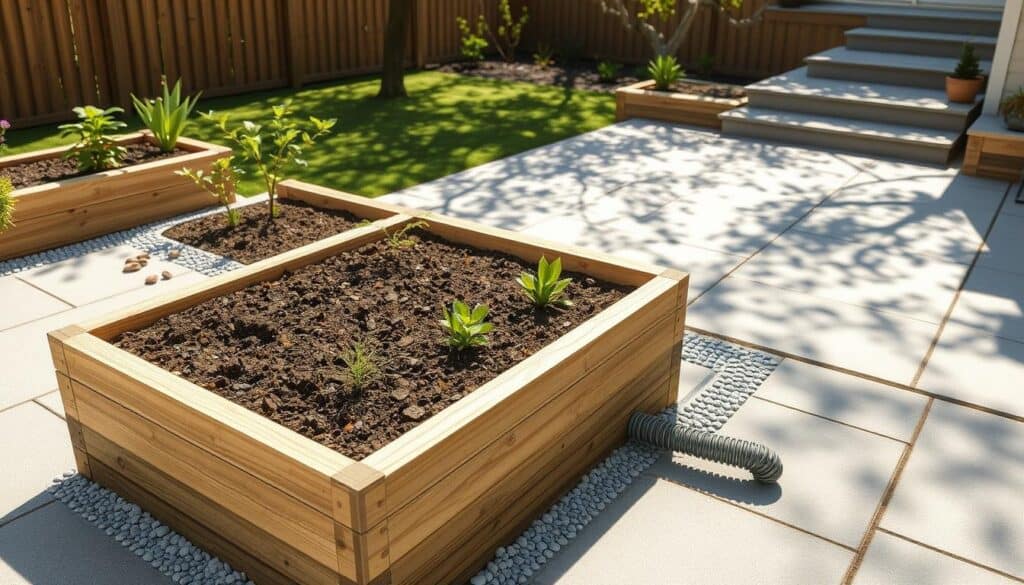
Using landscape fabric under raised bed on concrete helps. It keeps soil in while letting water out. This stops soil from clogging drains. Here are some tips for a healthy garden:
- Elevate your planter using feet or bricks to improve airflow.
- Apply a waterproofing under raised garden bed sealant to protect the concrete.
- Use a raised bed with bottom for deck setups to catch excess moisture.
- Choose concrete safe raised planter boxes that feature built-in drainage holes.
- Implement a raised bed water barrier on deck surfaces to ensure long-term staining prevention under planters.
Whether you’re making a cinder block raised bed on patio or a wooden frame, focus on drainage. It keeps plants healthy and your patio clean. A bit of planning now saves you from future cleaning headaches.
Choosing the Right Soil Mix for Container Gardening
Starting a container garden on a deck needs the right soil. The debate between container gardening and raised beds often focuses on looks. But, the soil needs are the same for both. You can’t use regular garden soil because it’s too heavy and compacts in containers.
Go for a light, nutrient-rich potting mix for good aeration and drainage. This mix is the best soil for raised bed on concrete because it prevents waterlogging. It also lets roots breathe and grow in deep raised beds on patios.
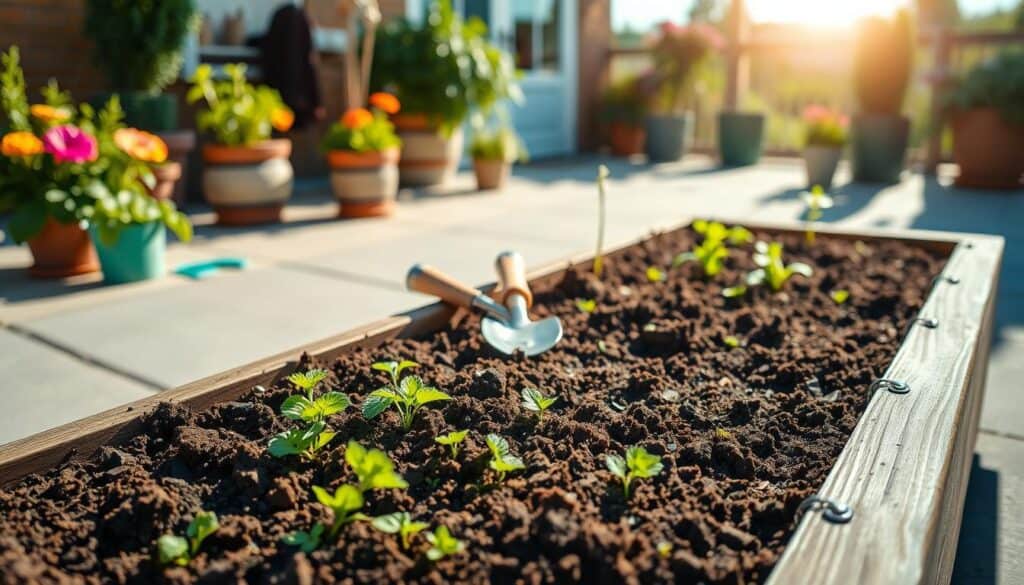
Wondering how deep a raised garden bed should be on a patio? For leafy greens and herbs, 6 to 8 inches is enough. For root veggies like carrots or potatoes, you need at least 12 to 18 inches.
Want to fill a deep raised bed on a patio? Try “hugelkultur” by adding organic materials like logs or dried leaves at the bottom. This method saves time and money by reducing potting mix needs and providing nutrients as the materials break down.
For a 4×4 raised bed, calculate your soil needs carefully. Multiply the length, width, and depth in feet. Buy a bit more soil than you calculate to cover settling after watering.
Design Ideas for Small Space and Urban Gardening
Turning a small concrete patio into a garden needs smart design. With little space, think vertically. Use wall-mounted planters and tiered structures to make the most of your small space gardening without taking up too much floor space.
Urban gardening on concrete often uses modular systems for tight spots. Many like temporary raised garden beds for deck setups because they’re easy to move or store. These lightweight beds let you try different layouts on your balcony or terrace.
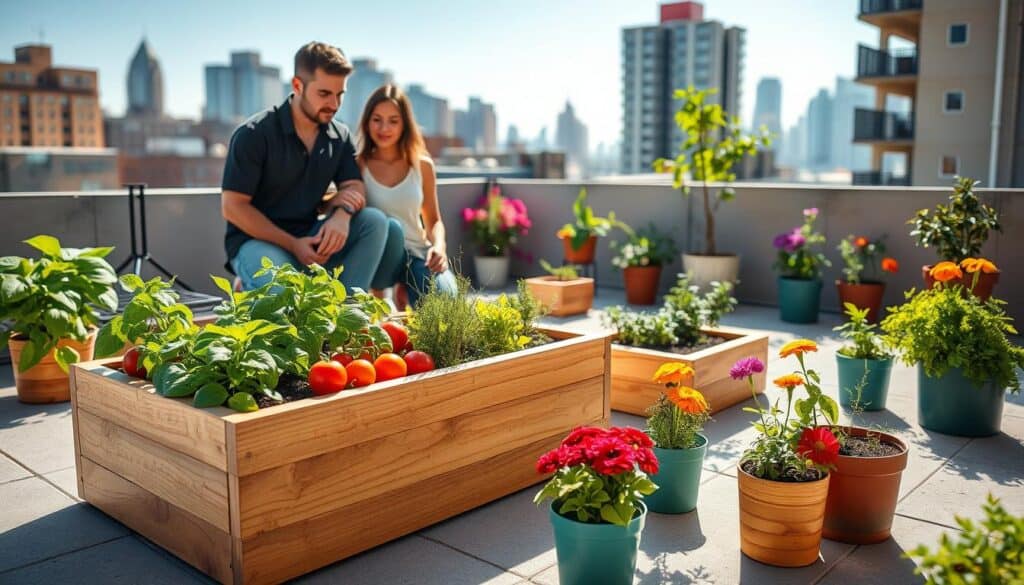
Wondering if elevated planters are better than raised beds? It depends on your needs and space. Elevated raised bed on legs designs are great for avoiding bending. Traditional boxes are better for bigger plants because they offer more root depth.
Here are some creative ideas for your urban garden:
- Vertical raised beds for small patios: Use wall-mounted pockets for herbs and leafy greens.
- Tiered structures: Stack your balcony and deck raised planter boxes for a green wall.
- Rooftop raised garden bed ideas: Choose lightweight materials for your roof’s safety.
- Concrete patio garden design: Add casters to your planters for easy rearrangement.
- Raised beds for condos: Go for narrow, long troughs that fit against railings or walls.
Using urban container gardening with raised beds brings nature to apartments. Whether it’s a tiny terrace or a sunny rooftop, these space-saving patio planters support healthy growth. With some planning, your raised bed garden design can turn any hard surface into a lively, productive space.
Best Vegetables and Herbs for Elevated Planters
Not every plant does well in a raised planter box for deck. It’s key to pick the right ones for success. For a wooden planter on a concrete patio, choose plants that do well in containers. Shallow rooted vegetables for elevated beds are often the best because they don’t need deep soil.
For a patio garden, aim for 8 to 12 inches deep for most greens and herbs. For bigger plants like tomatoes in raised deck planters, you’ll need deeper beds. This extra depth helps plants stay hydrated and healthy all summer.
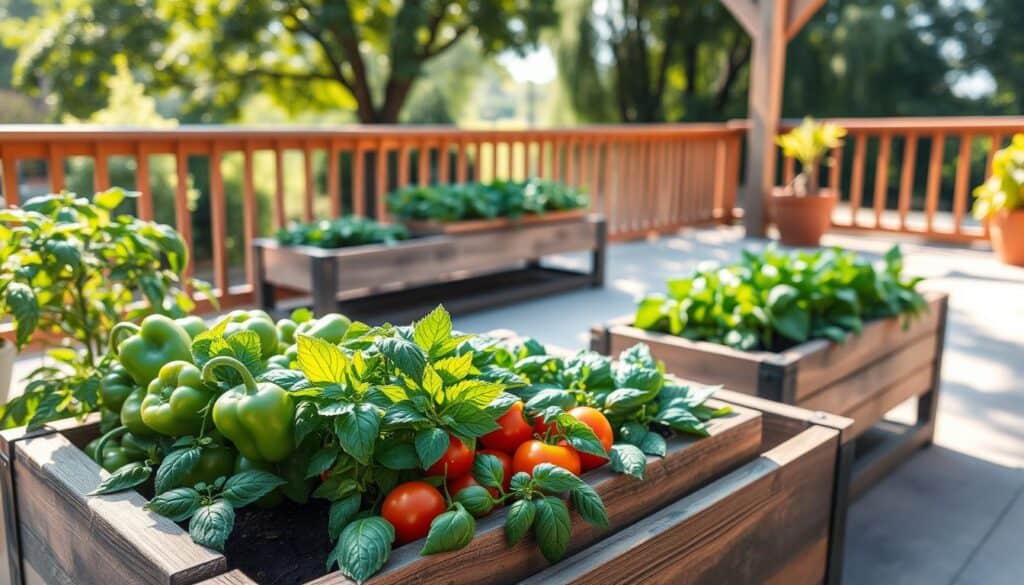
To make the most of your summer patio vegetable garden, pick these sun-loving plants:
- Leafy Greens: Lettuce, spinach, and arugula grow fast in shallow soil.
- Herbs: Basil, cilantro, and parsley are great patio raised bed herbs for pots.
- Compact Vegetables: Cherry tomatoes and bush beans are perfect for vertical growth.
- Pollinator Flowers: Marigolds and nasturtiums are the best flowers for raised deck planters to attract bees.
Using companion planting in raised beds can help manage pests naturally. For example, basil near tomatoes can keep away common garden pests. This method works well in a full sun patio raised bed where space is tight.
By picking the right plants, your diy cedar planter box for deck can become a productive food source. Choose plants that give high yields in small spaces for the best results. With the right care and plant selection, your elevated garden will thrive all season.
Implementing Square Foot Gardening Techniques
Square foot gardening on a patio turns small spaces into big food producers. It lets you use your raised bed garden design to its fullest. By dividing the area into one-foot squares, each plant gets the space it needs.
Start your concrete patio garden design by making a grid with twine or slats. This makes it easy to place seeds or plants. For a 4×4 bed, you’ll have 16 squares to manage. To know how much soil you need, calculate the volume based on the bed’s depth.
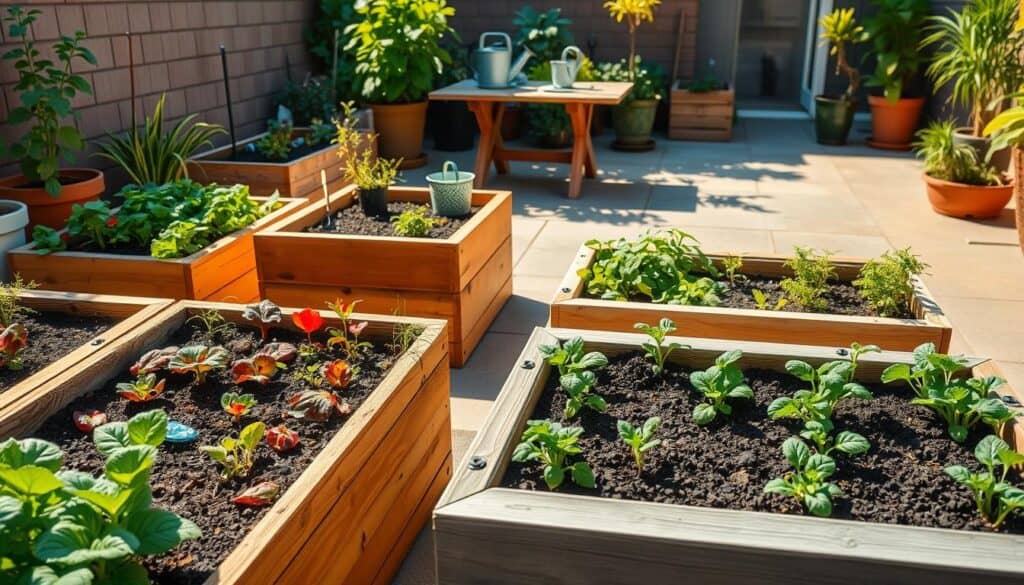
For the best results, use a good potting mix as your best soil for raised bed on concrete. This mix holds moisture and air well, perfect for small space raised bed gardening. Here are some spacing tips for your summer patio vegetable garden:
- Large plants: Put one tomato or pepper per square.
- Medium plants: Plant four lettuce or basil per square.
- Small plants: Nine spinach or radish can fit in one square.
- Herbs: Group herbs like cilantro or parsley for easy picking.
For small patios, try vertical raised beds for vining crops like cucumbers. This space-saving patio planters idea keeps plants off the deck and improves air flow. Choose shallow rooted vegetables for elevated beds to avoid overcrowding. Use companion planting in raised beds to keep pests away and make your full sun patio raised bed healthier.
If you’re wondering how to fill a deep raised bed on a patio?, start with a light layer of filler like plastic bottles or wood chips. Then add a rich compost blend for nutrients. This makes your small space gardening project easy, light, and very productive.
Maintenance Tips for Long-Term Success
Keeping your container garden on a deck thriving requires regular care. Simple patio gardening tips can help your plants grow well and keep your outdoor area looking great. Taking good care of your raised garden beds can stop problems before they begin.
Protecting your deck and patio garden is key when placing a raised bed on top. Wondering if you can build a raised bed without touching the deck? Yes, using risers or feet helps with airflow and prevents moisture buildup. This is important for keeping your deck safe from raised garden bed surfaces.
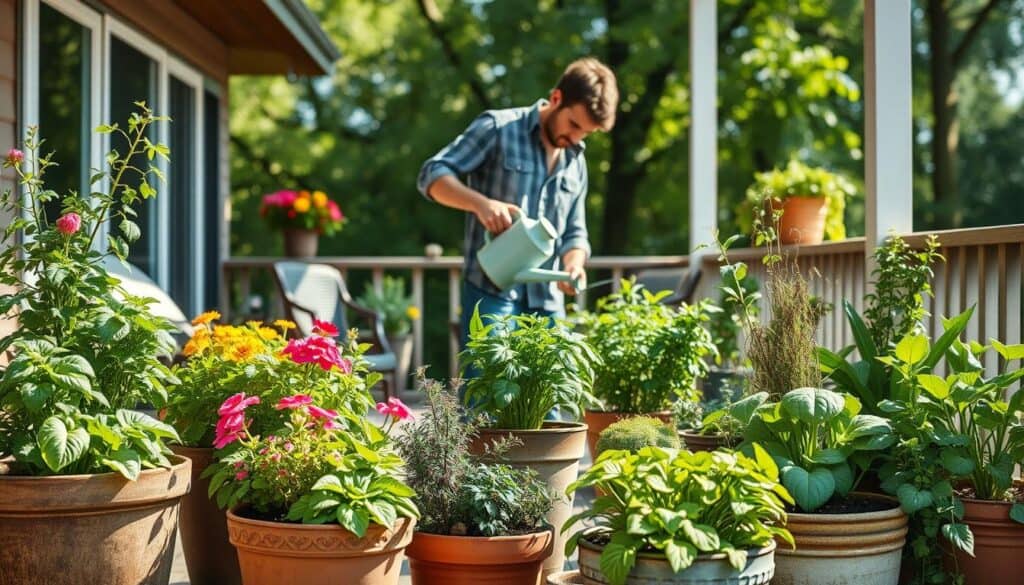
Managing water is critical to avoid deck damage. Make sure to check your raised bed drainage for concrete often to avoid clogs. A dedicated drainage system for your patio is a smart choice. It teaches you how to keep raised beds on concrete dry.
The right materials are important for your garden’s longevity. Many ask, what’s the best wood for a deck planter box? Cedar or redwood are great because they resist rot. Always use landscape fabric under your raised bed on concrete to keep soil in and protect the surface. This is the best material for patio raised beds.
For easier care, consider self-watering raised garden beds in the summer. These systems keep moisture levels steady, which is great for growing flowers in raised deck planters. Regular seasonal inspections will help you spot problems early. This ensures your garden stays beautiful for years.
Conclusion
Turning unused concrete into a garden is a great idea. It makes your space more lively and productive. You can use creative raised bed garden ideas to make the most of your area.
Urban gardeners often start with an apartment patio raised garden bed. It’s a simple way to grow herbs and veggies in small spaces. Square foot gardening on a patio can also help you grow more in less space.
Living in a high-rise building offers a chance to bring greenery to your roof. Many people use rooftop raised garden bed ideas to create peaceful spots. These spots offer a quiet break from city noise.
For condo owners, durable raised beds are a great choice. A well-designed terrace raised garden bed adds beauty and value to your home. Start small and grow your garden as you gain experience.
Following these tips for patio gardening helps your plants do well all season. It’s a step towards a healthier lifestyle. So, grab your tools and start your garden today. Enjoy the fruits of your labor soon.