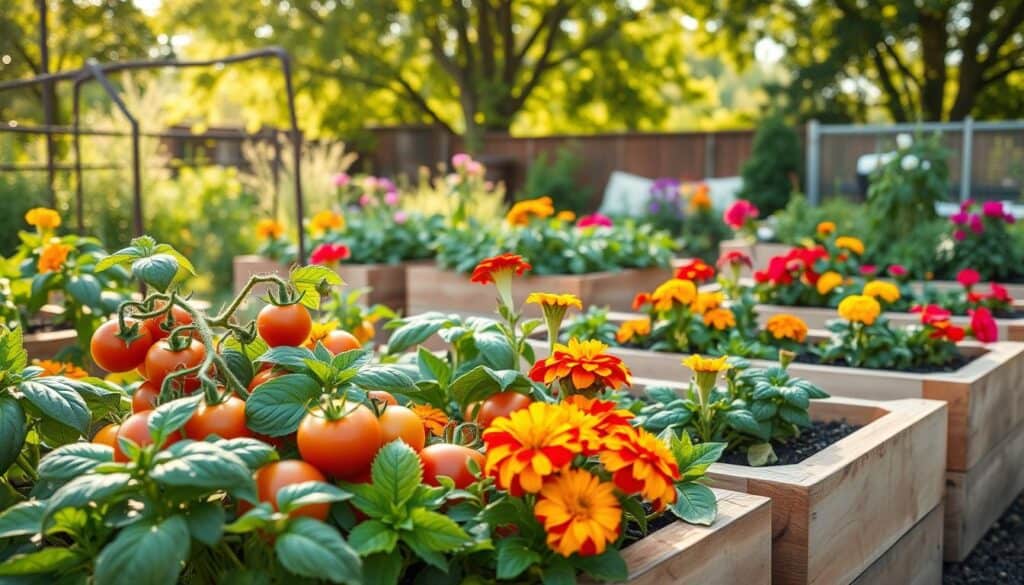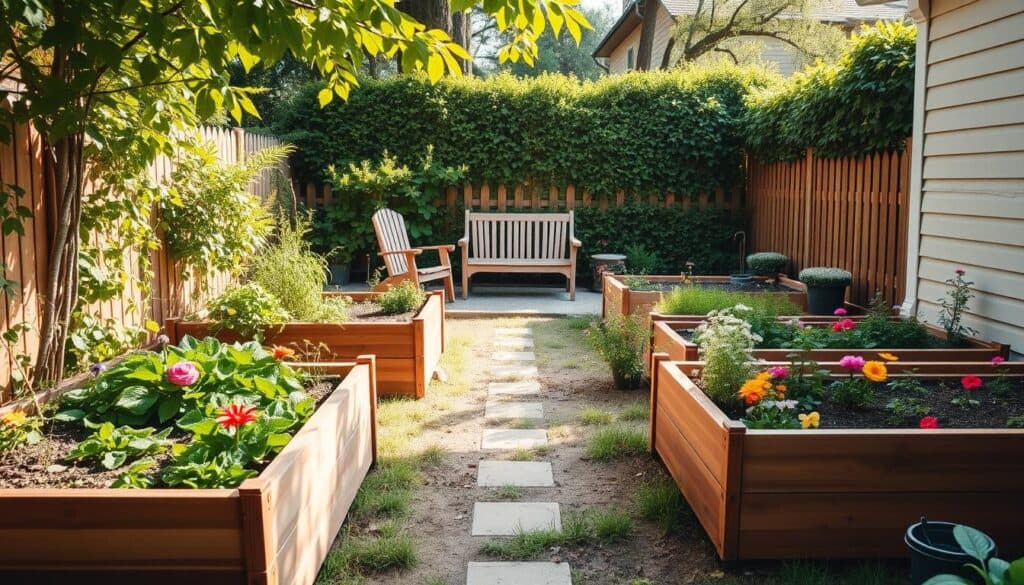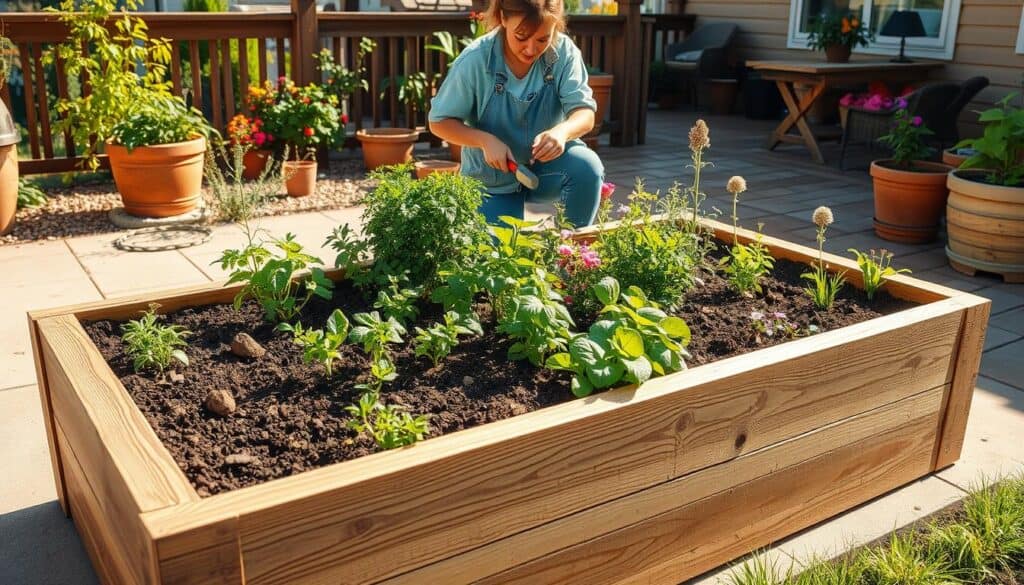
Modern gardeners look for ways to get more from small spaces. Raised bed gardening is a great way to do this. It keeps the soil healthy and adds color and life to your garden.
Choosing the right herbs can make your vegetables taste better and keep pests away. These herbs and vegetables work together, making your garden stronger and more fruitful.
Whether you’re new to gardening or have been doing it for years, knowing which herbs to pair is key. By learning The Best Herbs to Grow in a Raised Bed Alongside Vegetables, you can turn your backyard into a beautiful and useful space. Let’s see how these simple combinations can improve your gardening today.
Visit The Marketplace or grab your Free Garden Starter Kit
The Science and Benefits of Companion Planting
Science shows that certain plants can make your raised bed self-sustaining. By using companion planting, you help plants grow and protect each other. This method uses plants’ natural signals and traits to interact with their surroundings.
Integrating companion planting herbs and vegetables can hide your crops from pests. Many herbs release strong oils that confuse insects. This natural trick helps keep your garden healthy without chemicals.
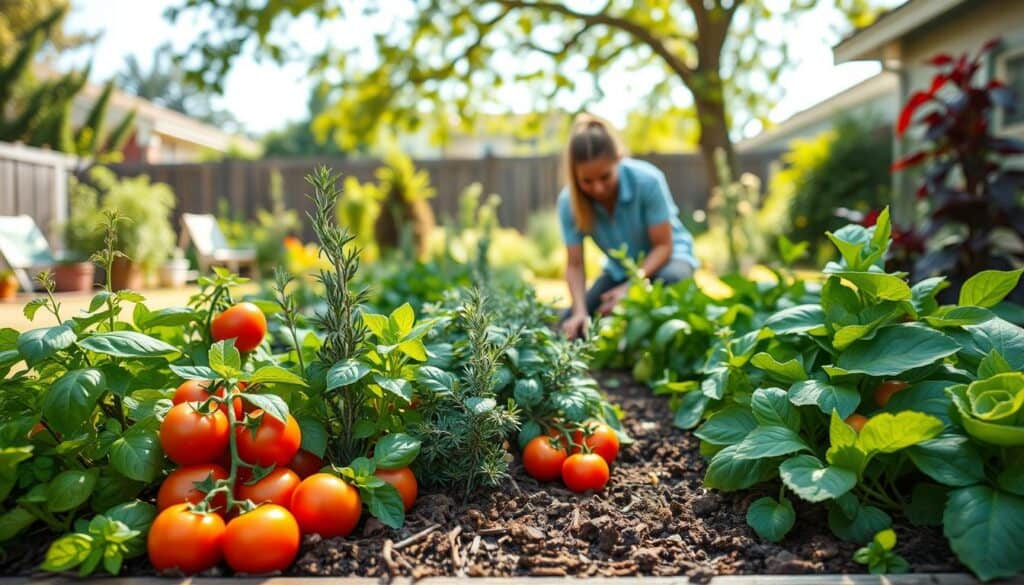
The benefits of companion planting with herbs go beyond just pest control. These plants can attract beneficial insects that eat pests. This balance helps your vegetables grow strong and healthy.
Using herb and vegetable co-planting methods can make your garden more productive. Knowing how plants interact helps you make better choices. A well-planned garden is not just productive; it’s a thriving home for your crops.
The Best Herbs to Grow in a Raised Bed Alongside Vegetables
Choosing the right herbs to grow with vegetables in a raised bed is key. Raised beds drain well and stay warmer than regular soil. This makes them perfect for many plants to grow well.
When starting your herb garden, pick herbs that like the same amount of water as your veggies. Many herbs that thrive in raised planter beds don’t need much water. This makes them great friends for plants like peppers and tomatoes. Growing plants that need the same things makes caring for them easier.
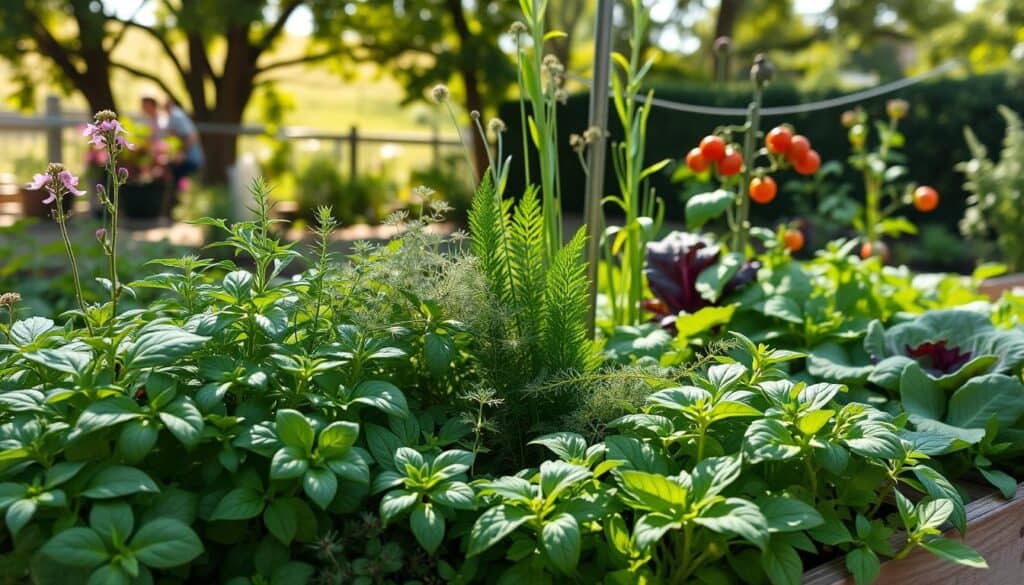
Some best herbs to grow are great for cooking and keeping pests away. These plants protect your veggies and add fresh flavors to your meals. Here are some reliable choices for your garden:
- Basil: It’s a top choice for growing with veggies because it does well in raised beds.
- Chives: Chives are easy for beginners because they’re tough and keep pests away.
- Parsley: Parsley loves the moist soil of raised beds and goes well with many veggies.
- Thyme: Thyme is a low-growing plant that does well in sunny spots, perfect for bed edges.
Adding these herbs to your best herbs for backyard vegetable patches makes your garden both productive and pretty. By focusing on these herbs, you’ll have a successful best herbs for companion planting season. With some planning, your raised bed will be a lively, fruitful space.
Culinary Powerhouses for Tomato and Pepper Patches
Learn how placing herbs wisely can make your tomato and pepper patches thrive. A good vegetable garden needs plants working together. Knowing which vegetables and herbs grow well together is key.
Choosing the right herbs for tomatoes and peppers creates a natural defense. These herbs protect your plants and help them grow better. Planting them strategically makes your crops healthier and gives you fresh ingredients.
Companion planting basil with tomatoes is a favorite among gardeners. This pair boosts the health and strength of tomato vines.
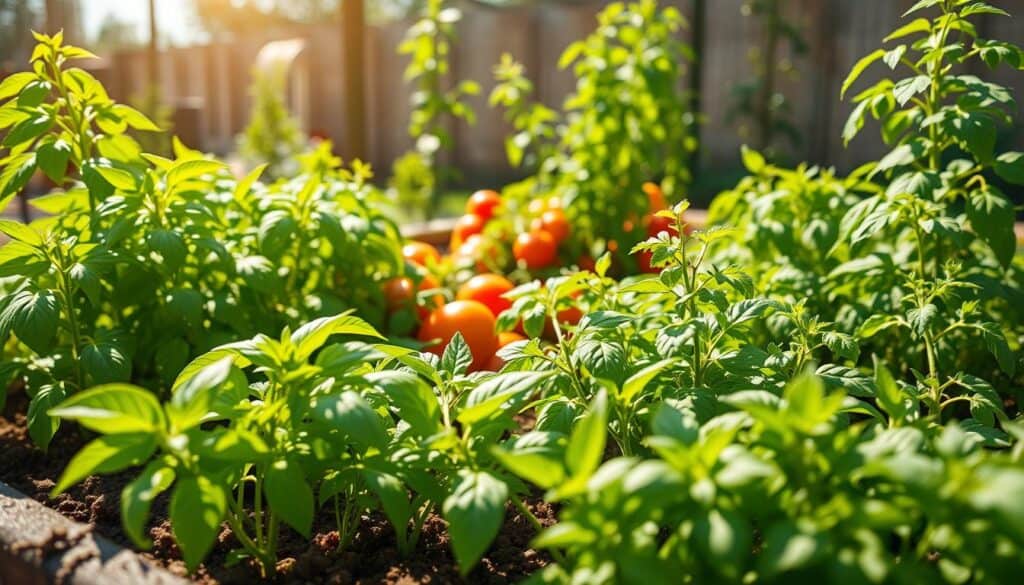
For pepper beds, marigolds and peppers keep pests away. These herbs are vital for summer vegetables. Marigolds protect your peppers, letting them focus on growing fruit.
Herbs can make vegetables taste better. Choosing the right herbs for tomatoes means better taste and more produce. Fresh vegetables taste amazing when grown well.
Here are some great pairings for your garden:
- Companion planting chives and tomatoes to deter aphids.
- Selecting the best herbs to grow with eggplants, such as thyme or oregano.
- Using aromatic borders to protect your nightshades from unwanted insects.
Try planting parsley with tomatoes to attract good bugs. The right herbs for bell peppers can cut down on chemical use. Healthy soil and diverse plants are the keys to a great harvest.
Planting garlic with tomatoes fights fungal diseases. Don’t forget about rosemary and beans for better soil. These plants work together to make your garden strong.
Planting cilantro with tomatoes helps with moisture and weed control. These herbs are great for summer crops. By using these herbs, you’ll have a season full of flavor.
Aromatic Protectors for Brassicas and Leafy Greens
Leafy greens often face pest problems, but aromatic herbs can help. These herbs create a natural defense system. They confuse insects, protecting your plants.
Many gardeners grow dill and cabbage together to keep pests away. These companion herbs to protect brassicas mask the scent of vegetables. This makes it hard for pests to find them, reducing the need for chemicals.
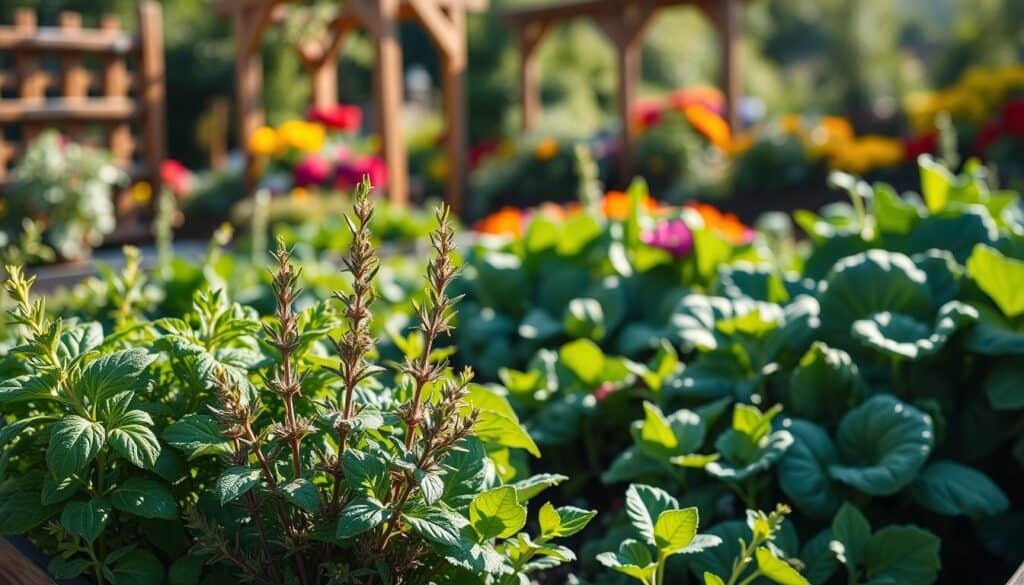
Choosing the right aromatic herbs for vegetable gardens is important. For example, chives and cilantro are great with lettuce. They repel slugs and add a nice scent to your garden.
Placing herbs strategically is key. Here are some effective pairings for your raised beds:
- Companion planting oregano and broccoli keeps cabbage moths away from your vegetables.
- Companion planting thyme and cabbage creates a fragrant barrier against beetles.
- Mint in pots can deter aphids, but it grows fast, so keep it contained.
- Sage is a hardy companion that fights off soil-borne pests.
Using these aromatic allies keeps your garden healthy. They not only protect your plants but also add flavor to your cooking. This approach makes gardening more sustainable and rewarding.
Root Vegetable Companions for Soil Health
Underground, a world of root interactions shapes your garden’s success. Choosing the right vegetables and herbs creates a balanced space. This balance is key for nutrient-rich soil in your raised beds.
Many gardeners look for the best herbs to grow with carrots. Herbs like chives, rosemary, and sage help keep pests away and improve soil. Planting them together lets them share space without fighting for nutrients.
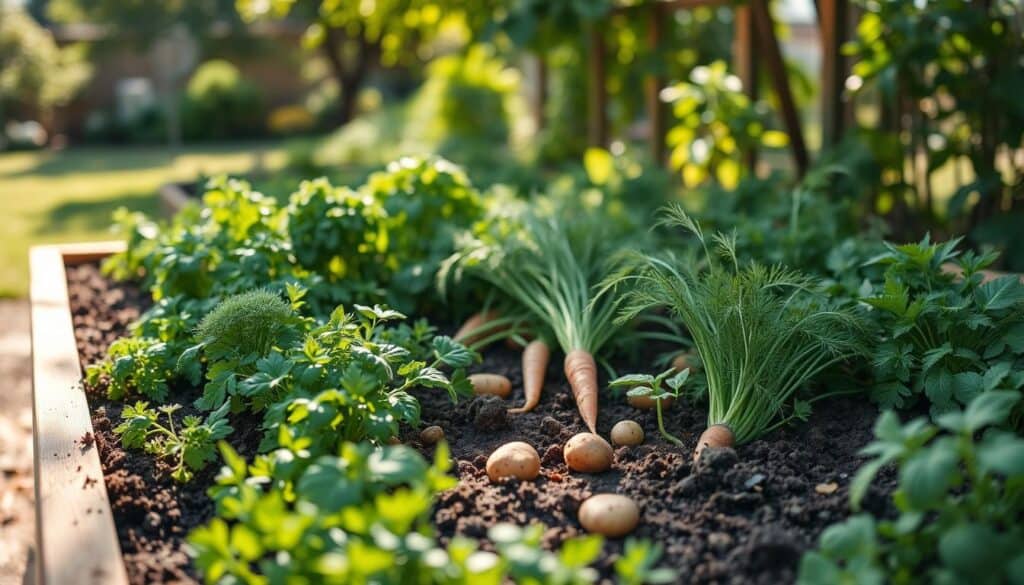
Using herbs to improve soil health is a smart gardening choice. These plants release compounds that boost your root crops’ health. This approach reduces the need for synthetic fertilizers and strengthens your garden’s ecosystem.
Pairing chives with carrots is a great idea. Chives’ scent confuses pests that smell carrots. This natural trick is a favorite among organic gardeners.
Here are some top herb pairings for your raised beds:
- Chives and Carrots: Enhances flavor and keeps carrot rust flies away.
- Rosemary and Beets: Promotes steady root growth.
- Sage and Parsnips: Keeps soil moist and healthy.
- Thyme and Radishes: Acts as a weed suppressor.
By focusing on these underground connections, your root vegetables will thrive. Healthy soil is the base of every successful harvest. Adding these aromatic herbs will make your garden more productive and sustainable.
Herbs That Attract Pollinators to Squash and Cucumbers
Choosing the right herbs can make your vegetable garden a hotspot for pollinators. Squash and cucumbers need bees to pollinate because they have separate male and female flowers. Using companion plants that attract pollinators helps your garden grow well.
Adding nectar-rich flowers to your garden makes it a lively place. These companion herbs for summer vegetables feed honeybees and native bumblebees. This keeps them around, helping your plants get fertilized.
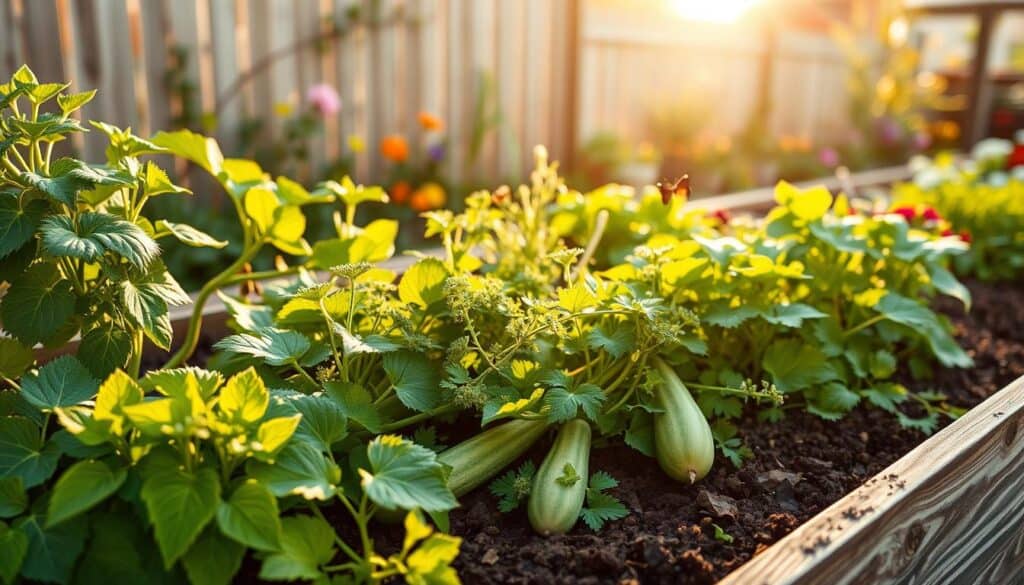
Companion planting for zucchini and borage is very effective. Borage’s blue flowers are a big hit with bees. It draws pollinators to your zucchini, helping it grow better.
Other companion herbs for cucumbers and squash also help a lot. Adding these to your garden can increase your harvest:
- Dill: Its feathery leaves and yellow flowers attract bees and wasps.
- Cilantro: Its white flowers are a favorite of beneficial insects when it bolts.
- Lemon Balm: Its small, nectar-filled flowers keep bees busy around your vines.
- Thyme: A low-growing herb with a carpet of flowers, great for best herbs for pollinator gardens.
By choosing these plants, your garden will have more fruit. Increased pollinator activity means fewer deformed fruits and a bigger harvest. A garden with these herbs is not just productive but also lively and colorful.
Designing Your Raised Bed Layout for Maximum Yield
Mastering companion planting for raised beds starts with a good layout. A well-thought-out raised bed herb garden layout and design ensures each plant thrives. This is key for any successful raised bed companion planting guide.
When planting herbs next to vegetables, think about airflow and light. Place taller crops on the north side to avoid shading smaller herbs. This way, sun-loving plants get enough sun, and delicate herbs stay cool.
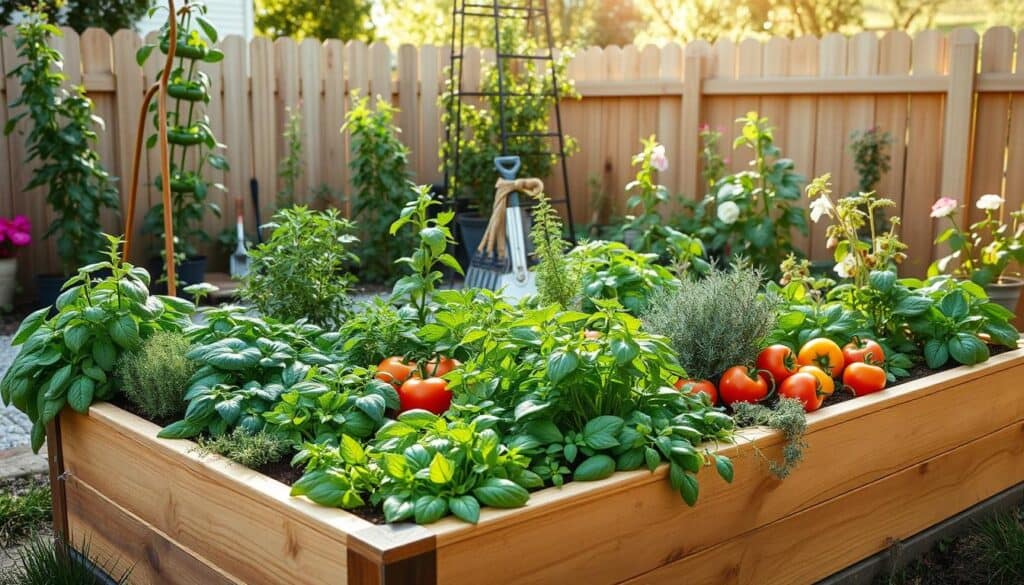
A good vegetable garden layout for herbs turns small spaces into productive areas. For small space companion planting ideas, use corners for herbs like thyme or oregano. They keep the soil cool and moist for your vegetables.
Using a companion planting guide for raised beds prevents overcrowding. Choose perfect plant pairings for raised beds to create a balanced garden. This balance naturally keeps pests away. Here are some key layout strategies:
- Group by water needs: Place thirsty vegetables like tomatoes near moisture-loving herbs like basil.
- Vertical layering: Use trellises for vining vegetables to save ground space for low-growing herbs.
- Edge planting: Use the perimeter of your bed for perennial herbs to define the space and provide easy access.
- Succession planning: Leave small gaps in your layout to rotate herbs throughout the growing season.
Whether you’re gardening in the city or a backyard, consistency is important. Always leave enough space for roots to grow without competing for nutrients. With a solid plan, your garden will be fruitful all season.
Natural Pest Management Strategies with Herbs
You can turn your vegetable garden into a safe haven with natural herbs. By placing aromatic plants wisely, your garden keeps pests away naturally. This makes your crops healthier.
Choosing organic pest control is a wise move. It avoids harmful chemicals. Many herbs, like those grown with tomatoes and peppers, protect against pests.
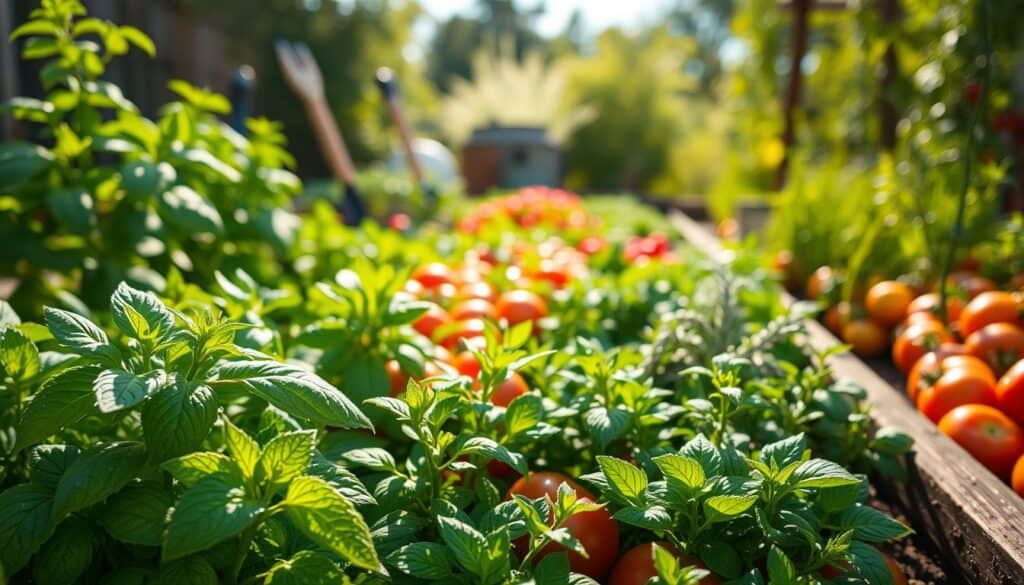
Basil is a great choice for tomatoes. Companion planting basil and tomatoes boosts flavor. It also hides the scent of tomatoes from pests.
Marigolds are key for peppers. Companion planting marigolds and peppers keeps bugs away. Their scent confuses pests like whiteflies.
Chives are excellent for tomatoes. Companion planting chives and tomatoes fights fungal diseases. It also keeps aphids away from young plants.
For eggplants, thyme and oregano are top picks. They keep beetles away. These herbs naturally repel aphids and other pests.
- Companion planting parsley and tomatoes attracts beneficial wasps.
- Dill is great for bell peppers. It invites ladybugs.
- Aromatic borders keep pests out.
Companion planting garlic and tomatoes is effective. Garlic fights fungi and repels pests. It’s a top choice for natural pest control.
Diverse planting is beneficial. Companion planting rosemary and beans protects beans from beetles. Companion planting cilantro and tomatoes controls spider mites well.
Sustainable Soil Enrichment Through Herb Integration
Adding certain herbs to your vegetable garden is a natural way to make the soil better. This method of organic gardening helps plants help each other. It’s key to sustainable gardening, keeping your soil rich and productive for years.
Some herbs pull important minerals from deep in the earth. These minerals then help nearby vegetables grow. The benefits of companion planting with herbs go beyond just keeping pests away. They also make your soil better for plants.
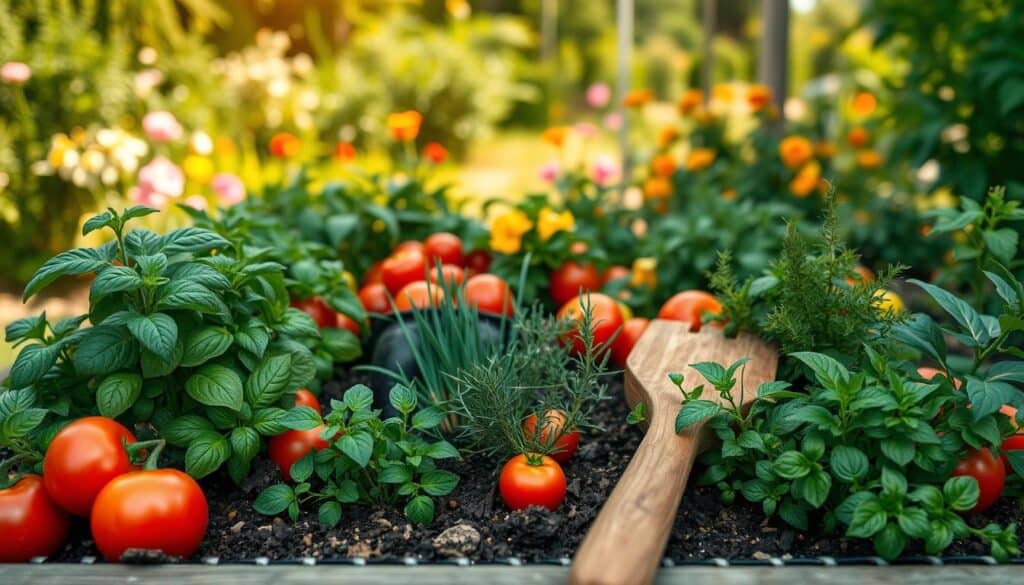
When designing your raised bed herb garden layout and design, think about placing these herbs near big eaters like tomatoes. A well-thought-out vegetable garden layout for herbs saves space and helps nutrients move around. This way, your plants get the minerals they need all season.
Using companion planting herbs for healthy soil keeps the underground life active. By using sustainable gardening with companion herbs, you cut down on synthetic fertilizers. Your garden becomes a self-sustaining system, giving you healthier, tastier food.
Seasonal Considerations for Herb and Vegetable Success
Mastering the seasonal rhythm of your garden is key to success. By aligning your planting schedule with the local climate, you ensure your plants grow well. These gardening tips help keep your garden productive all year.
It’s important to know the difference between annual and perennial herbs. Annual herbs like dill or basil need to be replanted as the seasons change. Perennial herbs, such as thyme or oregano, come back year after year, creating a stable base for your garden.
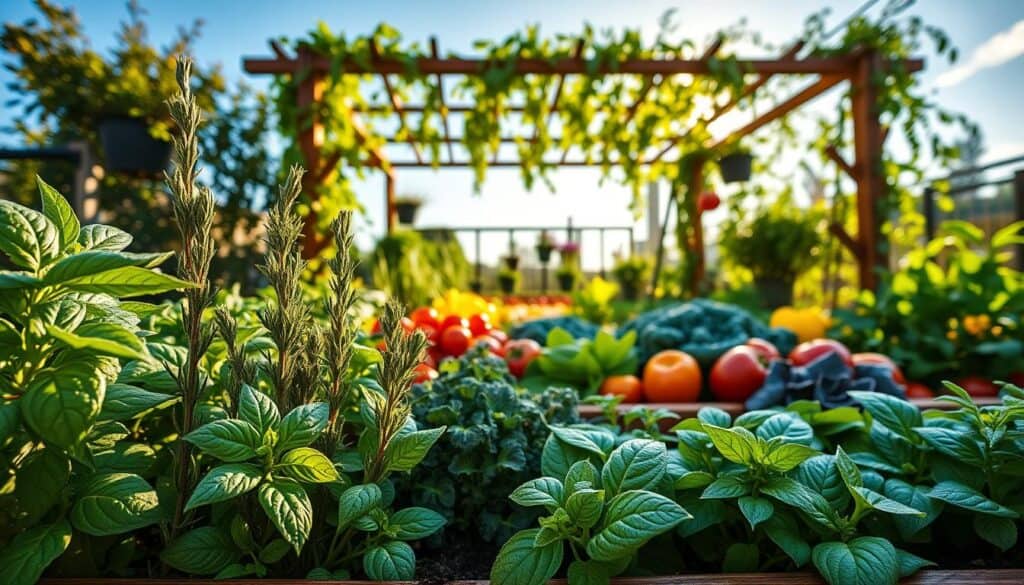
Here are some seasonal strategies for best herbs for companion planting success:
- Spring Planting: Focus on cool-season crops. This is the best time for companion planting thyme and cabbage to help your brassicas grow.
- Summer Growth: As it gets warmer, focus on growing dill and cabbage together to keep pests away. Also, plant best herbs to plant with lettuce to keep the soil cool.
- Autumn Harvest: Switch to hardy herbs that can handle the first frost. This way, you can keep using herbs to improve vegetable flavor even when it’s colder.
When planning your garden, remember that herbs that thrive in raised planter beds have different needs than vegetables. Group plants with similar needs to make care easier. These steps will help you become a skilled top companion herbs for beginner gardeners who want to see results.
By watching how your plants react to the weather, you can adjust your care. Whether you’re looking for best aromatic herbs for vegetable gardens or companion herbs to protect brassicas, timing is everything. Regular checks let you enjoy the best culinary herbs for backyard gardening all season.
Troubleshooting Common Challenges in Raised Bed Gardening
Fixing problems in your garden is key to success with raised bed herb gardening. Even with the best companion planting for raised garden beds, issues like stunted growth or wilting can happen. Spotting these problems early helps keep your garden productive and stress-free.
Overcrowding is a common problem. It leads to poor airflow and competition for nutrients. To fix this, thin out seedlings or move aggressive growers to other parts of your raised beds.
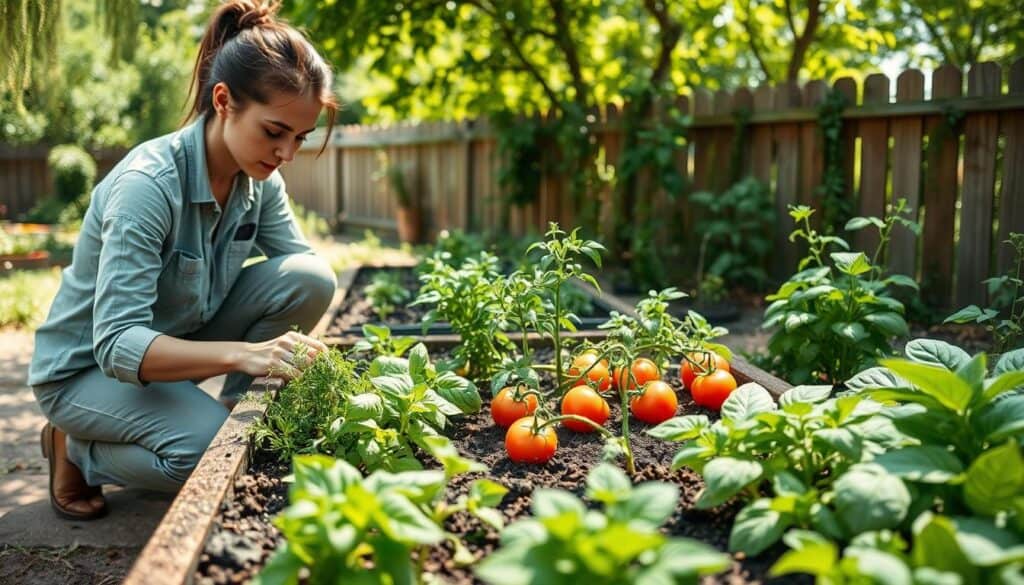
Pests can also be a problem. If you see holes in leaves or sticky residue, it’s time to use natural repellents. The right companion herbs for root vegetables can help, but sometimes you need more direct action.
Here are some strategies for managing pests and keeping plants healthy:
- Companion planting chives and carrots to naturally deter aphids and carrot rust flies.
- Check soil moisture often to prevent root rot in dense plantings.
- Use aromatic herbs to mask vegetable scents, deters pests naturally with companion herbs.
- Apply organic mulch to control weeds and keep soil nutrients for your plants.
- Rotate crops yearly to keep soil fertile and break pest cycles.
Following this companion planting guide for raised beds helps you stay ahead of pests. By repelling garden bugs naturally with herbs, you support healthy growth. Remember, watching your garden closely is the best way to manage pests.
If your best companion herbs for carrot crops are struggling, check the soil drainage. Good drainage is vital for success with raised bed herb gardening and prevents diseases. With these tips, you can quickly solve problems and keep your garden thriving all year.
Conclusion
Turning your backyard into a productive oasis begins with companion planting. By adding specific herbs to your vegetable beds, you create a balanced space. This supports long-term growth and keeps your soil rich in nutrients.
Learning about companion planting herbs and vegetables helps you use your space better. Plants like lavender or borage attract pollinators, boosting your crop yields. For example, pairing zucchini with borage keeps both plants healthy and thriving.
Choosing the right herbs for companion planting helps control pests naturally. Herbs like basil or mint protect cucumbers and squash from pests. These herbs also attract pollinators, keeping your garden active and productive.
Adopting sustainable gardening with companion herbs is rewarding. It builds a resilient garden that grows year after year. Start planning your next garden today to see the benefits of these natural partnerships.