Turning your backyard into a lush, productive space doesn’t need to cost a lot. Many people want to grow lots of food but worry about the cost. Learning how to build a trellis for cheap is a great way to use your space and save money.
A garden trellis under twenty five dollars gives your plants the support they need. It’s perfect for growing snap peas, cucumbers, or pole beans. This simple structure keeps your plants healthy and off the ground.
This guide will show you how to make your own support system. You’ll find that making a trellis for climbing vegetables is easy and rewarding. Follow these steps to create a trellis for under $25 and watch your harvest grow.
Visit The Marketplace or grab your Free Garden Starter Kit
Essential Tools and Budget Materials for Your Trellis
Starting your DIY garden trellis project is easy. You don’t need to spend a lot on materials. With the right tools, you can make a sturdy trellis that lasts all season.
Choosing affordable climbing plant support lets you grow more veggies. By picking budget-friendly garden structures, you can increase your harvest without spending a lot. Focus on materials that resist rot and moisture well.
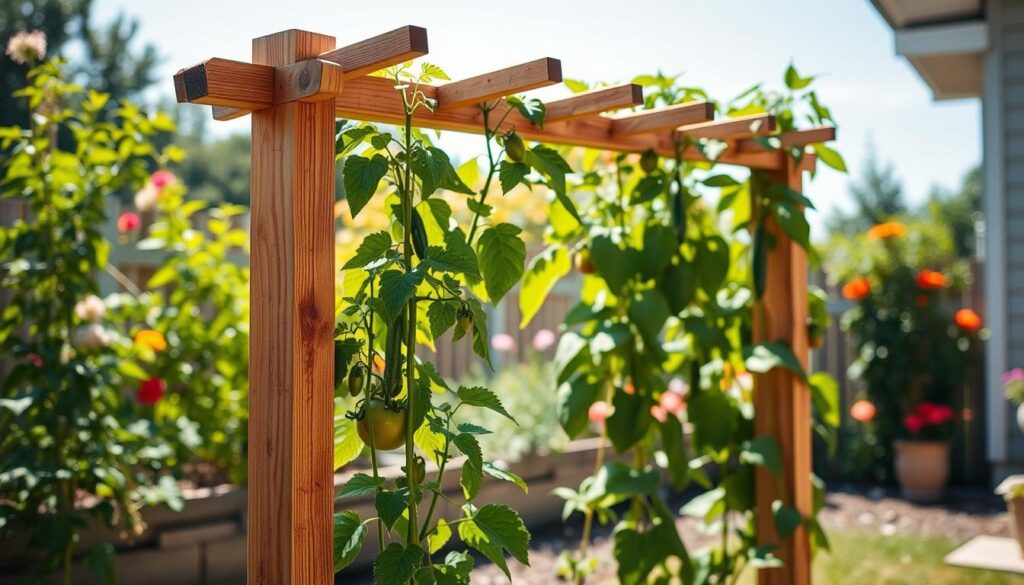
A cedar fence slat trellis is great for the frame because cedar resists weather. You can also use wooden garden stakes for trellis construction. These are easy to find at local hardware stores. They support heavy vines like cucumbers or pole beans well.
- Cedar fence slats for a lightweight, rot-resistant frame.
- Pressure-treated wooden stakes for added ground stability.
- High-quality wood screws for garden projects to prevent rusting.
- A basic power drill for quick and secure assembly.
Choosing the best wood for garden trellis projects is key. Look for lumber rated for outdoor use to withstand rain and sun. Use galvanized or coated screws to keep your trellis stable under plant weight.
Remember, building plant supports on a budge means smart shopping. Look for scrap wood or sales at local lumber yards. With these materials, you’ll have a reliable trellis for your climbing veggies soon.
How to Build a Wood Garden Trellis for Climbing Vegetables for Under $25
Want to build a wood garden trellis for climbing veggies under $25? You’re in the right spot. This diy garden trellis project is great for those who love quick, rewarding projects. With simple plans, you can make a strong trellis for your favorite plants without breaking the bank.
The easiest way to build a garden trellis is with furring strips. These are easy to find and very affordable. Using furring strips keeps costs down while giving your garden a professional look.
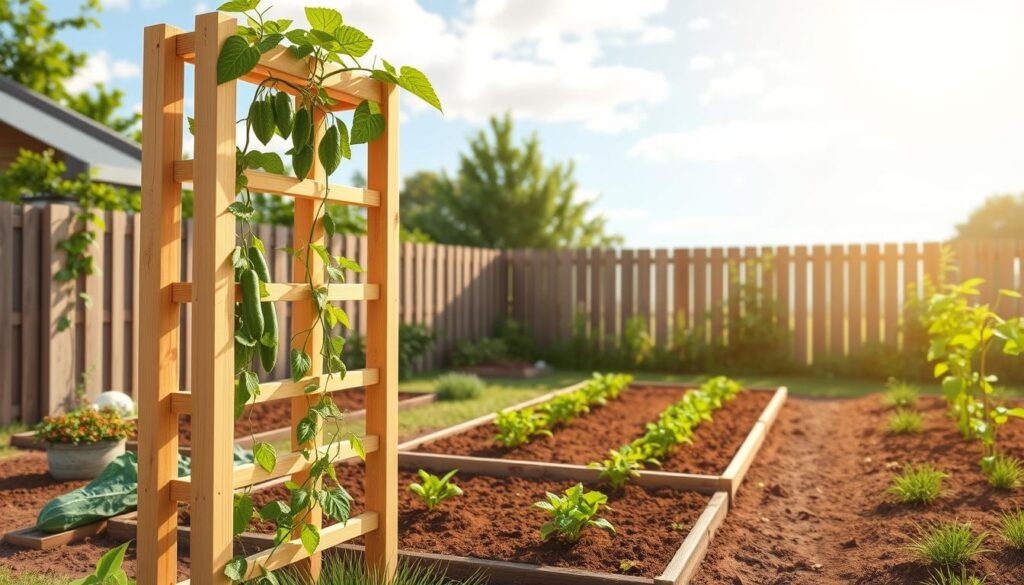
To start this homemade vegetable trellis, just gather your materials and follow this easy guide. Building plant supports on a budget is a great weekend activity. Here’s what you’ll need:
- Four 8-foot furring strips
- One box of exterior-grade wood screws
- A small container of outdoor wood glue
- A basic drill and a measuring tape
Here’s how to put together your cheap wood trellis diy project:
- Lay two furring strips parallel on a flat surface to form the sides of your frame.
- Measure and cut your remaining strips to create horizontal rungs for the plants to climb.
- Apply wood glue to the ends of the rungs before securing them with screws to the side rails.
- Allow the glue to dry completely before installing the trellis in your garden bed.
This step by step garden trellis guide helps your trellis stay functional and look good. It’s perfect for supporting cucumbers and peas. By following these steps, you can create a beautiful homemade garden trellis that will last for many seasons.
Top Benefits of Vertical Gardening for Vegetable Yields
Creating a low cost vertical garden is a big win for home gardeners. These space saving garden ideas turn small spots into green, fruitful areas.
Proper support for vining vegetables keeps leaves off wet soil. This lets plants spend more energy on growing fruits, not fighting rot.
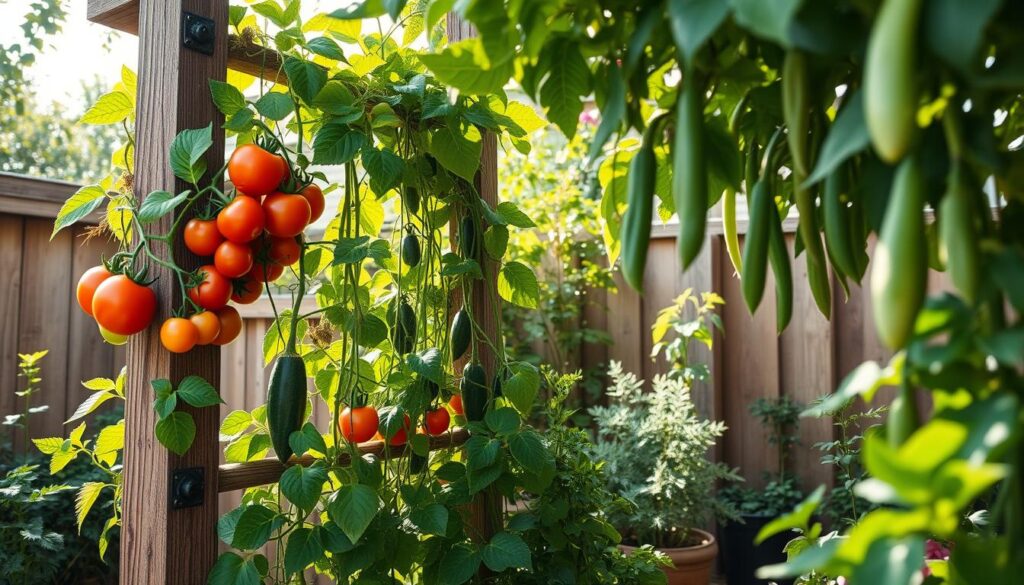
Healthy plants need air to grow well. Trellises help with improve garden air circulation. This is key for stopping issues like powdery mildew. It’s great for squash vertical growing, keeping fruits clean and off the soil.
There are many vertical gardening ideas to use space well without spending a lot. Training plants to climb offers big benefits:
- Easier harvesting because veggies are at eye level.
- Reduced pest damage by keeping crops away from insects.
- Better sun exposure for all plant parts.
- Cleaner produce that stays free from dirt and mud.
Using these methods keeps your garden tidy and efficient. Vertical setups make upkeep quicker and more fun for gardeners.
Choosing the Right Climbing Vegetables for Your Trellis
Choosing the right crops is key to a thriving vertical garden. A trellis for climbing vegetables saves space and improves airflow. But, not all plants fit the same support.
A tomato trellis system needs strong, vertical stakes or cages. This is because tomatoes can get very heavy. On the other hand, cucumber trellis diy projects are lighter. Cucumbers use delicate tendrils to climb, needing simpler supports.
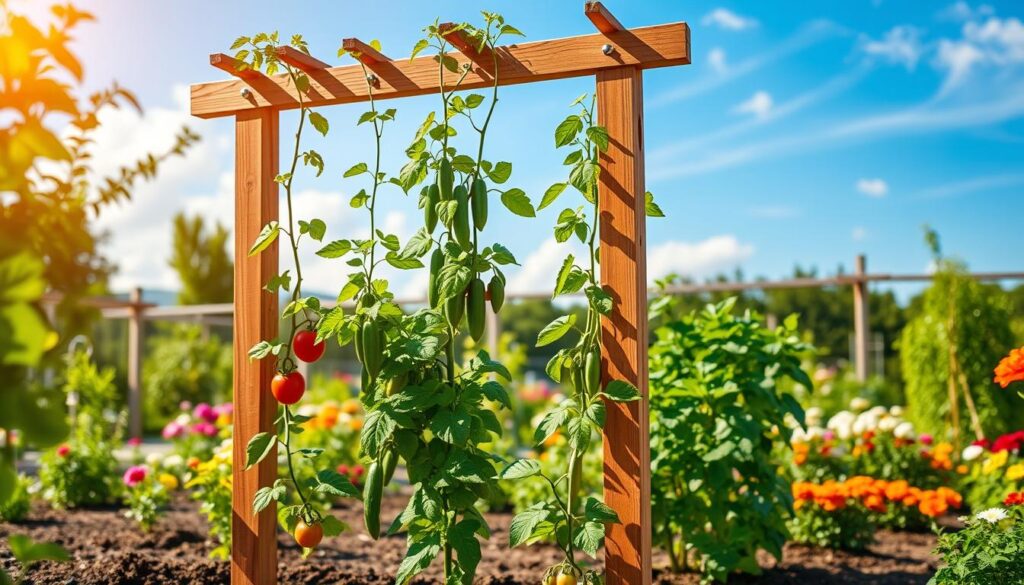
For big crops, you need heavy vegetable support to avoid damage. If you’re growing squash vertical growing or melon trellis diy, make sure your supports are sturdy. These plants have heavy fruits that can pull down weak supports.
Smaller vining plants offer more flexibility in your garden. Here are some ideas for your next planting:
- Pole bean support ideas: Use tall bamboo poles or twine for easy growth and harvesting.
- Pea trellis for garden beds: Choose lightweight mesh or chicken wire for pea tendrils to grip.
- Maintenance: Check your ties and fasteners weekly to keep plants attached as they grow.
By picking the right varieties, you can make a simple wooden structure into a high-yield food source. Proper planning leads to a lush, productive garden that looks great and works well all summer.
Creative Design Ideas for Inexpensive Trellises
Building a support system for your plants is easy with these cheap garden trellis ideas. You can make your vegetable patch look great with these affordable designs. They are both useful and stylish, fitting any space, big or small.
For a small vegetable garden trellis, try a ladder trellis. It’s great for peas or cucumbers and doesn’t take up much space. If you have a trellis for small spaces, an a frame trellis is a smart choice. It’s sturdy and won’t cost a lot.
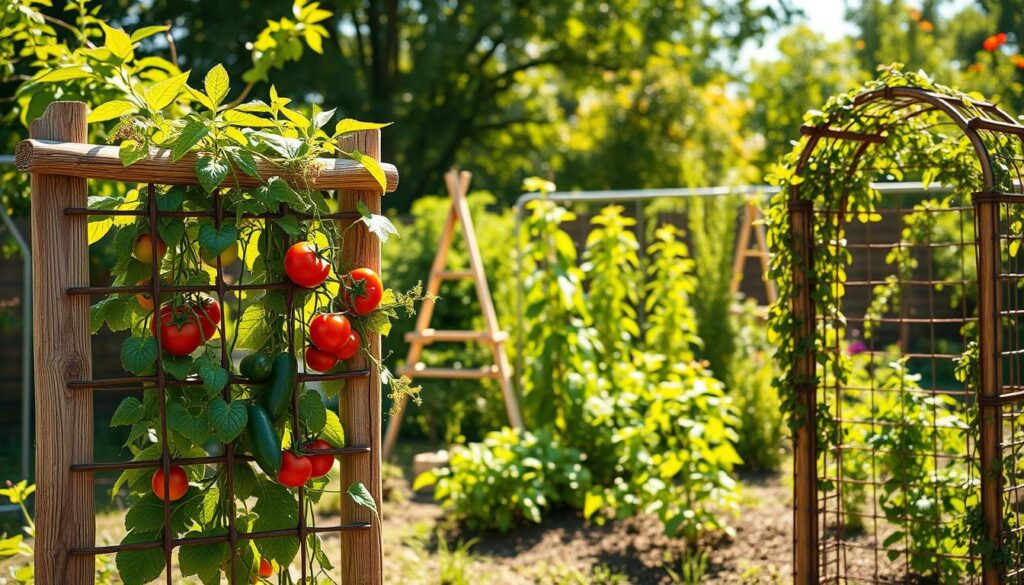
Using old materials is a great way to save money on trellises. A cedar fence slat trellis adds a rustic touch to your garden. For something more industrial, a t post garden trellis is strong and supports big plants.
Here are some ideas for supporting climbing vegetables:
- Cattle panel trellis ideas: Great for making sturdy tunnels or walls for heavy crops.
- Lattice panel diy: A simple way to add height and support for lighter vines.
- Teepee trellis for beans: A fun, space-saving option that adds beauty to your garden.
- Arched trellis diy: Perfect for a stunning walkway that also grows vegetables.
These budget-friendly garden structures show you don’t have to spend a lot to look professional. By choosing an inexpensive trellis, you can spend more on good seeds and soil. Start your project today and see your garden grow with these creative ideas.
Step-by-Step Guide to Installing Your Trellis in Raised Beds
Setting up your garden support structure is the final step to a thriving vertical harvest. This step by step garden trellis guide will help you create a stable raised bed garden trellis that lasts. It focuses on securing your frame so it remains upright throughout the entire growing season.
The easiest way to build a garden trellis involves attaching it directly to the wooden frame of your raised bed. You can use wooden garden stakes for trellis support if you prefer to anchor the structure into the soil. These easy diy trellis for vegetables methods provide the necessary strength to hold heavy vines.
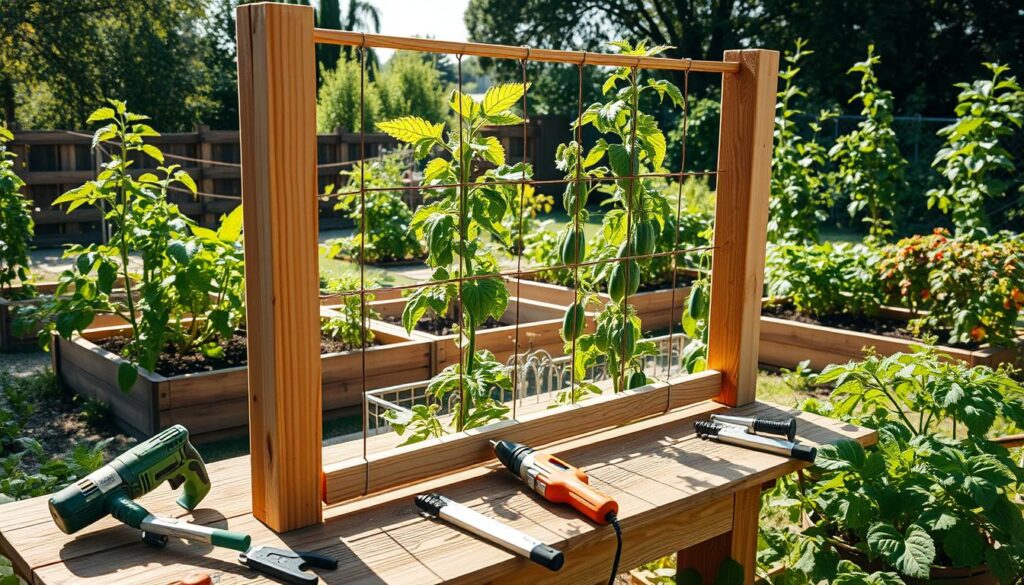
When learning how to build a trellis with furring strips, ensure you use exterior-grade screws for all connections. These simple wood trellis plans rely on a solid base to prevent tipping during high winds. Strong, weather-resistant hardware is essential for keeping your structure secure when plants are fully loaded with fruit.
If you are building a tomato trellis system, make sure the base is flush against the inside of your bed wall. For a cucumber trellis diy project, consider adding cross-bracing to distribute the weight of the vines evenly. Proper anchoring prevents the trellis from leaning or collapsing under the weight of a heavy harvest.
- Measure the width of your raised bed to ensure a perfect fit for your support frame.
- Pre-drill holes in your furring strips to prevent the wood from splitting during assembly.
- Secure the base of the trellis to the bed frame using heavy-duty L-brackets.
- Check the vertical alignment with a level to ensure your pole bean support ideas or pea trellis for garden beds remain straight.
. Whether you are planning a melon trellis diy or a simple vine support, a well-installed frame makes all the difference. Consistent maintenance of your connections will keep your garden looking great for years to come.
Maintenance Tips to Extend the Life of Your Wood Trellis
Proper care is key to making your DIY garden supports last long. Even with the best wood for garden trellis projects, like cedar or redwood, a weather resistant wood trellis treatment is essential. This step prevents rot and decay, keeping your budget-friendly garden trellis a reliable, affordable climbing plant support for years.
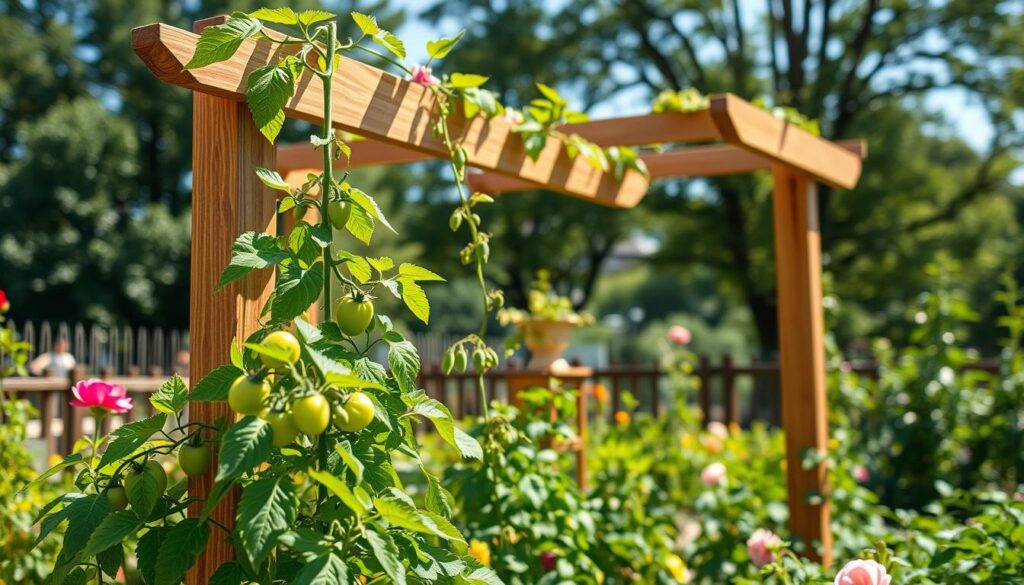
Building a trellis with twine is a flexible solution for climbing vegetables. Twine is great for temporary support, as it can be easily replaced or adjusted as plants grow. Using natural jute or cotton twine is eco-friendly and provides the needed grip for vines.
Inspect your wood screws for garden projects at spring’s start. Tightening loose hardware keeps your reusable garden supports safe and sturdy under heavy crops. If you see rust or significant wear, replace the screws right away to keep the frame strong.
Regular maintenance does more than protect the wood; it also improves garden air circulation around your plants. Keeping your trellis clean and free of old, dead vines reduces fungal disease risk. Follow these simple steps to keep your garden thriving:
- Apply a non-toxic wood sealant annually.
- Check all joints and fasteners for stability.
- Remove old plant debris after the harvest.
- Replace worn twine to prevent plant damage.
Common Mistakes to Avoid When Building Garden Supports
Many gardeners make a big mistake by picking the wrong materials for their vertical supports. They often underestimate how much their plants will weigh when they’re full grown. This can cause the supports to break down in the middle of the season.
It’s important to choose heavy vegetable support to keep your plants standing tall and healthy all summer.
Building a homemade garden trellis with flimsy materials can lead to disaster. A strong wind or heavy rain can knock it down. Always pick rot-resistant wood or strong metal that can handle the weather. Spending a bit more time planning can save you from rebuilding when your plants are at their best.
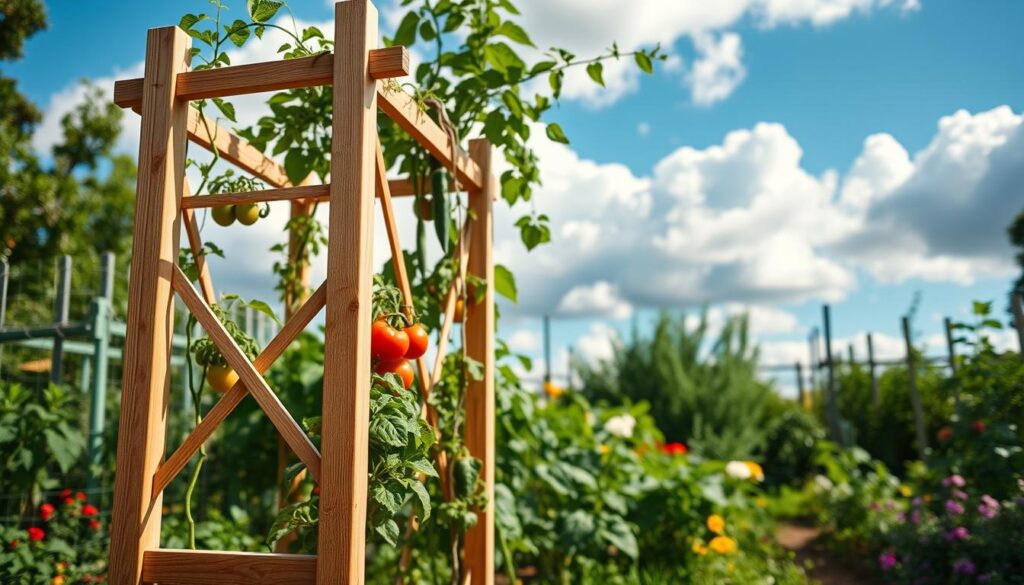
Another mistake is building a trellis with twine that’s not strong enough. If you’re using a t post garden trellis, make sure the posts are deep enough in the ground. Weak spots can break under the weight of heavy vines, ruining all your hard work.
- Always check the weight capacity of your materials before assembly.
- Use high-quality, weather-resistant fasteners for all joints.
- Incorporate reusable garden supports to save money and reduce waste over time.
- Secure your structure firmly to avoid shifting during storms.
By avoiding these simple mistakes, you can make an inexpensive trellis for vegetables that lasts for many seasons. A well-made support system is key for your plants to grow well. With the right setup, your vertical garden will be both productive and reliable.
Advanced Customizations for Decorative Garden Appeal
Turning a simple support into a focal point is easier than you think. An affordable garden trellis design can mix function with style. These budget garden trellis ideas help you make a decorative wood garden trellis that shows your taste without spending a lot.
Enhance a basic a frame trellis diy with exterior-grade paint or wooden finials. For a vertical look, a ladder trellis for garden can be dressed up with planters or hooks. These modern diy garden trellis projects turn simple lumber into a backyard highlight.
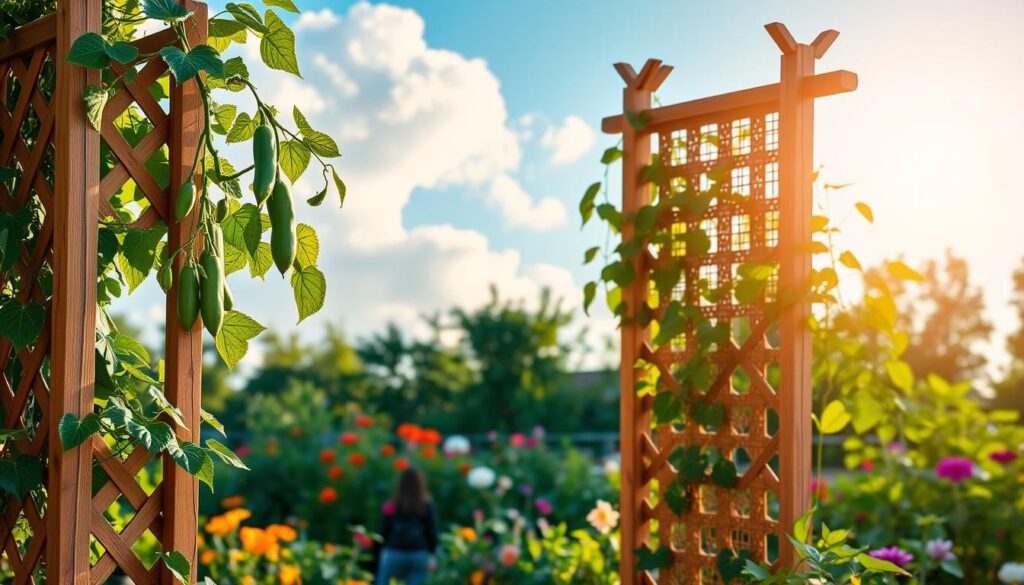
For small spaces, a trellis for small spaces is ideal. A lattice panel diy project adds texture and depth. An arched trellis diy makes a beautiful entrance for your small vegetable garden trellis, making the most of your space.
To keep your structure weather-proof, apply a weather resistant wood trellis sealant or stain. Try different shapes for your crops:
- Use a teepee trellis for beans for a charming, height-focused spot.
- Try cattle panel trellis ideas for a sturdy, industrial look that supports heavy vines.
- Add decorative caps for a polished finish.
- Experiment with wood stains for a custom color scheme.
Conclusion
Building your own support structure is a rewarding way to make the most of your garden space. You can grow more vegetables without spending a lot of money. Now, you know how to turn simple lumber into something useful.
These vertical gardening ideas help you organize your harvest better. A strong raised bed garden trellis is key for vines like cucumbers or pole beans. They will grow well all season long.
Your journey to a low cost vertical garden begins with one project. Choosing a decorative wood garden trellis adds beauty. It also keeps your plants healthy and off the ground.
These space saving garden ideas show you don’t need a lot of land to grow food. Get your tools ready and go to Home Depot or Lowe’s to buy what you need. Your future self will thank you for the harvest in your backyard.