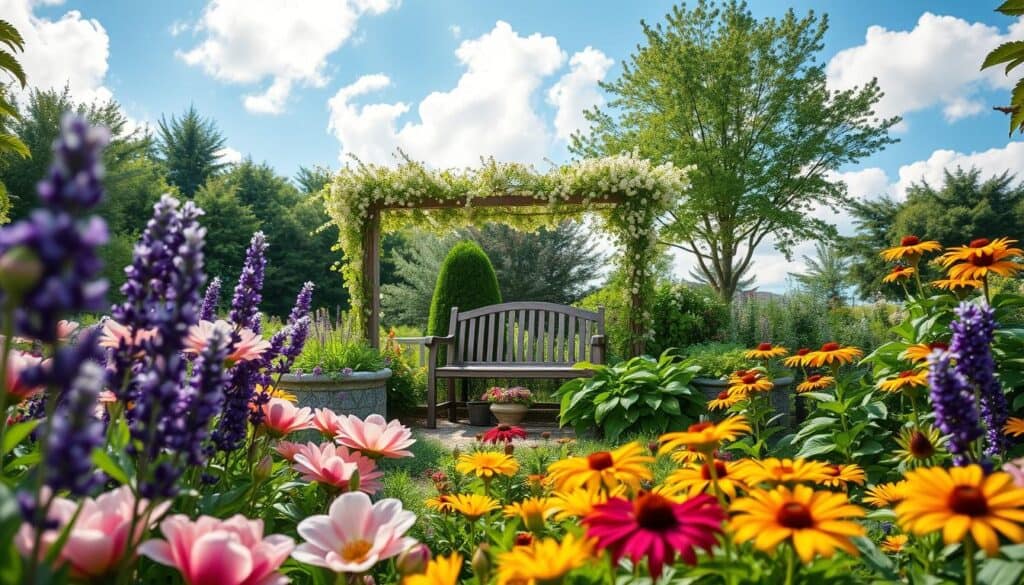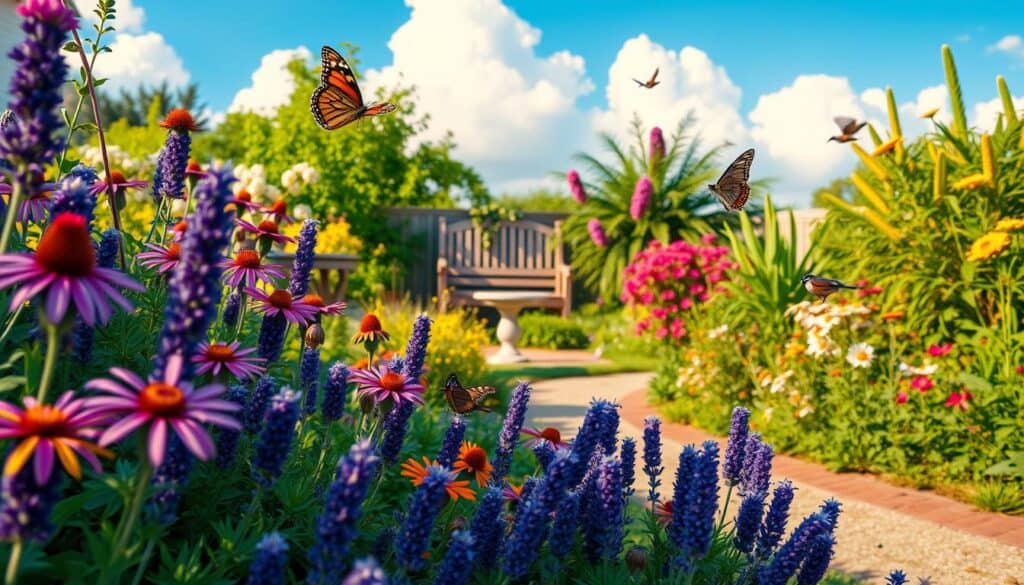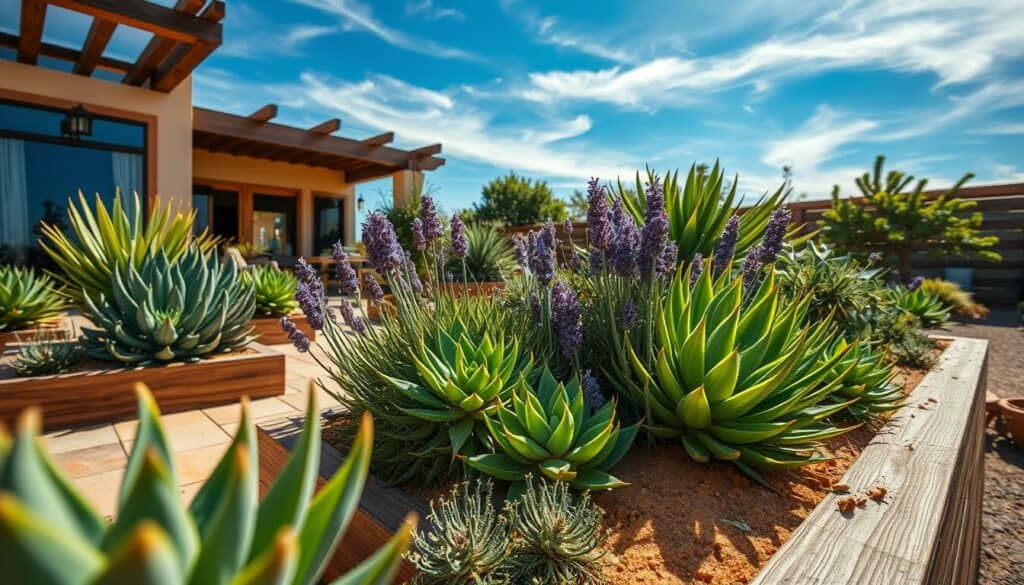
Turning your outdoor area into a lively, lasting haven is simpler than you might imagine. Many people are finding that mixing natural stone with local plants makes a beautiful, easy-to-care-for landscape. By learning How to Use River Rocks and Native Plants to Accent Your Garden Beds, you can create a thriving area that thrives in your local climate.
These garden landscaping ideas do more than look good. They help create homes for local pollinators and cut down on watering and chemical use. This green way keeps your yard looking great all year round.
Whether you need to mark paths or make eye-catching spots, this approach is a smart choice for today’s homes. We’ll look at the top materials, design tips for big impact, and upkeep advice for lasting beauty. Prepare to boost your home’s look with a design that blends with nature.
Visit The Marketplace or grab your Free Garden Starter Kit
The Benefits of Combining River Rocks and Native Plants
Using river rocks with native plants creates a beautiful mix of hard and soft elements. This design makes your garden feel both planned and natural. It gives your space a sophisticated look that stays great all year.
Native plants need less water because they’re already used to local weather. This makes your garden more eco-friendly and simple to care for. It’s a smart choice for anyone wanting a low-maintenance yard.
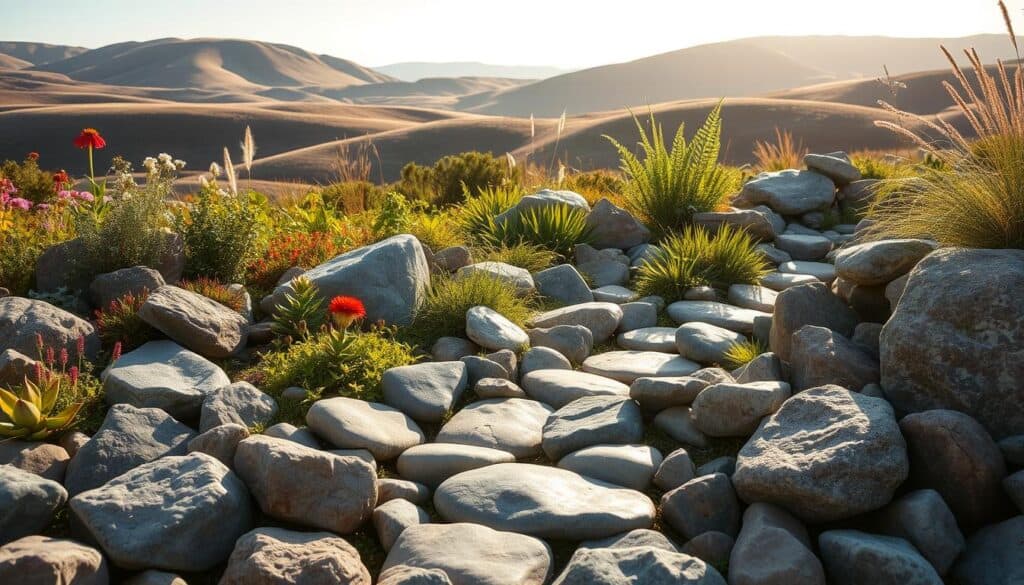
River rocks act as a solid base that stops soil from getting compacted. They also provide a clean background for plants to bloom. This design keeps your garden looking neat, even in rainy weather.
These rock and plant combinations are perfect for anyone wanting to enhance their yard. You get a garden that’s easy to care for and supports local wildlife. It’s a choice that keeps your outdoor space lively and healthy.
How to Use River Rocks and Native Plants to Accent Your Garden Beds
Turning your garden beds into stunning landscapes is simpler than you think. By focusing on garden bed accents, you can achieve a clean, intentional look. This highlights your native plants’ beauty, keeping your yard grounded in nature.
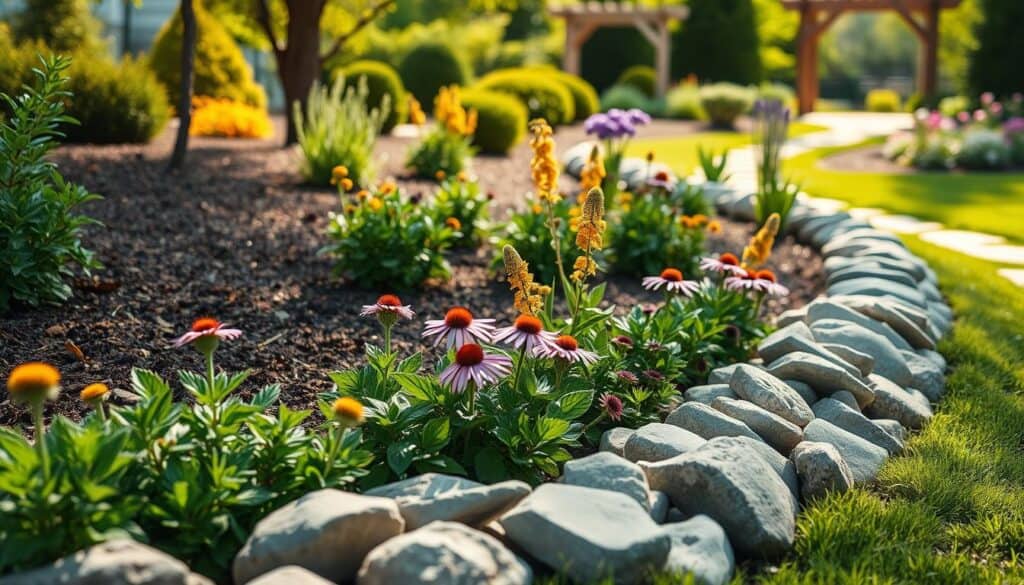
Start by creating a clear border. This separates your planting zones from the lawn, stopping grass from spreading into your flower beds. Incorporating river rocks in garden beds acts as a barrier and adds to the natural garden decor.
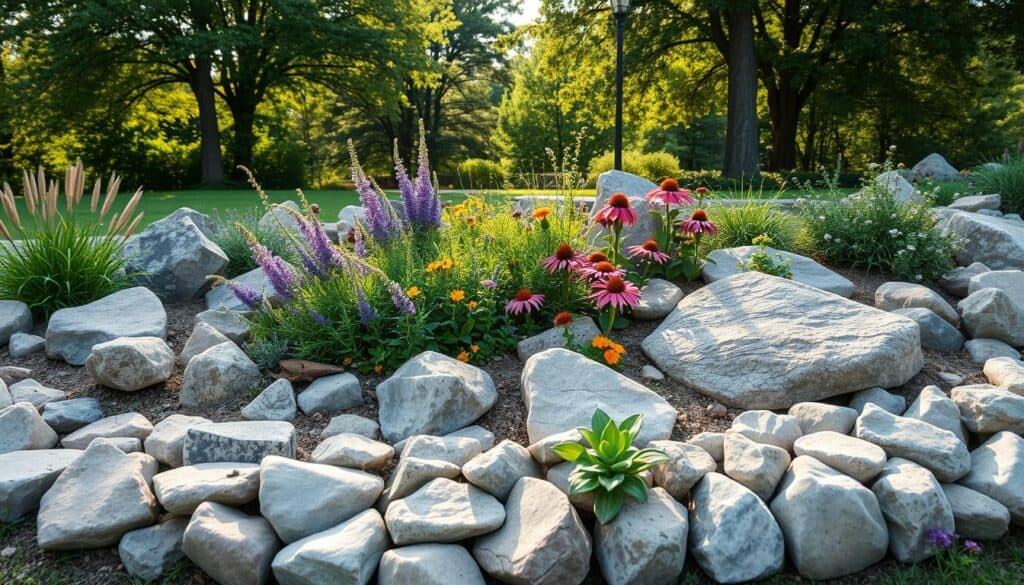
Use decorative garden rocks as a top dressing around your Drought tolerant plants. This gives your garden a polished look, like a dry creek bed or mountain stream. These rock-lined flower beds also help keep soil moist and control weeds, making care easier.
Placing these stones strategically defines your landscape’s shape. Whether it’s a winding path or a circular island, they’re key outdoor living accents. By mixing native plants’ soft textures with river stones’ solidity, you get a professional look that boosts your home’s appeal.
Selecting the Right Native Plants for Your Rock Garden
Starting a xeriscaping with river rocks means picking the right plants for your area. Choosing native plant gardening helps your garden stay healthy all year. It’s key for a stunning river rock garden design.
Identifying the right native plants is the first step. You need to pick plants that match your yard’s sunlight and soil. This way, your garden can handle dry spells without needing constant care.
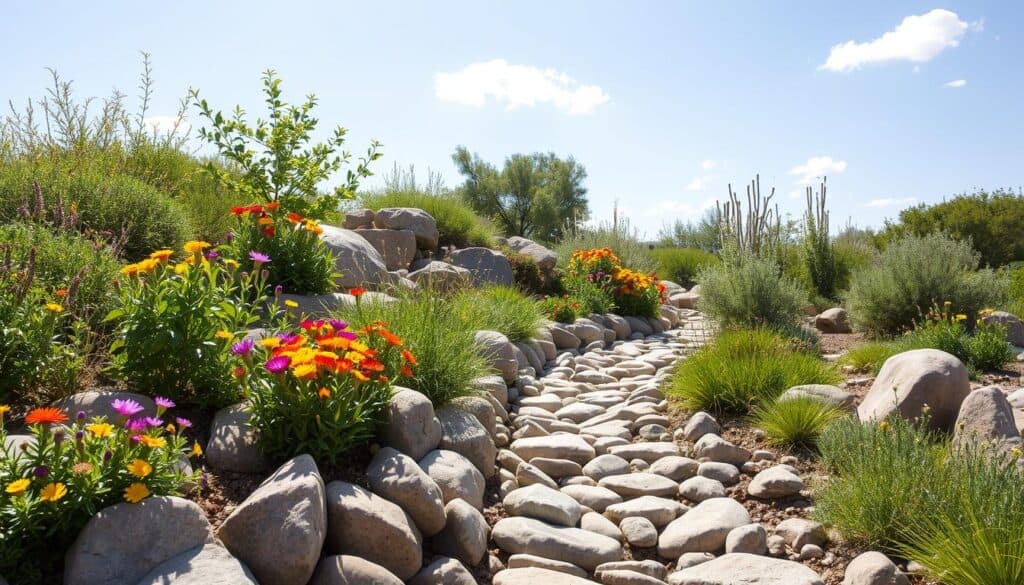
Perennial native flowers are great because they come back every year. They’re perfect for rocky areas where water drains fast. Here are some top picks:
- Purple coneflower: A sturdy favorite that attracts bees and butterflies.
- Black-eyed susans: These bright blooms add a cheerful pop of color to any rock bed.
- Butterfly weed: A resilient plant that thrives in dry, sunny spots.
These plants are among the best for rock gardens. They’re strong and add color without needing much care. This makes your garden a beautiful, easy-to-maintain space.
Designing a Natural Dry Riverbed Feature
You can turn your backyard into a beautiful landscape with a dry riverbed. This project is one of the most versatile landscape design ideas for homeowners. It adds character to your property by using stones to look like a natural watercourse.
A dry riverbed is a great garden drainage solution for homes. It helps direct rainwater away from your home’s foundation, preventing water damage. It also stops soil erosion, making it a smart choice for your backyard garden plans.
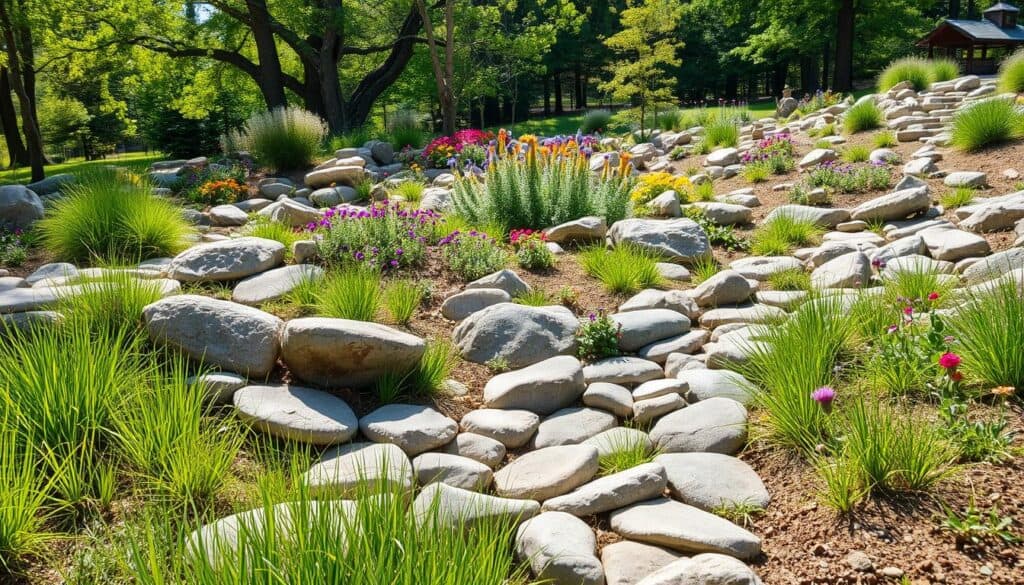
To make it look even better, add river rock pathways that follow the stones. Planting native species along the edges makes a pest-resistant garden dry riverbed design. These plants stabilize the soil and add a lush, vibrant contrast to the stones.
This feature is a perfect centerpiece for an eco-friendly garden design. It needs very little water once it’s set up and attracts local pollinators. Whether your yard is flat or sloped, a dry riverbed adds depth and interest all year round.
Creating Defined Edging with River Stones
Using river stones to define your garden borders is a simple yet effective way to enhance your landscape. This method of river rock landscaping brings a clean, modern garden aesthetics to your front yard. It instantly boosts your curb appeal by separating your lawn from planting areas.
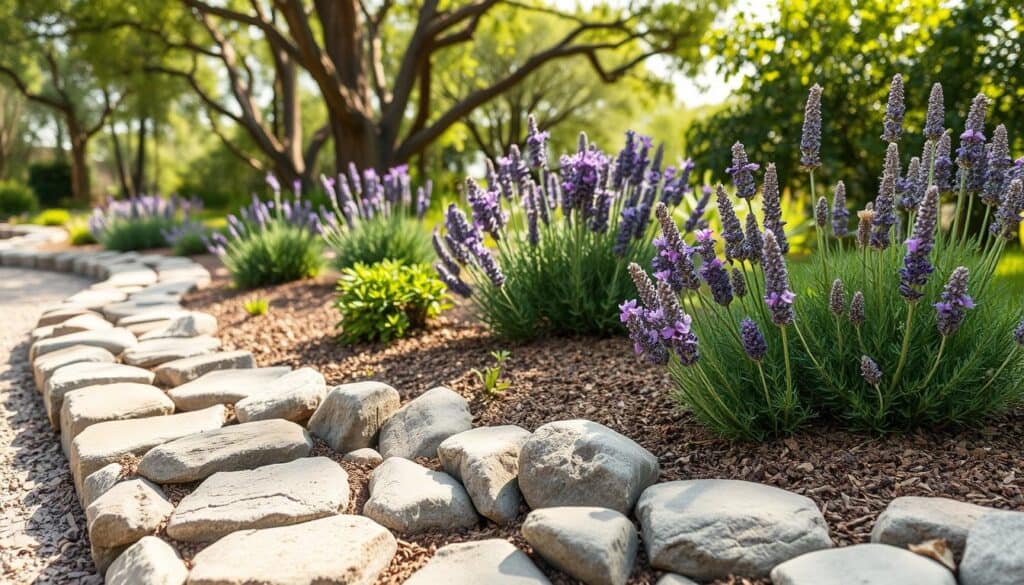
Choosing garden edging with rocks means you get both beauty and function. Hardscaping with river stones creates a strong barrier against lawn mowers and foot traffic. It keeps mulch and soil in place, preventing mess during rainstorms.
This technique can be applied to different parts of your property for a unified look. Here are some popular uses for stones in your design:
- Building stable borders for rock-lined flower beds.
- Outlining winding river rock pathways for easy navigation.
- Creating decorative tree rings with river rock to protect root zones.
- Establishing clean lines for vegetable or herb patches.
This DIY garden bed edging project is budget-friendly and can transform your front yard rock concepts. By layering the stones carefully, you create a stable border that lasts for years. A well-defined edge gives your garden a professional look, making it seem intentional and well-kept.
Using River Rocks for Soil Health and Moisture Retention
River rocks are more than just pretty to look at. They help keep your garden healthy. By using sustainable gardening practices and incorporating river rocks in garden beds, you create a strong home for your plants.
Starting hardscaping with river stones is more than just adding beauty. People often pick decorative garden rocks for their looks. But these stones do important work under the surface.
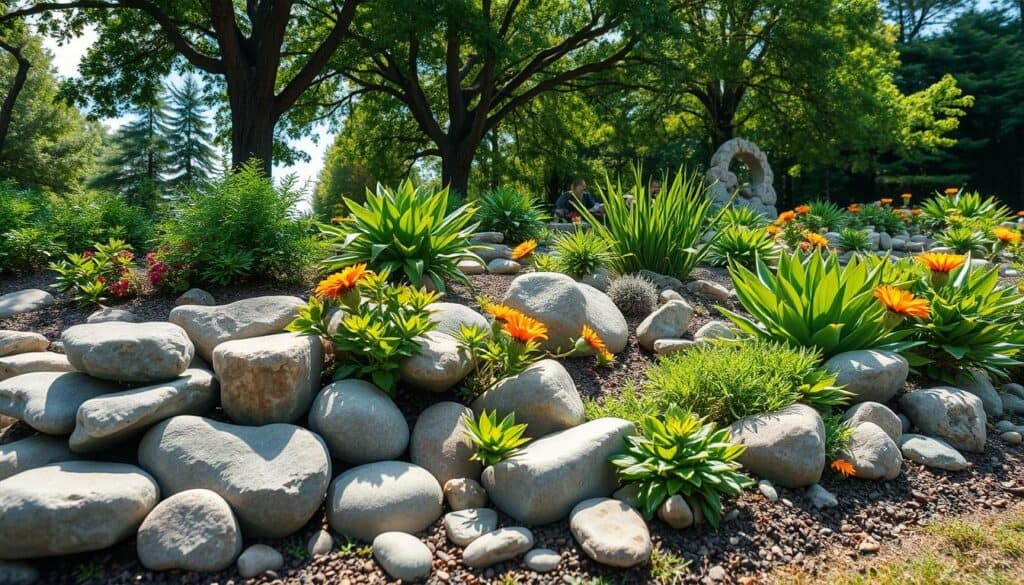
This approach is key to water-smart gardening. By covering the soil, you cut down on evaporation. This keeps the ground cool in the summer heat.
These stones also stop soil erosion by protecting the earth from rain and wind. They also block sunlight, stopping weeds from growing.
The main rock mulch benefits are keeping plants moist for a long time. This helps them survive dry periods. Unlike organic mulch, stones last forever.
Many people now prefer stone over other mulches. It’s also great for garden drainage solutions. It stops water from gathering around plants’ roots.
To get these benefits, you need to know how to layer river rocks right. Always put a landscape fabric under the stones. This keeps them from sinking and lets water reach the roots.
Incorporating Native Shrubs and Ornamental Grasses
Creating a biodiverse garden habitat begins with the right plants. Adding low maintenance ornamental grasses and flowering shrubs makes your garden lively all year. This mix is essential for a thriving environment.
Choosing the right native shrub landscaping is key. Plants like oakleaf hydrangea and coral honeysuckle add texture. Eastern redbud trees bring stunning spring blooms. These native flowering shrubs keep your garden beautiful all year.
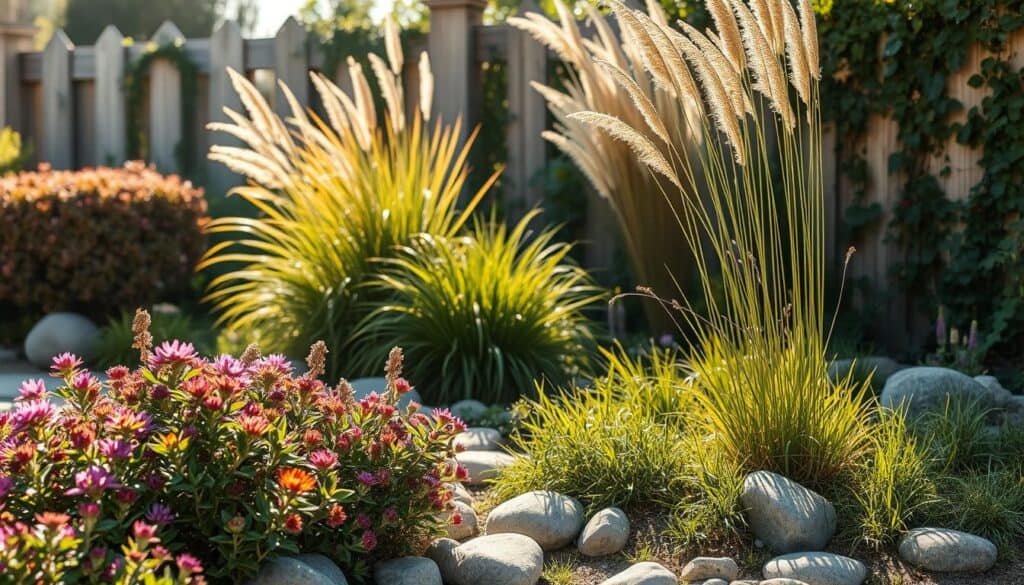
To boost your native plant gardening, add colorful perennials. Purple coneflower, black-eyed susans, and butterfly weed attract bees and butterflies. These plants are beautiful and essential for your local ecosystem’s health.
This method makes your garden a pollinator-friendly landscape. It supports many birds and insects. By planting strategically, you create a sustainable garden that benefits nature.
Building Focal Points with Large Boulders and Perennials
Creating a natural stone garden is all about balance. Large boulders serve as strong anchors for your garden bed accents. They bring a sense of stability and size to your outdoor area. Stones with unique shapes help ground the design, giving it a professional touch.
Pairing these stones with perennial native flowers creates eye-catching rock and plant combinations. These rock garden focal points grab your attention right away. They add the needed visual interest to your landscape. Mixing different heights and colors keeps your garden lively all season long.
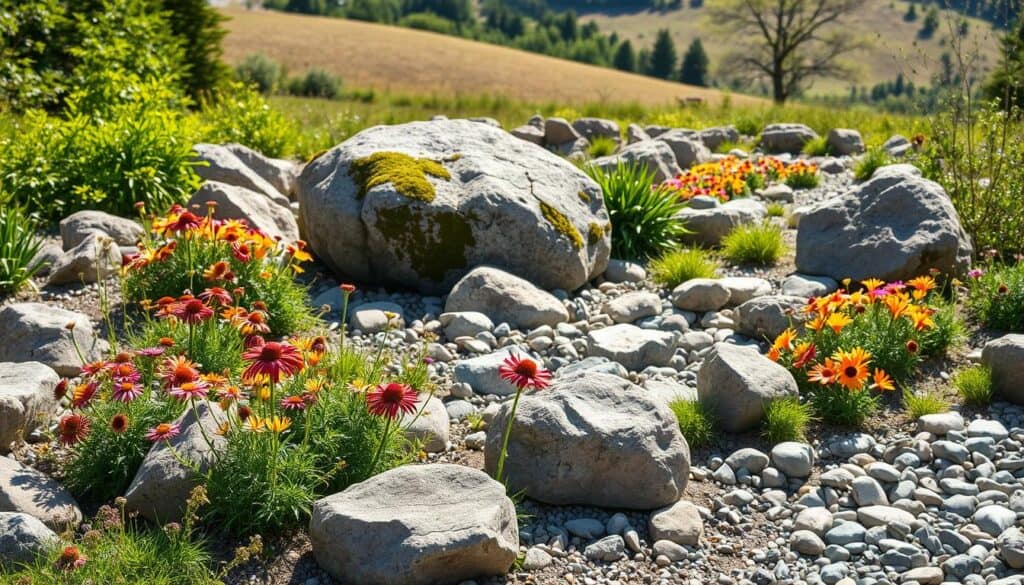
These elements are key for keeping your garden interesting in winter. Even when your perennials are dormant, the stones’ beauty shines through. This strategy helps you achieve modern garden aesthetics that feel both natural and thoughtfully designed.
Here are some tips for your layout:
- Select boulders of varying sizes to mimic a natural landscape.
- Group perennial native flowers near the base to soften the edges.
- Ensure the stones are partially buried to look like they belong in the earth.
- Use different textures to create depth within your garden bed accents.
Sustainable Landscaping Solutions for Curb Appeal
Turning your front yard into a green oasis is simpler than you think. By using garden landscaping ideas, you can get a stylish look that’s good for the planet. An eco-friendly garden design helps save water and keeps your outdoor area lively and healthy.
Choosing sustainable gardening practices is wise for today’s homeowners. These methods work with nature, making your routine easier. Many new landscape design ideas use native plants and stones for a look that’s easy to maintain.
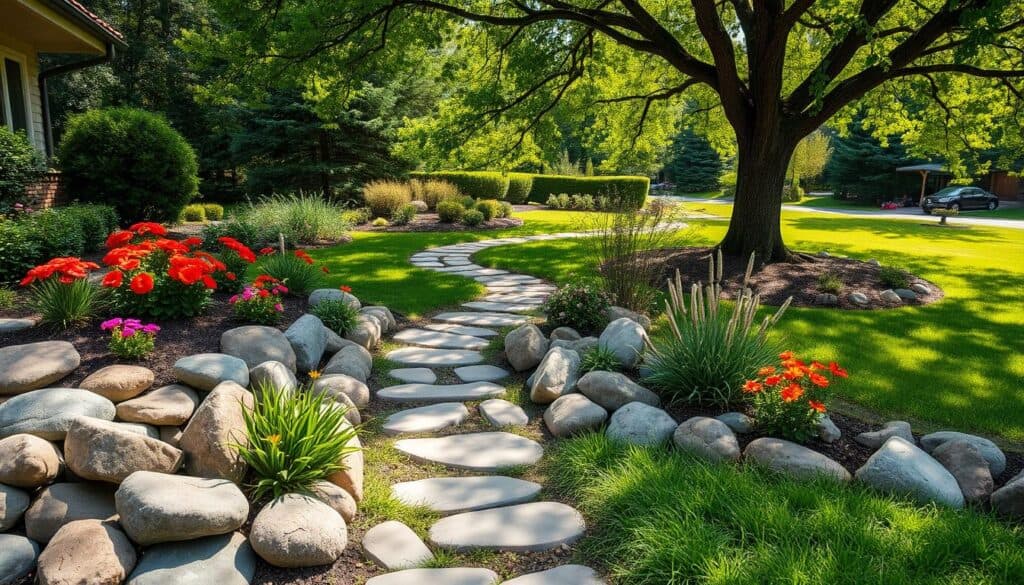
Using sustainable landscaping solutions makes a big difference in your home’s look. Front yard rock concepts are a strong base that lasts long. They cut down on weeding and chemical use, keeping your yard looking great all year.
Adding outdoor living accents can make your property more interesting. Many people find that landscaping on a budget is doable with natural materials like river rocks. These elements give a luxurious look without the high cost of fancy lawns.
In the end, improving curb appeal with rocks is a project that pays off. By picking materials that fit your local climate, you get a beautiful result with little upkeep. Your neighbors will definitely notice the care and thought you’ve put into your outdoor space.
Maintenance Tips for a Thriving Rock and Native Garden
To keep your rock and native garden looking great, just a few simple habits are needed. Focus on low-maintenance landscaping to keep your outdoor space beautiful and pollinator-friendly all year. Regular checks help protect your garden and keep it on track.
First, check your diy garden bed edging to make sure the stones are in place. Good garden edging with rocks stops soil erosion and weeds. If stones are out of place, just adjust them to keep your garden looking neat and enhance your home’s look.
Then, watch your garden drainage solutions to avoid water pooling near your home. A well-made dry riverbed design keeps water away from your home and helps plants during dry times. Make sure your rock garden focal points are clean to keep their beauty.
Your native flowering shrubs, like oakleaf hydrangea and eastern redbud trees, need little care if planted right. Here are some steps for their long-term health:
- Prune native ornamental grasses in late winter for new growth in spring.
- Look for pests to keep your garden pest-free.
- Replace stone mulch if it’s thin, as it helps regulate temperature.
- Use native plant identification guides to prune correctly.
By using these sustainable landscaping solutions, you create a biodiverse garden habitat that needs little care. These steps save time and keep your garden vibrant and healthy for years.
Conclusion
Creating a lasting landscape beauty is within reach. You now know how to use river rocks and native plants to enhance your garden beds.
These natural elements form a balanced ecosystem. Your yard becomes a haven for local pollinators, needing less water and chemicals. This approach supports the environment and saves time on yard work.
Start by considering your soil and sunlight patterns. Brands like Proven Winners offer native varieties that match well with smooth stones. Even small changes can greatly improve your yard’s look.
Embarking on this journey of creativity is exciting. Share your progress with neighbors or local gardening groups. Your dedication to sustainable landscaping benefits the planet.
Grab your shovel and begin your garden transformation today. A vibrant, easy-to-care-for garden is waiting for your touch.