Creating sustainable landscapes lets you enjoy colors all year without replanting. Many homeowners want to make their outdoor spaces beautiful with less work. They aim to keep their gardens looking great all season.
Choosing the right perennial garden plants turns your yard into a carefree haven. These plants come back every year. This saves you time and money, unlike annuals.
By picking perennial plants for your climate, you set your garden up for success. This guide shows how these garden plants make your home garden bloom year after year. Whether you’re new to gardening or experienced, these plants are great for a beautiful outdoor space.
Visit The Marketplace or grab your Free Garden Starter Kit
Understanding the Benefits of The Best Perennial Plants for a Home Garden That Bloom Every Year
Creating a beautiful home garden is easier with plants that come back every spring. Unlike annuals, these hardy plants grow deep roots. They survive winter and bloom again. This means your garden looks great all year with little work.
For beginners, picking the right plants is key. Look for easy perennials that grow well in many soils and lights. These plants are great for beginners because they’re easy to care for once they’re planted.
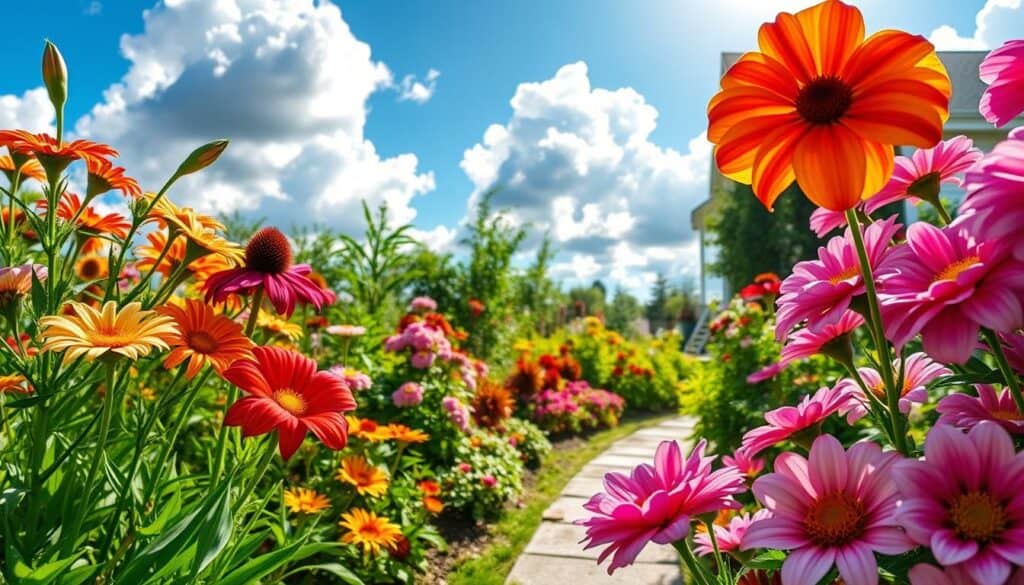
Choosing the best perennial flowers for beginners lets you enjoy a colorful garden without stress. Perennials for beginners grow bigger and more beautiful each year. They save you time and money, making your garden bloom every year.
Keeping up with gardening trends can make your garden exciting. Watch for the perennial of the year 2026. It might have new colors or better disease resistance. Adding these to your garden keeps it looking fresh and vibrant.
Sun-Loving Powerhouses for Vibrant Summer Color
Start by choosing long-blooming perennials that love the sun. These plants keep your garden colorful all summer. Pick the best perennials for your area for a yard that’s easy to care for.
Peonies, coneflower (echinacea), and black-eyed susan are must-haves for summer. They’re tough and attract bees and butterflies. Plant them together for a beautiful display that lasts.
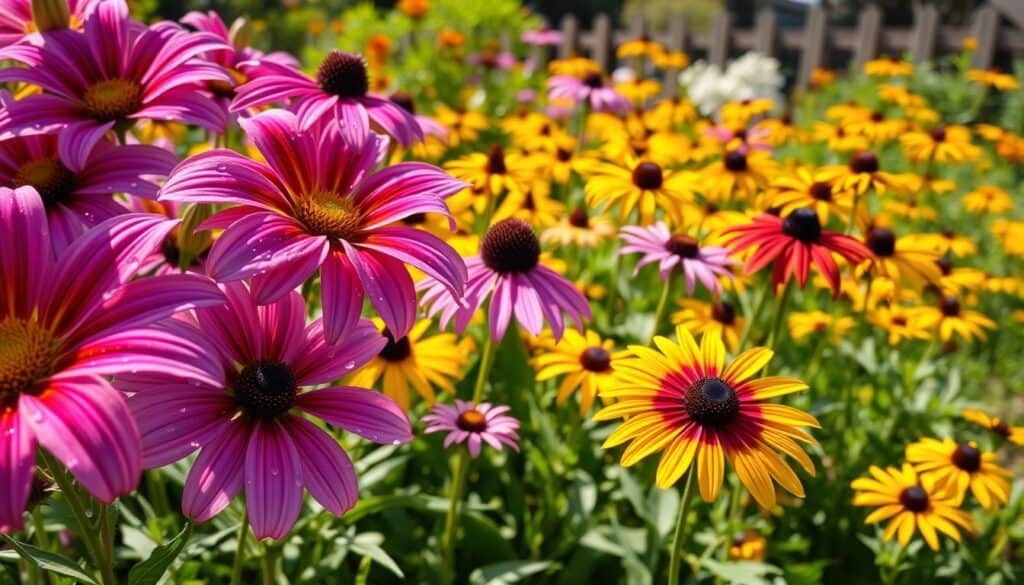
For a garden that always looks great, add these full sun perennials:
- Daylily: Blooms in warm colors.
- Salvia (meadow sage): Adds height with purple or blue flowers.
- Shasta daisy: Brings a cheerful vibe.
- Phlox: Has a sweet scent and colorful flowers.
For more color, try yarrow, coreopsis (tickseed), and blanket flower (gaillardia). They’re good at filling gaps and adding texture. And don’t forget hardy hibiscus for big, tropical flowers.
Choosing the right summer-blooming perennials means a garden full of life all season. These long-blooming perennials are key to a great outdoor space. With the right planning, your garden will be a sunny haven all summer.
Fragrant and Deer-Resistant Perennials for Your Borders
Fragrant blooms and sturdy foliage make a great perennial border. It’s beautiful and easy to care for. Choosing the right deer-resistant perennials keeps your garden safe from hungry wildlife.
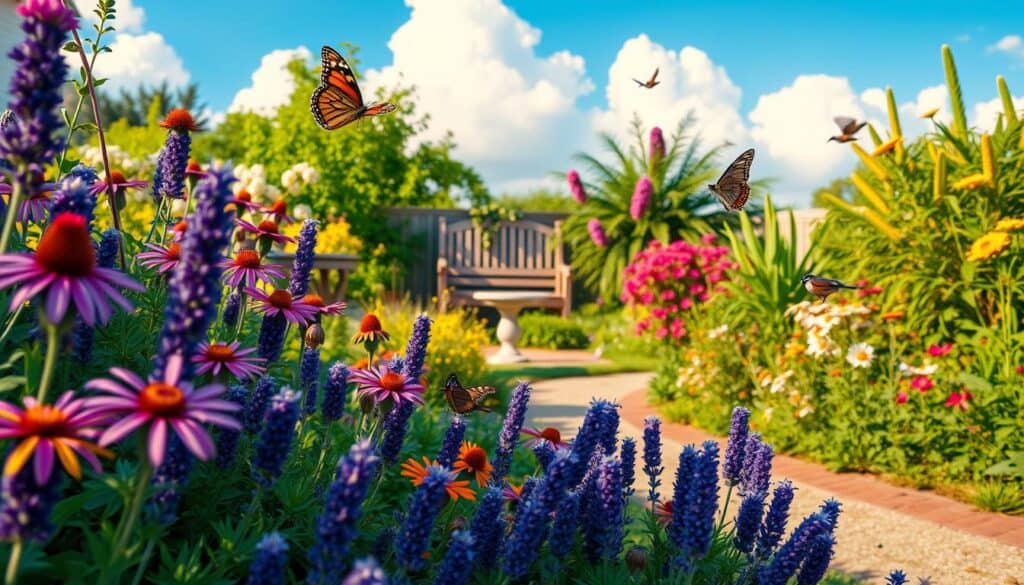
Long-blooming perennials keep your garden colorful all season. They offer nectar to bees and butterflies, making them best flowers for pollinators. A pollinator garden supports local bees and butterflies, creating a balanced ecosystem.
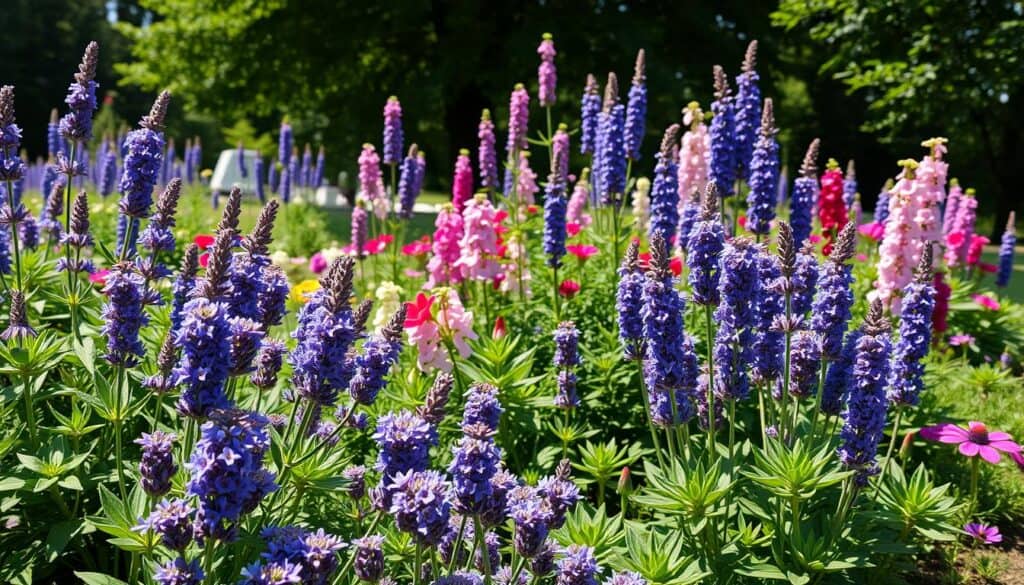
For a diverse and healthy display, add these reliable plants:
- Lavender and catmint: They repel pests and attract beneficial insects.
- Russian sage and pincushion flower (scabiosa): These native plants are essential for local wildlife.
- Peonies and salvia (meadow sage): These summer-blooming perennials add striking colors and beauty.
By mixing these pollinator-friendly plants, you create a thriving environment. These perennial flowers fill your garden with color and life. With some planning, your borders will be a haven for you and local pollinators.
Shade-Loving Beauties to Brighten Dark Corners
You can turn dark garden spots into lively areas. Many best perennials bloom beautifully in low light. They add color and life to dim places.
Choosing the right perennial flowers makes a shaded area lush and inviting. These plants add texture and depth. They make neglected areas feel special.
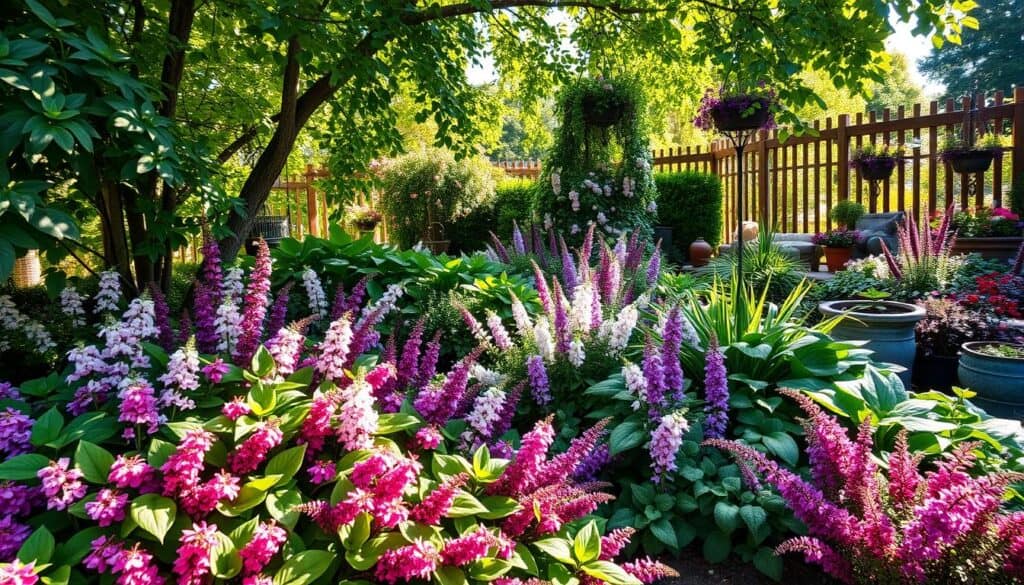
When planning your shaded garden, consider these options for lasting beauty:
- Hostas: They are perfect for shade, with many leaf shapes and colors.
- Coral bells (heuchera): Their striking foliage brings vibrant colors to dark spots.
- Hardy geranium (cranesbill): A dependable choice that adds delicate flowers and fills gaps.
- Phlox: Woodland varieties thrive in low light and have a lovely scent.
- Perennial groundcover: Use these to create a uniform carpet that connects your garden.
Adding these part shade perennials helps create a unified look in your garden. Whether you pick a classic hosta or colorful perennials, your garden will feel complete. These plants are key to connecting sunny areas with shaded corners.
Drought-Tolerant Selections for Low-Maintenance Landscaping
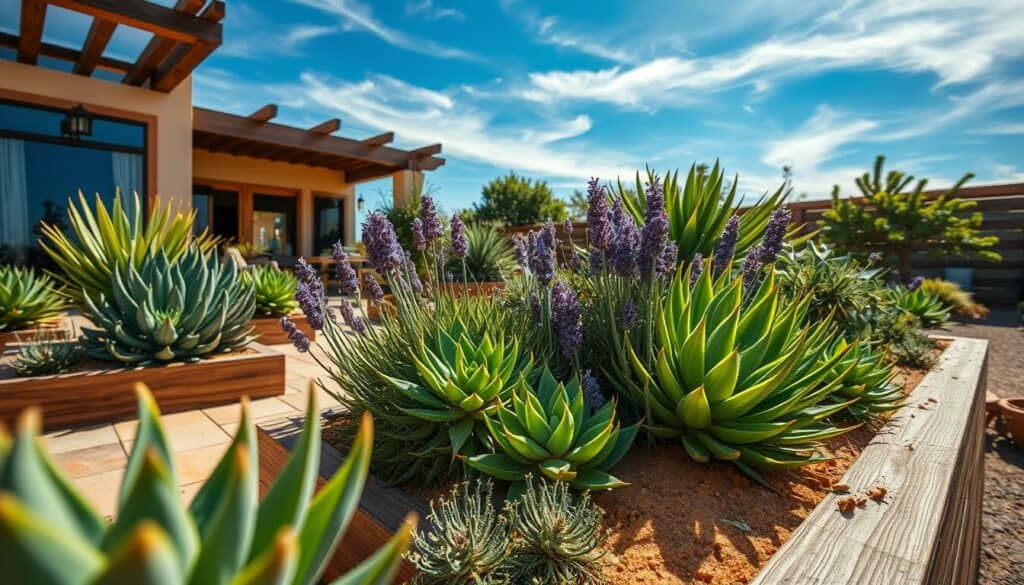
Creating a beautiful garden doesn’t mean endless hours with a hose. Drought-tolerant perennials are perfect for those who want an easy garden. They keep your garden lush without needing constant watering.
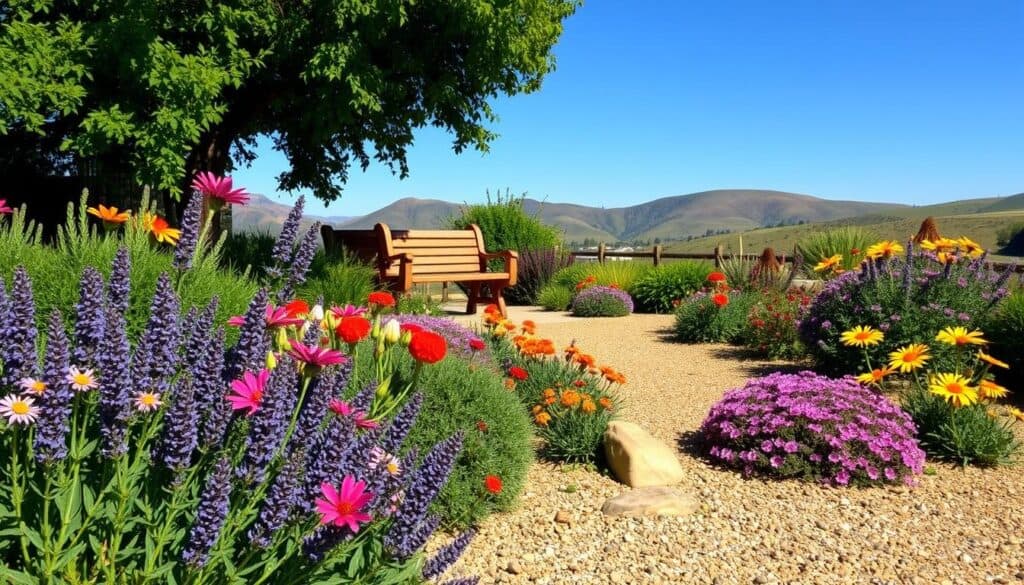
For a sunny garden, choose full sun perennials that love the heat. Sedum (stonecrop) and yarrow are great for hot, dry times. They add color and structure with little care.
Adding fragrant and colorful plants makes your garden special. Here are some great choices:
- Lavender: Known for its soothing scent and silver foliage.
- Catmint: A vigorous grower that attracts pollinators with ease.
- Russian sage: Offers airy, purple spikes that stand up well to intense heat.
For bright colors, try coreopsis (tickseed), pincushion flower (scabiosa), and blanket flower (gaillardia). They bloom all season and are very hardy.
Using drought-tolerant gardening saves water and keeps your garden healthy. Picking the right plants is key to a sustainable garden. With these choices, your garden will be beautiful all summer.
Structural Elegance with Ornamental Grasses and Shrubs
A great garden is more than flowers; it needs height and texture. Adding structural elements to your garden design brings movement and interest all year. The right perennial plants can give your outdoor space a professional look.
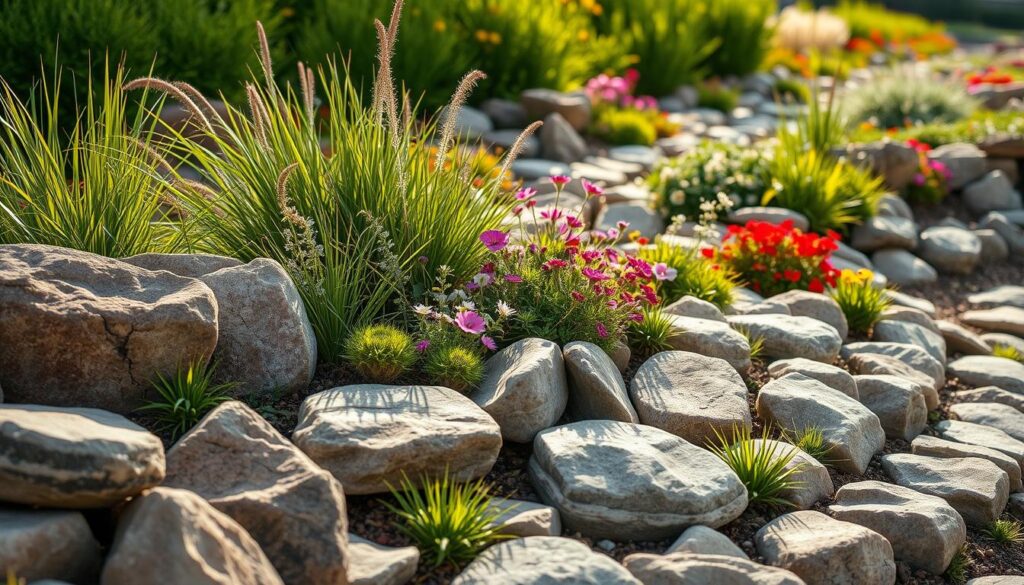
Ornamental grasses add grace and soft texture to any perennial border. They look great with drought-tolerant perennials like sedum (stonecrop). These plants keep your garden looking good even when other flowers are gone.
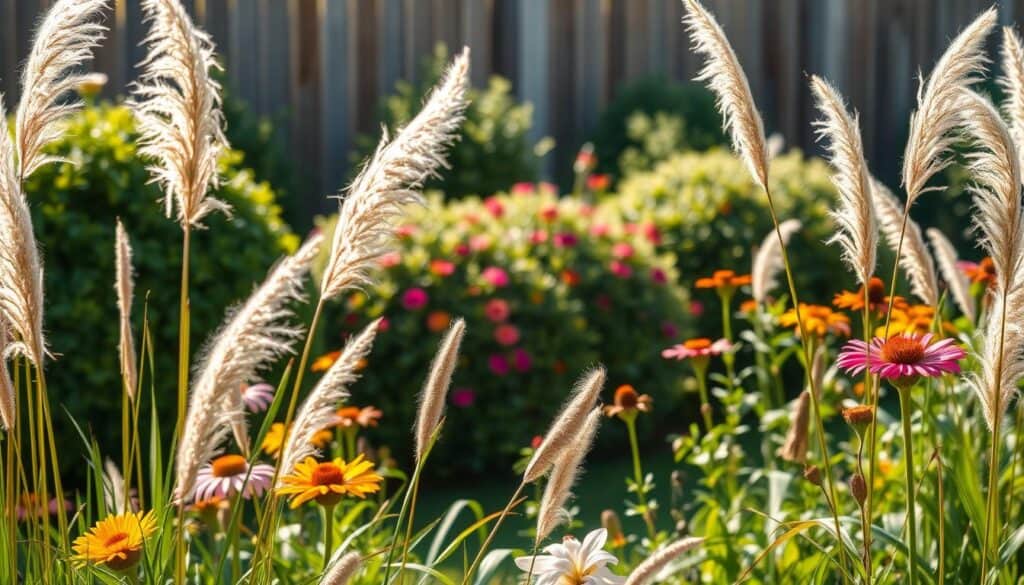
To create a layered look, add flowering shrubs as a base. Climbers like clematis on trellises add vertical interest. The bold blooms of hardy hibiscus make a stunning focal point. These elements define the space and add depth all year.
Choosing these structural plants is key to drought-tolerant gardening. Mixing them with a low-growing perennial groundcover creates a balanced look. This approach makes your garden beautiful and easy to care for over time.
Seasonal Planning for Year-Round Garden Interest
A good garden should look great all year. You need a garden planner to keep track of your plants’ life cycles. This way, your garden will always have perennial flowers for year-round color without any gaps.
Good garden design means picking perennial plants for all seasons that go well together. By choosing plants that bloom at different times, your garden will always look beautiful. This stops your garden from looking dull during the changing seasons.
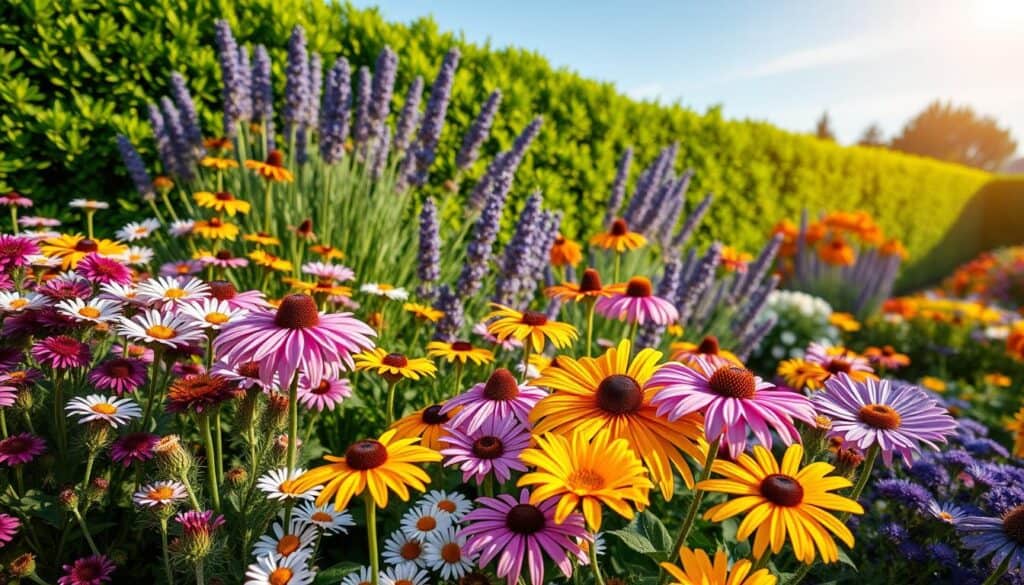
Creative perennial garden ideas mix spring perennials with fall perennials for a constant look. Early bloomers like creeping phlox or bleeding hearts start the show after winter. Then, as they fade, later bloomers keep the colors bright until it gets cooler.
To add interest, include ornamental grasses and flowering shrubs in your design. These elements add depth and texture, even when flowers aren’t blooming. Strong architectural shapes from shrubs and the flowing look of grasses make your garden a year-round delight.
Essential Tips for Planting and Maintaining Your Perennial Garden
Starting a thriving garden begins with the right setup and care for your perennial garden plants. A good perennial planting guide helps your hardy plants grow strong roots early. A pollinator garden needs good soil and steady water in its first year.
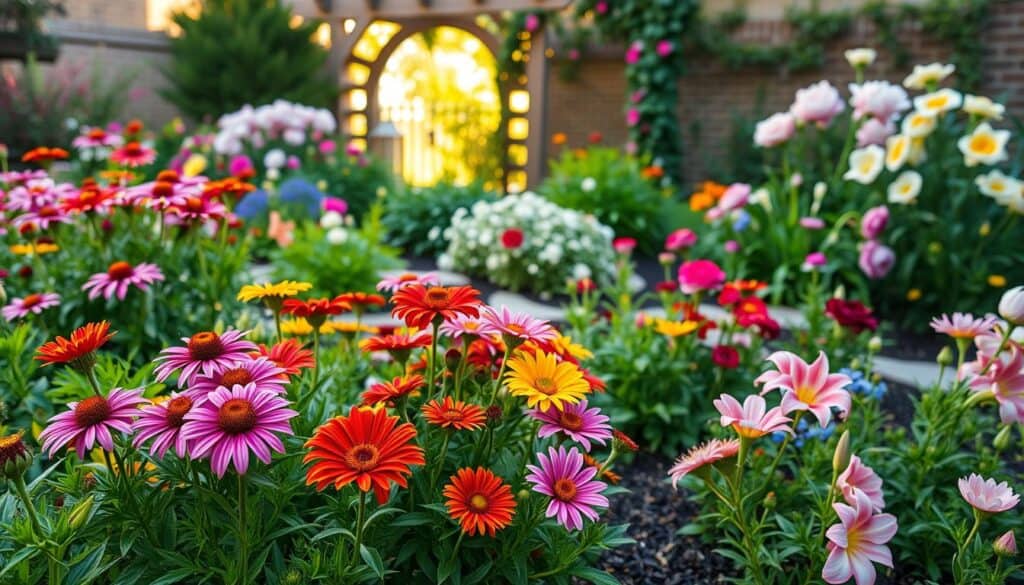
Low maintenance perennial plants are great because they come back year after year with little work. These plants need less water once they’re settled. Before planting, add organic matter to your soil to feed your flowers.
For beginners, pick best perennial flowers that are tough. Use a garden planner to arrange your garden plants by when they bloom and how tall they are. This keeps your garden looking neat and ensures each plant gets enough sun and air.
Dealing with shade perennials is different from sun-loving ones. For example, hostas and part shade perennials love moist, well-drained soil with compost. Give climbers like clematis something to climb on. The hardy geranium (cranesbill) does well in many light conditions, even deep shade or with hostas.
To help local wildlife, add native plants that are good for pollinators. Many deer-resistant perennials also attract pollinators, giving them nectar all summer. Here are key steps to keep your garden healthy:
- Apply a layer of mulch to keep soil moist and stop weeds.
- Water deeply at the base to help roots grow deep.
- Remove spent blooms to get more flowers.
- Split big clumps every three to four years to keep plants healthy.
Conclusion
Creating a garden with reliable perennials is a wise choice. Your plants will return year after year. This makes your garden more beautiful with each season.
Choosing a mix of spring and fall perennials keeps your yard lively. These flowers add color all year, making your garden a joy to behold. Use our guide to organize your garden beds for a sustainable space.
Opt for hardy plants like asters to enrich your soil. These plants are easy to care for and keep your garden looking great. Stay updated on the latest trends, like the perennial of the year 2026.
Your garden will be a beautiful, easy-to-care-for space for years. Begin your gardening journey today. Share your garden photos to inspire others in your community.