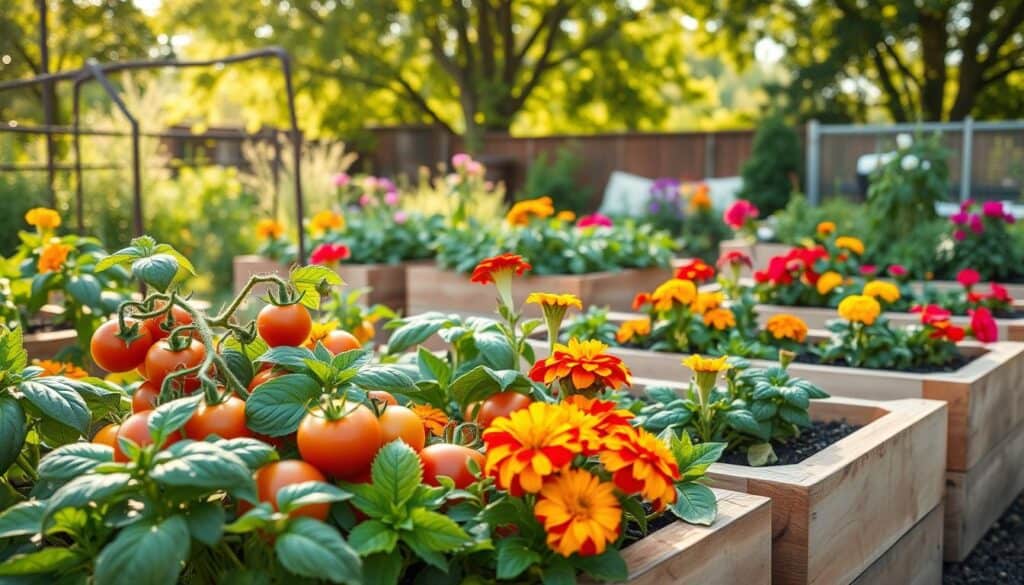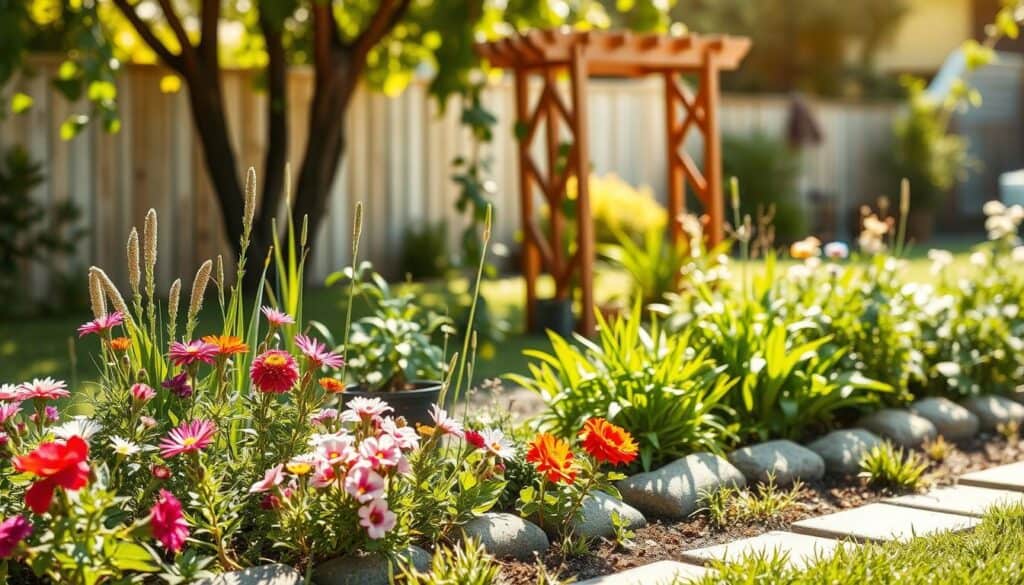
Welcome to our guide on making the most of your outdoor space. Many homeowners face the challenge of small areas. Yet, you can turn a small backyard into a productive garden.
By planning your space wisely, you can grow more veggies each year. Strategic design choices help you grow plenty of fresh food without a big garden.
We show you how to improve your gardening skills. These tips are for everyone, from beginners to experts. They help your soil work as hard as you do.
Key Takeaways:
- Maximize your harvest through vertical planting and intensive spacing.
- Improve soil health by using modular container designs.
- Create a sustainable ecosystem that thrives in small urban environments.
Visit The Marketplace or grab your Free Garden Starter Kit
Principles of High-Density Raised Bed Gardening
Mastering the art of intensive planting is key to a bountiful harvest. High-density gardening places crops close together to use soil efficiently. This method ensures plants get the nutrients they need, leading to healthier growth.
Using above ground gardening techniques helps avoid poor soil. It creates a controlled environment for better soil quality. This is ideal for those wanting to maximize garden space in their backyard.
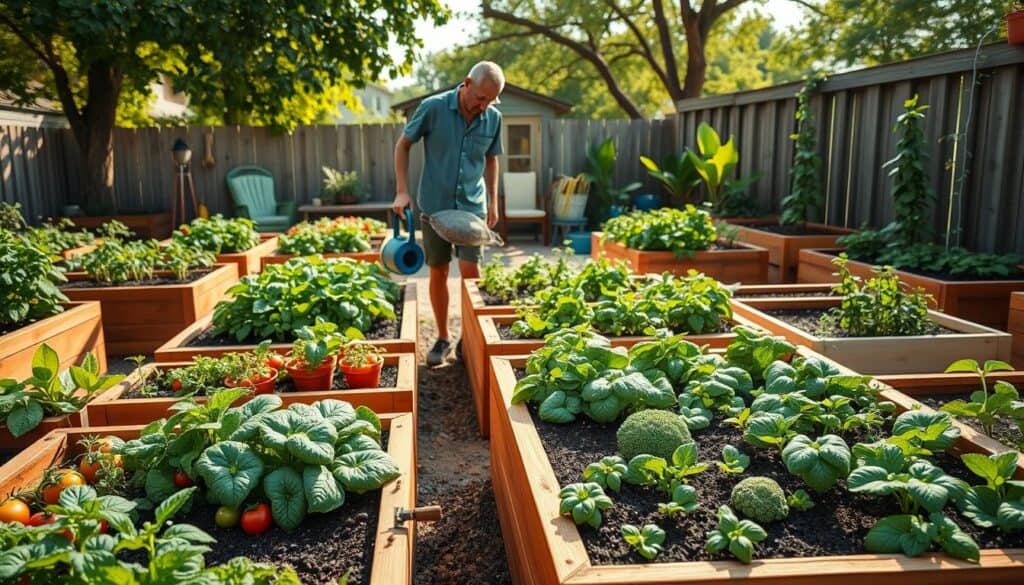
Small space gardening thrives with non-traditional methods, even on concrete
. Instead of wide paths, focus on efficient gardening layouts that consider plant size. This allows more vegetables in a single bed.
To maximize your setup, remember these key points:
- Focus on soil health for dense root systems.
- Use raised bed gardening for better drainage and warmth.
- Plan efficient gardening layouts to reduce weeds by shading the soil.
- Choose small space gardening varieties that grow compactly or vertically.
- Succession planting throughout the season maximizes garden space.
By adopting these strategies, your above ground gardening will become highly productive. Even a small plot can yield a lot of fresh produce. With proper planning, your garden will flourish all season.
The Best Raised Bed Garden Layouts for Growing More in Less Space
You can turn your backyard into a high-yield oasis by choosing the best raised bed garden layouts. Mastering raised bed gardening means having a clear plan that focuses on plant health and easy access. Using efficient gardening layouts ensures each plant gets the nutrients and space it needs to grow well.
When looking at raised garden bed designs, the classic grid system is a great choice. It organizes your vegetable garden beds into small, easy-to-manage squares. This method helps keep track of spacing for different crops.
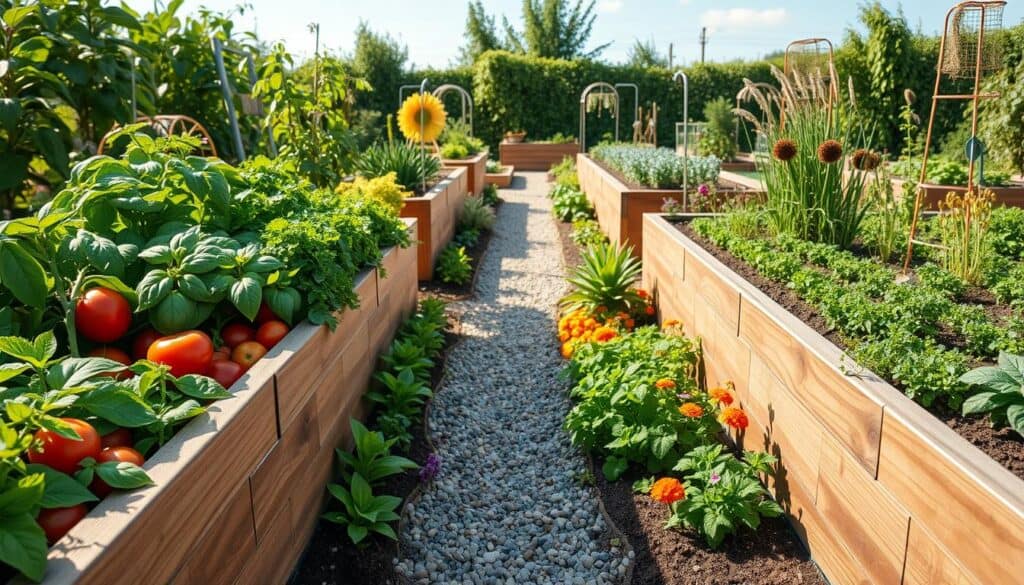
Many gardeners find that new raised bed ideas help them see their space better. A well-planned raised garden layout lets you reach the center of the bed without stepping on the soil. This keeps the soil loose and prevents compaction.
Starting from scratch? A simple raise bed garden design can greatly increase your yield. A good vegetable garden design groups plants with similar needs together. This saves time and reduces maintenance.
For those who love to cook, kitchen garden layout raised beds are ideal. These raised kitchen garden beds are placed near the back door for easy access to fresh herbs and greens. You can customize these beds to fit your patio or yard.
A beautiful raised bed kitchen garden serves both function and beauty. When designing a raised bed kitchen garden, consider the height of your plants. Place taller crops on the north side to avoid shading smaller vegetables.
Using kitchen garden raised beds lets you control the soil quality fully. Following a raised garden bed example plan helps beginners avoid mistakes like overcrowding. Here are some benefits of using these layouts:
- Increased yield per square foot of soil.
- Better drainage and soil temperature control.
- Reduced weed growth due to dense planting.
- Easier access for harvesting and pruning.
Your garden should be a place of joy and productivity. Look for raised garden bed inspiration in local gardens or online forums. With the right layout, you’ll enjoy a bountiful harvest all season.
Vertical Gardening Techniques for Maximum Yield
If you want to grow more food in a tiny space, look up instead of out. Vertical gardening is a great way to maximize garden space when space is limited. By training vining crops to grow upward, you can increase your harvest a lot.
Installing a sturdy veggie garden arch is perfect for heavy crops like cucumbers, beans, and squash. You might also think about a vegetable garden pergola for a shaded walkway that’s also a growing zone. A well-built vegetable pergola supports your entire landscape.
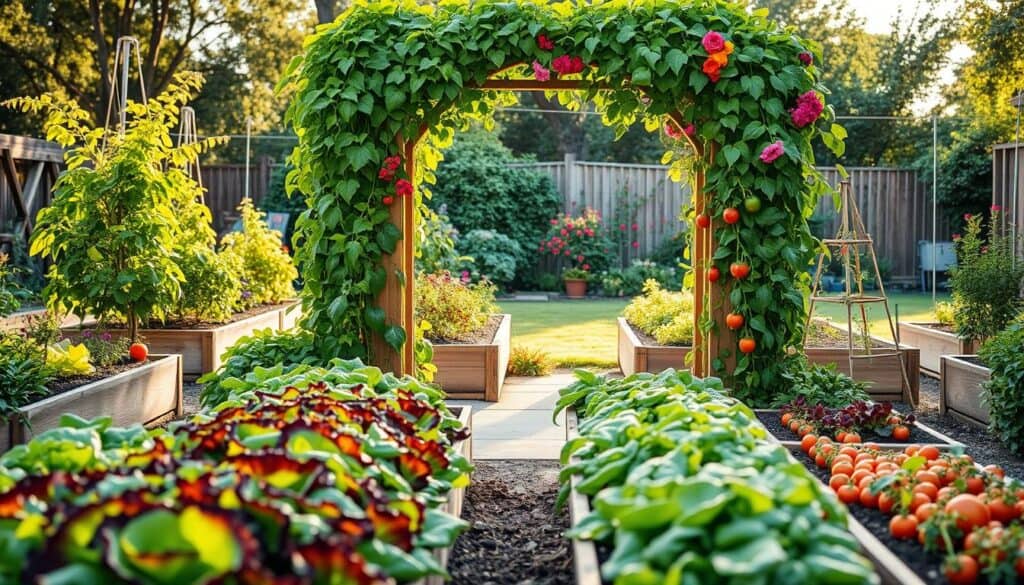
Using a vegetable garden with arch design keeps plants off the ground, which is good for their health. This method improves air circulation, preventing common fungal diseases in a pergola vegetable garden. Strong airflow keeps leaves dry and plants healthy all season.
Adding a vegetable garden with trellis and flowers makes your yard beautiful. Mixing climbing vegetables with colorful blooms attracts pollinators. Vertical structures turn a simple vegetable patch into a stunning, high-yield garden for any home gardener.
Essential Materials for Durable and Efficient Garden Beds
Building durable garden beds starts with choosing materials that last. You can pick a brick garden bed for its charm or a diy cedar raised garden bed for its natural look. The right materials help your garden beds stay productive for many seasons.
For raised garden bed designs that are both stylish and strong, think about masonry. A backyard garden with a brick retaining wall keeps soil temperature steady. Many gardeners love the look of a brick garden bed with plants in their yard.
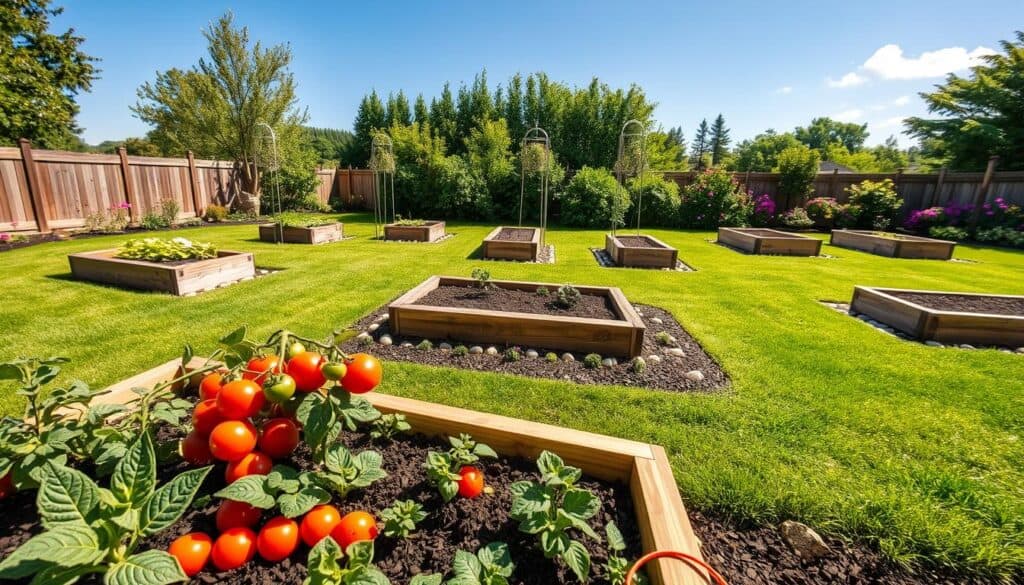
Wood is another great option, like a diy cedar raised garden bed that resists rot and insects. You can make your own boxes with a diy garden bed tutorial. An l-shaped raised garden bed is perfect for small spaces, making the most of your yard.
Finding cheap easy diy raised garden bed options is easier than you think. You don’t need expensive tools for raised garden boxes that look professional. Here are some key materials for your project:
- Cedar or Redwood: Naturally rot-resistant woods perfect for long-term garden set ups.
- Clay Bricks: Ideal for a permanent brick garden bed that adds structural beauty.
- Untreated Pine: A budget-friendly choice for a diy raised garden box cheap easy build.
- Galvanized Screws: Essential hardware to ensure your garden boxes stay sturdy under heavy soil loads.
The best raised bed ideas balance cost with durability. Whether you choose a diy brick garden bed or a simple wooden frame, proper construction is key. By picking the right materials, your garden beds vegetable production stays efficient and rewarding for years.
Creative Layouts for Small Vegetable Gardens
Creating small vegetable gardens is all about being creative and planning well. You can make even the smallest spaces into productive gardens. This way, you can enjoy fresh food without needing a big farm.
A good raised garden layout is key to a successful garden. A well-thought-out raise bed garden design makes sure plants get enough sunlight and air. Using kitchen garden layout raised beds helps organize your plants and makes them easy to care for.
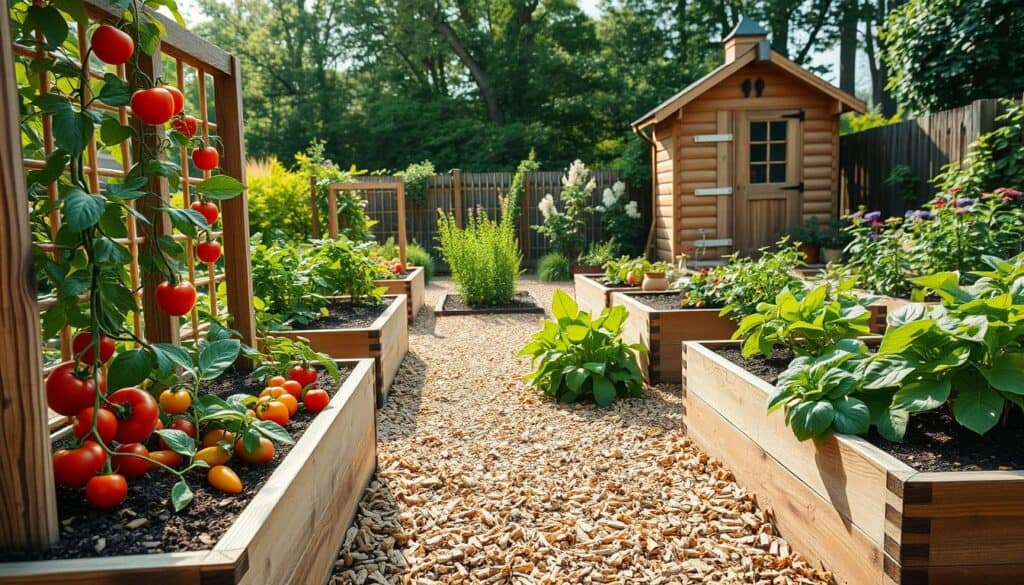
There are many veggie garden ideas to boost your harvest without crowding your plants. Try out different garden beds ideas like tiered structures or corner units. These add beauty to your veggie garden and keep it organized.
Even a small yard can become a stunning garden with the right vegetable gardening ideas. By using smart strategic planting, your garden will look great and produce a lot all year.
Think about the perks of raised kitchen garden beds for your home. A well-made raised bed kitchen garden makes weeding and watering easier. A good raised bed kitchen garden design means you’ll have plenty of fresh produce right outside your door.
Integrating Pollinator-Friendly Landscaping and Aesthetics
You can make your home vegetable garden more beautiful by adding pollinator-friendly plants. A good food garden looks great and grows well. By welcoming bees and butterflies, you help your crops grow and make your garden lively.
Adding a trellis or arch to your garden adds height and interest. These features are great for climbing plants and make a pretty entrance. A veggie garden arch is perfect for beans or peas and looks great too.
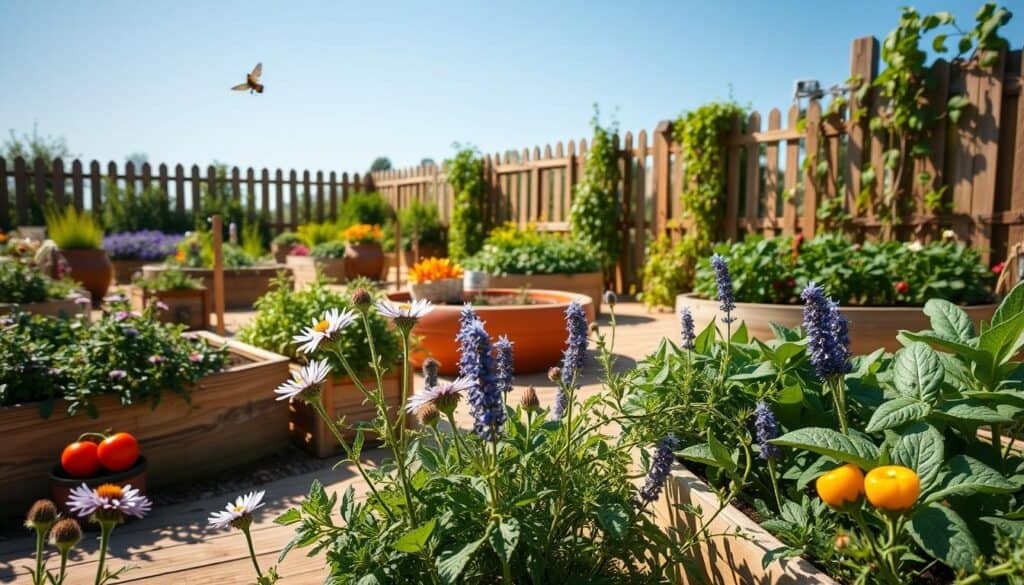
Many gardeners love the cottage garden look. It mixes pretty flowers with veggies for a lush feel. Using different plants keeps your garden looking good all year.
Bricks are a great choice for garden beds because they last long and look good. You can build a simple brick bed or a complex wall. Here are some ideas:
- Raised garden brick borders for clean, defined edges.
- A brick garden bed raised to a comfortable height for easy harvesting.
- A raised garden with bricks that complements your home’s existing architecture.
- A brick garden bed with plants that spill over the sides for a natural look.
These ideas turn your garden into a work of art. By choosing bricks and picking plants wisely, you help local wildlife. Your garden should be good for the soil and bring you joy.
Advanced Garden Planning and Permaculture Design
Garden design permaculture is a plan for long-term garden success. It sees your garden as a self-sustaining ecosystem. This way, you can create a dream veggie garden that works with nature.
This method goes beyond just planting. It focuses on how all parts of your garden work together. It’s about creating a garden farm design that’s efficient and sustainable.
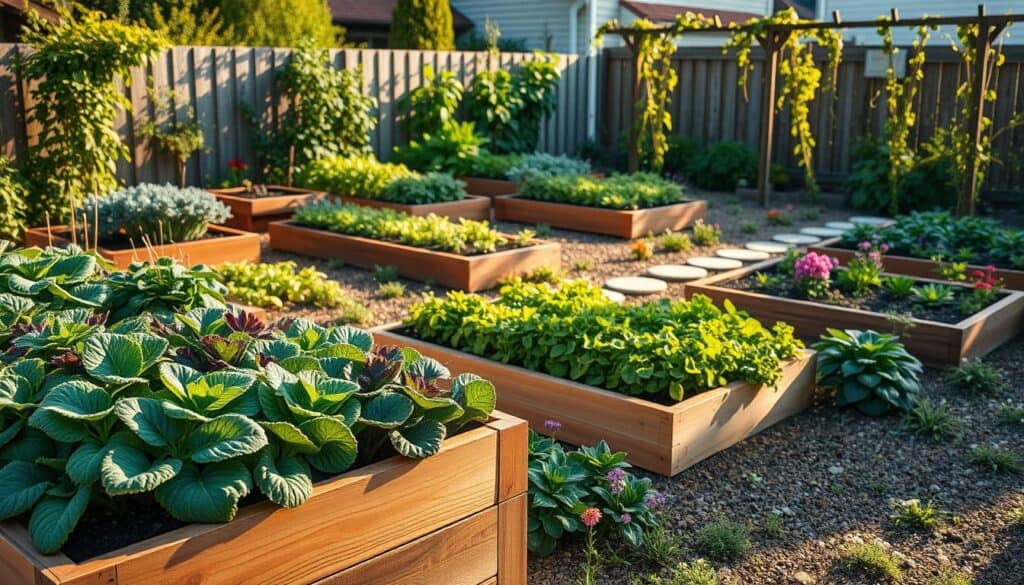
Soil health is key to a successful vegetable garden. Use crop rotation and organic amendments to keep the soil healthy. For huge garden ideas, think about how your garden supports these processes.
For example, a garden box that lets roots grow deep can boost your harvest. Many gardeners start with a diy cedar raised garden bed for its durability and looks. A raised garden bed example plan can help you design your space.
Here are a few tips for your next garden project:
- Use a reliable diy garden bed tutorial for a sturdy structure.
- Find a cheap easy diy raised garden bed design to save money.
- Choose easy diy raised garden bed kits if you’re short on time.
- Always pick quality materials when making garden boxes.
- Opt for diy raised garden box cheap easy by using local, untreated lumber.
By using these advanced techniques, your diy raised beds will give you fresh produce for years. Whether you’re building a simple box or a complex layout, careful planning is essential for a thriving garden.
Lighting and Infrastructure for Year-Round Productivity
You can turn your backyard into a year-round food source with the right setup. Invest in durable garden structures to protect your plants from bad weather. This lets you grow food even in the cooler months.
Raised covered garden beds are a great way to keep your harvest going. They protect against frost and rain, keeping the soil warm. Use clear panels over your beds to trap heat.
Vegetable garden lighting is a big help for gardeners. It lets you work on your garden at night. Raised beds with lights make it safe and easy to harvest or do maintenance late at night.
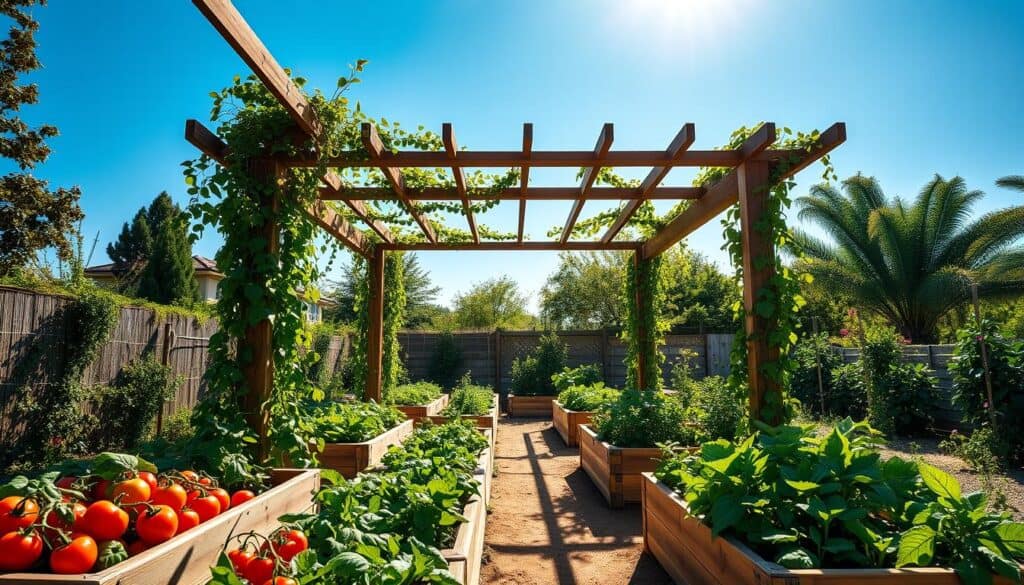
A vegetable garden pergola is both beautiful and useful. It supports climbing plants and gives shade in summer. Adding a pergola to your garden adds interest and a place for vining crops.
Protective covers and smart lighting make your garden super productive all year. With the right setup, you can have fresh food any time.
Conclusion
Creating the perfect space for your plants is all about careful planning. You can make small vegetable gardens very productive with smart designs. These ideas help you use every inch of your soil well.
Think about using raised covered garden beds to protect your plants from bad weather. These designs keep your crops safe and let you grow more. Adding lights to raised beds means your plants can grow even when it’s dark.
Many people dream of a veggie garden that’s both useful and beautiful. You might want a cottage garden look to make your yard feel special. Adding plants that attract bees and butterflies can also help your garden grow better. This approach is like a professional garden.
Your journey to a better veggie garden starts with one simple step. Just pick a corner of your yard and start today. A healthy veggie garden brings fresh food and joy all year.